
 Download PDF
Market Overview
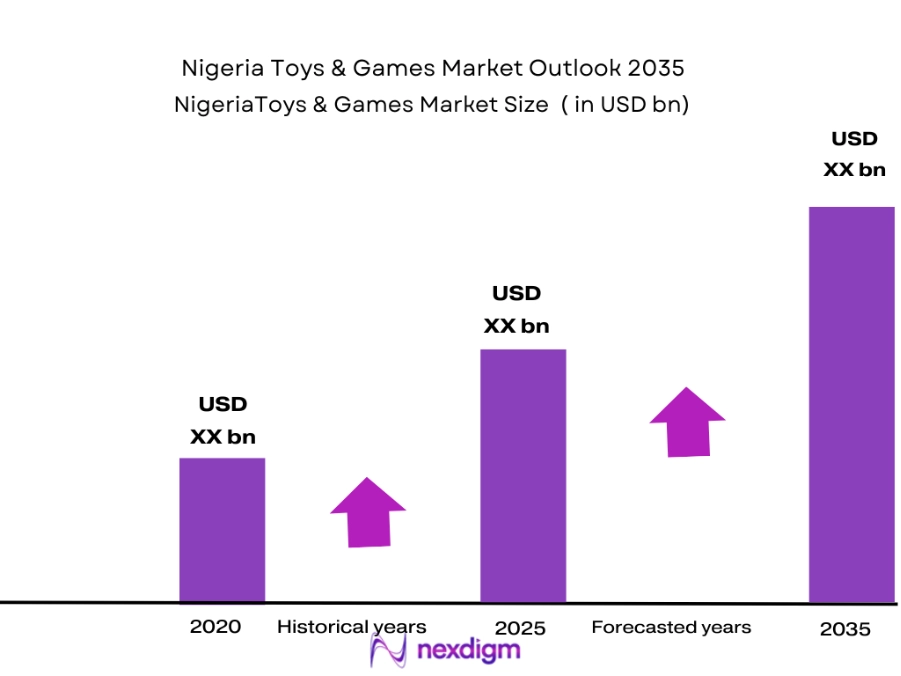
The Nigeria Toys & Games market is valued at USD ~ billion, based on a five-year historical analysis. Market growth is primarily driven by rising urbanization, increasing disposable income, and growing awareness among parents about the role of toys in early childhood development. The demand is further fueled by the proliferation of retail chains and e-commerce platforms that provide easy access to both domestic and international toy brands, creating a dynamic consumer-driven environment.
The market is dominated by major urban centers such as Lagos, Abuja, and Port Harcourt due to their higher population density, rising middle-class income, and well-developed retail infrastructure. These cities serve as key hubs for the distribution of toys and games across Nigeria. Lagos, in particular, is a commercial capital with strong import channels and diverse consumer preferences, while Abuja benefits from government-led initiatives promoting educational and recreational products. Port Harcourt’s affluent population also contributes to high purchasing power, supporting market dominance in these regions.
Market Segmentation
By Product Type
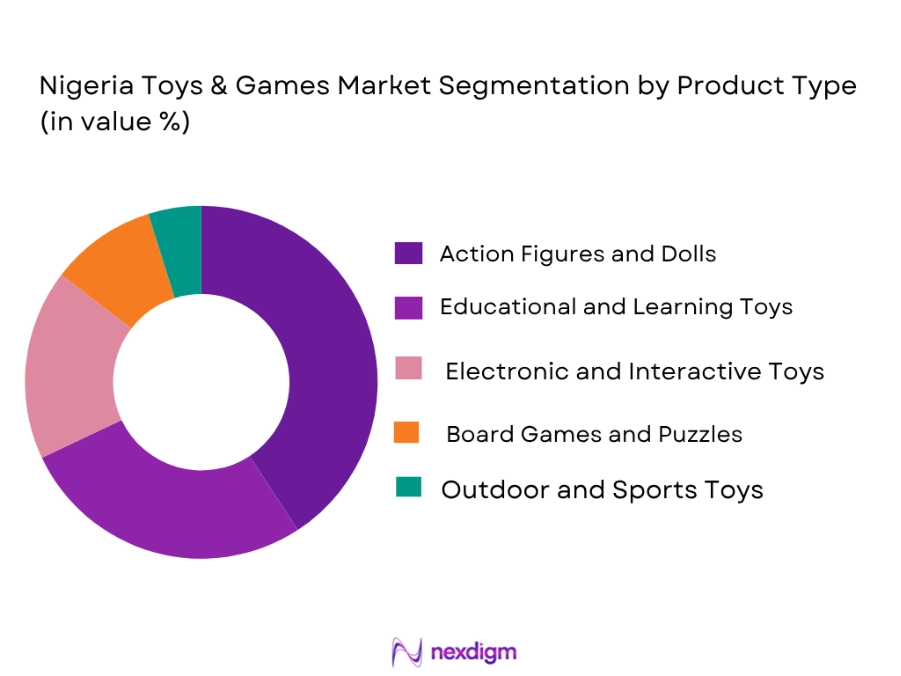
The Nigeria Toys & Games market is segmented by product type into action figures and dolls, educational and learning toys, electronic and interactive toys, board games and puzzles, and outdoor and sports toys. Educational and learning toys have a dominant market share due to increasing parental preference for products that support cognitive development and skill acquisition. Brands offering STEM-based toys and interactive learning kits are particularly popular among children aged 3–12 years. E-commerce platforms have further amplified accessibility, driving sales of educational toys nationwide.
By Distribution Channel
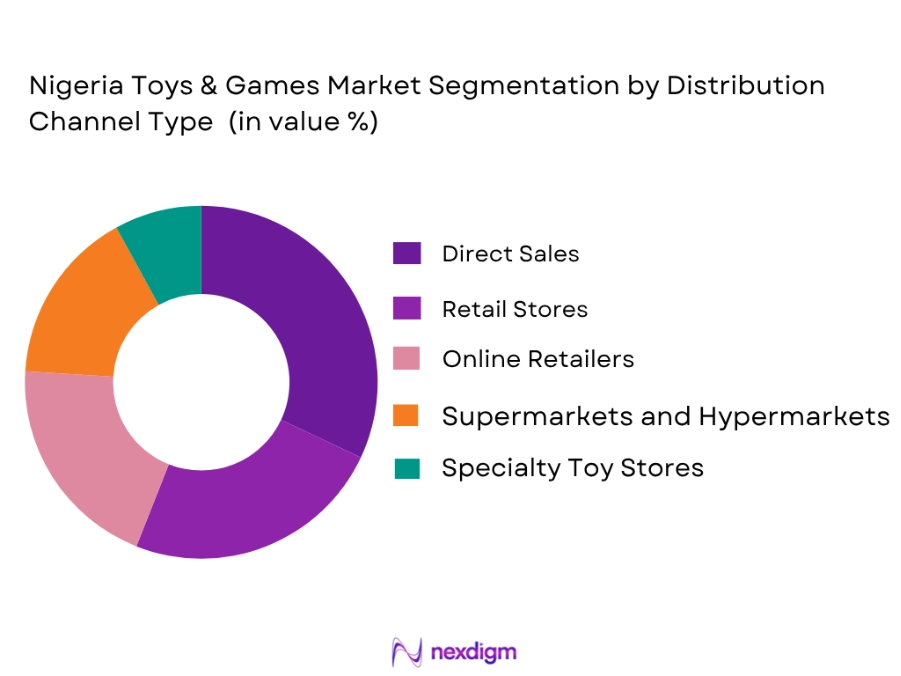
The market is segmented by distribution channels into direct sales, retail stores, online channels, supermarkets and hypermarkets, and specialty toy stores. Online channels hold a leading share due to growing digital penetration, convenience, and the availability of diverse domestic and international brands. Consumers increasingly prefer online shopping for price comparisons and home delivery, which has encouraged even smaller brands to adopt digital sales strategies, expanding their reach across the country.
Competitive Landscape
The Nigeria Toys & Games market is dominated by several key players, including international brands such as Mattel, Hasbro, Lego, and Spin Master, along with emerging local companies. This consolidation underscores the market influence of established brands with extensive distribution networks, strong brand recognition, and diverse product portfolios, creating high entry barriers for smaller players.
| Company | Establishment Year | Headquarters | Product Range | Distribution Network | Revenue 2023 (USD Mn) | Market Share (%) | Key Partnerships | Production Capacity |
| Mattel Inc. | 1945 | USA | ~ | ~ | ~ | ~ | ~ | ~ |
| Hasbro Inc. | 1923 | USA | ~ | ~ | ~ | ~ | ~ | ~ |
| Lego Group | 1932 | Denmark | ~ | ~ | ~ | ~ | ~ | ~ |
| Spin Master Corp. | 1994 | Canada | ~ | ~ | ~ | ~ | ~ | ~ |
| VTech Holdings Ltd. | 1976 | Hong Kong | ~ | ~ | ~ | ~ | ~ | ~ |
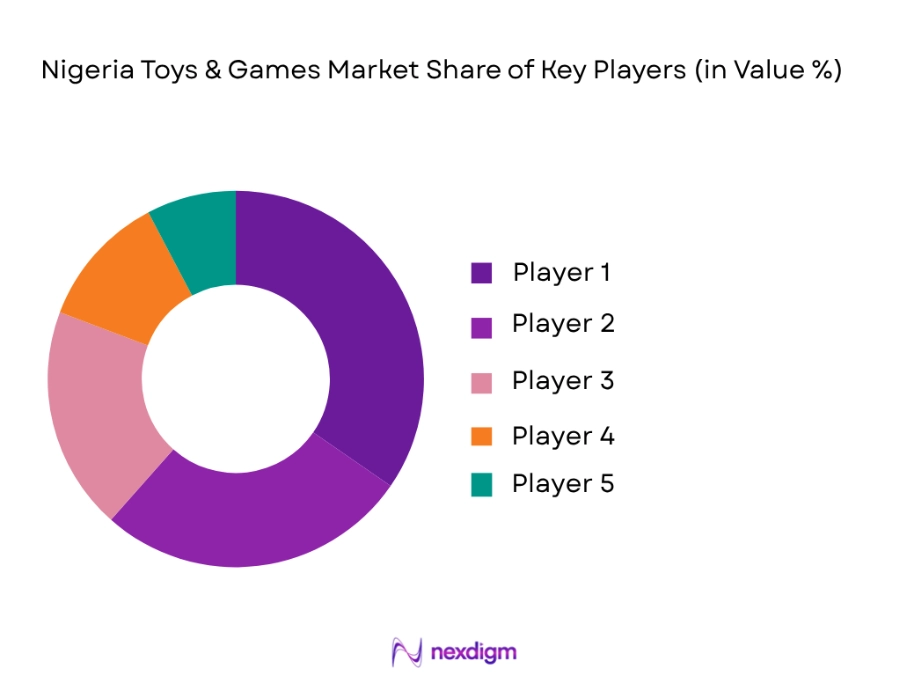
Nigeria Toys & Games Market Analysis
Growth Drivers
Increasing Disposable Income and Urbanization
The Nigeria Toys & Games market is strongly supported by increasing disposable income and rapid urbanization. As urban households experience higher income levels, parents are more willing to spend on toys that enhance learning, creativity, and entertainment for their children. Urban centers such as Lagos and Abuja have dense populations and well-developed retail infrastructure, making premium and branded toys more accessible. Rising consumer awareness about the importance of play in cognitive and social development has further amplified demand. Families are increasingly seeking educational and high-quality toys that offer long-term value, driving consistent sales growth across various categories, including action figures, educational kits, and interactive games.
Rising Awareness About Early Childhood Education
Rising awareness about early childhood education has become a significant market driver. Parents and caregivers are prioritizing toys that facilitate cognitive, emotional, and motor skill development. Educational and STEM-based toys are particularly favored, as they combine learning with play, helping children develop problem-solving and creative thinking abilities. School programs and campaigns promoting interactive learning tools have also increased adoption of such products. Furthermore, the popularity of licensed and branded toys that integrate educational elements with entertainment is growing, encouraging parents to invest in toys that support early learning. This trend is reinforced by both offline and online retailers offering curated selections of educational toys designed for various age groups.
Market Challenges
Fluctuations in Raw Material Prices
Fluctuations in raw material prices pose a key challenge to the Nigeria Toys & Games market. Many toys rely on imported plastics, electronic components, and specialized materials, whose prices vary based on global supply chains and currency exchange rates. Sudden increases in production costs can reduce profit margins for manufacturers and distributors, which may also translate into higher retail prices. These cost pressures particularly affect small and medium-sized local producers who have limited capacity to absorb price volatility. As a result, maintaining consistent pricing and ensuring product affordability while sustaining profitability remains a major challenge for the market’s stability and growth.
Counterfeit and Low-quality Products
Counterfeit and low-quality products represent another significant challenge in the Nigeria Toys & Games market. The presence of substandard and imitation toys undermines consumer trust, particularly among parents seeking safe and durable options for children. These products often bypass regulatory checks, posing safety hazards and contributing to negative perceptions of toy quality in the market. Furthermore, the market heavily relies on imports, making it vulnerable to supply inconsistencies and currency fluctuations. Rapidly changing consumer preferences, along with strict compliance requirements for toy safety and labeling, add additional operational and regulatory hurdles that manufacturers and distributors must navigate to remain competitive.
Opportunities
Growing Demand for Educational and STEM-based Toys
The Nigeria Toys & Games market has strong opportunities in the growing demand for educational and STEM-based toys. Parents increasingly seek products that combine learning with play, helping children develop critical thinking, problem-solving, and creative skills. This demand has been amplified by government and private programs promoting early childhood education. Local and international brands that provide STEM kits, interactive puzzles, and coding toys can capitalize on this trend by offering innovative products tailored to age-specific learning requirements. The integration of technology into learning toys also provides an avenue to attract tech-savvy parents and digitally inclined children, further expanding market potential across urban and semi-urban regions.
Emergence of Eco-friendly and Sustainable Toys
Emergence of eco-friendly and sustainable toys presents another key opportunity. With rising global awareness of environmental sustainability, Nigerian consumers are showing interest in non-toxic, biodegradable, and recycled material-based toys. Companies that offer wooden toys, plant-based plastics, or sustainably sourced products can position themselves as responsible brands while catering to an increasingly conscious customer base. This trend also allows manufacturers to differentiate from low-cost, low-quality imports and create premium product lines with higher perceived value. Online retail channels and social media marketing can further accelerate the adoption of sustainable toys by educating consumers about the benefits and availability of eco-friendly options.
Future Outlook
Over the next decade, the Nigeria Toys & Games market is expected to experience sustained growth driven by rising disposable income, increased digital penetration, and evolving consumer preferences for educational and interactive toys. The expansion of online retail platforms and e-commerce will further facilitate accessibility to international brands, while the local manufacturing sector is expected to scale production of eco-friendly and STEM-based toys. Government programs promoting early childhood education and parental awareness will continue to reinforce market expansion.
Major Players
- Mattel Inc.
- Hasbro Inc.
- Lego Group
- Spin Master Corp.
- Bandai Namco Holdings
- Fisher-Price
- Funko Inc.
- VTech Holdings Ltd.
- Ravensburger AG
- LeapFrog Enterprises
- Tomy Company, Ltd.
- Playmates Toys
- Jumbo Group
- MEGA Brands
- K’NEX Brands
Key Target Audience
- Toy and Game Manufacturers
- Retail Chains and Department Stores
- Online Retail Platforms
- Distributors and Wholesalers
- Corporate Gifting Companies
- Investments and Venture Capitalist Firms
- Government and Regulatory Bodies
- Import and Export Companies
Research Methodology
Step 1: Identification of Key Variables
The initial phase involves mapping all relevant stakeholders in the Nigeria Toys & Games market. Desk research leveraging secondary and proprietary databases is conducted to identify the primary factors influencing market dynamics, including consumer behavior, product types, and distribution channels.
Step 2: Market Analysis and Construction
Historical data is compiled and analyzed to evaluate market penetration, sales volumes, revenue generation, and product popularity. This phase ensures a comprehensive understanding of trends and provides the foundation for accurate forecasting and segmentation.
Step 3: Hypothesis Validation and Expert Consultation
Market hypotheses are validated through interviews with industry experts and key company representatives. These consultations provide firsthand insights on operational strategies, consumer preferences, and emerging trends, ensuring the robustness of the market data.
Step 4: Research Synthesis and Final Output
Direct engagement with major manufacturers and distributors is carried out to cross-verify sales data, product portfolios, and distribution networks. This synthesis of primary and secondary research results in a validated, accurate, and actionable market report.

- Executive Summary
- Research Methodology (Market Definitions and Assumptions, Abbreviations, Market Sizing Approach, Consolidated Research Approach Understanding Market Potential Through In-Depth Industry Interviews, Primary Research Approach, Limitations and Future Conclusions)

- Definition and Scope
- Market Dynamics Overview
- Market Genesis
- Major Players and Market Timeline
- Business Cycle and Trends
- Supply Chain and Value Chain Analysis

- Growth Drivers
Increasing Disposable Income and Urbanization
Rising Awareness About Early Childhood Education
Growing Popularity of Branded and Licensed Toys
Expansion of E-commerce and Online Retail Platforms
Government and Private Initiatives Promoting Educational Toys - Market Challenges
Fluctuations in Raw Material Prices
Counterfeit and Low-quality Products
Import Dependency and Currency Volatility
Changing Consumer Preferences
Regulatory Compliance and Safety Standards - Opportunities
Growing Demand for Educational and STEM-based Toys
Emergence of Eco-friendly and Sustainable Toys
Expansion of Online Retail and Direct-to-Consumer Channels
Rising Adoption of Digital and Interactive Gaming Products
Innovation in Toy Design and Licensing Collaborations - Key Trends
Focus on STEM and Educational Toys
Integration of Digital and Augmented Reality Features
Rising Demand for Licensed and Branded Toys
Increased Popularity of Board Games and Puzzles Among All Age Groups
Shift Toward Sustainable and Non-toxic Toy Materials - Government Regulations
- SWOT Analysis
- Porter’s Five Forces

- By Value, 2020–2025
- By Volume, 2020–2025
- By Average Price, 2020–2025

- By Product Type (In Value %)
Action Figures and Dolls
Educational and Learning Toys
Electronic and Interactive Toys
Board Games and Puzzles
Outdoor and Sports Toys - By Age Group (In Value %)
Infants (0–2 Years)
Toddlers (3–5 Years)
Children (6–12 Years)
Teenagers (13–17 Years)
Adults - By Material Type (In Value %)
Plastic Toys
Wooden Toys
Metal Toys
Electronic Components
Others - By Distribution Channel (In Value %)
Direct Sales
Retail Stores
Online Channels
Supermarkets and Hypermarkets
Specialty Toy Stores - By Region (In Value %)
North
South
East
West
Central

- Market Share of Major Players by Value/Volume
- Market Share of Major Players by Product Type
- Cross Comparison Parameters (Company Overview, Business Strategies, Recent Developments, Strength, Weakness, Organizational Structure, Revenues, Revenues by Product Type, Number of Touchpoints, Distribution Channels, Number of Dealers and Distributors, Margins, Production Plant, Capacity, Unique Value Offering and Others)
- SWOT Analysis of Major Players
- Pricing Analysis Based on Product Categories for Major Players
- Detailed Profiles of Major Companies
Mattel Inc.
Hasbro Inc.
Lego Group
Spin Master Corp.
Bandai Namco Holdings
Fisher-Price
Funko Inc.
VTech Holdings Ltd.
Ravensburger AG
LeapFrog Enterprises
Tomy Company, Ltd.
Playmates Toys
Jumbo Group
MEGA Brands
K’NEX Brands

- Market Demand and Utilization
- Purchasing Power and Budget Allocations
- Regulatory and Compliance Requirements
- Needs, Desires, and Pain Point Analysis
- Decision-Making Process

- By Value, 2026–2035
- By Volume, 2026–2035
- By Average Price, 2026–2035


 Request a Sample
 Ask for Customization
 Get a Quote
 Enquire Now