
 Download PDF
Market Overview
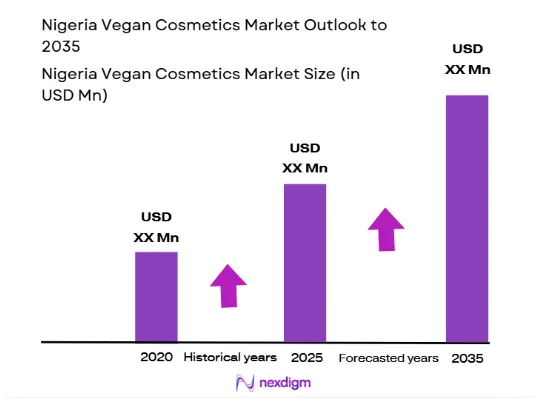
The Nigerian vegan cosmetics market has been experiencing significant growth, driven primarily by increased consumer awareness around the benefits of cruelty-free and organic products. In recent years, the market has been valued at approximately USD ~ million, with a steady upward trend observed due to the growing demand for natural and vegan beauty products. Key drivers include rising disposable incomes, greater exposure to global beauty trends, and a shift towards ethical consumption. This trend is expected to sustain momentum due to continuous advocacy for sustainability and plant-based ingredients, which is expected to expand the market further.
In Nigeria, major urban hubs like Lagos, Abuja, and Port Harcourt dominate the vegan cosmetics market. Lagos, as the commercial capital, leads the market due to its higher concentration of middle to high-income consumers and extensive retail and e-commerce networks. Abuja follows closely due to its status as the political capital and growing demand for premium, eco-friendly products. The rise in social media influence and global beauty standards also impacts these urban areas significantly, with brands leveraging influencers to boost brand visibility and consumer adoption.
Market Segmentation
By Product Category
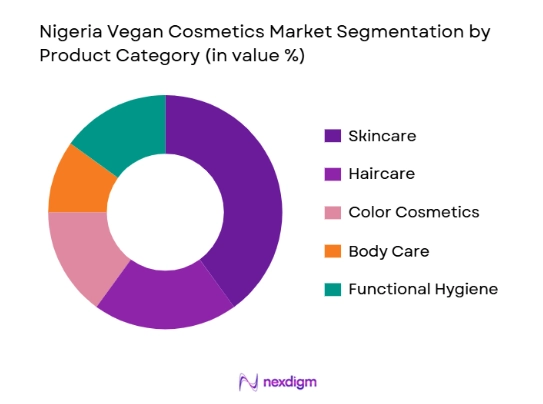
The Nigerian vegan cosmetics market is segmented into skin care, hair care, color cosmetics, body care, and functional/personal hygiene products. Skin care dominates the market due to the increasing awareness of dermatologically safe, plant-based skincare solutions. Products like face creams, serums, and moisturizers using plant-derived ingredients have gained strong consumer trust, making skin care the largest segment. The preference for vegan skin care is driven by growing concerns over skin health and the harmful effects of synthetic chemicals. Nigerian consumers are increasingly inclined towards natural skincare formulations that promise fewer side effects and long-term benefits.
By Distribution Channel
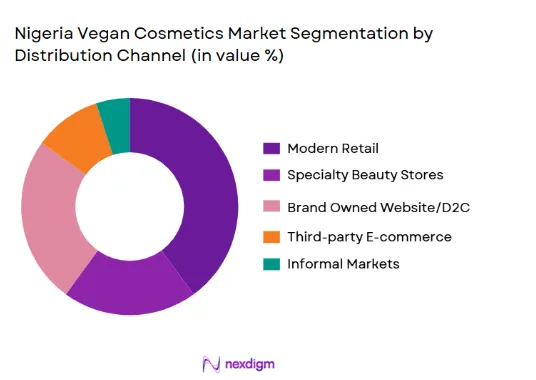
In terms of distribution channels, the Nigerian vegan cosmetics market is primarily segmented into modern retail, specialty beauty stores & pharmacies, direct-to-consumer (brand e-commerce), third-party e-commerce platforms, and informal markets. Modern retail channels such as supermarkets and specialty beauty stores dominate the market. This is due to their broad reach, accessibility, and ability to provide consumers with a hands-on experience before purchase. E-commerce also plays a crucial role, particularly for premium vegan brands looking to reach a wider audience outside of the traditional retail spaces. The convenience of online shopping paired with home delivery services has made it a popular channel for consumers seeking vegan beauty products.
Competitive Landscape
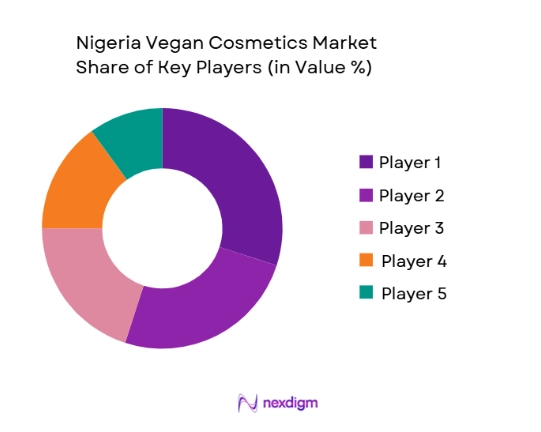
The Nigerian vegan cosmetics market is dominated by a combination of local players and international brands. Local companies like Zaron Cosmetics, Cake Beauty Nigeria, and Nala Cosmetics are capitalizing on the growing demand for vegan products by offering natural beauty alternatives. Additionally, international brands such as The Body Shop and Shea Moisture have established a solid foothold by promoting their ethical practices, cruelty-free products, and eco-friendly packaging. The competitive landscape highlights the influence of brands that are committed to sustainability and transparency, with a notable shift towards product formulation and ethical sourcing practices.
| Company Name | Establishment Year | Headquarters | Technology Focus | Market Reach | Revenue | Product Line Count |
| Zaron Cosmetics | 2000 | Lagos, Nigeria | ~ | ~ | ~ | ~ |
| Cake Beauty Nigeria | 2015 | Lagos, Nigeria | ~ | ~ | ~ | ~ |
| Nala Cosmetics | 2017 | Lagos, Nigeria | ~ | ~ | ~ | ~ |
| The Body Shop | 1976 | UK | ~ | ~ | ~ | ~ |
| Shea Moisture | 1991 | USA | ~ | ~ | ~ | ~ |
Nigeria Vegan Cosmetics Market Analysis
Growth Drivers
Rising Health & Clean Beauty Awareness
Nigeria’s consumer market reflects a broader shift toward health‑oriented consumption, driven by macroeconomic and demographic conditions. With a population of approximately 232.7 million people and a GDP per capita of USD 1,084.20 in 2024, discretionary spending decisions increasingly incorporate health and wellbeing considerations. As global trends toward plant‑based lifestyles intersect with local cultural emphasis on natural personal care, awareness of clean, vegan, and cruelty‑free formulations grows alongside access to beauty education content through digital and traditional media. This heightened awareness influences purchasing behavior, as Nigerian consumers seek products perceived as safer for skin and overall health, aligning ethical preferences with an expanding middle class capable of absorbing incremental price premiums for perceived product quality.
Growth in Digital Discovery & Social Commerce
The expansion of digital retail infrastructure has reshaped how Nigerian consumers discover and purchase vegan cosmetics. In 2023 the Nigerian e‑commerce market was valued at about USD 15 billion in B2C sales, supported by rising internet and mobile usage. Mobile devices played a dominant role, with 88% of online purchases made through phones or tablets, indicating how mobile‑first discovery via social platforms accelerates product discovery. Nigeria’s e‑commerce ecosystem is bolstered by substantial growth in digital payment adoption and online retail logistics, which facilitates exposure to global and local vegan brands beyond traditional retail. This digital discovery environment contributes to faster consumer education on ingredient transparency, ethical sourcing, and aligns with socially driven clean beauty trends.
Market Challenges
Regulatory Gaps in Vegan Claims & Labeling
Regulatory standards in Nigeria currently lag behind consumer demand for verified ethical claims in vegan cosmetics. While the beauty and personal care category saw strong value growth in 2024, it faced challenges due to macroeconomic pressures like high inflation that limited disposable income and complicated product positioning. There is no unified statutory guideline on vegan or cruelty‑free certification within Nigeria’s regulatory framework, leading to inconsistent labeling and potential consumer mistrust. This regulatory gap places responsibility on manufacturers and importers to self‑certify claims and may slow mainstream adoption of vegan products compared with markets where claim validation is codified by law.
Price Sensitivity in Target Segments
Nigeria’s macroeconomic conditions exert considerable pressure on consumer discretionary spending. With the inflation rate at roughly 33.2% in 2024, household budgets tighten, often shifting expenditure toward essentials and lower‑price alternatives. Disposable personal income increased to approximately 21,437,390 million NGN in mid‑2024, reflecting income growth, but currency volatility and cost of living pressures constrain discretionary outlays. For vegan cosmetics, which frequently command a premium due to ingredient sourcing and certification, price sensitivity may dampen demand among value‑oriented consumers. Despite rising interest in ethical products, purchasing decisions remain tethered to affordability, especially for mass segments of the population.
Market Opportunities
Retail Expansion via E‑Commerce
Nigeria’s online retail landscape presents a substantial commercial opportunity for vegan cosmetics brands. The country’s e‑commerce market is valued in the range of USD 10.49 billion in 2026, growing with enhancements in digital infrastructure and increasing smartphone penetration. Mobile commerce accounted for a significant share of digital retail, with smartphones capturing over 80% of online orders in 2025, suggesting that retail strategies optimized for mobile will effectively reach younger, digitally‑savvy consumers. As e‑commerce becomes more accessible, vegan brands can leverage social commerce channels and digital marketplaces to reduce dependence on tier‑1 retail real estate while creating direct engagement with consumers seeking transparency and ethical credentials.
Vegan Personal Care in Male Grooming
There is emerging demand for male‑focused vegan personal care products in Nigeria, aligned with evolving social norms around male grooming. While the overall male grooming market size remains modest at approximately USD 0.31 million in 2024, this segment reflects nascent but growing interest in targeted personal care beyond basic hygiene. Globally, men’s personal care is well‑established, and similar value chains suggest room for specialized vegan formulations tailored to male consumers who increasingly prioritize skincare and body care. With growing urbanization and shifts in male consumer behavior toward appearance and wellness, vegan male grooming lines such as plant‑based beard care, vegan shaving products, and natural deodorants can differentiate offerings within the broader personal care ecosystem.
Future Outlook
Over the next decade, the Nigerian vegan cosmetics market is expected to experience robust growth, driven by the increasing popularity of eco-friendly and cruelty-free products. The rise of health-conscious consumers, coupled with greater attention to ethical beauty products, will likely push the demand for vegan cosmetics further. Additionally, local manufacturers focusing on plant-based ingredients and sustainable packaging solutions will contribute to increased market supply, making these products more accessible across the country.
Major Players in the Nigerian Vegan Cosmetics Market
- Zaron Cosmetics
- Cake Beauty Nigeria
- Nala Cosmetics
- The Body Shop
- Shea Moisture
- Lush Cosmetics
- Burt’s Bees
- Khiel’s (L’Oréal Clean Range)
- Yves Rocher
- Organic Shop International
- Dr. Organic
- Kora Organics
- Ethique
- Natura Brasil
- The Ordinary
Key Target Audience
- Investments and Venture Capitalist Firms
- Government and Regulatory Bodies (e.g., NAFDAC, SON)
- Beauty Retailers & Distributors
- E-commerce Platforms (e.g., Jumia, Konga)
- Manufacturers of Personal Care and Cosmetics
- Beauty & Fashion Influencers
- Cosmetic Industry Associations (e.g., NABC)
- Multinational Cosmetics Corporations
Research Methodology
Step 1: Identification of Key Variables
This phase involves mapping key variables that impact the Nigerian vegan cosmetics market, such as consumer preferences, regulatory frameworks, and product types. Desk research using secondary sources like industry reports and databases will establish the market foundation.
Step 2: Market Analysis and Construction
Historical data on market demand, consumer trends, and product category performance will be analyzed to develop a forecast model. The market’s competitive dynamics will be explored, including leading players and emerging local brands.
Step 3: Hypothesis Validation and Expert Consultation
We will engage with key stakeholders such as dermatologists, brand managers, and local suppliers through primary interviews to validate market hypotheses and refine our findings.
Step 4: Research Synthesis and Final Output
In this final step, data from the previous phases will be synthesized into actionable insights. Detailed engagement with market experts and key players will ensure the robustness of the market analysis and provide a comprehensive market outlook.

- Executive Summary
- Research Methodology (Market Definitions and Boundary Conditions for Vegan/Cruelty-Free/Clean Beauty, Abbreviations, Top-to-Bottom Market Modeling, Bottom-to-Top SKU and Channel Mapping, Price-Point Benchmarking, Brand Universe Construction, Primary Expert Interviews with Brand Owners/Distributors/E-Retailers/Contract Manufacturers/Dermatology Clinics, Demand-Side Consumer Assessment, Forecasting Framework, Data Triangulation and Validation, Limitations and Assumptions)

- Definition and Scope
- Market Genesis & Evolution
- Industry Value Chain & Distribution Platforms
- Supply Chain Mapping
- Consumer Adoption Framework

- Growth Drivers (Rising Health & Clean Beauty Awareness, Growth in Digital Discovery & Social Commerce, Youth‑Driven Ethical Consumption, Rising Disposable Income in Urban Hubs)
- Market Challenges (Regulatory Gaps in Vegan Claims & Labeling, Price Sensitivity in Target Segments, Limited Local Manufacturing Capabilities)
- Market Opportunities (Localization of Raw Material Processing, Retail Expansion via E‑Commerce, Vegan Personal Care in Male Grooming)
- Key Trends (Clean Ingredients & Transparent Labeling, Eco‑Friendly & Recyclable Packaging, Influencer‑Led Branding & Community Marketing)
- Government & Regulatory Environment
- Standards for Vegan Claims (SON, NAFDAC Guidelines)
- Import Duty Structure on Cosmetics Ingredients
- SWOT Analysis
- Porter’s Five Forces

- By Market Value (2020-2025)
- By Market Volume (2020-2025)
- By Average Selling Price (2020-2025)
- By Per Capita Spending (2020-2025)
- By Online vs Offline Revenue Mix (2020-2025)

- By Product Category (In Value%)
Skin Care
Hair Care
Color Cosmetics
Body Care
Functional/Personal Hygiene - By Distribution Channel (In Value %)
Modern Retail
Specialty Beauty Stores & Pharmacies
Direct‑to‑Consumer
Third‑Party E‑Commerce Platforms
Informal Markets & Trade - By Price Tier (In Value %)
Mass Market (Low‑Cost Vegan Range)
Mid‑Tier Ethical & Clean Brands
Premium Eco‑Luxury Vegan - By Consumer Demographic (In Value %)
Urban Millennials & Gen Z
Middle‑Income Households
High‑Income & Affluent Consumers
Gender - By Ingredient Source (In Value %)
Locally Sourced Botanicals
Imported Natural Actives
Certified Organic Actives
Novel Vegan Bio‑Active

- Market Share of Leading Players ( By Value, By Volume, By Product Category, By Distribution Channel)
- Cross Comparison Parameters of Key Competitors (Brand Positioning & Vegan Certification, Status (Ethical Labeling), Product Portfolio Breadth (Category Coverage), Ingredient, Transparency Index (Active Botanic Count), Retail Touchpoints, Price Tier Coverage (Mass, Mid, Premium), Distribution Intensity, E-Commerce vs Retail Presence, Marketing & Influencer Engagement Score, Local Sourcing and Manufacturing Footprint)
- SWOT of Major Competitors
- Pricing & SKU Strategy Comparison
- Detailed Profiles of Major Companies
The Body Shop
Shea Moisture (Sundial Brands)
Organic Shop International
Khiel’s (L’Oréal Clean Range)
Lush Cosmetics
Yves Rocher
Burt’s Bees
Dr. Organic
Zaron Cosmetics
Cake Beauty Nigeria
Afrikoko Cosmetics
Beauty by Didi
Nala Cosmetics
Sisi Jemimah Divine Organics
EloU Naturals

- Consumer Awareness, Perceptions & Willingness to Pay
- Purchasing Behavior Across Channels (Influencer Seeding, Livestream Conversion, Store Trial, Clinic Recommendation, Peer Review Reliance)
- Pain Points & Unmet Needs (Ingredient Transparency, Product Efficacy)
- Decision Journey & Conversion Funnels
- Unmet Needs and Pain Points (Sensitive-Skin Safety, Humid-Climate Suitability, Authenticity Assurance, Shade/Texture Localization, Affordable Certified Vegan Options)
- Brand Loyalty and Repurchase Behavior (Repeat Rate, Hero SKU Pull, Community Building, CRM Effectiveness, Membership / Loyalty Leverage)
- Decision‑Making Triggers (Ingredients, Price, Brand Trust)

- By Market Value (2026-2035)
- By Volume (2026-2035)
- By Average Selling Price (2026-2035)
- By Per Capita Spending (2026-2035)
- By Online vs Offline Revenue Mix (2026-2035)


 Request a Sample
 Ask for Customization
 Get a Quote
 Enquire Now