
 Download PDF
Market Overview
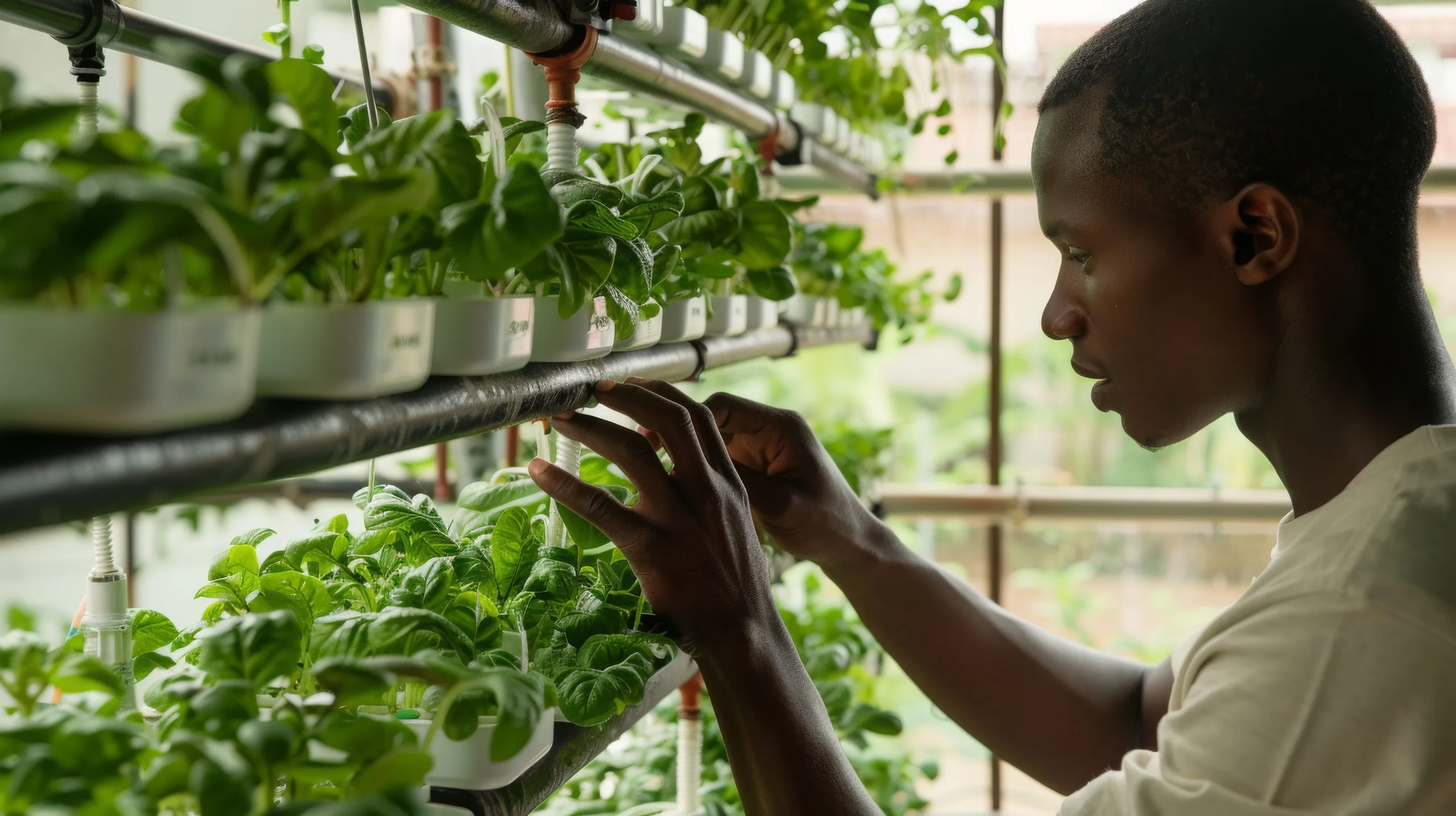
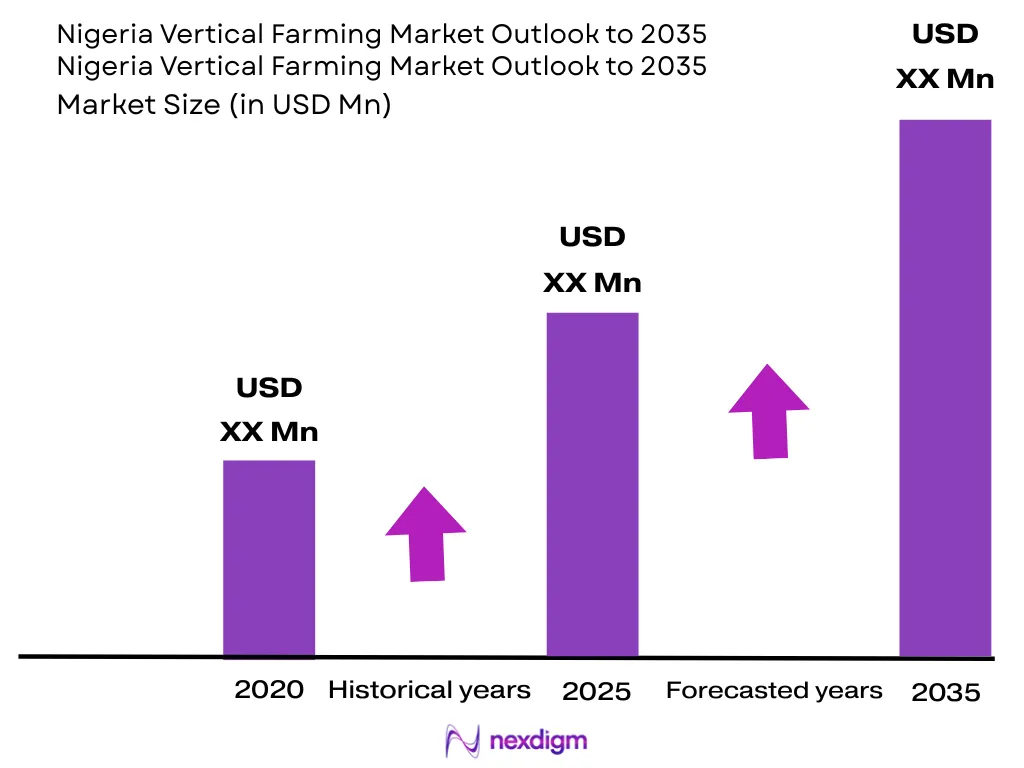
The Nigeria Vertical Farming Market is an emerging and rapidly evolving segment of the country’s agricultural technology landscape, positioned at an early but accelerating stage of development. The vertical farming market in Nigeria is relatively nascent but growing, with an estimated market size of approximately USD ~ Million in 2024. Nigeria, Africa’s most populous nation with over 220 million people and one of the continent’s largest economies, faces acute and structural food security challenges: the country imports more than USD ~ billion in agricultural and food products annually, while domestic food inflation has remained persistently elevated in recent years, intensified by naira devaluation and the removal of fuel subsidies. With rapid urbanisation concentrating population growth in cities including Lagos, Abuja, and Port Harcourt, and with post-harvest losses estimated at between 40 and 50 percent of perishable produce due to inadequate cold chain infrastructure, vertical farming and controlled environment agriculture represent a compelling solution to chronic food distribution and supply chain inefficiencies. The market is principally characterised by small and medium-scale hydroponic and container farm operators concentrated in Lagos and Abuja, serving premium hotels, restaurants, and health-conscious consumers, with growing interest from agritech investors, development finance institutions, and state governments seeking to strengthen urban food security.
Market Segmentation
By Crop Type
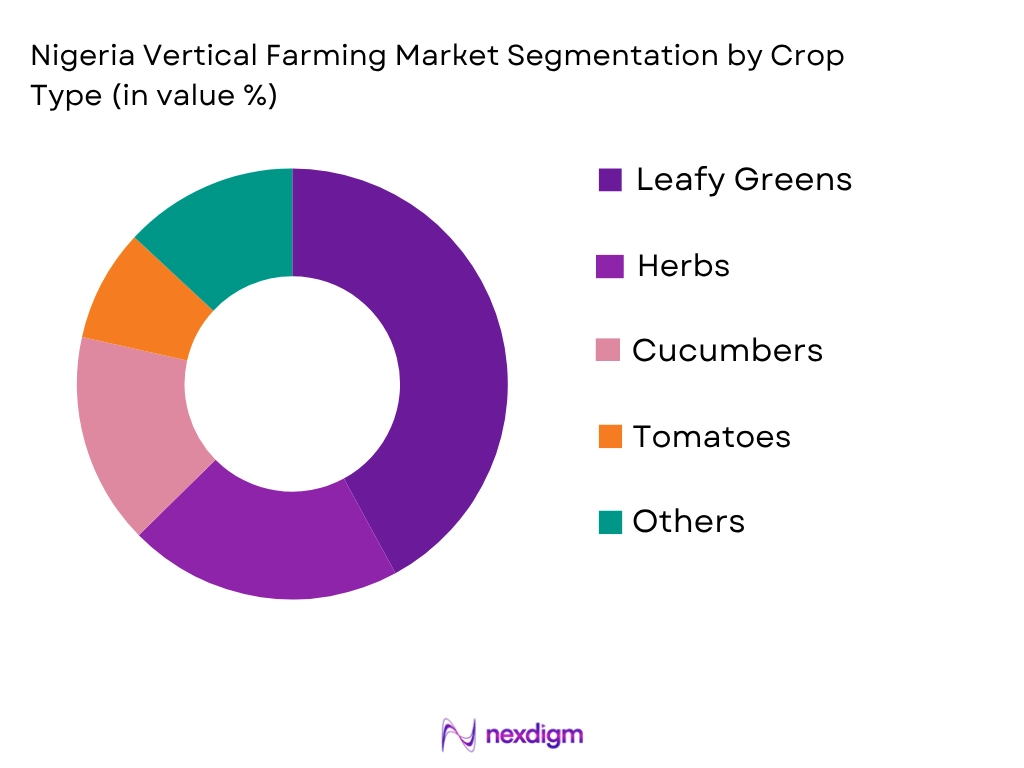
The Nigeria Vertical Farming Market is segmented by crop type into leafy greens, herbs, microgreens, tomatoes, cucumbers and peppers, fodder crops, and specialty produce. Leafy greens, including lettuce, kale, and salad mixes, constitute the dominant crop category, driven by their short cultivation cycles, compatibility with hydroponic systems, and strong demand from premium hotels, restaurants, and increasingly health-aware urban consumers in Lagos and Abuja. Unlike open-field alternatives, vertically farmed leafy greens command a significant price premium owing to their pesticide-free, freshness-guaranteed attributes, which resonate strongly with Nigeria’s growing middle class and expatriate community. Herbs represent the second-largest crop segment, benefiting from consistent year-round demand from the hospitality sector and direct-to-consumer buyers. Tomatoes and cucumbers are gaining commercial attention as operators expand beyond leafy crops, though the fruiting crop segment faces greater technical complexity and higher input requirements. A distinctive and locally relevant segment is hydroponic fodder production, where controlled cultivation of maize and barley seedlings is used as high-nutrition livestock feed — a category with significant growth potential given Nigeria’s large livestock sector and the chronic cost and quality volatility of conventional animal feed.
By Growing Mechanism
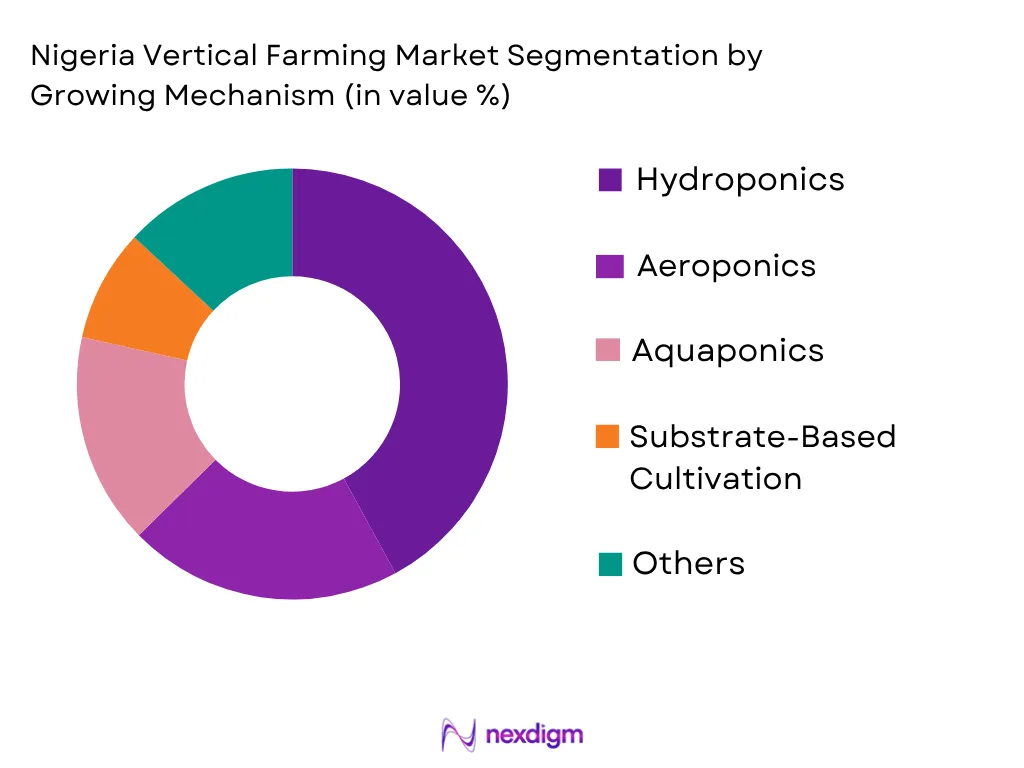
The Nigeria Vertical Farming Market is segmented by growing mechanism into hydroponics, aeroponics, aquaponics, and substrate-based cultivation. Hydroponics holds the dominant market share, primarily because of its relative operational simplicity, established supply of basic components through local and imported distributors, and proven suitability for leafy greens and herbs in the Nigerian urban context. Hydroponic systems require significantly less water than conventional open-field farming — a meaningful advantage in urban settings where water costs and access can be inconsistent — and enable production in constrained spaces such as warehouses, converted buildings, and repurposed shipping containers. Aeroponics remains a niche segment due to its higher technology cost and the limited availability of specialised technical expertise required for system maintenance in the Nigerian market. Aquaponics, which integrates fish and vegetable production in a closed-loop system, is gaining traction as a dual-output model particularly attractive to entrepreneurs seeking both protein and fresh produce revenue streams within a single facility footprint. Container-based hydroponic farms represent an important structural subset of the market, offering modular scalability and the ability to operate independently of grid electricity when integrated with solar power systems.
Competitive Landscape
The Nigeria Vertical Farming Market is fragmented and dominated by small and medium-sized pioneer operators, with no single company commanding a dominant national market position. The competitive environment is characterised by a proliferation of urban hydroponic startups, rooftop farming initiatives, and container farm entrepreneurs, primarily concentrated in Lagos and Abuja. Unlike more mature markets, competitive advantages in Nigeria are driven less by automation and scale and more by proximity to premium end-users, consistency of supply, ability to manage power and input costs, and strength of relationships with hotels, restaurants, and upscale retail channels. Several international operators, including Vertical Field from Israel and Sky Greens from Singapore, have explored or established a presence in the Nigerian market, attracted by the scale of the unmet demand opportunity. Growing interest from AgriTech investors and development finance institutions, including initiatives supported by the Central Bank of Nigeria’s Anchor Borrowers Programme and international development organisations, is beginning to catalyse a new generation of better-capitalised vertical farming ventures.
| Company | Establishment Year | Headquarters | Primary Crop Focus | Growing Technology | Automation Level | Geographic Presence | Retail Partnerships | Sustainability Focus |
| Farmforte | 2013 | ~ | ~ | ~ | ~ | ~ | ~ | ~ |
| Greenaira Hydroponics Farm | 2015 | ~ | ~ | ~ | ~ | ~ | ~ | ~ |
| Hydro Greens Farms | 2016 | ~ | ~ | ~ | ~ | ~ | ~ | ~ |
| Fresh Direct (Container Farms) | 2017 | ~ | ~ | ~ | ~ | ~ | ~ | ~ |
| BIC Farms Concept | 2014 | ~ | ~ | ~ | ~ | ~ | ~ | ~ |
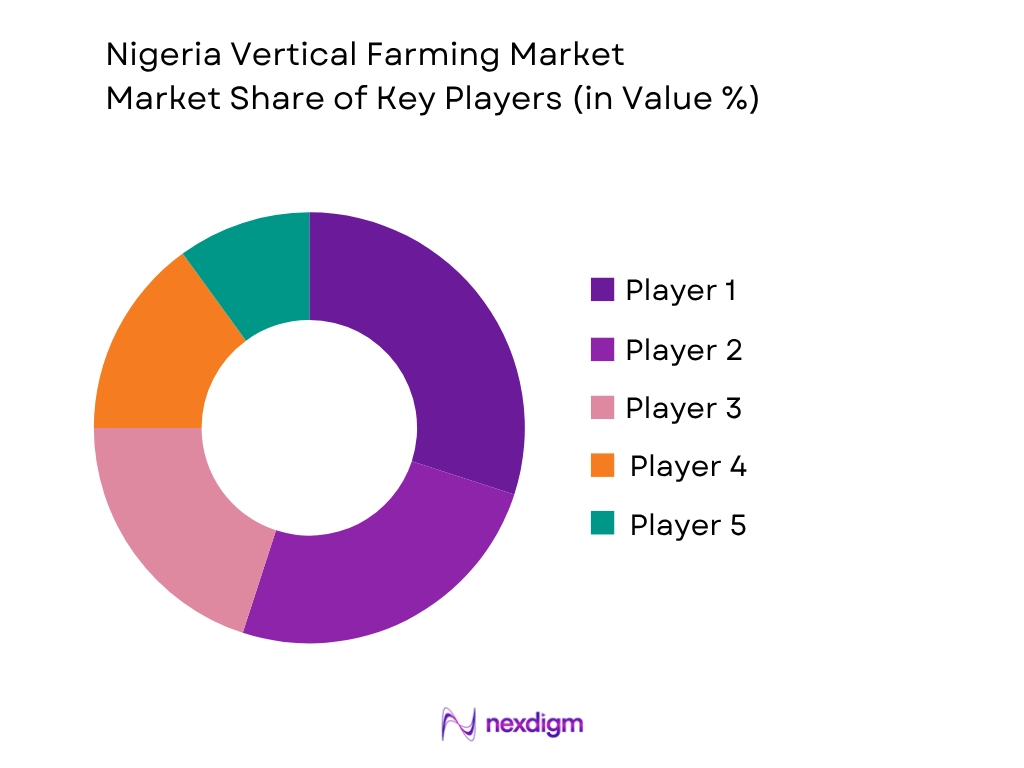
Nigeria Vertical Farming Market Analysis
Growth Drivers
Rapid Urbanisation, Food Inflation, and Import Dependency
Nigeria’s rapid urbanisation and persistent food inflation are the foundational drivers of the Vertical Farming Market. Lagos alone is home to an estimated 15 to 20 million people, and Nigeria’s urban population is projected to more than double by 2050 as the country’s total population approaches 400 million, according to United Nations projections. Rapid urban growth has outpaced the ability of traditional supply chains to deliver affordable, fresh produce reliably, resulting in chronic price volatility, high post-harvest losses estimated at 40 to 50 percent of perishable output, and heavy dependence on long-distance food transportation from Nigeria’s rural north and agricultural belt to urban centres in the south. The country imports more than USD 6 billion in food products annually, with naira devaluation since 2023 sharply increasing the cost of imported produce and creating strong incentives for locally produced substitutes. Vertical farming directly addresses these structural inefficiencies by enabling production within or adjacent to urban demand centres, dramatically reducing transport distances and post-harvest losses while delivering consistent, fresh supply to hotels, restaurants, and consumers.
Growing Urban Middle Class and Premium Hospitality Demand
Nigeria’s expanding urban middle class, large expatriate community, and fast-growing premium hospitality and foodservice sector represent a uniquely powerful demand driver for the Vertical Farming Market. Lagos and Abuja host a significant concentration of international hotels, fine-dining restaurants, quick-service restaurant chains, and corporate canteens, many of which increasingly require consistent, pesticide-free, locally sourced produce to meet guest quality expectations and food safety standards. Operators such as Greenaira Hydroponics Farm and Farmforte have established supply partnerships with hotels and upscale restaurants in Lagos, demonstrating the commercial viability of premium vertical farm produce in the Nigerian hospitality market. The growth of food delivery platforms and health-focused direct-to-consumer channels in Lagos and Abuja is creating an additional and expanding addressable market for premium, fresh, vertically farmed herbs, salad greens, and speciality vegetables. As consumer awareness of food safety, pesticide residues, and nutritional quality rises among Nigeria’s urban population, premium vertically farmed produce is well positioned to capture a growing share of fresh produce spending.
Market Challenges
Chronic Power Supply Instability and Generator Dependency
Unreliable grid electricity is the most acute structural challenge facing the Nigeria Vertical Farming Market. Nigeria’s national grid generates an average of approximately 4,000 megawatts of electricity — a figure widely regarded as insufficient for the country’s population of over 220 million — and over 92 million Nigerians lack access to grid electricity entirely. For vertical farming operators, which require continuous and reliable power for LED lighting, climate control, nutrient circulation pumps, and water management systems, grid unreliability necessitates heavy reliance on diesel or petrol generators, significantly increasing operational costs. Fuel costs for generator-dependent operations can represent a substantial portion of total operating expenditure, particularly following the removal of the government fuel subsidy in 2023, which caused fuel prices to rise sharply. This energy cost burden compresses already thin margins for small operators and represents a critical barrier to commercial scaling. Integrating solar power with battery storage is increasingly viewed as the most viable long-term solution, though the upfront capital requirements for off-grid energy systems add to already significant facility investment demands.
Foreign Exchange Volatility, Import Costs, and Limited Technical Expertise
Nigeria’s vertical farming sector faces compounding challenges from foreign exchange volatility and dependence on imported technology components. LED lighting systems, hydroponic equipment, grow media, nutrient solutions, and climate control hardware are predominantly sourced from suppliers in East Asia, Europe, and North America, making capital costs and ongoing input procurement highly sensitive to naira exchange rate movements. Following the unification of Nigeria’s exchange rate in 2023, the naira depreciated sharply, significantly increasing the naira cost of imported vertical farming equipment and inputs and eroding the margins of operators dependent on foreign-sourced components. In parallel, the Nigerian market faces a significant shortage of trained agronomists, controlled environment agriculture specialists, and automation engineers capable of designing, operating, and maintaining advanced vertical farming systems, with most technical expertise concentrated in a small number of pioneer operators. This combination of high import costs and limited domestic technical capacity constrains the pace at which the market can scale and professionalise.
Market Opportunities
Solar Integration, Container Farm Expansion, and Off-Grid Solutions
The integration of solar power and battery storage with modular container farm systems represents the most significant near-term opportunity for the Nigeria Vertical Farming Market. Container farms offer a highly practical and scalable format for the Nigerian market: their self-contained, modular design enables rapid deployment across urban and peri-urban locations without the need for substantial civil infrastructure, and their compatibility with off-grid solar and battery systems directly addresses the chronic power supply challenge that limits the viability of grid-dependent vertical farm operations. Solar-powered container farms can achieve operational energy independence at a lower levelised cost than generator-reliant alternatives following the removal of fuel subsidies, creating a compelling economic case for off-grid farm systems. Entrepreneurs such as Fresh Direct in Abuja have demonstrated the feasibility of repurposed shipping container hydroponic operations, and as solar equipment costs continue to decline, the economics of solar-integrated container farms are improving rapidly. Broader rollout of this model across Lagos, Abuja, Port Harcourt, and secondary cities presents a substantial growth pathway for the sector.
Premium Hospitality Partnerships, AgriTech Investment, and Development Finance Access
Growing interest from Nigerian and international AgriTech investors, combined with expanding access to development finance, creates meaningful opportunities for the next phase of vertical farming market growth in Nigeria. The hospitality and foodservice sector — including international hotel chains, growing quick-service restaurant networks, and food delivery platforms — represents a high-value and underserved demand base for consistent, premium-quality, locally produced herbs, salad greens, and speciality vegetables. Formalising supply partnerships with hospitality groups through long-term offtake agreements would provide vertical farm operators with the revenue predictability required to attract investment and justify facility expansion. Development finance institutions and impact investors, including those active in Nigeria’s broader AgriTech ecosystem which has attracted over USD 154 million in funding over the past decade, are increasingly recognising vertical farming’s alignment with food security, climate resilience, and urban employment objectives. University partnerships, particularly with Nigerian agricultural sciences institutions, offer an additional pathway for technology transfer, agronomic research, and workforce development that could accelerate the sector’s maturation.
Future Outlook
The Nigeria Vertical Farming Market is expected to transition from an early-stage, fragmented landscape dominated by small hydroponic operators to a more structured and commercially viable sector over the forecast period to 2035, driven by continued urbanisation, persistent food inflation, improving solar energy economics, and growing awareness of controlled environment agriculture among Nigerian investors, policymakers, and consumers. The proliferation of modular container farms integrated with off-grid solar power systems is expected to define the next phase of market expansion, enabling operators to circumvent Nigeria’s grid electricity challenges and deploy at scale across Lagos, Abuja, Port Harcourt, and emerging secondary urban markets. The premium hospitality, foodservice, and direct-to-consumer channels will remain the primary commercial anchors for vertical farm operators, while growing health consciousness and food safety concerns among Nigeria’s urban middle class are expected to widen the consumer addressable market over time. Increasing engagement from the Federal Ministry of Agriculture and Food Security, state-level urban agriculture initiatives, and development finance institutions is expected to improve the policy and financing environment for the sector. International AgriTech companies seeking first-mover positioning in Africa’s largest economy are likely to increase their presence in the Nigerian market, introducing more advanced automation technologies and business models. As naira volatility stabilises and domestic manufacturing capacity for hydroponic components gradually expands, the structural cost barriers currently limiting market growth are expected to moderate, enabling a broader and more commercially sustainable vertical farming ecosystem to emerge in Nigeria through 2035.
Major Players
- Farmforte
- Greenaira Hydroponics Farm
- Hydro Greens Farms
- Fresh Direct (Container Farm Operations)
- BIC Farms Concept
- Farm Hydroponics Nigeria
- Vertical Field Nigeria
- Sky Greens Nigeria
- Illuminatus Insectaries
- PEDA AgriTech
- GreenBasket Nigeria
- Urban Green Farms
- AgriTech by Lagos State Government Partnerships
- Babban Gona (Urban Vertical Initiatives)
- Association for Vertical Farming (AVF) Nigeria Chapter Members
Key Target Audience
- Vertical Farming Operators and Hydroponic Agriculture Entrepreneurs
- Hotels, Fine-Dining Restaurants and Premium Foodservice Buyers
- Fresh Produce Retail Chains, Supermarkets and Open Market Distributors
- Food Delivery Platforms and Direct-to-Consumer Channel Operators
- Agricultural Technology Equipment Importers and Distributors
- Impact Investors, Venture Capital and Development Finance Institutions
- Government and Regulatory Bodies (Federal Ministry of Agriculture and Food Security, Central Bank of Nigeria, National Environmental Standards and Regulations Enforcement Agency, State Ministries of Agriculture)
- Solar Energy and Off-Grid Power Solution Providers
- University Agricultural Research Institutions and AgriTech Incubators
Research Methodology
Step 1: Identification of Key Variables
The initial phase involves constructing an ecosystem map encompassing all major stakeholders within the Nigeria Vertical Farming Market. Extensive secondary research is conducted through industry publications, government databases, company reports, AgriTech investment records, and agricultural technology resources. The objective is to identify key variables influencing production capacity, crop yields, technology adoption, investment activity, and market growth across Nigeria’s key urban states and regions.
Step 2: Market Analysis and Construction
This phase focuses on collecting and analysing historical industry data related to production volume, facility expansion, crop output, technology deployment, and revenue generation. Market segmentation is developed based on crop types, cultivation technologies, and end-user demand patterns across Nigeria’s state-level urban markets. Supply-side and demand-side assessments are integrated to establish accurate market estimates.
Step 3: Hypothesis Validation and Expert Consultation
Market assumptions and forecasts are validated through structured interviews with vertical farm operators, agricultural technology providers, equipment distributors, hospitality procurement professionals, and industry specialists. These consultations provide operational insights regarding yield performance, energy cost structures, expansion strategies, and future technology adoption trends specific to the Nigerian vertical farming sector.
Step 4: Research Synthesis and Final Output
The final stage combines insights obtained from primary and secondary research sources. Data triangulation techniques are applied to validate market estimates and segment-level findings. The resulting analysis provides a comprehensive view of competitive dynamics, growth opportunities, future trends, and strategic recommendations within the Nigeria Vertical Farming Market.

- Executive Summary
- Research Methodology (Market Definitions and Assumptions, Abbreviations, Market Sizing Approach, Top-Down Analysis, Bottom-Up Analysis, Controlled Environment Agriculture Assessment, Demand-Side Assessment, Supply-Side Assessment, Primary Industry Interviews, Data Triangulation, Forecasting Framework, Limitations and Future Conclusions)

- Definition and Scope
- Market Evolution and Industry Genesis
- Timeline of Major Industry Developments
- Vertical Farming Ecosystem Structure
- Controlled Environment Agriculture Value Chain Analysis

- Growth Drivers (Rapid Urbanisation and Shrinking Arable Land Access, Rising Food Inflation and Import Dependency, Growing Middle-Class and Premium Produce Demand, Post-Harvest Loss Reduction Imperative, Increasing Awareness of Sustainable Agriculture, Youth Entrepreneurship and AgriTech Investment Activity)
- Market Challenges (Chronic Power Supply Instability and Generator Dependency, High Capital Requirements Relative to Market Maturity, Foreign Exchange Volatility and Equipment Import Costs, Limited Technical Expertise and Agronomic Workforce, Low Consumer Awareness of Controlled Environment Produce, Absence of Dedicated Vertical Farming Policy Framework)
- Market Opportunities (Solar and Off-Grid Energy Integration for Farm Power, Modular and Container Farm Expansion Across Urban Centres, Premium Hotel and Restaurant Supply Chain Partnerships, Export of Specialty and Organic Produce to Diaspora and Regional Markets, University and Research Institution Collaboration, Anchor Borrowers Programme and Development Finance Access)
- Market Trends (Container Farm Proliferation, Rooftop and Vertical Urban Farming Adoption, Aquaponics Integration for Dual-Output Food Systems, Solar-Powered Off-Grid Farm Systems, Community and Cooperative Farming Models, AgriTech Platform Integration for Farm Management)
- Government Regulations (Federal Ministry of Agriculture and Food Security Initiatives, National Agricultural Technology and Innovation Policy, Anchor Borrowers Programme (CBN), National Food Safety Management Framework, National Environmental Standards and Regulations Enforcement Agency (NESREA) Guidelines, State-Level Urban Agriculture Initiatives)
- SWOT Analysis
- PESTLE Analysis
- Porter’s Five Forces Analysis
- Stakeholder Ecosystem
- Competition Ecosystem

- By Market Value (2020-2025)
- By Production Volume (2020-2025)
- By Average Selling Price (2020-2025)

- By Crop Type (In Value %)
Leafy Greens (Lettuce, Kale, Salad Greens)
Herbs (Basil, Mint, Coriander, Parsley, Thyme)
Microgreens
Tomatoes
Cucumbers and Peppers
Fodder and Livestock Feed Crops
Specialty and High-Value Crops - By Farming Structure (In Value %)
Building-Based Vertical Farms
Shipping Container Farms
Rooftop Greenhouse Farms
Hybrid Controlled Environment Farms - By Growing Mechanism (In Value %)
Hydroponics
Aeroponics
Aquaponics
Substrate-Based Cultivation - By State and Region (In Value %)
Lagos State
Abuja (FCT)
Rivers State (Port Harcourt)
Ogun State
Other States (Oyo, Kano, Delta, Enugu) - By End User (In Value %)
Hotels and Fine-Dining Restaurants
Quick Service Restaurants and Foodservice
Fresh Produce Retail and Open Markets
Direct-to-Consumer and Online Platforms
Institutional and Corporate Buyers
Livestock Feed and Agro-Processing

- Market Share Analysis of Major Players (By Revenue, Production Volume, Cultivation Capacity, Crop Portfolio, State-Level Presence)
- Market Concentration Analysis
- Cross Comparison Parameters (Cultivation Capacity, Annual Yield Output, Number of Vertical Farming Facilities, Crop Portfolio Diversity, Energy Source Configuration, Automation & Technology Integration Level, Cost per Kg of Produce, Retail & Foodservice Distribution Reach)
- SWOT Analysis of Major Players
- Pricing Analysis (Per Kilogram Pricing, Premium vs Conventional Produce Pricing, Retail Channel Pricing, Crop-Wise Pricing Benchmarking)
- Detailed Profiles of Major Companies
Farmforte
Greenaira Hydroponics Farm
Hydro Greens Farms
Fresh Direct (Container Farm Operations)
BIC Farms Concept
Farm Hydroponics Nigeria
Vertical Field Nigeria
Sky Greens Nigeria
Illuminatus Insectaries
Association for Vertical Farming (AVF) Nigeria Chapter Members
PEDA AgriTech
GreenBasket Nigeria
Urban Green Farms
AgriTech by Lagos State Government Partnerships
Babban Gona (Urban Vertical Initiatives)

- Fresh Produce Consumption and Utilisation Assessment (Consumption Frequency, Freshness Preference, Local Produce Demand, Premium Produce Adoption)
- Procurement Behaviour Analysis (Contract Farming Preference, Supplier Switching Rate, Procurement Volume, Supply Consistency Requirements)
- Purchasing Power and Spending Analysis
- Sustainability-Driven Purchase Behaviour (Pesticide-Free Preference, Food Miles Awareness, Organic Certification Interest)
- Premium Pricing Acceptance Analysis

- By Market Value (2026-2035)
- By Production Volume (2026-2035)
- By Average Selling Price (2026-2035)


 Request a Sample
 Ask for Customization
 Get a Quote
 Enquire Now