

 Download PDF
 Download PDF
Market Overview
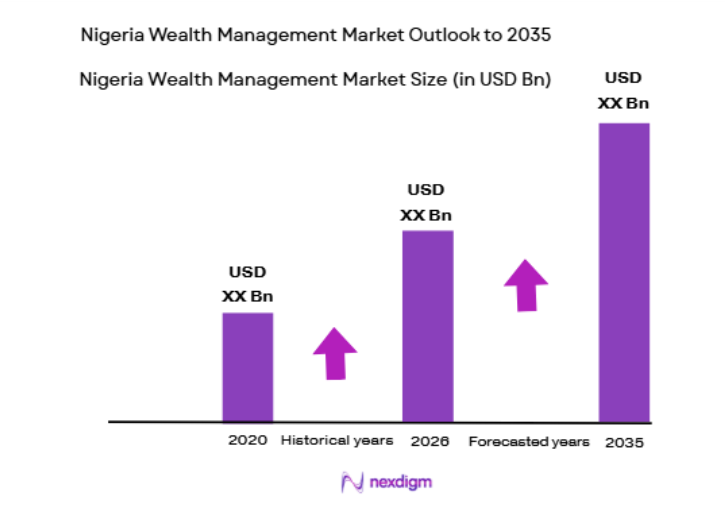
The Nigeria wealth management market is valued at approximately USD ~ billion, primarily driven by increasing high-net-worth individuals (HNWIs) and a growing middle class. The rise in disposable income, coupled with expanding investment opportunities in both traditional and digital asset classes, significantly contributes to market growth. The adoption of digital platforms and mobile banking services has also made wealth management more accessible, fueling demand for personalized financial planning and asset management solutions.
Lagos and Abuja dominate the wealth management market, owing to their positions as financial and political hubs, respectively. Lagos, as Nigeria’s economic capital, hosts a majority of the country’s financial institutions and investment firms. Abuja, with its central government presence, attracts a growing number of affluent individuals and institutions. These cities are key drivers in the wealth management sector, offering robust infrastructure, a higher concentration of wealth, and access to a wide range of financial products and services.
Market Segmentation
By Product Type
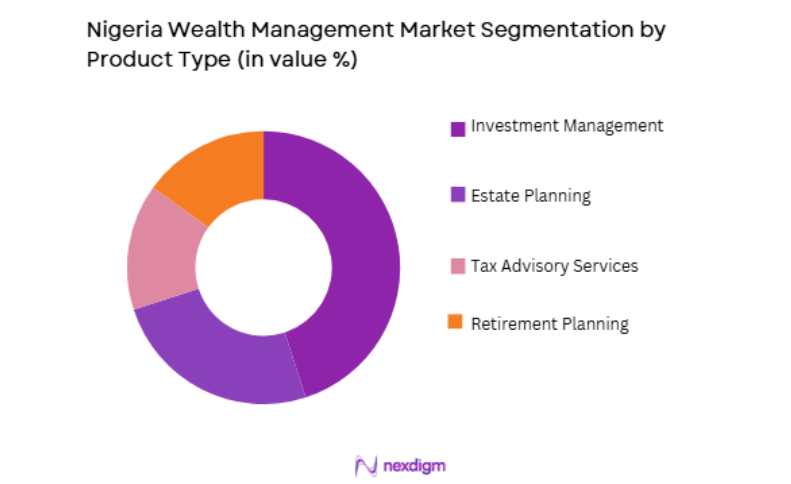
The Nigeria wealth management market is segmented by product type into investment management, estate planning, tax advisory services, and retirement planning. Investment management services dominate the market, driven by a growing interest in asset diversification among high-net-worth individuals (HNWIs). The increase in domestic and international investments, as well as the rise of fintech platforms offering automated investment options, have contributed significantly to the growth of this segment. Nigerian investors are increasingly looking for ways to maximize returns through various asset classes, including equities, real estate, and digital assets, further boosting the demand for professional investment management services.
By Distribution Channel
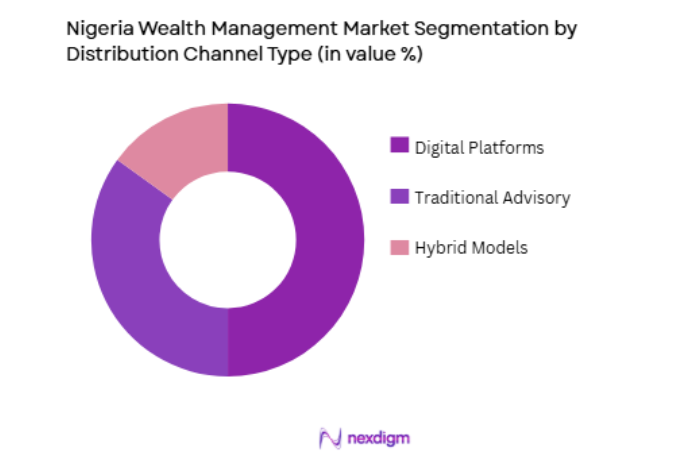
The Nigeria wealth management market is segmented by distribution channel into traditional advisory services, digital platforms, and hybrid models. Digital platforms have seen a surge in popularity due to their accessibility, affordability, and ease of use. A large number of Nigerian consumers are now utilizing online platforms and mobile apps to manage their wealth, invest in financial products, and access advisory services. This shift is further fueled by the increasing availability of high-speed internet, a younger, tech-savvy population, and the rise of robo-advisors, which offer cost-effective wealth management solutions compared to traditional models.
Competitive Landscape
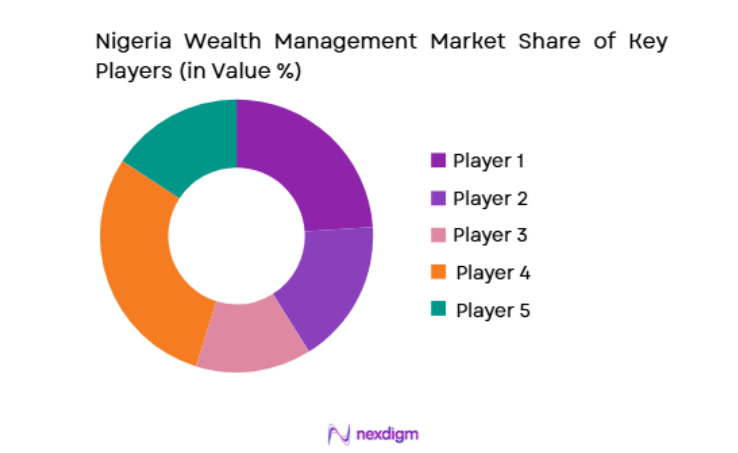
The competitive landscape of the Nigeria wealth management market is evolving with a blend of traditional banks, financial institutions, and digital-first wealth management platforms. Large banks dominate the market with established brand names, a comprehensive range of products, and significant resources for wealth management. However, the rise of digital wealth management platforms, including robo-advisors and mobile apps, is increasingly challenging traditional players by offering more accessible and lower-cost alternatives. This has led to consolidation, where digital platforms are partnering with banks to extend their reach.
| Company Name | Establishment Year | Headquarters | Technology Focus | Market Reach | Key Products | Revenue (USD Million) | Key Service Areas |
| Stanbic IBTC Wealth | 1989 | Lagos, Nigeria | ~ | ~ | ~ | ~ | ~ |
| FBNQuest Wealth Management | 1994 | Lagos, Nigeria | ~ | ~ | ~ | ~ | ~ |
| Access Bank Wealth | 1989 | Lagos, Nigeria | ~ | ~ | ~ | ~ | ~ |
| Meristem Wealth Management | 2001 | Lagos, Nigeria | ~ | ~ | ~ | ~ | ~ |
| Afrinvest Wealth | 1994 | Lagos, Nigeria | ~ | ~ | ~ | ~ | ~ |
Nigeria Wealth Management Market Analysis
Growth Drivers
Increasing Affluence and Wealth Accumulation
The growing affluence of Nigeria’s high-net-worth individuals (HNWIs) and the rising number of middle-class citizens with increasing disposable income is a significant growth driver for the wealth management market. The Nigerian economy, despite facing challenges, continues to expand, with increasing opportunities in both traditional investments (stocks, bonds) and newer digital asset classes. More Nigerians are seeking professional wealth management services to help them grow and preserve their wealth. The rise of entrepreneurial ventures and successful local businesses, along with increasing foreign investments, has resulted in a larger population of wealthy individuals looking for tailored financial services. These trends, coupled with an increasing demand for better financial literacy and long-term planning, are expected to continue driving the market’s growth.
Technological Advancements in Wealth Management Platforms
The rapid advancement in digital platforms, including mobile banking apps and robo-advisors, has revolutionized the wealth management landscape in Nigeria. Technology has made wealth management more accessible, particularly for younger, tech-savvy generations who prefer managing their investments online. These platforms provide low-cost alternatives to traditional wealth management services and allow users to make informed investment decisions quickly. Moreover, the integration of artificial intelligence and machine learning in wealth management platforms helps tailor investment portfolios based on individual preferences and risk profiles, offering a more personalized service. The increasing use of blockchain and cryptocurrency as part of investment portfolios further drives the adoption of digital wealth management solutions in Nigeria, catering to a more diverse range of asset classes.
Market Challenges
Lack of Financial Literacy and Awareness
Despite the growth in the wealth management market, a significant challenge remains in terms of financial literacy and awareness. Many Nigerians, particularly outside major cities like Lagos and Abuja, lack understanding about wealth management, investment strategies, and the benefits of financial planning. This knowledge gap creates a barrier to accessing wealth management services, particularly among lower-income groups who may not perceive the value of long-term wealth accumulation strategies. Educating the population about the importance of wealth management, investment diversification, and risk mitigation is critical to unlocking further growth in the market. Financial institutions and wealth management firms need to invest in awareness campaigns and educational resources to address this challenge.
Regulatory and Compliance Barriers
The regulatory landscape in Nigeria poses another challenge to the wealth management market. While regulatory frameworks are improving, there are still gaps in the enforcement of policies related to wealth management and the financial services sector. Investors and wealth managers face challenges in terms of inconsistent regulations, which can create uncertainty and discourage investment. Additionally, the lack of clear regulations surrounding emerging asset classes such as cryptocurrencies further complicates the situation for wealth managers. Strengthening regulatory frameworks, improving policy enforcement, and offering clearer guidelines will be essential to foster growth and stability in the wealth management market.
Opportunities
Growth of Digital Wealth Management
The Nigerian wealth management market presents significant opportunities in digital wealth management services. With the increasing adoption of smartphones and internet access, more consumers are seeking online platforms to manage their investments. Digital wealth management tools, such as robo-advisors and mobile apps, are becoming more sophisticated, offering tailored investment portfolios, financial planning tools, and tax-saving strategies at a fraction of the cost of traditional advisory services. This market offers immense growth potential, especially as younger generations become more financially literate and demand accessible, low-cost wealth management solutions. As the fintech sector continues to thrive in Nigeria, wealth management firms can leverage these technologies to reach a larger customer base and offer a broader range of investment opportunities.
Investment in Alternative Assets
The growing interest in alternative assets such as real estate, private equity, and digital currencies presents a significant opportunity for wealth management firms in Nigeria. Wealthy individuals are increasingly seeking to diversify their portfolios with alternative investments to mitigate risk and increase returns. Real estate, which remains a prominent investment avenue in Nigeria, continues to attract high-net-worth investors. Additionally, the rising popularity of cryptocurrencies and blockchain technology opens new investment opportunities. Wealth management firms that can offer expertise in these alternative assets will be well-positioned to capture a larger share of the market by catering to the evolving preferences of Nigerian investors.
Future Outlook
The Nigeria wealth management market is expected to experience continued growth over the next five years, driven by an increasing number of affluent individuals, the rise of digital wealth management platforms, and a growing interest in diversified investment products. Technological advancements and the rising penetration of smartphones and internet services will make wealth management more accessible, particularly to younger generations. Regulatory improvements and greater financial literacy will also play a key role in enabling sustainable market growth. As investors seek more personalized and cost-effective financial planning solutions, the wealth management sector will adapt to meet these demands with innovative products and services.
Major Players
- Stanbic IBTC Wealth
- FBNQuest Wealth Management
- Access Bank Wealth
- Meristem Wealth Management
- Afrinvest Wealth
- Renaissance Capital
- Union Bank Wealth Management
- Zenith Bank Private Banking
- Citi Private Bank
- GTBank Wealth Management
- UBA Private Banking
- Standard Chartered Private Banking
- Standard Bank Wealth
- Barclays Wealth
- Bank of Africa Wealth
Key Target Audience
- Investments and venture capitalist firms
- Government and regulatory bodies
- Financial institutions
- Asset management firms
- High-net-worth individuals
- Private equity firms
- Real estate developers
- Corporate clients
Research Methodology
Step 1: Identification of Key Variables
Key variables, including consumer behavior, investment preferences, and technological advancements in wealth management, are identified through market research and expert consultations.
Step 2: Market Analysis and Construction
The wealth management market is segmented based on product types, distribution channels, and consumer demographics. Both quantitative and qualitative research methods are used to analyze trends, consumer preferences, and growth drivers.
Step 3: Hypothesis Validation and Expert Consultation
Market hypotheses are validated through consultations with industry professionals, including wealth managers, financial advisors, and regulatory bodies. This ensures the accuracy of the market assumptions and provides a comprehensive understanding of the market dynamics.
Step 4: Research Synthesis and Final Output
Data collected from primary and secondary sources is synthesized to produce actionable insights and detailed market forecasts. The final output includes key market trends, growth drivers, challenges, and opportunities within the Nigeria wealth management market.

- Executive Summary
- Research Methodology (Definitions, Scope, Industry Assumptions, Market Sizing Approach, Primary & Secondary Research Framework, Data Collection & Verification Protocol, Analytic Models & Forecast Methodology, Limitations & Research Validity Checks)

- Market Definition and Scope
- Value Chain & Stakeholder Ecosystem
- Regulatory / Certification Landscape
- Sector Dynamics Affecting Demand

- Growth Drivers
Rise in Disposable Income
Growing Interest in Investment Products
Government Support for Wealth Management Initiatives - Market Challenges
Limited Financial Literacy
Regulatory Hurdles
Trust Issues in Digital Wealth Platforms - Market Opportunities
Expansion of Digital Wealth Platforms
Increasing Demand for ESG Investments
Partnerships Between Traditional Banks and Fintechs - Trends
Increased Adoption of Robo-Advisors
Shift Toward Sustainable and Ethical Investments - Government Regulations
- SWOT Analysis
- Porter’s Five Forces

- By Market Value, 2020-2025
- By Installed Units, 2020-2025
- By Average System Price, 2020-2025
- By System Complexity Tier, 2020-2025

- By System Type (In Value%)
Investment Advisory Services
Portfolio Management Services
Private Banking Services
Tax Planning & Advisory
Retirement Planning - By Platform Type (In Value%)
Online Platforms
Mobile Applications
Wealth Management Firms
Private Banks
Robo-advisory Platforms - By Fitment Type (In Value%)
Personalized Wealth Management
Managed Wealth Solutions
Do-it-yourself Platforms
Hybrid Solutions - By End User Segment (In Value%)
High-net-worth Individuals
Ultra-high-net-worth Individuals
Small and Medium Enterprises

- Market Share Analysis
- Cross Comparison Parameters (Service Type, Platform Type, Investment Size, Customer Type, Risk Appetite, Investment Horizon, Fees and Charges, Portfolio Diversification, Asset Allocation Strategy, Regulatory Compliance)
- SWOT Analysis of Key Competitors
- Pricing & Procurement Analysis
- Key Players
Stanbic IBTC Wealth Management
FBNQuest Wealth Management
Access Bank Private Banking
Guaranty Trust Bank Private Wealth
United Capital
ARM Wealth Management
First Bank of Nigeria
Zenith Bank Private Banking
Citi Private Bank
Rand Merchant Bank
Investec
RBC Wealth Management
Standard Chartered Private Bank
Citi Private Wealth
Union Bank Wealth Management

- Growing Affluence Among Nigerian Citizens
- Increased Focus on Retirement Planning
- Rise in Digital Investments
- Demand for Diversified Investment Products

- Forecast Market Value, 2026-2035
- Forecast Installed Units, 2026-2035
- Price Forecast by System Tier, 2026-2035
- Future Demand by Platform, 2026-2035


 Request a Sample
 Ask for Customization
 Get a Quote
 Enquire Now