
 Download PDF
Market Overview
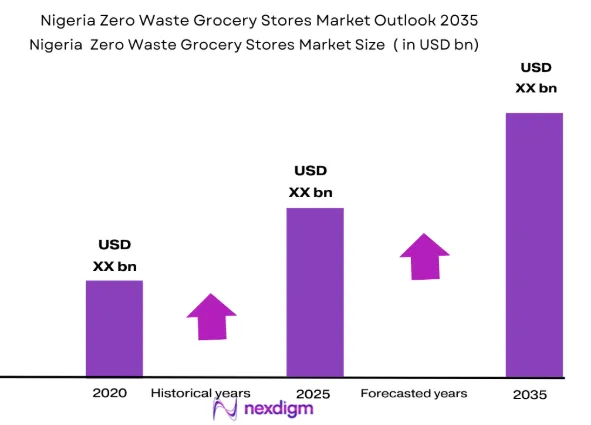
The Nigeria Zero Waste Grocery Stores Market is valued at USD ~ billion in 2024, with the forecasted CAGR for the 2024–2030 period assessed at 9.0%, supported by the wider global zero waste grocery store market benchmark of USD 264.11 billion in 2024 and its projected growth toward 2030. The market is driven by bulk grocery formats, reusable-container shopping, refill-based household products, informal loose-food retailing, and retailer-led plastic reduction initiatives. Nigeria’s packaged food retail sales are estimated at USD 4.7 billion, creating a growing base for low-waste grocery adoption.
Lagos, Abuja, Port Harcourt, Ibadan, Kano, Enugu, Benin City, and Kaduna are the dominant city markets for Nigeria Zero Waste Grocery Stores Market. Their dominance is linked to higher urban income, stronger supermarket penetration, large middle-class populations, expanding e-commerce adoption, and growing sustainability awareness. Nigeria wastes around 38 million tonnes of food annually, while urban cities generate about 27.3 million tonnes of municipal solid waste, including around 1.1 million tonnes of plastics, encouraging demand for refillable, reusable, and package-light grocery formats.
Market Segmentation
By Product Type
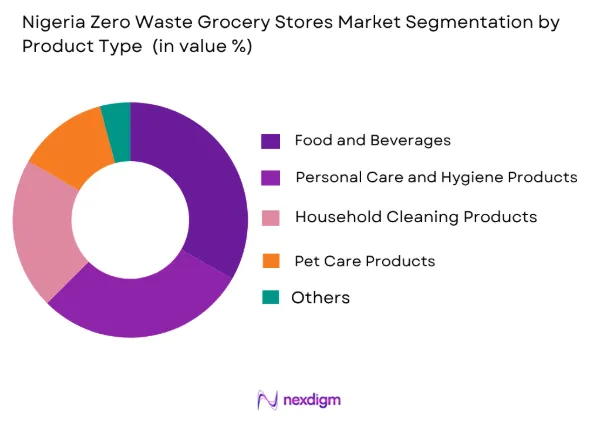
The Nigeria Zero Waste Grocery Stores Market is segmented by product type into pantry supplies and dry goods, fresh produce, personal care and hygiene products, cleaning supplies, and others. Recently, pantry supplies and dry goods have held the dominant market share under product type segmentation because they are highly compatible with bulk bins, open-market retailing, reusable containers, weighing systems, and bring-your-own-container shopping. Products such as rice, beans, garri, maize, millet, sorghum, flour, pasta, lentils, groundnuts, spices, dried fish, tea, coffee, cereals, and baking ingredients are widely consumed across Nigerian households and are suitable for package-light retail formats. This segment also benefits from Nigeria’s traditional grocery culture, where many staples are already purchased loose or by weight through open markets and local shops. Retailers prefer pantry supplies and dry goods because they support flexible quantity buying, longer shelf life, and lower cold-chain complexity compared with fresh or chilled categories.
By Distribution Channel
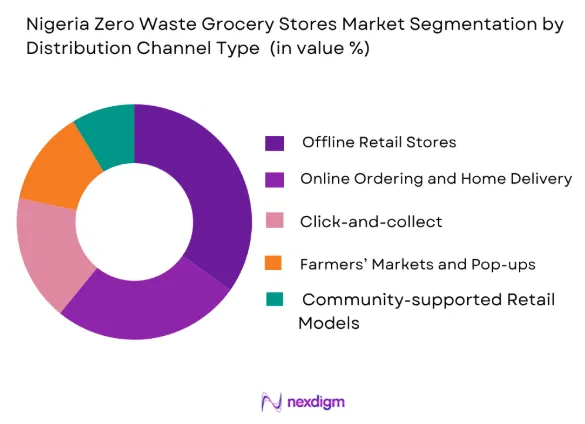
The Nigeria Zero Waste Grocery Stores Market is segmented by distribution channel into offline stores and online platforms. Recently, offline stores have had the dominant market share under distribution channel segmentation because grocery shopping in Nigeria remains highly dependent on open markets, local shops, physical product inspection, quantity negotiation, and consumer trust. Open-air markets, supermarkets, independent grocery stores, farmers’ markets, organic outlets, sustainable product shops, and neighborhood retailers form the core offline ecosystem. Consumers prefer offline stores for staples, fresh produce, cleaning products, and household items because they can inspect quality, negotiate price, and buy quantities suited to household budgets. Online platforms are growing through grocery delivery, food marketplaces, and sustainable product e-commerce, but offline channels continue to dominate because Nigeria’s zero-waste grocery opportunity is closely linked to traditional loose-product retailing and neighborhood commerce.
Competitive Landscape
The Nigeria Zero Waste Grocery Stores Market is fragmented, with a mix of supermarket chains, online grocery platforms, open-market retailers, organic stores, sustainable lifestyle brands, and refill-adjacent product sellers. Competition is shaped by price accessibility, product freshness, local sourcing, reusable packaging, informal bulk-retail systems, digital grocery fulfilment, and consumer education. Shoprite Nigeria, FoodCo, Market Square, Jumia Food / Jumia Grocery, and Supermart.ng are influential players, while local organic stores, sustainable retailers, and open-market networks support low-waste grocery behaviour across Lagos, Abuja, Port Harcourt, Ibadan, and other urban centers.
| Company | Establishment Year | Headquarters | Business Model | Core Product Focus | Store / Channel Presence | Sustainability Positioning | Packaging Model | Market Role |
| Shoprite Nigeria | 2005 | Lagos, Nigeria | ~ | ~ | ~ | ~ | ~ | ~ |
| FoodCo | 1982 | Ibadan, Nigeria | ~ | ~ | ~ | ~ | ~ | ~ |
| Market Square | 2015 | Port Harcourt, Nigeria | ~ | ~ | ~ | ~ | ~ | ~ |
| Jumia Food / Jumia Grocery | 2012 | Lagos, Nigeria | ~ | ~ | ~ | ~ | ~ | ~ |
| Supermart.ng | 2014 | Lagos, Nigeria | ~ | ~ | ~ | ~ | ~ | ~ |
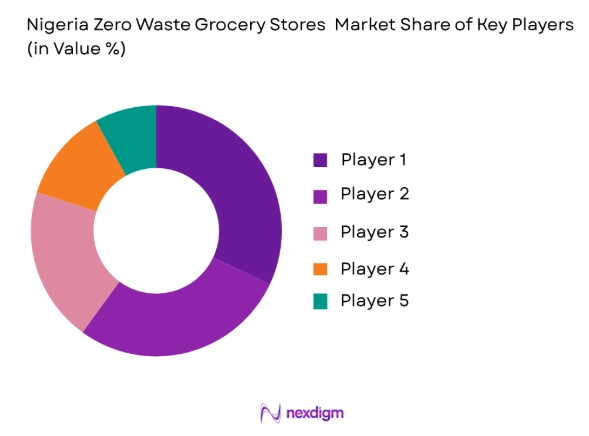
Nigeria Zero Waste Grocery Stores Market Analysis
Growth Drivers
Support from recycling, waste reduction, and circular economy initiatives
Nigeria’s zero waste grocery stores market can benefit from growing attention to recycling, waste reduction, and circular economy practices, especially in major urban centers. Cities such as Lagos and Abuja face visible waste management pressures, including plastic pollution, landfill congestion, and drainage blockages linked to unmanaged waste. These challenges are increasing public discussion around responsible consumption and packaging reduction. Zero waste grocery stores can position themselves as practical solutions by offering refillable household products, bulk pantry staples, reusable bags, and low-packaging personal care items. Community clean-up programs, recycling start-ups, environmental NGOs, and sustainability campaigns can also help build awareness. As waste reduction becomes more relevant to urban quality of life, low-waste grocery formats may gain stronger consumer interest.
Growing preference for ethical and locally sourced products
Growing interest in ethical and locally sourced products supports the development of zero waste grocery stores in Nigeria. Consumers in urban areas are becoming more attentive to product origin, freshness, food safety, and support for local producers. Zero waste stores can use this trend by sourcing grains, beans, spices, nuts, dried foods, oils, natural soaps, and household products from Nigerian farmers, cooperatives, and small sustainable brands. Local sourcing can reduce dependence on imported packaged goods while improving affordability and supply chain resilience. It also allows retailers to promote regional products and build trust through transparent sourcing. By combining reduced packaging with local economic support, zero waste grocery stores can create a stronger value proposition for conscious Nigerian consumers.
Market Challenges
Competition from informal retail, open markets, and supermarkets
Competition from informal retail, open markets, and supermarkets is a major challenge for zero waste grocery stores in Nigeria. Open markets already sell many staples such as rice, beans, garri, grains, spices, and produce in loose quantities, often at lower prices. Informal retailers also offer flexibility, negotiation, and neighborhood accessibility that formal zero waste stores may struggle to match. At the same time, supermarkets appeal to middle- and higher-income consumers through packaged convenience, hygiene perception, and broad product availability. Zero waste grocery stores must therefore differentiate beyond simply selling loose products. They need to offer cleaner refill systems, trusted sourcing, better product presentation, reusable packaging options, and a clear sustainability message without losing affordability.
Food safety, hygiene, and compliance requirements
Food safety, hygiene, and compliance requirements create operational challenges for zero waste grocery stores in Nigeria. Selling unpackaged or refillable food products requires careful storage, pest control, clean dispensers, accurate labeling, and protection from humidity, dust, and contamination. These standards are especially important because consumers may compare zero waste stores with supermarkets, where packaged products are often perceived as safer and more reliable. Retailers also need to manage traceability, expiry dates, allergen information, and supplier quality across bulk goods. Maintaining these controls can increase labor, infrastructure, and training costs. To build trust, zero waste grocery stores must show visible cleanliness, transparent sourcing, sealed refill systems, and consistent product quality across both food and non-food categories.
Opportunities
Partnerships with local farmers, cooperatives, and sustainable brands
Partnerships with local farmers, cooperatives, and sustainable brands offer strong opportunities for Nigeria’s zero waste grocery stores. Nigeria has a large agricultural base, with opportunities to source grains, legumes, spices, nuts, oils, fruits, vegetables, and natural ingredients directly from producers. Working with cooperatives can improve supply consistency, reduce intermediary costs, and support rural livelihoods. Zero waste retailers can also collaborate with local sustainable brands producing natural soaps, cleaning products, skincare items, and reusable household goods. These partnerships can help create affordable, locally relevant assortments while reducing unnecessary packaging. They also allow stores to communicate product origin and social impact, which can strengthen customer trust and differentiate them from both open markets and conventional supermarkets.
Expansion into Lagos, Abuja, Port Harcourt, Ibadan, and emerging urban markets
Expansion into Lagos, Abuja, Port Harcourt, Ibadan, and emerging urban markets presents a practical opportunity for Nigeria’s zero waste grocery stores. Lagos and Abuja offer large urban populations, higher-income consumer segments, sustainability-focused communities, and stronger exposure to modern retail formats. Port Harcourt and Ibadan can support smaller neighborhood refill stores, hybrid grocery formats, or partnerships with existing retailers. Growth may be strongest in areas where consumers already purchase organic, natural, or premium household products. To succeed, zero waste stores should adapt formats to local shopping behavior, including flexible quantities, affordable staples, mobile refill options, and digital ordering. A phased city-by-city approach can help build awareness while managing operating costs and supply chain complexity.
Future Outlook
Over the next decade, the Nigeria Zero Waste Grocery Stores Market is expected to expand steadily as consumers, retailers, and regulators respond to plastic waste, food waste, and demand for affordable low-waste grocery formats. Growth will be concentrated in Lagos, Abuja, Port Harcourt, Ibadan, Kano, and other large urban centers before spreading through supermarkets, neighborhood retailers, organic outlets, online grocery platforms, and open-market modernization. The market outlook to 2035 will be shaped by refill infrastructure, reusable packaging, informal retail digitization, food-waste reduction initiatives, and plastic-waste regulations.
Major Players
- Shoprite Nigeria
- FoodCo
- Market Square
- Jumia Food / Jumia Grocery
- Supermart.ng
- Spar Nigeria
- Prince Ebeano Supermarket
- Justrite Superstore
- Addide Supermarket
- Hubmart Stores
- Farmcrowdy Foods
- Thrive Agric
- Organic & Natural Store Lagos
- Konga Grocery
- MyFoodAngels
Key Target Audience
- Zero waste grocery store operators
- Organic and natural grocery retailers
- Supermarket chains and food retailers
- Sustainable packaging manufacturers
- Refill station and bulk dispensing equipment providers
- Investments and venture capitalist firms
- Government and regulatory bodies
- Food co-operatives and regional grocery associations
Research Methodology
Step 1: Identification of Key Variables
The initial phase involves constructing an ecosystem map covering zero-waste grocery stores, supermarkets, open-market retailers, organic grocery outlets, online grocery platforms, refill-system providers, packaging manufacturers, food co-operatives, and regulatory stakeholders. This step is underpinned by desk research and secondary databases to identify the key variables influencing the Nigeria Zero Waste Grocery Stores Market, such as plastic-waste regulation, loose-product retailing, refill adoption, grocery retail structure, urban income, and consumer sustainability behaviour.
Step 2: Market Analysis and Construction
In this phase, historical data related to Nigeria’s grocery retail sector, packaged food sales, open-market trade, supermarket growth, refill models, sustainable packaging, and food-waste reduction activity is compiled and assessed. The analysis reviews market penetration, channel performance, product-category relevance, and revenue generation across offline and online formats. The objective is to construct a market view that reflects both emerging zero-waste grocery concepts and traditional loose-grocery practices that already reduce packaging use.
Step 3: Hypothesis Validation and Expert Consultation
Market hypotheses are developed around product dominance, city-level adoption, distribution-channel strength, price sensitivity, and consumer purchasing behaviour. These hypotheses are validated through interviews with grocery retailers, supermarket operators, organic store owners, packaging specialists, refill-system providers, and sustainable food stakeholders. The consultation process helps test assumptions related to affordability, refill logistics, hygiene perception, supplier consistency, consumer education, and competitive differentiation.
Step 4: Research Synthesis and Final Output
The final phase integrates secondary findings, market modelling, stakeholder inputs, and competitive benchmarking into a structured analysis of the Nigeria Zero Waste Grocery Stores Market. Insights from supermarket chains, sustainable packaging providers, open-market participants, online grocery platforms, and organic food retailers are used to verify segmentation, sales-channel dynamics, future outlook, and major-player positioning. This step ensures that the final output reflects practical market conditions, growth opportunities, and investment relevance.

- Executive Summary
- Research Methodology (Market Definitions and Assumptions, Abbreviations, Market Sizing Approach, Consolidated Research Approach, Understanding Market Potential Through In-Depth Industry Interviews, Primary Research Approach, Limitations and Future Conclusions)

- Definition and Scope
- Market Dynamics Overview
- Market Genesis
- Major Players and Market Timeline
- Business Cycle and Trends
- Supply Chain and Value Chain Analysis
- Role of Bulk, Refill, Reuse, and Package-free Retail Models

- Growth Drivers
Increasing Consumer Awareness About Plastic Waste and Sustainability
Rising Demand for Package-free and Low-waste Shopping Options
Growth in Organic, Natural, and Sustainable Food Consumption
Expansion of Urban Eco-conscious Consumer Groups
Increasing Adoption of Reusable and Refillable Packaging
Support from Recycling, Waste Reduction, and Circular Economy Initiatives
Growing Preference for Ethical and Locally Sourced Products - Market Challenges
High Operating Costs and Limited Scalability
Consumer Convenience Barriers Compared with Conventional Grocery Retail
Limited Supplier Ecosystem for Package-free Products
Food Safety, Hygiene, and Compliance Requirements
Price Sensitivity Among Consumers
Difficulty in Maintaining Product Freshness and Inventory Turnover
Competition from Informal Retail, Open Markets, and Supermarkets - Opportunities
Expansion of Refill Stations in Mainstream Retail
Growth of Online Zero Waste Grocery Platforms
Partnerships with Local Farmers, Cooperatives, and Sustainable Brands
Adoption of Deposit-return and Circular Packaging Models
Rising Demand for Private-label Sustainable Products
Expansion into Lagos, Abuja, Port Harcourt, Ibadan, and Emerging Urban Markets
Use of Technology for Inventory, Traceability, and Waste Reduction - Key Trends
Shift Toward Bulk Food and Refill Shopping
Increasing Use of Reusable Containers and Deposit-based Packaging
Integration of Zero Waste Sections in Conventional Grocery Stores
Growth of Community-owned and Specialty Sustainable Retail Models
Rising Demand for Local, Organic, and Ethically Sourced Products
Expansion of Plastic-free Personal Care and Cleaning Products
Increasing Focus on Carbon Footprint Reduction and Circular Economy Practices - Government Regulations and Policy Landscape
NAFDAC Food Safety and Retail Hygiene Regulations
Federal Competition and Consumer Protection Regulations
National Environmental Standards and Regulations Enforcement Agency Guidelines
Plastic Waste Reduction and Waste Management Policies
Extended Producer Responsibility and Packaging Waste Regulations
State-level Waste Management and Plastic Reduction Policies
Packaging, Labeling, Recycling, and Circular Economy Policies - SWOT Analysis
- Porter’s Five Forces Analysis

- By Value, 2020–2025
- By Store Count, 2020–2025
- By Transaction Volume, 2020–2025
- By Average Basket Size, 2020–2025
- By Average Revenue per Store, 2020–2025

- By Store Format (In Value %)
Standalone Zero Waste Grocery Stores
Bulk and Refill Stores
Organic and Sustainable Grocery Stores with Zero Waste Sections
Cooperative and Community-based Stores
Mobile and Pop-up Zero Waste Stores
Others - By Product Category (In Value %)
Food and Beverages
Personal Care and Hygiene Products
Household Cleaning Products
Pet Care Products
Others - By Food Product Type (In Value %)
Grains, Pulses, and Cereals
Nuts, Seeds, and Dried Fruits
Spices, Herbs, and Condiments
Fresh Produce
Dairy and Plant-based Alternatives
Snacks and Package-free Foods
Beverages
Others - By Non-food Product Type (In Value %)
Shampoo, Soaps, and Personal Care Refills
Laundry and Cleaning Refills
Reusable Bags, Containers, and Jars
Compostable and Eco-friendly Household Products
Others - By Business Model (In Value %)
Bring-your-own-container Model
Deposit-return Packaging Model
Subscription and Refill Delivery Model
In-store Bulk Dispensing Model
Hybrid Sustainable Grocery Model - By Consumer Type (In Value %)
Environmentally Conscious Consumers
Urban Millennials and Gen Z Consumers
Health-conscious Consumers
Families and Households
Small Businesses and Cafés
Others - By Distribution Channel (In Value %)
Offline Retail Stores
Online Ordering and Home Delivery
Click-and-collect
Farmers’ Markets and Pop-ups
Community-supported Retail Models - By Region (In Value %)
Lagos
Abuja / FCT
South West
South East
South South
North Central
North West
North East
Rest of Nigeria

- Market Share of Major Players by Value
- Market Share of Major Players by Store Count
- Market Share by Product Category
- Market Share by Region
- Competitive Positioning of Zero Waste Grocery Stores and Sustainable Retailers
- Cross Comparison Parameters (Company Overview, Business Model, Product Categories, Store Presence, Online Presence, Geographic Reach, Sourcing Strategy, Sustainability Practices, Packaging and Refill Model, Pricing Strategy, Customer Base, Revenue Streams, Recent Developments, Strengths and Weaknesses, Partnerships and Supplier Network, Unique Value Offering)
- SWOT Analysis of Major Players
- Pricing Analysis
- Pricing Analysis by Product Category
- Pricing Comparison with Conventional Grocery Stores
- Pricing Analysis of Bulk and Refill Products
- Average Basket Size by Store Format
- Margin Analysis by Product Category
- Detailed Profiles of Major Companies
Shoprite Nigeria
Spar Nigeria
Jumia Food / Jumia Fresh
PricePally
Farmcrowdy Foods
Thrive Agric
FreshDirect Nigeria
FoodCo Nigeria
Hubmart Stores
Market Square
Justrite Superstore
Addide Supermarket
Ebeano Supermarket
So Fresh
Wellahealth Marketplace
ReelFruit
Lagos Farmers Market
Local and Regional Zero Waste Grocery Stores

- Market Demand and Utilization
- Purchasing Power and Budget Allocations
- Consumer Preferences and Buying Behavior
- Awareness of Sustainability and Waste Reduction
- Needs, Desires, and Pain Point Analysis
- Decision-making Process
- Frequency of Purchase and Basket Size Analysis

- By Value, 2026–2035
- By Store Count, 2026–2035
- By Transaction Volume, 2026–2035
- By Average Basket Size, 2026–2035
- By Average Revenue per Store, 2026–2035


 Request a Sample
 Ask for Customization
 Get a Quote
 Enquire Now