
 Download PDF
 Download PDF
Market Overview
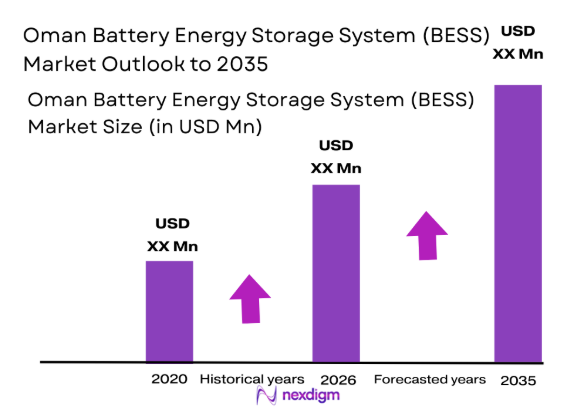
The Oman Battery Energy Storage System (BESS) market has seen substantial growth, driven by the increasing demand for renewable energy integration, grid stability, and the rising need for sustainable energy storage solutions. The market size, based on a recent historical assessment, stands at approximately USD ~ million, with a strong upward trajectory due to government support for clean energy initiatives and technological advancements in battery efficiency. These factors contribute to the growing installation of BESS solutions across various sectors, including residential, commercial, and industrial applications.
Countries like Oman and neighboring regions in the Middle East are witnessing rapid adoption of energy storage systems due to their strategic focus on renewable energy and energy security. Oman, with its abundant solar and wind resources, has taken the lead in deploying battery energy storage systems, aiming to reduce reliance on traditional energy sources. Additionally, government initiatives and investment in infrastructure have further solidified Oman’s position as a dominant player in the BESS market in the region.
Market Segmentation
By Product Type
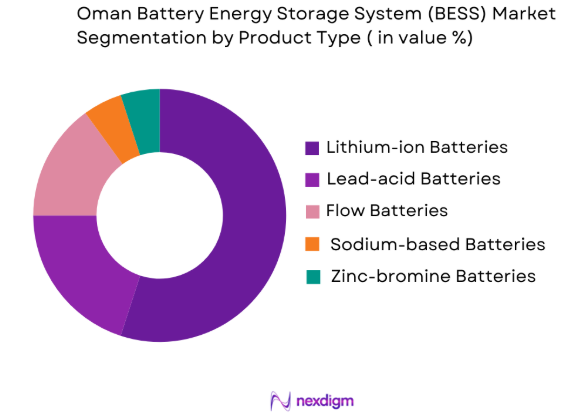
The Oman Battery Energy Storage System market is segmented by product type into lithium-ion batteries, lead-acid batteries, flow batteries, sodium-based batteries, and zinc-bromine batteries. Recently, lithium-ion batteries have dominated the market share due to factors such as higher energy density, longer life cycles, and cost efficiency. Their widespread use in both residential and commercial applications, supported by innovations in battery management systems and increased availability of raw materials, has enabled them to capture a significant portion of the market.
By Platform Type
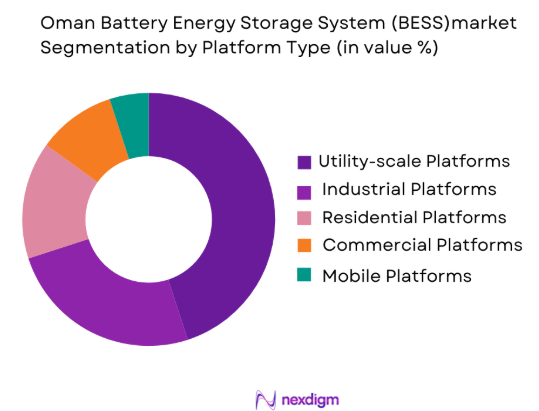
The market is segmented by platform type into residential platforms, commercial platforms, industrial platforms, utility-scale platforms, and mobile platforms. Utility-scale platforms have recently gained dominance in the market due to the rising demand for grid stabilization and renewable energy storage. These platforms are typically used for large-scale storage, helping manage the intermittent nature of renewable energy and ensuring a steady power supply during peak demand times.
Competitive Landscape
The competitive landscape in Oman’s Battery Energy Storage System market is characterized by increasing investments from international players alongside local companies focused on energy security. As the market sees consolidation, players with innovative technologies and partnerships with utility companies are gaining influence. Companies are focusing on reducing battery costs, improving system efficiencies, and offering integrated storage solutions for renewable energy projects, making competition intense but innovative.
| Company Name | Establishment Year | Headquarters | Technology Focus | Market Reach | Key Products | Revenue (USD Million) | Additional Parameter |
| Tesla | 2003 | USA | ~ | ~ | ~ | ~ | ~ |
| LG Chem | 1947 | South Korea | ~ | ~ | ~ | ~ | ~ |
| Siemens | 1847 | Germany | ~ | ~ | ~ | ~ | ~ |
| ABB | 1988 | Switzerland | ~ | ~ | ~ | ~ | ~ |
| Fluence | 2018 | USA | ~ | ~ | ~ | ~ | ~ |
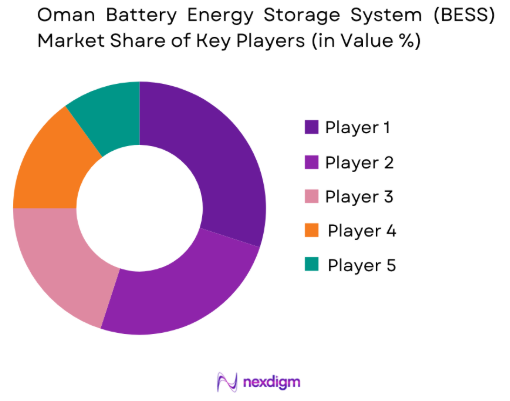
Oman Battery Energy Storage System (BESS) Market Analysis
Growth Drivers
Government Support for Renewable Energy Integration
Oman has introduced various policies to diversify its energy mix and promote renewable energy adoption. Government initiatives, including incentives for renewable energy and regulatory frameworks supporting energy storage solutions, are major drivers of the BESS market. By prioritizing solar and wind energy, Oman aims to become a leader in sustainable energy, with energy storage systems essential for balancing intermittent energy supply and demand. The growing focus on renewable energy generation further amplifies the need for efficient energy storage, accelerating the expansion of the BESS market. These initiatives help create a favorable environment for energy storage technologies to thrive in the country.
Technological Advancements in Battery Efficiency
Recent advancements in battery technology, particularly in lithium-ion batteries, have led to longer lifespans, faster charging times, and improved storage capacities. These developments have made energy storage systems more efficient and cost-effective. Innovations such as solid-state batteries and integration with smart grids have also played a key role in reducing deployment costs while enhancing overall system performance. These technological breakthroughs provide a strong case for adopting energy storage solutions in residential, commercial, and industrial settings. As a result, the continued evolution of battery technology is driving the growth of the energy storage market, making it a more viable and attractive option across various sectors.
Market Challenges
High Initial Investment Costs
The BESS market in Oman faces a major challenge due to the high upfront cost of battery energy storage systems. Despite the long-term cost savings these systems provide, the initial financial investment remains a significant barrier for many businesses and residential consumers. The costs associated with battery production, installation, and maintenance are particularly high for advanced systems with larger storage capacities. This substantial initial expense discourages many potential investors, slowing the adoption of energy storage solutions. While government incentives can help alleviate some of these costs, the economic hurdle remains considerable, limiting the widespread implementation of energy storage systems in the region.
Technological and Integration Barriers
Integrating energy storage systems with existing grid infrastructure remains a challenge, despite advancements in battery technology. Ensuring compatibility between storage solutions and grid management systems requires specialized expertise and can be complex. The fast-paced technological innovation further adds the risk of early-stage investments becoming outdated as new technologies emerge. To address these issues, continuous investment in research and development is essential. A more standardized approach to energy storage solutions across the region would streamline integration, making it easier to incorporate these systems into the grid. This would not only enhance the feasibility of energy storage deployment but also improve the long-term sustainability and efficiency of energy systems.
Opportunities
Expansion of Grid Energy Storage Solutions
As Oman grows its renewable energy capacity, battery energy storage systems (BESS) offer a key solution to improve grid management. Large-scale storage can help stabilize fluctuations in renewable energy generation, ensuring consistent power distribution. With increasing solar and wind energy production, BESS can store excess energy during peak production and discharge it when demand exceeds supply. This integration between energy storage and renewable sources enhances grid reliability while supporting Oman’s shift toward cleaner, sustainable energy. BESS plays a crucial role in stabilizing the grid and strengthening Oman’s energy infrastructure, making it a vital component of the country’s renewable energy transition.
Partnerships with EV Charging Stations
As the adoption of electric vehicles (EVs) increases, the demand for reliable EV charging infrastructure also grows. Battery energy storage systems (BESS) are vital in supporting these charging stations, especially in regions with limited grid access or during peak demand times. BESS can store excess energy when demand is low and release it during peak hours, ensuring a consistent power supply. By collaborating with EV charging providers, BESS companies can help enhance the efficiency of charging stations, ensuring that infrastructure can scale to meet the growing needs of the electric vehicle market in Oman. This partnership plays a crucial role in driving the widespread adoption of EVs.
Future Outlook
The future outlook for Oman’s Battery Energy Storage System market is promising, with continued growth anticipated over the next five years. Advances in battery technology, coupled with favorable regulatory support, are expected to drive market adoption. The expansion of renewable energy projects, especially solar and wind, will significantly increase demand for energy storage solutions to stabilize the grid. Additionally, the integration of energy storage with electric vehicle charging infrastructure and smart grids presents new avenues for market growth, positioning Oman as a key player in the energy transition.
Major Players
- Tesla
- LG Chem
- Siemens
- ABB
- Fluence
- Schneider Electric
- S&C Electric
- BYD Company
- General Electric
- VARTA AG
- Kokam
- E3/DC
- VionxEnergy
- Saft
- Enphase Energy
Key Target Audience
- Investments and venture capitalist firms
- Government and regulatory bodies
- Renewable energy providers
- Grid operators
- Commercial/industrial enterprises
- Residential consumers
- Electric vehicle infrastructure providers
- Battery manufacturers
Research Methodology
Step 1: Identification of Key Variables
Identify the key variables impacting the Battery Energy Storage System market, such as technology adoption, regulatory factors, and consumer demand patterns.
Step 2: Market Analysis and Construction
Gather market data through secondary research, focusing on historical and current market trends, technological advancements, and economic factors affecting the BESS market.
Step 3: Hypothesis Validation and Expert Consultation
Validate hypotheses with experts in the energy storage field, incorporating insights from industry stakeholders, technology providers, and government bodies.
Step 4: Research Synthesis and Final Output
Synthesize the collected data into a comprehensive market report, ensuring accuracy and actionable insights for stakeholders.

- Executive Summary
- Research Methodology (Definitions, Scope, Industry Assumptions, Market Sizing Approach, Primary & Secondary Research Framework, Data Collection & Verification Protocol, Analytic Models & Forecast Methodology, Limitations & Research Validity Checks)

- Market Definition and Scope
- Value Chain & Stakeholder Ecosystem
- Regulatory / Certification Landscape
- Sector Dynamics Affecting Demand
- Strategic Initiatives & Infrastructure Growth

- Growth Drivers
Increased Demand for Renewable Energy Integration
Government Incentives for Green Energy Solutions
Technological Advancements in Battery Efficiency - Market Challenges
High Initial Investment Costs
Technological and Integration Barriers
Regulatory Hurdles in Energy Storage Adoption - Market Opportunities
Expansion of Grid Energy Storage Solutions
Partnerships with EV Charging Stations
Advancements in Battery Recycling Technologies - Trends
Rise in Energy Storage for Peak Shaving
Growth in Smart Grid Technologies
Increased Use of AI in Battery Management Systems - Government Regulations
- SWOT Analysis of Key Competitors
- Porter’s Five Forces

- By Market Value, 2020-2025
- By Installed Units, 2020-2025
- By Average System Price, 2020-2025
- By System Complexity Tier, 2020-2025

- By System Type (In Value%)
Lithium-ion Batteries
Lead-acid Batteries
Flow Batteries
Sodium-based Batteries
Zinc-bromine Batteries - By Platform Type (In Value%)
Residential Platforms
Commercial Platforms
Industrial Platforms
Utility-Scale Platforms
Mobile Platforms - By Fitment Type (In Value%)
On-site Energy Storage
Off-site Energy Storage
Grid-integrated Storage
Standalone Storage
Hybrid Storage Solutions - By End User Segment (In Value%)
Renewable Energy Providers
Grid Operators
Commercial/Industrial Enterprises
Residential Consumers
Electric Vehicle Infrastructure - By Procurement Channel (In Value%)
Direct Procurement
Government Tenders
Private Sector Procurement
Online Bidding Platforms
Third-party Distributors

- Market Share Analysis
- Cross Comparison Parameters (System Type, Platform Type, Procurement Channel, End User Segment, Fitment Type, Battery Chemistry, Energy Storage Capacity, Deployment Location, Charging/Discharge Efficiency, Cost per kWh)
- SWOT Analysis of Key Competitors
- Pricing & Procurement Analysis
- Key Players
Tesla
LG Chem
Siemens
Schneider Electric
ABB
Fluence
Sungrow Power
S&C Electric
Dynapower
Kokam
E3/DC
VARTA AG
AES Energy Storage
Honeywell
BYD Company

- Shift Toward Renewable Integration in Industries
- Government-led Initiatives for Green Energy Transition
- Growing Demand for Energy Security in Residential Areas
- Electric Vehicle Adoption Boosting Battery Demand

- Forecast Market Value, 2026-2035
- Forecast Installed Units, 2026-2035
- Price Forecast by System Tier, 2026-2035
- Future Demand by Platform, 2026-2035


 Request a Sample
 Ask for Customization
 Get a Quote
 Enquire Now