

 Download PDF
 Download PDF
Market Overview
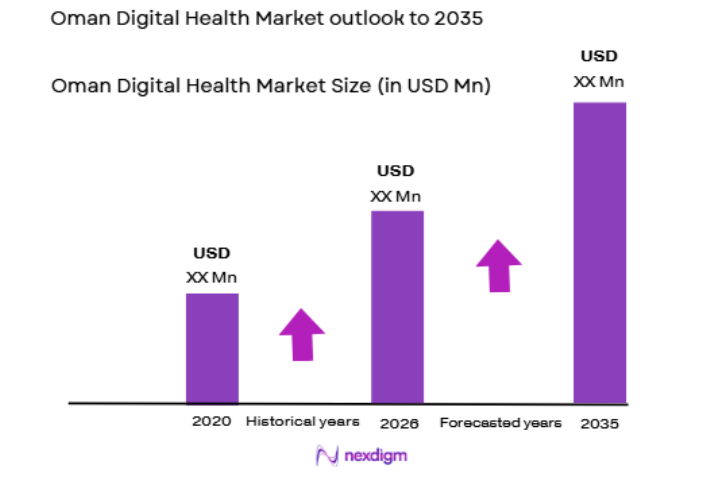
Based on a recent historical assessment, the Oman Digital Health Market is valued at approximately USD ~ million. The market’s growth is primarily driven by the increasing adoption of digital health solutions, including telemedicine, electronic health records (EHR), mHealth applications, and remote patient monitoring technologies. The growing healthcare demands, improvements in digital infrastructure, and government-backed initiatives to promote healthcare innovation contribute significantly to the expansion of the digital health ecosystem in Oman.
Muscat, the capital city, is the dominant hub for the adoption and expansion of digital health technologies in Oman due to its concentration of healthcare facilities, medical centers, and research institutions. The city is the focal point for both public and private sector investments in advanced digital health systems, supported by initiatives from the Ministry of Health. Muscat’s strong digital infrastructure and its role as a central healthcare provider make it a key player in the country’s digital health market, further accelerating the implementation of telehealth services and digital patient management systems.
Market Segmentation
By Product Type
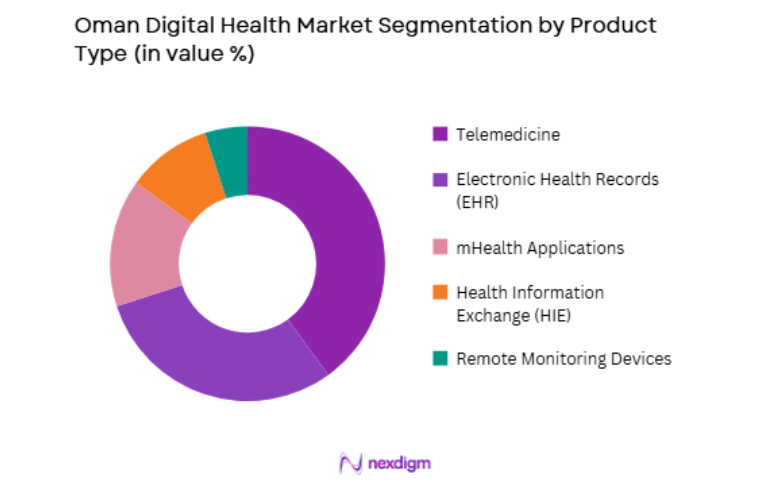
Oman Digital Health market is segmented by product type into Telemedicine, Electronic Health Records (EHR), mHealth Applications, Health Information Exchange (HIE), and Remote Monitoring Devices. Recently, Telemedicine has a dominant market share due to factors such as growing demand for remote consultations, increased acceptance of virtual healthcare, and the ongoing development of digital healthcare infrastructure. The COVID-19 pandemic accelerated the adoption of telemedicine in Oman, as both patients and healthcare providers sought ways to ensure continuity of care without in-person visits. Telemedicine services offer an efficient and convenient way for patients, especially in rural areas, to access healthcare services, reducing waiting times and improving healthcare access. The government’s focus on integrating telemedicine platforms within the national healthcare framework has also contributed to this sub-segment’s growth. As the demand for remote care and healthcare accessibility continues to increase, telemedicine is expected to maintain a dominant position in the digital health market in Oman.
By End User
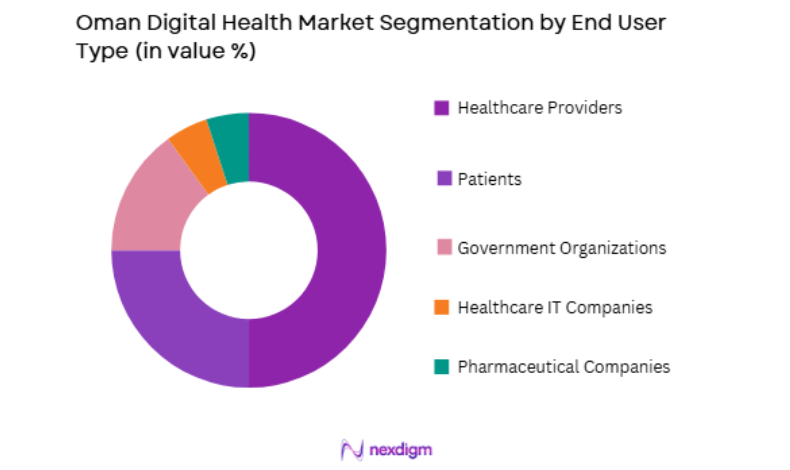
Oman Digital Health market is segmented by end user into Healthcare Providers, Patients, Government Organizations, Healthcare IT Companies, and Pharmaceutical Companies. Recently, Healthcare Providers have a dominant market share due to the increasing integration of digital health solutions into hospitals, clinics, and healthcare facilities. Healthcare providers are the key users of telemedicine platforms, EHR systems, and remote patient monitoring devices, enabling them to enhance patient care, streamline workflows, and improve operational efficiency. The adoption of digital health solutions by healthcare providers has been supported by government initiatives that encourage the integration of technology in healthcare services. This segment also benefits from rising demand for specialized medical services, such as teleconsultations and telemedicine-assisted treatments, which contribute to the broader adoption of digital health technologies. As healthcare providers increasingly rely on digital health to enhance service delivery, this segment continues to dominate the market.
Competitive Landscape
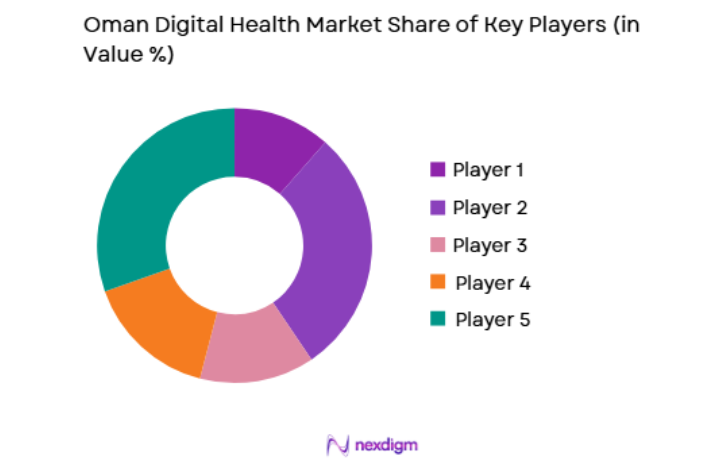
The Oman Digital Health Market is competitive, with a mix of local and international players offering telemedicine platforms, EHR systems, and digital health solutions. The market is witnessing rapid adoption of digital health technologies driven by government initiatives and increasing demand from healthcare providers and patients. Key players are focusing on innovation, strategic partnerships, and the development of scalable digital health platforms to capture a larger market share. Public-private collaborations and government support play a crucial role in shaping the competitive landscape, as they provide the necessary infrastructure, funding, and regulatory support to encourage the growth of digital health services.
| Company Name | Establishment Year | Headquarters | Technology Focus | Market Reach | Key Products | Revenue | Market-Specific Parameter |
| Oman Telemedicine | 2015 | Muscat | ~ | ~ | ~ | ~ | ~ |
| Cerner Corporation | 1979 | Kansas City, USA | ~ | ~ | ~ | ~ | ~ |
| Philips Healthcare | 1891 | Amsterdam, NL | ~ | ~ | ~ | ~ | ~ |
| Medtronic | 1949 | Minneapolis, USA | ~ | ~ | ~ | ~ | ~ |
| Allscripts Healthcare | 1986 | Chicago, USA | ~ | ~ | ~ | ~ | ~ |
Oman Digital Health Market Analysis
Growth Drivers
Government Support for Digital Health Integration
Government Support for Digital Health Integration plays a pivotal role in the growth of the Oman Digital Health Market. The government of Oman has made significant investments in healthcare modernization, with a focus on integrating digital health solutions across public and private healthcare sectors. These initiatives are aimed at improving healthcare accessibility, quality of care, and patient outcomes. The government has introduced policies and frameworks to facilitate the adoption of telemedicine, electronic health records, and other digital health technologies within healthcare institutions. Additionally, the government provides funding and regulatory support to encourage healthcare providers to adopt and implement digital solutions that enhance healthcare delivery. As a result, public hospitals, clinics, and diagnostic centers are increasingly adopting digital health systems, further driving the market’s growth. The government’s commitment to expanding healthcare infrastructure and technology integration ensures the continuous development of the digital health market in Oman.
Rising Demand for Healthcare Services and Digital Health Solutions
Rising Demand for Healthcare Services and Digital Health Solutions is a major growth driver for the Oman Digital Health Market. As the population continues to grow and the prevalence of chronic diseases increases, the demand for healthcare services in Oman is expanding. Patients are increasingly seeking more accessible, efficient, and affordable healthcare options, particularly in rural areas. Digital health solutions, such as telemedicine, remote patient monitoring, and digital health apps, address these needs by enabling patients to access medical consultations, monitor their health remotely, and receive treatment without the need for frequent hospital visits. The convenience of digital health technologies, combined with the ability to provide high-quality care remotely, is contributing to their growing adoption. Additionally, the younger, tech-savvy population in Oman is more likely to embrace digital health tools, further accelerating demand. As healthcare providers continue to integrate digital solutions into their services, the market for digital health in Oman will continue to expand.
Market Challenges
High Implementation Costs for Healthcare Providers
High Implementation Costs for Healthcare Providers present a significant challenge to the growth of the Oman Digital Health Market. While the benefits of digital health solutions are clear, the costs associated with implementing these technologies can be prohibitively high for some healthcare providers, particularly in the private sector or smaller healthcare institutions. The costs include purchasing advanced equipment, setting up infrastructure, integrating digital health platforms into existing systems, and training healthcare staff. These high initial investments can deter some healthcare providers from adopting digital health technologies, slowing down the overall market growth. Moreover, ongoing maintenance and operational costs add to the financial burden of healthcare facilities. To address this challenge, partnerships between the public and private sectors and government support through subsidies and funding programs are critical in enabling more widespread adoption of digital health solutions.
Data Privacy and Security Concerns
Data Privacy and Security Concerns represent a major challenge for the Oman Digital Health Market as digital health solutions require the collection, storage, and transmission of sensitive patient data. Ensuring the security and privacy of this data is a critical issue for both healthcare providers and patients. Inadequate cybersecurity measures and the risk of data breaches can undermine trust in digital health solutions, preventing patients from fully adopting telemedicine, remote monitoring, and other digital health services. Healthcare providers must invest in robust data protection systems to safeguard patient information and comply with regulations surrounding data privacy. Additionally, international and local data protection laws, such as those governing the use of personal health data, must be adhered to, which can be challenging for healthcare institutions to manage. As the digital health market continues to grow, addressing these concerns through the adoption of advanced cybersecurity technologies and regulatory frameworks is crucial to ensuring the sector’s long-term success.
Opportunities
Expansion of Telemedicine in Rural Areas
Expansion of Telemedicine in Rural Areas presents a significant opportunity for the Oman Digital Health Market. Oman’s rural and remote areas face challenges in accessing healthcare services due to the scarcity of medical facilities and healthcare professionals. Telemedicine provides an efficient solution by enabling patients in these areas to consult with healthcare providers remotely, thus overcoming the barriers of distance and limited healthcare infrastructure. The government’s initiatives to improve digital connectivity in rural areas further support the expansion of telemedicine services. By extending telemedicine services to remote regions, Oman can improve healthcare access, reduce patient wait times, and offer a more equitable distribution of healthcare resources. This opportunity is particularly valuable in a country like Oman, where the geographical spread of its population necessitates innovative solutions to ensure that all citizens have access to high-quality healthcare services.
Integration of Artificial Intelligence (AI) in Healthcare Services
Integration of Artificial Intelligence (AI) in Healthcare Services represents a key opportunity in the Oman Digital Health Market. AI has the potential to revolutionize healthcare delivery by improving diagnostic accuracy, enabling personalized treatment plans, and optimizing hospital operations. AI-powered tools, such as predictive analytics, machine learning algorithms, and AI-based imaging technologies, are already being used to assist healthcare providers in diagnosing diseases more accurately and efficiently. As the healthcare sector in Oman continues to modernize, the adoption of AI technologies is expected to grow, providing new opportunities for healthcare providers to enhance their services. Additionally, AI can be integrated into telemedicine platforms to improve decision-making during remote consultations, allowing healthcare providers to offer more precise diagnoses and treatment recommendations. The integration of AI into Oman’s digital health ecosystem will further boost the country’s position as a leader in healthcare innovation in the region.
Future Outlook
The Oman Digital Health Market is expected to experience continued growth over the next five years, driven by advancements in healthcare technologies, government support, and increasing demand for digital health solutions. The ongoing adoption of telemedicine, the integration of AI, and the expansion of remote patient monitoring services will contribute to the market’s development. Additionally, regulatory support and the focus on improving healthcare access, particularly in rural areas, will continue to drive the growth of the digital health sector in Oman.
Major Players
- Oman Telemedicine
- Cerner Corporation
- Philips Healthcare
- Medtronic
- Allscripts Healthcare
- Siemens Healthineers
- GE Healthcare
- IBM Watson Health
- Oracle Health
- Teladoc Health
- VitelMed
- Samsung Medison
- Zain Telemedicine
- Aster DM Healthcare
- Health Hub
Key Target Audience
- Government and regulatory bodies
- Healthcare IT providers
- Digital health technology developers
- Healthcare system integrators
- Medical device manufacturers
- Pharmaceutical companies
- Investments and venture capitalist firms
- Insurance companies
Research Methodology
Step 1: Identification of Key Variables
Key market variables, such as digital health adoption rates, healthcare infrastructure, government initiatives, and technological advancements, were identified to assess the market’s drivers and challenges.
Step 2: Market Analysis and Construction
Market analysis was conducted by examining healthcare facility needs, patient demographics, government healthcare policies, and technological adoption rates across Oman.
Step 3: Hypothesis Validation and Expert Consultation
The hypothesis regarding growth drivers, challenges, and opportunities was validated through consultations with healthcare professionals, technology providers, and industry experts.
Step 4: Research Synthesis and Final Output
Data from primary and secondary sources was synthesized to provide a comprehensive report, combining expert insights, market data, and government initiatives to assess the Oman Digital Health Market.

- Executive Summary
- Research Methodology (Definitions, Scope, Industry Assumptions, Market Sizing Approach, Primary & Secondary Research Framework, Data Collection & Verification Protocol, Analytic Models & Forecast Methodology, Limitations & Research Validity Checks)

- Market Definition and Scope
- Value Chain & Stakeholder Ecosystem
- Regulatory / Certification Landscape
- Sector Dynamics Affecting Demand

- Growth Drivers
Government digital health initiatives under Oman Vision 2040
Increased adoption of telemedicine during and after the pandemic
Growing demand for efficient healthcare data management and accessibility - Market Challenges
High initial investment costs for digital health infrastructure
Data security and privacy concerns surrounding patient data
Limited adoption in rural areas due to internet and infrastructure constraints - Market Opportunities
Expansion of telemedicine services for remote areas
Collaborations between public and private sectors to enhance digital health accessibility
Increased focus on patient-centered healthcare solutions - Trends
Growth of AI and machine learning technologies in healthcare diagnostics
Rise in wearable health technology and patient monitoring systems - Government Regulations
Regulations on health data privacy and patient consent
Omani government healthcare IT policies
Telemedicine licensing and accreditation standards - SWOT Analysis
- Porter’s Five Forces

- By Market Value, 2020-2025
- By Installed Units, 2020-2025
- By Average System Price, 2020-2025
- By System Complexity Tier, 2020-2025

- By System Type (In Value%)
Telemedicine
Health Information Exchange (HIE)
EHR/EMR Solutions
Mobile Health Apps
Remote Monitoring - By Platform Type (In Value%)
Web-based Platforms
Cloud-based Platforms
On-premise Platforms
Hybrid Platforms
Mobile-based Platforms - By Fitment Type (In Value%)
New Digital Health Infrastructure
Upgrades to Existing Digital Health Infrastructure
Cloud Integration and Migration
Customization of Existing Platforms - By End User Segment (In Value%)
Hospitals and Healthcare Providers
Diagnostic Laboratories
Public Health Agencies

- Market Share Analysis
- Cross Comparison Parameters (Regulatory Compliance, Data Security, Telemedicine Adoption, Healthcare Infrastructure Investment, Cloud Integration, Mobile Health App Adoption, Digital Health Accessibility, AI in Healthcare, Patient Engagement, Government Initiatives)
- SWOT Analysis of Key Competitors
- Pricing & Procurement Analysis
- Key Players
Ministry of Health, Oman
Al Hayat Healthcare
Medcare Hospitals
Oman Health Group
Aster DM Healthcare
NMC Health
MedeAnalytics
Cerner Corporation
GE Healthcare
Philips Healthcare
Siemens Healthineers
Allscripts Healthcare Solutions
Oracle Health Sciences
InTouch Health
Intel Healthcare

- Increased investment in digital infrastructure by private healthcare providers
- Growth of telemedicine in rural and underserved regions
- Public health agencies’ push for more efficient data management
- The growing role of pharmacies and retail health in digital health

- Forecast Market Value, 2026-2035
- Forecast Installed Units, 2026-2035
- Price Forecast by System Tier, 2026-2035
- Future Demand by Platform, 2026-2035


 Request a Sample
 Ask for Customization
 Get a Quote
 Enquire Now