
 Download PDF
 Download PDF
Market Overview
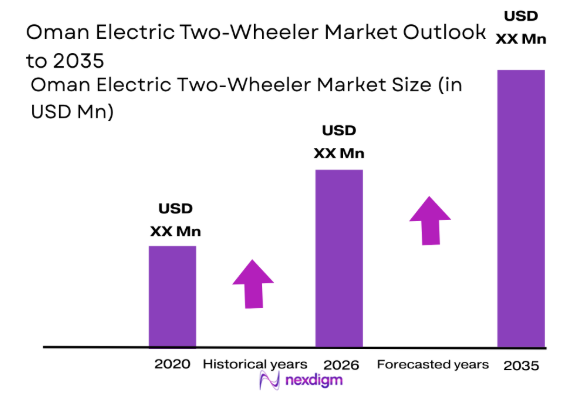
The Oman Electric Two-Wheeler Market is experiencing a significant increase in demand, driven by growing environmental concerns and the government’s push for sustainable transportation solutions. The market size for electric buses in Oman was valued at USD ~ million, with a steady increase due to rising fuel prices and urbanization trends. This market’s growth is further supported by government incentives for electric vehicle adoption and the integration of advanced battery technologies, enhancing the efficiency and range of these two-wheelers.
Oman’s market for electric two-wheelers is dominated by cities like Muscat, where the government is focusing on green initiatives to reduce carbon emissions. The country’s strategic positioning, along with supportive regulatory frameworks, has enabled rapid adoption of electric vehicles. The expansion of charging infrastructure in urban centers also contributes to the market’s dominance. Moreover, international players are attracted by Oman’s favorable regulatory environment and potential for growth in sustainable transportation solutions.
Market Segmentation
By Product Type
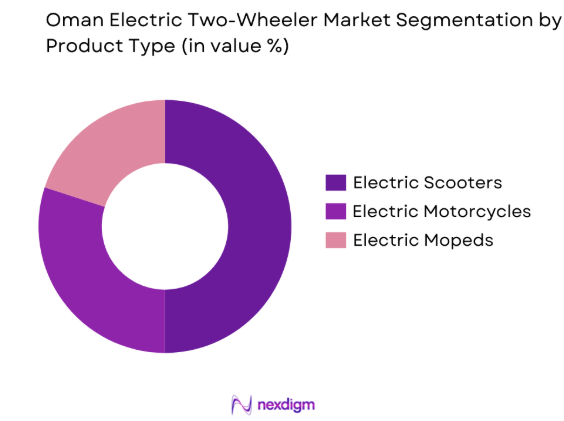
The Oman Electric Two-Wheeler market is segmented by product type into electric scooters, electric motorcycles, and electric mopeds. Recently, electric scooters have gained a dominant market share due to factors such as cost-effectiveness, easier maneuverability, and growing demand for last-mile connectivity. This product type’s dominance can also be attributed to the increasing popularity among young professionals and students who prioritize convenience and low running costs. Electric scooters are well suited for Oman’s urban landscape, making them the preferred choice among consumers.
By Platform Type
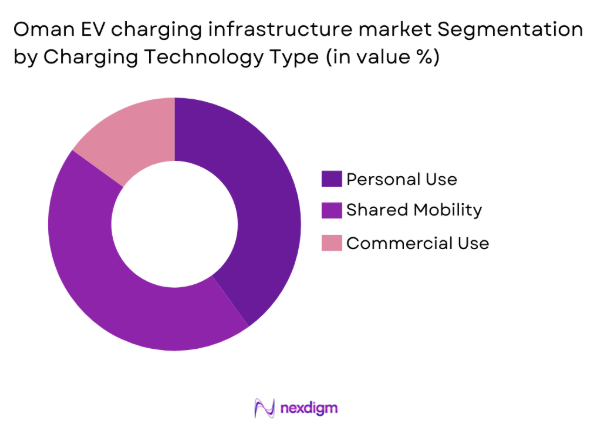
The Oman Electric Two-Wheeler market is segmented by platform type into personal use, shared mobility, and commercial use. Shared mobility has recently gained significant traction due to its cost-effectiveness and the increasing demand for urban mobility solutions. The presence of bike-sharing and e-scooter rental services in Muscat has contributed to the rise of this segment. Shared mobility platforms cater to a wide range of consumers, especially in congested urban areas, making it a dominant platform in the market.
Competitive Landscape
The competitive landscape in Oman’s electric two-wheeler market is characterized by the entry of global and regional players. Consolidation is evident, with major electric vehicle manufacturers and local distributors increasingly focusing on partnerships and expansions in the region. The competitive intensity is high, as players strive to leverage technological advancements and regulatory support to gain a competitive edge.
| Company Name | Establishment Year | Headquarters | Technology Focus | Market Reach | Key Products | Revenue (USD) | Market-Specific Parameter |
| Tesla | 2003 | Palo Alto, USA | ~ | ~ | ~ | ~ | ~ |
| Zero Motorcycles | 2006 | Scotts Valley, USA | ~ | ~ | ~ | ~ | ~ |
| Gogoro | 2011 | Taipei, Taiwan | ~ | ~ | ~ | ~ | ~ |
| Hero Electric | 2007 | Ludhiana, India | ~ | ~ | ~ | ~ | ~ |
| Mahindra Electric | 2008 | Bengaluru, India | ~ | ~ | ~ | ~ | ~ |
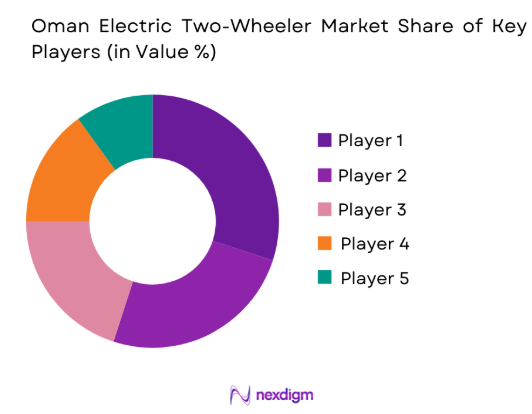
Oman Electric Two-Wheeler Market Analysis
Growth Drivers
Government support in electric two-wheelers market in Oman
Government support is a key driver in the adoption of electric two-wheelers in Oman. The government’s policy initiatives, including green vehicle incentives, tax exemptions, and investments in charging infrastructure, have made electric two-wheelers a more financially viable alternative to traditional petrol-powered vehicles. These measures not only encourage manufacturers to invest in electric mobility but also make it easier for consumers to embrace eco-friendly transportation options. As the government continues to provide financial incentives and improve infrastructure, it will further accelerate the growth of the electric two-wheeler market. This ongoing support plays a vital role in shaping the market’s future development and adoption.
Technological Advancements
Continuous advancements in battery technology, such as the development of lithium-ion and solid-state batteries, are fueling the growth of electric two-wheelers. These improvements have enhanced performance, extended range, and reduced charging times, making electric vehicles more appealing to consumers. Moreover, innovations in electric motor efficiency, regenerative braking, and lightweight materials have boosted overall performance and reduced costs, making electric two-wheelers an attractive option for urban mobility. As technology evolves, these enhancements will further improve the consumer experience, increase confidence in electric vehicles, and accelerate adoption. The ongoing development of these technologies will play a crucial role in the market’s continued growth.
Market Challenges
High Initial Cost
A key challenge facing the Oman electric two-wheeler market is the higher upfront cost compared to traditional gasoline-powered vehicles. While long-term savings on fuel and maintenance make electric two-wheelers more economical, the initial investment remains a significant barrier for price-sensitive consumers. The high cost of batteries and premium pricing for electric models contribute to their higher purchase price, making them less accessible to the broader market. Despite government incentives aimed at reducing these costs, the price remains a hurdle, particularly for less affluent segments. This challenge must be addressed to drive greater adoption and ensure electric two-wheelers are more affordable for a wider range of consumers.
Limited Charging Infrastructure
Despite the increasing demand for electric two-wheelers, the availability of charging stations in Oman is still limited, particularly in rural areas. The insufficient charging infrastructure poses a major barrier to the widespread adoption of electric vehicles. Consumers in regions outside urban centers often face difficulties finding accessible charging stations, hindering their ability to fully embrace electric mobility. Although the government has plans to expand the charging network, progress remains slow, and this infrastructure gap continues to impede market growth. As the demand for electric vehicles rises, addressing this challenge by accelerating the development of charging stations will be crucial to unlocking the market’s full potential.
Opportunities
Rising Environmental Awareness
As climate change and pollution become increasingly urgent issues in Oman, the demand for sustainable transportation solutions is rising. Growing environmental awareness is driving more consumers to choose electric vehicles as a way to reduce their carbon footprint. This shift towards eco-friendly alternatives presents a significant opportunity for manufacturers of electric two-wheelers to tap into the growing demand for greener mobility options. With ongoing awareness campaigns and sustainability initiatives gaining momentum, the market for electric two-wheelers in Oman is expected to experience substantial growth. As consumers become more conscious of their environmental impact, the demand for electric two-wheelers will continue to rise, offering strong potential for market expansion.
Integration with Smart Technologies
The integration of smart technologies like IoT connectivity, real-time tracking, and AI-powered route planning offers a major opportunity for the Oman electric two-wheeler market. These innovations enhance the user experience by providing greater control, convenience, and safety for riders. Smart solutions can also optimize vehicle performance, monitor battery health, and offer data on maintenance needs, helping users make informed decisions about their electric two-wheelers. As consumers increasingly seek tech-driven products that offer convenience and efficiency, manufacturers incorporating these smart technologies will be well-positioned to attract a broader and more diverse customer base. This shift towards smarter electric vehicles will likely fuel market growth in Oman.
Future Outlook
The future of the Oman Electric Two-Wheeler Market looks promising, with continued growth driven by supportive government policies, technological advancements, and rising environmental awareness. Innovations in battery technologies and charging infrastructure expansion will further boost market adoption. The next five years are expected to witness an increase in market penetration, particularly in urban areas, as both consumers and businesses adopt electric two-wheelers for daily commuting and short-distance travel. The trend towards smart, sustainable, and cost-efficient transportation will fuel demand, with regulatory support playing a critical role in ensuring market growth.
Major Players
- Tesla
- Zero Motorcycles
- Gogoro
- Hero Electric
- Mahindra Electric
- Yamaha
- Honda Motor Co.
- KTM
- Piaggio
- TVS Motor Company
- Bajaj Auto
- Suzuki Motor Corporation
- Electra Meccanica
- NIU Technologies
- Super Soco
Key Target Audience
- Investments and venture capitalist firms
- Government and regulatory bodies
- Electric vehicle manufacturers
- Energy and utility companies
- Urban mobility solution providers
- Ride-sharing companies
- E-commerce platforms
- Transport infrastructure developers
Research Methodology
Step 1: Identification of Key Variables
Identifying and understanding the key market variables that impact market growth, such as consumer behavior, technological advancements, and regulatory policies.
Step 2: Market Analysis and Construction
Constructing a detailed market model using both primary and secondary research, including historical data and current market dynamics, to assess the market size and trends.
Step 3: Hypothesis Validation and Expert Consultation
Validating hypotheses derived from data analysis by consulting market experts, industry leaders, and stakeholders to ensure accuracy and relevance of the findings.
Step 4: Research Synthesis and Final Output
Synthesizing research findings and generating a comprehensive report that includes detailed insights, analysis, and recommendations tailored to the market’s future growth.

- Executive Summary
- Research Methodology (Definitions, Scope, Industry Assumptions, Market Sizing Approach, Primary & Secondary Research Framework, Data Collection & Verification Protocol, Analytic Models & Forecast Methodology, Limitations & Research Validity Checks)

- Market Definition and Scope
- Value Chain & Stakeholder Ecosystem
- Regulatory / Certification Landscape
- Sector Dynamics Affecting Demand
- Strategic Initiatives & Infrastructure Growth

- Growth Drivers
Increased Government Investment in National Security
Technological Advancements in AI and Cybersecurity
Rising Geopolitical Tensions
Growing Military Modernization Programs
Integration of Commercial Technologies into Defense Systems - Market Challenges
High Capital Expenditure in Defense Projects
Cybersecurity Threats and Vulnerabilities
Regulatory and Compliance Barriers
Technological Integration and Interoperability Issues
Political and Social Resistance to Military Expansion - Market Opportunities
Expansion in Artificial Intelligence-Driven Defense Solutions
Partnerships with Private Tech Firms for Enhanced Cybersecurity
Emerging Demand for Autonomous Systems and Robotics - Trends
Increase in Use of Autonomous and Unmanned Systems
Integration of AI and Machine Learning in Battlefield Operations
Surge in Cybersecurity Investments for Defense Systems - Government Regulations
- SWOT Analysis of Key Competitors
- Porter’s Five Forces

- By Market Value, 2020-2025
- By Installed Units, 2020-2025
- By Average System Price, 2020-2025
- By System Complexity Tier, 2020-2025

- By System Type (In Value%)
Command & Control Systems
Cybersecurity Systems
Surveillance & Reconnaissance Systems
Communication Systems
Weapon Systems - By Platform Type (In Value%)
Land Platforms
Airborne Platforms
Naval Platforms
Space Platforms
Integrated Platforms - By Fitment Type (In Value%)
On-premise Solutions
Cloud-based Solutions
Hybrid Solutions
Modular Solutions
Integrated Solutions - By End User Segment (In Value%)
Military Forces
Defense Contractors
Government Agencies
Security Services
Private Sector / Technology Firms - By Procurement Channel (In Value%)
Direct Procurement
Government Tenders
Private Sector Procurement
Online Bidding Platforms
Third-party Distributors

- Market Share Analysis
- Cross Comparison Parameters (System Type, Platform Type, Procurement Channel, End User Segment, Fitment Type, Market Value, Installed Units, System Complexity, Average Price, Geographical Reach)
- SWOT Analysis of Key Competitors
- Pricing & Procurement Analysis
- Key Players
Lockheed Martin
Thales Group
BAE Systems
General Dynamics
Northrop Grumman
Raytheon Technologies
L3 Technologies
Leonardo
Harris Corporation
Saab Group
Rheinmetall AG
Elbit Systems
Hewlett Packard Enterprise
Boeing
Sikorsky Aircraft

- Military Forces’ Increasing Demand for Digital Systems
- Government Agencies’ Role in Regulating and Procuring Defense Systems
- Defense Contractors’ Shift Towards Innovation and Integration
- Private Sector’s Growing Interest in Cybersecurity Solutions

- Forecast Market Value, 2026-2035
- Forecast Installed Units, 2026-2035
- Price Forecast by System Tier, 2026-2035
- Future Demand by Platform, 2026-2035


 Request a Sample
 Ask for Customization
 Get a Quote
 Enquire Now