
 Download PDF
 Download PDF
Market Overview
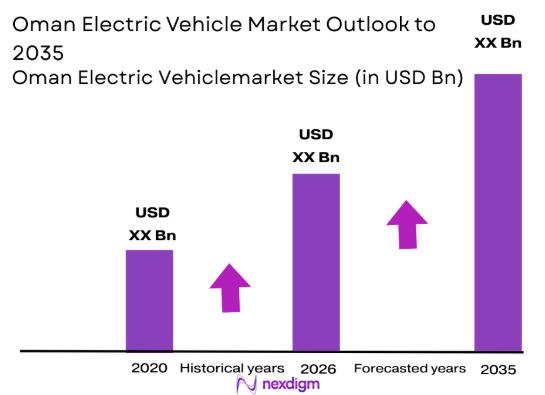
The Oman electric vehicle market is valued at ~ billions USD, driven primarily by growing environmental concerns, policy incentives, and a shift towards sustainability. Government policies worldwide, including tax exemptions, subsidies, and charging infrastructure investment, are fueling growth. The market’s expansion is further boosted by advancements in electric vehicle technology, such as battery efficiency and cost reductions. These factors contribute significantly to the market’s ongoing upward trajectory, making it one of the fastest-growing sectors globally.
Dominant regions driving this market include countries with strong governmental support, such as those in Europe, North America, and select parts of Asia. These regions have implemented policies encouraging EV adoption, and the expansion of charging infrastructure has made it easier for consumers to transition to electric vehicles. Urbanized areas with high vehicle density are seeing faster adoption due to reduced reliance on fossil fuels and cleaner air policies. The technological innovations and the cost-effectiveness of electric vehicles in these areas are accelerating market growth.
Market Segmentation
By Product Type
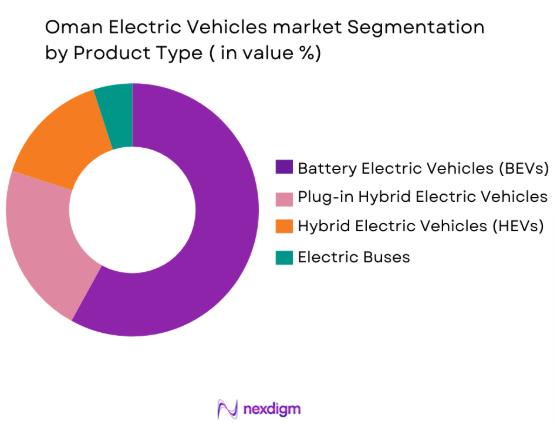
The Oman electric vehicle market is segmented by product type into Battery Electric Vehicles (BEVs), Plug-in Hybrid Electric Vehicles (PHEVs), Hybrid Electric Vehicles (HEVs), and Electric Buses. Recently, BEVs have dominated the market due to their superior range and improved battery technology. The increasing infrastructure development and favorable government incentives for BEVs have contributed significantly to their adoption. As battery technologies improve, and with lower prices for electric vehicles, BEVs remain the dominant segment.
By Platform Type
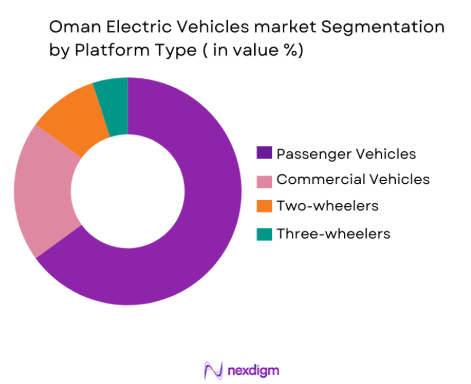
The Oman electric vehicle market is also segmented by platform type into passenger vehicles, commercial vehicles, two-wheelers, and three-wheelers. Passenger vehicles are currently the dominant segment, accounting for a significant portion of the market share due to the growing demand for eco-friendly personal transportation. Factors like affordability, expanding model ranges, and enhanced range capabilities are key drivers for this segment’s dominance. In addition, the focus on reducing the carbon footprint and the increased availability of government incentives for EVs has contributed to the growth of this segment.
Competitive Landscape
The Oman electric vehicle market is highly competitive, with numerous key players globally. Market consolidation is evident as major manufacturers continue to ramp up their EV production capabilities. Companies such as Tesla, Nissan, and BMW are at the forefront, leading the innovation in electric vehicle technology. These companies benefit from strong brand recognition and have heavily invested in R&D to maintain their competitive edge. With increasing demand, collaboration between tech companies and automotive giants has become a trend, further intensifying competition.
| Company Name | Establishment Year | Headquarters | Technology Focus | Market Reach | Key Products | Revenue (USD) | Additional Market-Specific Parameter |
| Tesla | 2003 | USA | ~ | ~ | ~ | ~ | ~ |
| Nissan | 1933 | Japan | ~ | ~ | ~ | ~ | ~ |
| BMW | 1916 | Germany | ~ | ~ | ~ | ~ | ~ |
| BYD | 1995 | China | ~ | ~ | ~ | ~ | ~ |
| Volkswagen | 1937 | Germany | ~ | ~ | ~ | ~ | ~ |
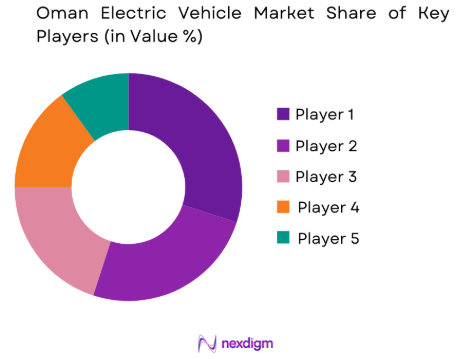
Oman Electric Vehicle Market Analysis
Growth Drivers
Technological Advancements
The Oman electric vehicle market is rapidly advancing, particularly in battery technology. Innovations like solid-state batteries and improved lithium-ion batteries are increasing driving range and reducing charging times, making EVs more efficient and affordable. These breakthroughs are driving market growth by lowering consumer barriers. Automotive manufacturers are investing heavily in R&D to develop cutting-edge technologies for EVs. Government incentives also play a vital role in making EVs more accessible by offsetting high initial costs. Furthermore, advancements in autonomous driving technologies are expected to boost consumer interest. This combination of technological progress and supportive policies is accelerating the adoption of electric vehicles across various consumer segments.
Environmental Regulations
A key growth driver in the electric vehicle market is the implementation of stringent government regulations aimed at reducing greenhouse gas emissions. Governments worldwide are mandating carbon emission reductions, pushing the automotive industry to shift from traditional fuel-powered vehicles to electric ones. To support this transition, policies such as subsidies, tax incentives, and grants are being introduced, making EVs more attractive to consumers. Additionally, regulations on fuel economy standards, carbon taxes, and restrictions on internal combustion engine (ICE) vehicles in urban areas further promote the adoption of electric vehicles, encouraging both consumers and businesses to opt for cleaner, more sustainable transportation solutions.
Market Challenges
High Initial Cost
The Oman electric vehicle market faces a significant challenge due to the high upfront cost of EVs. While electric vehicles offer lower long-term costs due to reduced maintenance and fuel expenses, the initial purchase price remains higher than conventional vehicles. This price disparity is largely due to the advanced battery technology, which is a major cost driver. Despite the decline in battery prices, the high purchase cost continues to deter many consumers, particularly in emerging markets. While subsidies and tax incentives help reduce the price barrier, the upfront cost still limits adoption. Manufacturers must further reduce costs through economies of scale and technological innovations to make EVs more affordable for a broader consumer base.
Limited Charging Infrastructure
Another significant challenge for the electric vehicle market is the lack of widespread charging infrastructure. While some countries, particularly in Europe and North America, have made progress in expanding their charging networks, many regions still face significant gaps in charging infrastructure availability. This lack of infrastructure creates range anxiety among consumers, who fear being unable to find charging stations when needed. Furthermore, the uneven distribution of charging stations, especially in rural areas, exacerbates the problem. Governments and private companies need to continue investing in the development of fast-charging networks to ensure the widespread adoption of electric vehicles. Without a comprehensive and accessible charging infrastructure, electric vehicles will continue to face limitations in terms of convenience, which will hinder market growth.
Opportunities
Growing Commercial Fleets
One of the most promising opportunities in the electric vehicle market lies in the growth of commercial electric fleets. Businesses and logistics companies are increasingly adopting electric vehicles to reduce their carbon footprints and take advantage of cost savings in fuel and maintenance. Electric delivery vans and trucks are becoming more common in urban areas, where emissions regulations are stricter. Fleet owners are also attracted to the long-term savings in energy costs, as well as the growing availability of charging stations and incentives for businesses that adopt EVs. This shift to electric fleets presents a significant opportunity for manufacturers to cater to the commercial segment with specialized electric vehicle models designed for business needs.
Advancements in Battery Recycling
The Oman electric vehicle market is also presented with opportunities in the field of battery recycling. As the number of electric vehicles on the road increases, so does the need for the recycling of EV batteries. With the rise in battery production and consumption, the environmental impact of used batteries is becoming a growing concern. Companies are investing in innovative technologies to recycle lithium-ion batteries more efficiently, ensuring that valuable materials can be reused in the manufacturing of new batteries. This not only helps reduce waste but also lowers the cost of materials for manufacturers. As battery recycling technologies continue to improve, they will play an integral role in supporting the growth of the electric vehicle market and improving its sustainability.
Future Outlook
The Oman electric vehicle market is poised for significant growth over the next five years, driven by the continuous advancement of battery technology, expanded infrastructure, and growing regulatory support for cleaner energy. The push towards zero-emission vehicles and the increasing demand for sustainable transportation solutions are expected to accelerate adoption rates globally. Additionally, the rise of commercial fleets and increased consumer awareness about the environmental impact of traditional vehicles will contribute to market expansion. With investments in both vehicle and charging infrastructure, the future outlook for the electric vehicle market is promising, with accelerated adoption anticipated across both developed and emerging markets.
Major Players
- Tesla
- Nissan
- BMW
- Ford
- General Motors
- Audi
- Hyundai
- Kia
- Mercedes-Benz
- Rivian
- Volkswagen
- BYD
- Toyota
- Lucid Motors
- Porsche
Key Target Audience
- Investments and venture capitalist firms
- Government and regulatory bodies
- Automotive manufacturers
- Charging infrastructure providers
- Electric vehicle battery manufacturers
- Fleet operators
- Environmental NGOs
- Consumers
Research Methodology
Step 1: Identification of Key Variables
The first step involves identifying the critical variables influencing the market, such as technological advancements, policy changes, and consumer preferences.
Step 2: Market Analysis and Construction
This step includes gathering data from primary and secondary sources to build a comprehensive model of the electric vehicle market.
Step 3: Hypothesis Validation and Expert Consultation
Expert consultations and surveys are conducted to validate market trends and projections, ensuring data accuracy and relevancy.
Step 4: Research Synthesis and Final Output
In the final step, all research data is synthesized into actionable insights and presented in the final report.

- Executive Summary
- Research Methodology (Definitions, Scope, Industry Assumptions, Market Sizing Approach, Primary & Secondary Research Framework, Data Collection & Verification Protocol, Analytic Models & Forecast Methodology, Limitations & Research Validity Checks)

- Market Definition and Scope
- Value Chain & Stakeholder Ecosystem
- Regulatory / Certification Landscape
- Sector Dynamics Affecting Demand
- Strategic Initiatives & Infrastructure Growth

- Growth Drivers
Expansion of Renewable Energy Integration
Government Policies & Incentives for EV Adoption|
Rising Environmental Awareness
Technological Advancements in EV Batteries
Infrastructure Development for EV Charging - Market Challenges
High Initial Cost of Electric Vehicles
Limited Charging Infrastructure
Dependence on Foreign Technology
Consumer Perception and Awareness
Regulatory and Policy Gaps - Market Opportunities
Growth in Commercial Electric Fleets
Partnerships for EV Infrastructure Expansion
Integration of Autonomous Technologies in EVs - Trends
Adoption of Battery Swapping Technology
Increasing EV Battery Recycling Initiatives
Collaborations Between EV Manufacturers and Energy Providers - Government Regulations
- SWOT Analysis of Key Competitors
- Porter’s Five Forces

- By Market Value, 2020-2025
- By Installed Units, 2020-2025
- By Average System Price, 2020-2025
- By System Complexity Tier, 2020-2025

- By System Type (In Value%)
Battery Electric Vehicles
Plug-in Hybrid Electric Vehicles
Hybrid Electric Vehicles
Electric Bus Systems
Electric Motorcycle Systems - By Platform Type (In Value%)
Passenger Vehicles
Commercial Vehicles
Two-Wheelers
Three-Wheelers
Public Transport Vehicles - By Fitment Type (In Value%)
OEM Systems
Aftermarket Systems
Vehicle Integrated Systems
Standalone Systems
Fleet Management Systems - By End User Segment (In Value%)
Private Consumers
Commercial Fleets
Government & Municipalities
Public Transport Services
Logistics & Delivery Services - By Procurement Channel (In Value%)
Direct Procurement
Government Contracts
Private Sector Deals
Online Marketplaces
Third-party Distributors

- Market Share Analysis
- Cross Comparison Parameters (System Type, Platform Type, Procurement Channel, End User Segment, Fitment Type, Market Share, Technological Integration, Consumer Adoption Rate, Government Incentives, Charging Infrastructure Development)
- SWOT Analysis of Key Competitors
- Pricing & Procurement Analysis
- Key Players
Tesla
BYD
Nissan
BMW
Audi
Ford
Chevrolet
Hyundai
Kia
Lucid Motors
Rivian
Volvo
Mercedes-Benz
Porsche
Toyota

- Government Fleet Electrification
- Private Sector Adoption Trends
- Consumer Preferences for EVs
- Logistics Sector Demand for Electric Fleets

- Forecast Market Value, 2026-2035
- Forecast Installed Units, 2026-2035
- Price Forecast by System Tier, 2026-2035
- Future Demand by Platform, 2026-2035


 Request a Sample
 Ask for Customization
 Get a Quote
 Enquire Now