

 Download PDF
 Download PDF
Market Overview
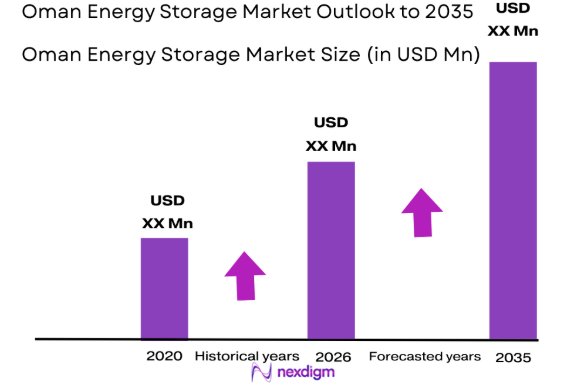
The Oman Energy Storage market has been growing steadily, driven by an increasing demand for renewable energy and the need for reliable and sustainable energy storage solutions. Based on a recent historical assessment, the market is valued at approximately USD ~ million. This growth is mainly attributed to the country’s push towards renewable energy sources, such as solar and wind power, which require efficient energy storage systems to maintain a consistent power supply. The government’s initiatives to diversify energy sources and reduce reliance on fossil fuels are key contributors to this market’s development.
Oman is emerging as a key player in the energy storage market, with its energy strategies focusing on diversification and sustainability. The country’s dominance can be attributed to its strategic location and investment in energy infrastructure, making it a hub for renewable energy projects. Moreover, the government’s proactive policies, such as tax incentives and subsidies for energy storage solutions, have bolstered its position in the region. Several cities, including Muscat and Salalah, are leading the adoption of energy storage systems due to their importance in the national grid and renewable energy projects.
Market Segmentation
By System Type
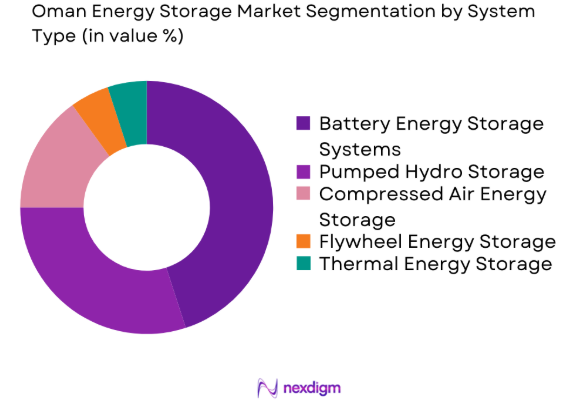
The Oman Energy Storage market is segmented by system type into various sub-segments, including battery energy storage systems (BESS), pumped hydro storage, and compressed air energy storage. Recently, battery energy storage systems (BESS) have seen a dominant market share due to their superior efficiency, declining costs, and increasing adoption in both utility-scale and residential applications. The growth of solar power in Oman, which requires large-scale storage solutions, has further boosted the demand for BESS, making it a leading system type in the market.
By Platform Type
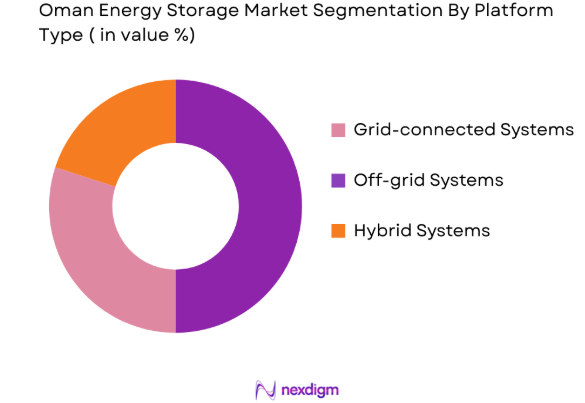
The Oman Energy Storage market is also segmented by platform type into grid-connected systems, off-grid systems, and hybrid systems. The grid-connected systems sub-segment currently holds a dominant position, as these systems support the integration of renewable energy into the national grid, helping stabilize the power supply. Oman’s ongoing efforts to increase the share of renewable energy in its energy mix make grid-connected platforms a critical component, as they help optimize power generation from renewable sources, especially solar.
Competitive Landscape
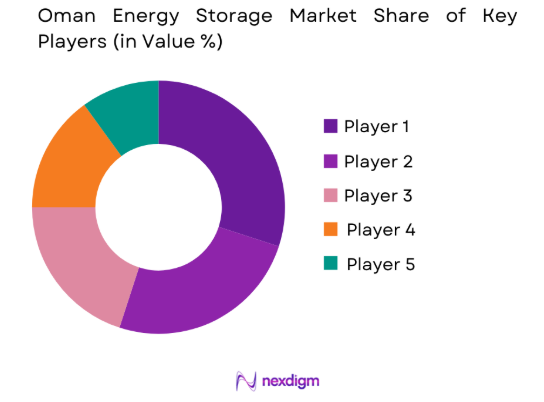
The competitive landscape of the Oman energy storage market is characterized by strong consolidation and the presence of global and regional players. The competition is intensifying as companies continue to innovate in energy storage technologies and compete for government contracts in large-scale projects. Major players, such as Siemens and ABB, hold significant market influence due to their established presence, technological expertise, and local partnerships. As the market grows, there is an increasing trend toward collaborations between local and international players, further driving innovation and market development.
| Company Name | Establishment Year | Headquarters | Technology Focus | Market Reach | Key Products | Revenue | Additional Parameter |
| Siemens | 1847 | Germany | ~ | ~ | ~ | ~ | ~ |
| ABB | 1988 | Switzerland | ~ | ~ | ~ | ~ | ~ |
| Tesla | 2003 | USA | ~ | ~ | ~ | ~ | ~ |
| Fluence Energy | 2018 | USA | ~ | ~ | ~ | ~ | ~ |
| BYD | 1995 | China | ~ | ~ | ~ | ~ | ~ |
Oman Energy Storage Market Analysis
Growth Drivers
Technological Advancements in Energy Storage
Technological advancements in energy storage technologies, particularly in battery storage systems, are a primary growth driver for the market. The rapid improvements in battery technology, such as lithium-ion batteries, have led to reduced costs and enhanced performance, making them more viable for both commercial and residential applications. As the cost of energy storage continues to decline, it becomes more accessible for both developers and consumers, driving wider adoption across Oman’s energy infrastructure. These advancements are expected to continue evolving, further promoting the shift towards renewable energy systems. Additionally, the integration of smart grid technologies allows for better management and optimization of energy storage, making energy storage solutions more efficient and appealing for various sectors, including residential, industrial, and commercial.
Government Support for Renewable Energy
Oman’s government has introduced a range of policies and initiatives to promote renewable energy, which also supports the adoption of energy storage systems. Focused on reducing carbon emissions and diversifying energy sources, the government provides subsidies, tax incentives, and favorable tariffs for both energy storage and renewable energy projects. These efforts have created a favorable environment for technology providers, fostering market expansion. Additionally, the country’s Vision 2040 plan prioritizes sustainable energy solutions, which is anticipated to boost investments in energy storage technologies. This commitment to clean energy infrastructure is expected to significantly drive the growth of the energy storage sector in Oman over the coming years.
Market Challenges
High Capital Investment
A major challenge for the Oman energy storage market is the high capital investment needed for large-scale energy storage systems. Although energy storage technology costs are gradually decreasing, the initial investment for infrastructure, including storage units, power conversion systems, and grid connections, remains substantial. This presents difficulties for smaller businesses and individual consumers who seek to adopt energy storage solutions. While the long-term benefits of these systems are significant, the high upfront costs are a barrier to widespread adoption, especially in the residential sector, where the return on investment is slower. As a result, this challenge continues to limit the market’s growth potential.
Regulatory and Compliance Barriers
The Oman energy storage market faces challenges due to regulatory and compliance barriers. While the government has made progress in promoting renewable energy, the regulatory framework for energy storage is still developing. There is a need for clearer policies, safety standards, and certification processes to attract more private sector involvement. The absence of standardized regulations for storage system performance and safety creates uncertainty for investors and consumers, complicating their decision-making process. This lack of clear guidelines slows the adoption of energy storage technologies and hinders the market’s growth, as potential stakeholders may be reluctant to invest in a market without established regulatory assurance.
Opportunities
Expansion of Hybrid Systems
A significant opportunity in the Oman energy storage market is the growing demand for hybrid energy storage systems. These systems combine various storage technologies, such as batteries and thermal storage, to enhance energy efficiency. As Oman continues to develop its renewable energy infrastructure, hybrid systems offer a cost-effective solution to manage intermittent power from solar and wind sources. They are particularly beneficial for commercial and industrial sectors, where energy demands fluctuate, ensuring a more stable energy supply. This creates an opportunity for manufacturers and energy providers to deliver integrated solutions that address both energy storage and demand management, supporting Oman’s renewable energy goals.
Partnerships with Private Sector Players
Another key opportunity in the Oman energy storage market is the increasing trend of partnerships between public and private sector players. With government initiatives focused on sustainable energy, there is a rising demand for innovative storage solutions. Private sector companies, particularly those in technology and energy, can take advantage of government support through subsidies and incentives to provide energy storage systems for both grid and off-grid applications. By aligning with the government’s renewable energy objectives, these companies can accelerate the deployment of energy storage solutions across Oman, benefiting from long-term contracts and large-scale projects that further drive market growth and expansion.
Future Outlook
The Oman energy storage market is expected to continue its growth trajectory over the next five years, supported by favorable government policies, technological advancements, and increasing investments in renewable energy infrastructure. Hybrid energy storage solutions and smart grid integration are expected to be key drivers of this growth. The government’s commitment to reducing reliance on fossil fuels and the continued development of renewable energy projects will further fuel demand for energy storage solutions, positioning Oman as a regional leader in sustainable energy technologies.
Major Players
- Siemens
- ABB
- Tesla
- Fluence Energy
- BYD
- GE Renewable Energy
- Panasonic
- LG Chem
- AES Corporation
- Vestas
- Mitsubishi Heavy Industries
- Saft Group
- Schneider Electric
- Redflow
- Energy Vault
Key Target Audience
- Investments and venture capitalist firms
- Government and regulatory bodies
- Energy providers and utilities
- Commercial businesses seeking energy solutions
- Renewable energy developers
- Technology integrators and consultants
- Large-scale industrial and manufacturing companies
- Research institutions and innovation hubs
Research Methodology
Step 1: Identification of Key Variables
This step involves identifying the critical factors and variables that influence the energy storage market, such as technological advancements, government policies, and industry regulations.
Step 2: Market Analysis and Construction
This step involves analyzing the market dynamics, identifying key trends, and building a comprehensive framework for understanding market structure and segmentation.
Step 3: Hypothesis Validation and Expert Consultation
In this step, the hypotheses and assumptions regarding market trends and growth drivers are validated through consultations with industry experts and stakeholders.
Step 4: Research Synthesis and Final Output
In the final step, all the gathered data is synthesized, and the final report is prepared, presenting the key findings and market forecasts.

- Executive Summary
- Research Methodology (Definitions, Scope, Industry Assumptions, Market Sizing Approach, Primary & Secondary Research Framework, Data Collection & Verification Protocol, Analytic Models & Forecast Methodology, Limitations & Research Validity Checks)

- Market Definition and Scope
- Value Chain & Stakeholder Ecosystem
- Regulatory / Certification Landscape
- Sector Dynamics Affecting Demand
- Strategic Initiatives & Infrastructure Growth

- Growth Drivers
Increase in Renewable Energy Deployment
Government Support for Clean Energy Technologies
Technological Advancements in Energy Storage Solutions - Market Challenges
High Initial Capital Investment
Energy Storage System Efficiency Limitations
Regulatory and Compliance Barriers - Market Opportunities
Rising Demand for Energy Independence
Integration of Energy Storage with Smart Grids
Expansion of Battery Recycling Technologies - Trends
Increase in Hybrid Energy Storage Solutions
Integration of Energy Storage with Electric Vehicles
Growth in Modular and Scalable Storage Solutions - Government Regulations
- SWOT Analysis of Key Competitors
- Porter’s Five Forces

- By Market Value, 2020-2025
- By Installed Units, 2020-2025
- By Average System Price, 2020-2025
- By System Complexity Tier, 2020-2025

- By System Type (In Value%)
Battery Energy Storage Systems
Pumped Hydro Storage
Flywheel Energy Storage
Compressed Air Energy Storage
Thermal Energy Storage - By Platform Type (In Value%)
Grid-connected Systems
Off-grid Systems
Hybrid Systems
Centralized Systems
Distributed Systems - By Fitment Type (In Value%)
On-grid Solutions
Off-grid Solutions
Stand-alone Solutions
Hybrid Solutions
Integrated Solutions - By End User Segment (In Value%)
Utilities
Industrial Sector
Residential Consumers
Commercial Sector
Government Entities - By Procurement Channel (In Value%)
Direct Procurement
Government Tenders
Private Sector Procurement
Online Bidding Platforms
Third-party Distributors

- Market Share Analysis
- Cross Comparison Parameters (System Type, Platform Type, Procurement Channel, End User Segment, Fitment Type, Energy Storage Technology, Installation Location, Storage Capacity, Regulatory Compliance, Market Demand Drivers)
- SWOT Analysis of Key Competitors
- Pricing & Procurement Analysis
- Key Players
Schneider Electric
Siemens AG
ABB Ltd.
LG Chem
Tesla Inc.
BYD Company Ltd.
Fluence Energy
Sonnen GmbH
Eos Energy Enterprises
Varta AG
Panasonic Corporation
Saft Group
General Electric
NRG Energy
KOSTAL Solar Electric

- Utilities’ Role in Grid Stabilization
- Industrial Sector’s Demand for Uninterrupted Power Supply
- Residential Market Adoption of Home Storage Systems
- Government and Regulatory Bodies’ Influence on Market Growth

- Forecast Market Value, 2026-2035
- Forecast Installed Units, 2026-2035
- Price Forecast by System Tier, 2026-2035
- Future Demand by Platform, 2026-2035


 Request a Sample
 Ask for Customization
 Get a Quote
 Enquire Now