
 Download PDF
 Download PDF
Market Overview
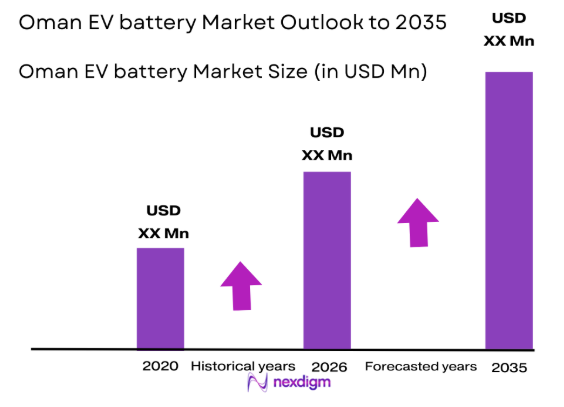
The Oman EV battery market has seen notable growth, with significant investments driving the adoption of electric vehicle technologies. Based on recent historical assessments, the market size is valued at approximately USD ~ million. This growth is largely attributed to government initiatives aimed at reducing carbon emissions, as well as the increased demand for electric vehicles. The government’s support through tax incentives, infrastructure development, and long-term sustainability goals has provided a solid foundation for the EV battery market’s expansion.
The dominant regions in the market include Muscat and Salalah, with these cities benefiting from advanced infrastructure, regulatory support, and strategic investments. Oman has attracted both international and local players due to its stable economy and commitment to renewable energy integration. The government’s focus on expanding clean energy initiatives, such as the Oman’s National Energy Strategy, has propelled these cities to the forefront of EV battery adoption, further driving the market’s growth.
Market Segmentation
By Product Type
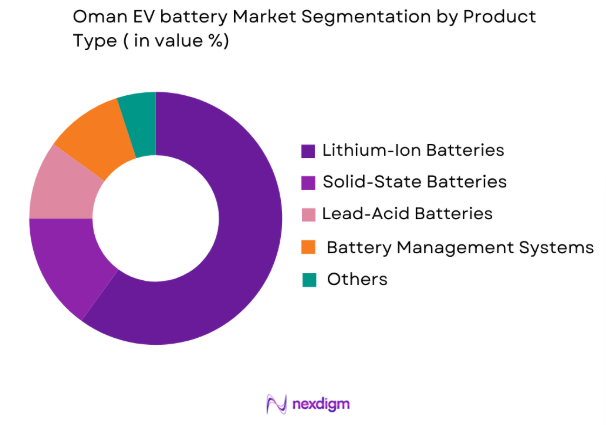
The Oman EV battery market is segmented by product type into lithium-ion batteries, solid-state batteries, lead-acid batteries, battery management systems, and others. Recently, lithium-ion batteries have captured a dominant market share due to their higher energy density, longer lifespan, and declining manufacturing costs. Consumer demand for long-range electric vehicles and increased energy storage applications are key factors driving this trend.
By Platform Type
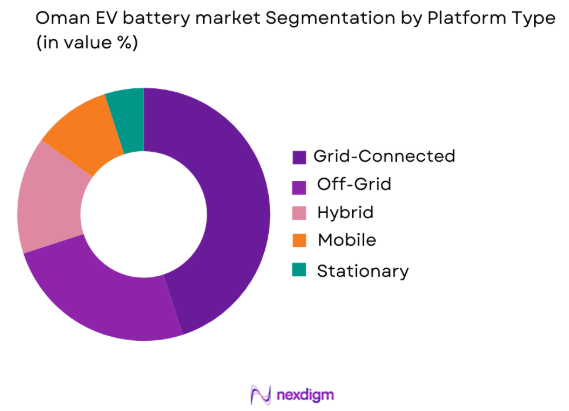
The Oman EV battery market is segmented by platform type into grid-connected platforms, off-grid platforms, hybrid platforms, mobile platforms, and stationary platforms. Grid-connected platforms have seen the highest demand as they provide efficient energy storage solutions for electric vehicles and renewable energy systems. The increasing emphasis on renewable energy integration with electric vehicle infrastructure has bolstered the demand for grid-connected solutions.
Competitive Landscape
The competitive landscape in the Oman EV battery market is moderately consolidated, with a mix of local players and international companies. Key players in the market are investing in local manufacturing and joint ventures to gain a competitive edge. Oman’s focus on reducing its carbon footprint has attracted major international firms seeking to capitalize on government incentives.
| Company Name | Establishment Year | Headquarters | Technology Focus | Market Reach | Key Products | Revenue (USD) | Additional Parameter |
| Tesla | 2003 | USA | ~ | ~ | ~ | ~ | ~ |
| BYD | 1995 | China | ~ | ~ | ~ | ~ | ~ |
| Panasonic | 1918 | Japan | ~ | ~ | ~ | ~ | ~ |
| CATL | 2011 | China | ~ | ~ | ~ | ~ | ~ |
| LG Chem | 1947 | South Korea | ~ | ~ | ~ | ~ | ~ |
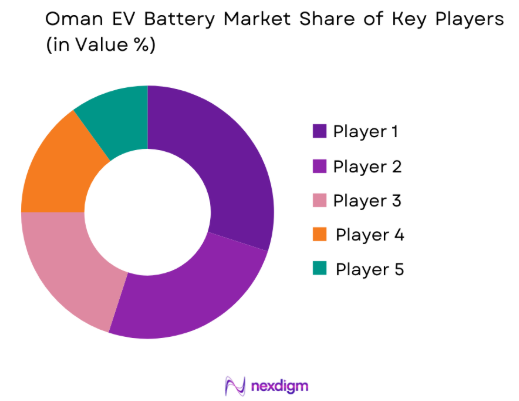
Oman EV battery Market Analysis
Growth Drivers
Increased Government Incentives for EV Adoption
Oman has been actively fostering the growth of the electric vehicle sector through various incentives, including tax rebates, reduced registration fees, and infrastructure development. These measures have attracted both local and international investment while helping consumers by lowering upfront costs. The government’s commitment to diversifying its energy mix, with a focus on renewable energy, has been a key driver for the EV battery market. Additionally, the growing adoption of electric vehicles aligns with Oman’s sustainability goals, strengthening the policy-driven demand for EVs and supporting the broader transition to greener technologies. These efforts provide a solid foundation for the continued expansion of the EV market in Oman.
Technological Advancements in Battery Chemistry
Technological innovations in battery chemistry, particularly in lithium-ion and solid-state technologies, have played a pivotal role in the growth of the EV battery market. Enhancements in energy density, faster charging capabilities, and longer battery lifespans have made EV batteries more appealing to both consumers and businesses. These advancements have also lowered production costs, making electric vehicles more affordable and accelerating their adoption. Continued investment in research and development from leading players such as Tesla and Panasonic fosters ongoing innovation, ensuring the market remains competitive. This drive for technological progress not only supports current demand but also creates opportunities for further growth in the EV industry.
Market Challenges
High Initial Capital Investment
A major challenge in the Oman EV battery market is the high upfront costs associated with building EV infrastructure, including charging stations and battery storage systems. These substantial investments can discourage smaller investors and slow down the adoption of electric vehicles, particularly in areas with limited access to funding. Moreover, the capital required for setting up manufacturing facilities for EV batteries adds another barrier to entry, hindering the market’s expansion. To address this issue, more favorable financing options and government incentives are necessary to make investments in EV infrastructure and battery production more viable. Such measures will help accelerate the adoption of EVs and support long-term market growth.
Limited Battery Recycling Infrastructure
Another significant challenge in Oman’s EV battery market is the lack of sufficient battery recycling infrastructure. As the adoption of electric vehicles grows, the need for effective and eco-friendly recycling solutions becomes more pressing. Currently, there is limited capacity to recycle used EV batteries, which not only raises environmental concerns but also increases disposal costs. To address this issue, investments in advanced recycling technologies and processes are essential. These solutions can help reduce waste, lower recycling costs, and minimize the environmental impact of used batteries. Strengthening the recycling infrastructure would support sustainable market growth and create a more circular economy for EV battery materials in Oman.
Opportunities
Partnerships with Tech Firms for Enhanced Battery Solutions
The increasing collaboration between battery manufacturers and technology firms offers a valuable opportunity for market expansion. As electric vehicles become more integrated with smart technologies, there is a growing demand for advanced battery management systems (BMS) to improve efficiency and safety. By partnering with tech companies, battery manufacturers can develop longer-lasting, more reliable, and higher-performing batteries. These collaborations drive the innovation of next-generation EV batteries, offering significant improvements in both cost and functionality. As a result, consumers and businesses are more likely to invest in electric vehicles, accelerating the adoption of EVs and contributing to the overall growth of the market. This partnership fosters the continued evolution of the EV industry.
Growing Demand for Renewable Energy Integration
The integration of renewable energy sources, such as solar and wind, with electric vehicle charging infrastructure presents a significant opportunity for the Oman EV battery market. As the country aims to diversify its energy sources and reduce dependence on fossil fuels, renewable energy-powered EV charging stations provide a cost-effective and sustainable solution. This growing demand for renewable energy-powered charging stations not only boosts the adoption of electric vehicles but also aligns with Oman’s long-term sustainability objectives. By expanding the renewable energy sector alongside EV adoption, Oman can achieve a greener future, reduce carbon emissions, and strengthen its position in the global transition to clean energy solutions. This development will be key in shaping the future of Oman’s transportation and energy sectors.
Future Outlook
The Oman EV battery market is expected to continue its upward trajectory, with increasing government initiatives, growing demand for electric vehicles, and continuous technological advancements in battery solutions. Over the next five years, the market is likely to see an acceleration in battery production, further reductions in cost, and increased investments in recycling infrastructure. The integration of renewable energy systems with EV charging stations will become a key driver of demand, creating opportunities for new business models in the energy sector. As technological developments progress and regulatory support increases, the EV battery market will play a pivotal role in Oman’s transition towards a more sustainable future.
Major Players
- Tesla
- BYD
- Panasonic
- CATL
- LG Chem
- Samsung SDI
- AESC
- Northvolt
- SK Innovation
- GotionHigh-tech
- Guoxuan
- CALB
- FarasisEnergy
- Envision AESC
- Electrovaya
Key Target Audience
- Investments and venture capitalist firms
- Government and regulatory bodies
- Energy infrastructure companies
- Electric vehicle manufacturers
- Battery manufacturers
- Renewable energy providers
- Automotive OEMs
- Private investors
Research Methodology
Step 1: Identification of Key Variables
The key variables for market analysis include product type, platform type, procurement channel, and regional dynamics that affect EV battery adoption. These variables were identified through a comprehensive review of the EV and renewable energy sectors in Oman.
Step 2: Market Analysis and Construction
A detailed market analysis was conducted by examining historical data, government policies, technological trends, and industry reports. This data was used to build a market model and estimate the current and future market size.
Step 3: Hypothesis Validation and Expert Consultation
Industry experts and stakeholders were consulted to validate assumptions and provide insights into market trends and challenges. This helped refine the forecast and address any data discrepancies.
Step 4: Research Synthesis and Final Output
The final output was synthesized from the analysis, expert inputs, and market models. The findings were compiled into a comprehensive report, ensuring that all relevant aspects of the Oman EV battery market were covered.

- Executive Summary
- Research Methodology (Definitions, Scope, Industry Assumptions, Market Sizing Approach, Primary & Secondary Research Framework, Data Collection & Verification Protocol, Analytic Models & Forecast Methodology, Limitations & Research Validity Checks)

- Market Definition and Scope
- Value Chain & Stakeholder Ecosystem
- Regulatory / Certification Landscape
- Sector Dynamics Affecting Demand
- Strategic Initiatives & Infrastructure Growth

- Growth Drivers
Increase in Government Incentives for EV Adoption
Technological Advancements in Battery Chemistry
Rising Demand for Clean Energy Solutions - Market Challenges
High Initial Capital Investment
Limited Battery Recycling Infrastructure
Supply Chain Disruptions in Raw Materials - Market Opportunities
Government-led Initiatives for EV Infrastructure Development
Partnerships with Tech Firms for Enhanced Battery Solutions
Growing Demand for Renewable Energy Integration - Trends
Advancements in Solid-State Battery Technology
Integration of Artificial Intelligence in Battery Management Systems
Shift Towards Sustainable Battery Recycling Practices - Government Regulations
- SWOT Analysis of Key Competitors
- Porter’s Five Forces

- By Market Value, 2020-2025
- By Installed Units, 2020-2025
- By Average System Price, 2020-2025
- By System Complexity Tier, 2020-2025

- By System Type (In Value%)
Battery Storage Systems
Lithium-ion Batteries
Lead-Acid Batteries
Solid-State Batteries
Battery Management Systems - By Platform Type (In Value%)
Grid-Connected Platforms
Off-Grid Platforms
Hybrid Platforms
Mobile Platforms
Stationary Platforms - By Fitment Type (In Value%)
On-Board Systems
Off-Board Systems
Modular Systems
Integrated Systems
Stand-Alone Systems - By End User Segment (In Value%)
Electric Vehicles
Industrial Applications
Consumer Electronics
Energy Storage Systems
Renewable Energy Systems - By Procurement Channel (In Value%)
Direct Procurement
Third-party Distributors
Retail Procurement
Online Procurement
Government Procurement

- Market Share Analysis
- Cross Comparison Parameters (System Type, Platform Type, Procurement Channel, End User Segment, Fitment Type, Battery Chemistry, Market Value, Technological Integration, Supply Chain Resilience, Environmental Impact)
- SWOT Analysis of Key Competitors
- Pricing & Procurement Analysis
- Key Players
Tesla
LG Chem
CATL
Samsung SDI
BYD Company
Panasonic
SK Innovation
Saft Group
A123 Systems
General Electric
Hitachi Chemical
Mitsubishi Electric
Toshiba
Leclanché
Varta AG

- Rising Adoption of Electric Vehicles
- Demand from Industrial Energy Storage Systems
- Growth in Consumer Electronics with Longer Battery Life
- Increased Integration with Renewable Energy Sources

- Forecast Market Value, 2026-2035
- Forecast Installed Units, 2026-2035
- Price Forecast by System Tier, 2026-2035
- Future Demand by Platform, 2026-2035


 Request a Sample
 Ask for Customization
 Get a Quote
 Enquire Now