

 Download PDF
 Download PDF
Market Overview
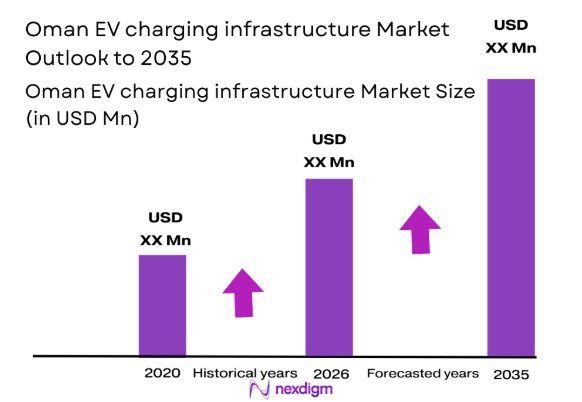
The Oman EV charging infrastructure market is expected to see substantial growth, driven by the increasing adoption of electric vehicles (EVs) and the government’s commitment to sustainability. In recent assessments, the market for EV charging infrastructure has been valued at approximately USD ~ million, with a focus on expanding the charging network to accommodate rising EV usage. The market is expected to grow significantly due to investments in clean energy, the growing popularity of electric mobility, and supportive government policies aimed at reducing emissions and supporting green transportation alternatives.
Oman, particularly its capital Muscat, is emerging as a key hub for EV adoption, owing to government initiatives and the country’s growing interest in sustainable infrastructure. The nation’s ongoing efforts to enhance its electric vehicle charging network and integrate green energy solutions into the grid make it an attractive destination for EV infrastructure development. With urban areas experiencing rapid EV adoption and demand for convenient charging solutions increasing, Oman’s strategic position as a key player in the region’s clean energy transition is becoming more prominent.
Market Segmentation
By Charging Technology Type
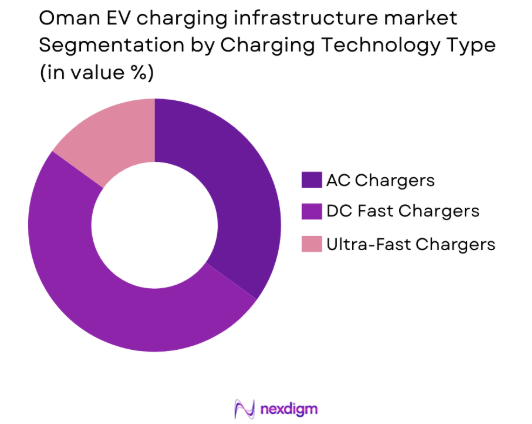
The Oman EV charging infrastructure market is segmented by charging technology type into AC chargers, DC fast chargers, and ultra-fast chargers. Recently, DC fast chargers have taken a dominant market share due to their ability to charge vehicles quickly, catering to the growing demand for faster charging times and increasing the convenience factor for EV users. As the market continues to evolve, the demand for DC fast charging technology is expected to grow further, driven by both private and public sector investments in high-speed infrastructure.
By End-User Segment
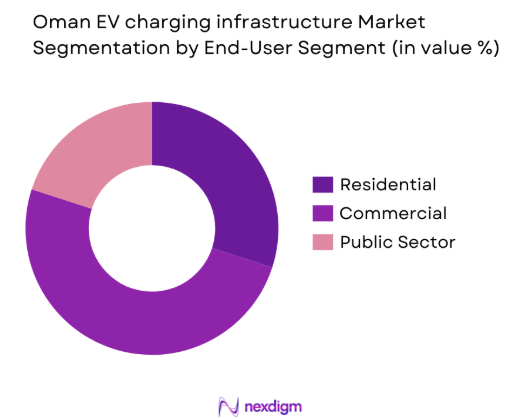
The market for EV charging infrastructure in Oman is segmented by end-user segment into residential, commercial, and public sector end users. Commercial end-users, particularly businesses with fleets and public transport operators, dominate the market share due to their need for regular charging facilities for electric buses, taxis, and company-owned EVs. These segments are driving the installation of fast and ultra-fast charging stations to ensure operational efficiency and reduce downtime. Furthermore, with increasing EV adoption in urban areas, the commercial sector’s demand for accessible and reliable EV charging infrastructure continues to rise.
Competitive Landscape
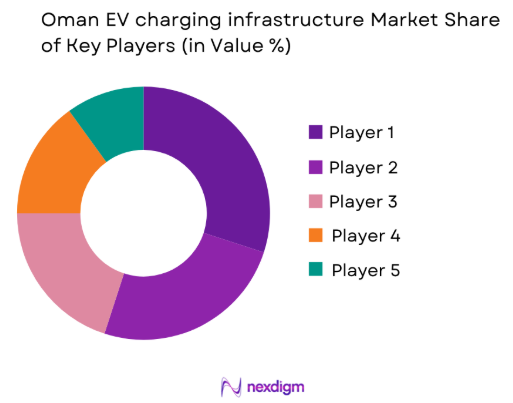
The Oman EV charging infrastructure market is moderately fragmented, with several key players contributing to the market’s growth. Consolidation is expected to increase as more companies invest in long-term infrastructure solutions. Major players are expanding their offerings to include integrated solutions for commercial and residential customers, providing charging solutions that cater to the increasing demand for electric mobility. As the market grows, the influence of international firms with extensive experience in deploying EV infrastructure continues to rise.
| Company Name | Establishment Year | Headquarters | Technology Focus | Market Reach | Key Products | Revenue (USD Million) | Market-Specific Parameter |
| ABB | 1988 | Switzerland | ~ | ~ | ~ | ~ | ~ |
| Siemens | 1847 | Germany | ~ | ~ | ~ | ~ | ~ |
| ChargePoint | 2007 | USA | ~ | ~ | ~ | ~ | ~ |
| Tesla | 2003 | USA | ~ | ~ | ~ | ~ | ~ |
| Schneider Electric | 1836 | France | ` | ~ | ~ | ~ | ~ |
Oman EV charging infrastructure Market Analysis
Growth Drivers
Government Support for Clean Energy
Government policies aimed at reducing emissions and promoting electric mobility are crucial drivers of market growth. Oman’s strategic planning for integrating clean energy into public infrastructure has led to increased investments in electric vehicle charging networks. These initiatives offer incentives for both businesses and consumers to adopt EVs, aligning with the country’s renewable energy targets and carbon reduction goals. By fostering a favorable regulatory environment, the government is facilitating the expansion of EV infrastructure, encouraging widespread adoption. This proactive approach not only supports sustainability efforts but also positions Oman as a leader in the transition to cleaner transportation solutions, driving further growth in the EV market.
Technological Advancements in Charging Infrastructure
Continuous innovations in charging technologies, including ultra-fast charging and smart grid integration, are key drivers of market growth. Ultra-fast chargers, capable of charging EVs up to 80% in under 30 minutes, provide a significant advantage for commercial and public users by reducing downtime. Furthermore, advancements in wireless charging and grid-based systems for efficient load distribution are enhancing the overall charging experience. These developments not only make charging more convenient but also accelerate the adoption of electric vehicles by both consumers and businesses. As these technologies continue to evolve, they will play a crucial role in meeting the growing demand for efficient and accessible EV charging infrastructure.
Market Challenges
High Infrastructure Costs
The rapid growth of the electric vehicle sector faces a significant challenge due to the high costs associated with establishing widespread EV charging infrastructure. Deploying charging stations, especially fast and ultra-fast chargers, involves considerable upfront investments that may deter smaller operators from entering the market. In addition to initial costs, ongoing maintenance and system upgrades add to the long-term financial burden, making the industry capital-intensive. These challenges create hurdles for sustainable growth, particularly for new entrants and businesses with limited financial resources. Overcoming these cost-related barriers is essential to ensure the expansion and accessibility of EV charging networks and support the broader adoption of electric vehicles.
Grid Integration Issues
Integrating EV charging stations into the existing power grid presents significant challenges. A stable power supply is crucial for charging stations, but regions with unstable grid infrastructure or remote areas struggle to provide reliable access. This leads to higher operational costs, especially in underserved locations. Furthermore, the need for grid reinforcements and upgrades to support the growing demand for EV charging adds complexity to infrastructure deployment. These challenges not only increase installation costs but also slow the expansion of charging networks, particularly in areas with limited access to reliable electrical infrastructure. Addressing these issues is critical for ensuring the widespread availability of charging stations and supporting the growth of electric vehicle adoption.
Opportunities
Expansion of Public and Private Partnerships
The development of EV charging infrastructure presents significant opportunities for public-private partnerships (PPPs). By collaborating with government bodies, private investors can benefit from incentives such as tax breaks and regulatory support, while the government ensures the swift deployment of charging stations nationwide. These partnerships are vital for establishing fast-charging corridors along highways, meeting the growing demand for electric vehicles. By combining resources and expertise, both sectors can accelerate the development of a comprehensive charging network, facilitating the widespread adoption of EVs. This collaboration will play a key role in promoting sustainable mobility solutions and driving the future growth of the electric vehicle market across the country.
Integration of Renewable Energy
Oman’s emphasis on renewable energy presents a substantial opportunity to integrate solar-powered EV charging stations into the grid. These solar-powered chargers can reduce reliance on the main electricity grid, helping lower operational costs for charging providers. Additionally, they align with Oman’s sustainability targets, offering an eco-friendly solution to meet the growing demand for electric vehicle infrastructure. As investments in solar energy infrastructure continue to rise, the integration of solar-powered charging stations becomes increasingly feasible. This shift is expected to play a pivotal role in the future expansion of EV charging networks across the country, further supporting Oman’s transition to greener and more sustainable energy solutions.
Future Outlook
The future outlook for the Oman EV charging infrastructure market indicates continued growth, driven by technological advancements and a favorable regulatory environment. The rise of fast and ultra-fast charging stations, coupled with increasing EV adoption, will lead to higher demand for reliable and accessible charging networks. Government incentives, along with investments in renewable energy integration, are expected to support the rapid expansion of charging infrastructure. With key cities like Muscat taking the lead, the EV charging market is poised for long-term success, with commercial and public sector players taking an active role in shaping the future of the industry.
Major Players
- ABB
- Siemens
- ChargePoint
- Tesla
- Schneider Electric
- Engie
- Alfen
- Webasto
- Delta Electronics
- Leviton
- Efacec
- General Electric
- Tritium
- Noodoe
- Siemens Gamesa
Key Target Audience
- Investments and venture capitalist firms
- Government and regulatory bodies
- Electric vehicle manufacturers
- Infrastructure developers
- Public transport authorities
- Utility companies
- Fleet management operators
- Charging station operators
Research Methodology
Step 1: Identification of Key Variables
Understanding the key market variables, such as charging technology types, end-user segments, and government incentives, helps set the foundation for market analysis.
Step 2: Market Analysis and Construction
Analyzing the market’s current state, historical data, and future projections helps build a comprehensive market model to assess growth drivers and challenges.
Step 3: Hypothesis Validation and Expert Consultation
Market assumptions are validated through expert consultations with industry professionals, helping refine the analysis and ensure accuracy.
Step 4: Research Synthesis and Final Output
Synthesizing the collected data, insights, and expert feedback leads to the final output, which is presented as a detailed market report for stakeholders.

- Executive Summary
- Research Methodology (Definitions, Scope, Industry Assumptions, Market Sizing Approach, Primary & Secondary Research Framework, Data Collection & Verification Protocol, Analytic Models & Forecast Methodology, Limitations & Research Validity Checks)

- Market Definition and Scope
- Value Chain & Stakeholder Ecosystem
- Regulatory / Certification Landscape
- Sector Dynamics Affecting Demand
- Strategic Initiatives & Infrastructure Growth

- Growth Drivers
Government initiatives supporting electric mobility infrastructure
Expansion of EV sales and fleet electrification programs
Strategic investments in sustainable transport infrastructure - Market Challenges
High capital costs for charging infrastructure deployment
Limited grid capacity in remote regions
Consumer concerns regarding charging accessibility - Market Opportunities
Development of fast charging corridors along major highways
Integration of renewable energy powered charging stations
Growing demand for commercial fleet charging infrastructure - Trends
Deployment of smart charging networks with digital monitoring
Integration of solar powered charging stations
Partnerships between utilities and mobility providers - Government Regulations
- SWOT Analysis of Key Competitors
- Porter’s Five Forces

- By Market Value, 2020-2025
- By Installed Units, 2020-2025
- By Average System Price, 2020-2025
- By System Complexity Tier, 2020-2025

- By System Type (In Value%)
AC Slow Charging Systems
DC Fast Charging Systems
Ultra Fast Charging Systems
Wireless Charging Systems
Battery Swapping Infrastructure - By Platform Type (In Value%)
Public Charging Stations
Private Residential Charging
Commercial Charging Hubs
Highway Corridor Charging Stations
Fleet Charging Infrastructure - By Fitment Type (In Value%)
Standalone Charging Units
Integrated Parking Charging Systems
Smart Grid Integrated Chargers
Modular Charging Units
Solar Integrated Charging Stations - By End User Segment (In Value%)
Private Electric Vehicle Owners
Public Transport Operators
Corporate Fleet Operators
Ride Hailing and Mobility Service Providers
Government and Municipal Authorities - By Procurement Channel (In Value%)
Government Infrastructure Projects
Utility Company Installations
Public Private Partnership Projects
Private Commercial Procurement
Automotive OEM Partnerships

- Market Share Analysis
- Cross Comparison Parameters (Charging Technology Type, Deployment Model, Charging Speed Capability, Infrastructure Integration, Service Network Coverage, Payment Systems, Charging Accessibility, Grid Connectivity, Energy Efficiency, Scalability)
- SWOT Analysis of Key Competitors
- Pricing & Procurement Analysis
- Key Players
ABB Ltd
Siemens AG
Schneider Electric
ChargePoint Holdings Inc
Tesla Inc
EVBox
Delta Electronics Inc
Shell Recharge Solutions
Alfanar Group
Blink Charging Co
Leviton Manufacturing Co
ENGIE
Tritium DCFC Limited
Webasto Group
Alfen N.V.

- Increasing adoption of EVs among private vehicle owners
- Government fleet electrification initiatives
- Corporate logistics fleets shifting toward electric mobility
- Growth of ride hailing services adopting electric vehicles

- Forecast Market Value, 2026-2035
- Forecast Installed Units, 2026-2035
- Price Forecast by System Tier, 2026-2035
- Future Demand by Platform, 2026-2035


 Request a Sample
 Ask for Customization
 Get a Quote
 Enquire Now