

 Download PDF
 Download PDF
Market Overview
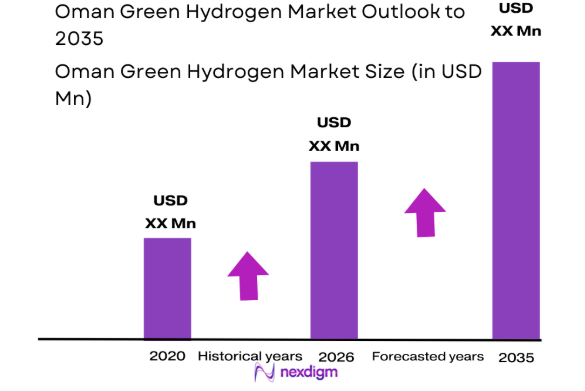
The Oman Green Hydrogen market is rapidly evolving, supported by strong governmental push for diversification of energy sources and global trends favoring renewable energy solutions. The market size is currently estimated at USD ~ million, driven by significant investments in clean energy infrastructure, technological advancements, and global decarbonization goals. This growth is further stimulated by Oman’s favorable natural resources, including abundant solar and wind power, which make green hydrogen production a viable and attractive option for both domestic and international markets.
Oman is positioning itself as a key player in the Middle East’s green hydrogen sector. The country’s strategic location and vast renewable energy potential have attracted international attention. Cities like Muscat are becoming central hubs for green hydrogen development, with major projects aimed at producing and exporting hydrogen to global markets, particularly in Europe and Asia. Oman’s national strategies align well with global energy trends, fostering a competitive edge in the production and export of green hydrogen.
Market Segmentation
By System Type
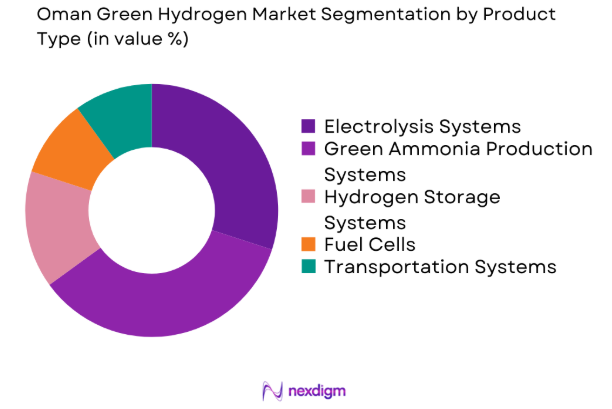
The Oman Green Hydrogen market is segmented by system type into electrolysis systems, green ammonia production systems, hydrogen storage systems, fuel cells, and transportation systems. Electrolysis systems dominate the market, driven by their ability to efficiently convert renewable energy into hydrogen through water splitting. This method is particularly attractive for Oman, given its abundant renewable resources such as solar and wind. Electrolysis provides a scalable and cost-effective solution, positioning it as the preferred technology for large-scale hydrogen production.
By Platform Type
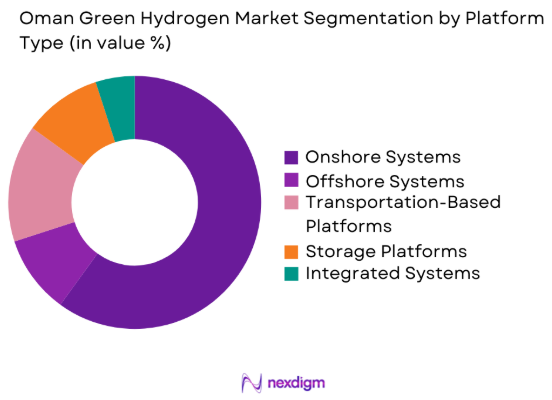
The Oman Green Hydrogen market is also segmented by platform type into onshore systems, offshore systems, transportation-based platforms, storage platforms, and integrated systems. Onshore systems have a dominant market share due to their cost-effectiveness and alignment with Oman’s abundant land resources for renewable energy production. Onshore platforms allow for easier integration with existing energy infrastructure and provide a more sustainable and scalable solution compared to offshore and other platform types.
Competitive Landscape
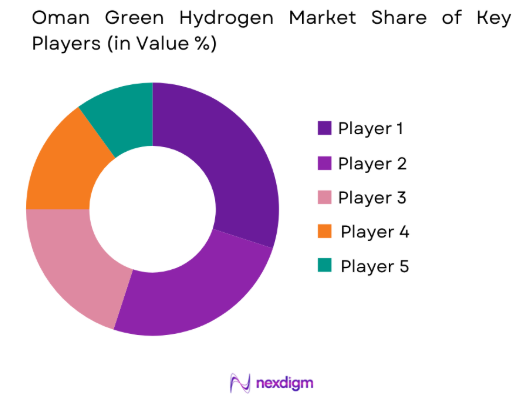
The Oman Green Hydrogen market is becoming more competitive as both local and international companies aim to capitalize on the growing demand for clean energy solutions. Major global players, such as Siemens Energy, Linde, and Air Products, are collaborating with regional entities to enhance their market presence and contribute to large-scale green hydrogen projects. This collaboration drives technological innovations, reduces production costs, and supports Oman’s ambitions to become a key global exporter of green hydrogen.
| Company Name | Establishment Year | Headquarters | Technology Focus | Market Reach | Key Products | Revenue | Additional Parameter |
| Oman Hydrogen Company | 2020 | Muscat, Oman | ~ | ~ | ~ | ~ | ~ |
| Siemens Energy | 1847 | Munich, Germany | ~ | ~ | ~ | ~ | ~ |
| Linde | 1907 | Dublin, Ireland | ~ | ~ | ~ | ~ | ~ |
| Air Products and Chemicals | 1940 | Allentown, USA | ~ | ~ | ~ | ~ | ~ |
| Nel ASA | 1927 | Oslo, Norway | ~ | ~ | ~ | ~ | ~ |
Oman Green Hydrogen Market Analysis
Growth Drivers
Government Support
The Omani government has demonstrated strong support for the green hydrogen market through policies focused on reducing carbon emissions and diversifying the energy mix. By investing in infrastructure, offering tax incentives to clean energy companies, and fostering international partnerships, Oman aims to become a key player in the global hydrogen market. Government backing creates a stable environment for large-scale green hydrogen projects, making it an attractive investment for both private and international stakeholders. Additionally, green hydrogen is a key component of Oman’s long-term energy strategy, contributing to energy security and economic diversification, ensuring the nation’s sustainability and competitiveness in the future energy landscape.
Technological Advancements
Advancements in electrolysis technology are a key driver for green hydrogen production in Oman. With improved efficiency and reduced costs, electrolysis systems have become increasingly viable for large-scale hydrogen production. Ongoing research is focused on optimizing electrolyzer technology and exploring more cost-effective production methods. These innovations are expected to improve the competitiveness of green hydrogen, making it a more attractive option for both domestic energy production and export. Additionally, growing interest in hydrogen storage technologies and fuel cells further contributes to the market’s overall growth. As these technologies evolve, they will help enhance the scalability and sustainability of Oman’s green hydrogen sector.
Market Challenges
Capital Investment Requirements
A major challenge for Oman’s green hydrogen market is the high capital investment required for developing large-scale electrolysis systems, hydrogen storage infrastructure, and transportation solutions. While the long-term benefits are substantial, the initial capital expenditure can be prohibitive for many potential market participants. This challenge is especially significant in the early stages, where large-scale infrastructure development is essential to create a functioning hydrogen ecosystem. Securing adequate financing and navigating complex funding models further complicate market entry, posing barriers for new players looking to capitalize on Oman’s green hydrogen opportunities. Overcoming these financial hurdles is crucial for driving the market’s growth and attracting necessary investments.
Grid Integration and Storage
A key challenge for Oman’s green hydrogen market is integrating hydrogen production and storage systems into the existing energy grid. Oman’s renewable energy infrastructure must be upgraded to manage the variability of green hydrogen production. Efficient energy storage solutions are vital for balancing supply and demand, particularly when renewable energy generation fluctuates. Although storage technologies are advancing, there remains a need for large-scale systems capable of storing excess hydrogen during periods of high production. Addressing this challenge is essential for ensuring the scalability, reliability, and long-term success of Oman’s green hydrogen market, enabling it to meet growing energy demands and export opportunities.
Opportunities
Hydrogen Export Market
Oman has a strong opportunity to become a leading exporter of green hydrogen, particularly to key global markets like Europe and Asia. As demand for clean energy solutions grows and the global push for decarbonization intensifies, Oman is well-positioned to leverage its vast renewable energy resources. The country’s strategic location further enhances its ability to export hydrogen to international markets. By investing in large-scale green hydrogen production facilities and necessary export infrastructure, Oman can tap into the increasing global demand for sustainable energy. This will drive economic growth, enhance the nation’s competitive edge, and solidify its role as a significant player in the global green hydrogen market.
Public-Private Partnerships
Increased collaboration between the Omani government and private sector companies offers a key opportunity to accelerate green hydrogen infrastructure development. Public-private partnerships and joint ventures can drive the large-scale deployment of electrolysis systems, hydrogen storage solutions, and transport infrastructure. These collaborations will reduce the financial burden on the government while bringing in international expertise and investment. By combining the strengths of both sectors, Oman can scale up green hydrogen production more effectively, strengthen its position in the global market, and enhance its competitive advantage in the rapidly expanding renewable energy sector. This approach is vital for the nation’s long-term green hydrogen ambitions.
Future Outlook
The future of Oman’s green hydrogen market looks promising, with continued investment in renewable energy infrastructure and technological advancements. Government initiatives to support green hydrogen production, along with the growing international demand for sustainable energy solutions, will fuel market growth. Over the next five years, the market is expected to benefit from further cost reductions in electrolysis technology, advancements in hydrogen storage, and the development of efficient transportation networks. These factors, combined with Oman’s strategic location and abundant renewable resources, will position the country as a leading player in the global green hydrogen market.
Major Players
- Oman Hydrogen Company
- Siemens Energy
- Linde
- Air Products and Chemicals
- Nel ASA
- Green Hydrogen Systems
- Enel Green Power
- Plug Power
- BP
- Ørsted
- Shell
- TotalEnergies
- thyssenkrupp Uhde Chlorine Engineers
- IHI Corporation
- McDermott
Key Target Audience
- Investments and venture capitalist firms
- Government and regulatory bodies
- Energy producers
- Hydrogen technology providers
- Renewable energy companies
- Environmental organizations
- Energy infrastructure developers
- International trade and export companies
Research Methodology
Step 1: Identification of Key Variables
Identify the key factors that influence the green hydrogen market, including government policies, technological developments, and market trends.
Step 2: Market Analysis and Construction
Conduct a comprehensive market analysis by collecting data from primary and secondary sources, including industry reports, expert opinions, and market trends.
Step 3: Hypothesis Validation and Expert Consultation
Validate the findings through expert consultations and hypothesis testing to ensure the accuracy and reliability of the market data.
Step 4: Research Synthesis and Final Output
Synthesize the research findings into a detailed and actionable report, providing a clear market overview, analysis, and recommendations for stakeholders.

- Executive Summary
- Research Methodology (Definitions, Scope, Industry Assumptions, Market Sizing Approach, Primary & Secondary Research Framework, Data Collection & Verification Protocol, Analytic Models & Forecast Methodology, Limitations & Research Validity Checks)

- Market Definition and Scope
- Value Chain & Stakeholder Ecosystem
- Regulatory / Certification Landscape
- Sector Dynamics Affecting Demand
- Strategic Initiatives & Infrastructure Growth

- Growth Drivers
Increasing Demand for Clean Energy Solutions
Government Initiatives Supporting Green Hydrogen Adoption
Global Shift Toward Sustainable Energy Systems - Market Challenges
High Capital Investment Requirements
Technological Limitations in Hydrogen Production
Regulatory and Certification Challenges - Market Opportunities
Development of Hydrogen-based Mobility Solutions
Expansion of Hydrogen Export Markets
Partnerships with Global Green Technology Companies - Trends
Integration of AI in Hydrogen Production Systems
Rise in Green Hydrogen Investments
Technological Advancements in Electrolysis - Government Regulations
- SWOT Analysis of Key Competitors
- Porter’s Five Forces

- By Market Value, 2020-2025
- By Installed Units, 2020-2025
- By Average System Price, 2020-2025
- By System Complexity Tier, 2020-2025

- By System Type (In Value%)
Electrolysis Systems
Green Ammonia Production Systems
Hydrogen Storage Systems
Fuel Cells
Transportation Systems - By Platform Type (In Value%)
Onshore Systems
Offshore Systems
Transportation-Based Platforms
Storage Platforms
Integrated Systems - By Fitment Type (In Value%)
On-premise Solutions
Cloud-based Solutions
Hybrid Solutions
Modular Solutions
Integrated Solutions - By End User Segment (In Value%)
Power Generation
Transportation
Industrial Applications
Agriculture
Residential - By Procurement Channel (In Value%)
Direct Procurement
Government Tenders
Private Sector Procurement
Online Bidding Platforms
Third-party Distributors

- Market Share Analysis
- Cross Comparison Parameters (Electrolysis Efficiency, Hydrogen Storage Capacity, Fuel Cell Efficiency, Market Reach, Government Support, Production Cost, Scalability, Technological Maturity, Supply Chain Integration, Environmental Impact)
- SWOT Analysis of Key Competitors
- Pricing & Procurement Analysis
- Key Players
Oman Hydrogen Company
Siemens Energy
Air Products and Chemicals
Linde
Iberdrola
Green Hydrogen Systems
Enel Green Power
Plug Power
Nel ASA
Thyssenkrupp Uhde Chlorine Engineers
AquaVentus
BP
E.ON
Ørsted
Shell

- Growth of Hydrogen Demand in Power Generation
- Rise of Hydrogen as Fuel for Transport
- Increasing Adoption of Hydrogen in Industrial Sectors
- Government-backed Green Hydrogen Projects

- Forecast Market Value, 2026-2035
- Forecast Installed Units, 2026-2035
- Price Forecast by System Tier, 2026-2035
- Future Demand by Platform, 2026-2035


 Request a Sample
 Ask for Customization
 Get a Quote
 Enquire Now