

 Download PDF
 Download PDF
Market Overview
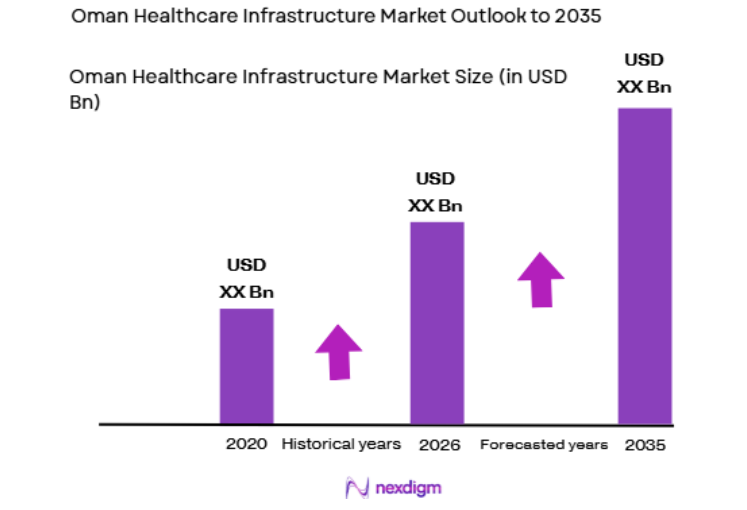
Based on a recent historical assessment, the Oman Healthcare Infrastructure Market is valued at approximately USD ~ billion. The market growth is primarily driven by significant investments in the expansion of healthcare facilities, including hospitals, diagnostic centers, and specialty care units. Government initiatives to enhance healthcare services, along with the increasing demand for quality medical services due to population growth and the rising prevalence of chronic diseases, contribute to the continued expansion of healthcare infrastructure in the country.
Muscat, the capital city, is the dominant hub for healthcare infrastructure development in Oman due to its concentration of advanced healthcare facilities and medical centers. The city’s well-established healthcare system, supported by both public and private institutions, is the primary driver of the sector’s growth. Government-backed health initiatives and the presence of key healthcare providers in Muscat continue to make it the focal point for medical infrastructure development, with ongoing projects to expand the availability and quality of healthcare services in both urban and rural areas of Oman.
Market Segmentation
By Facility Type
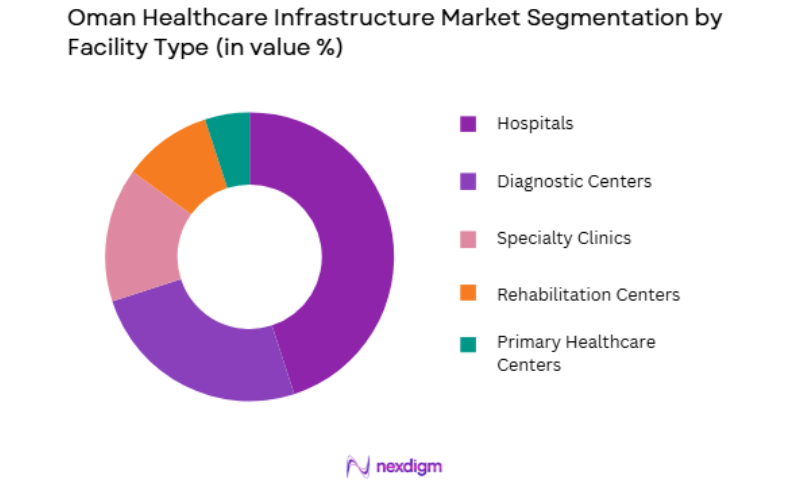
Oman Healthcare Infrastructure market is segmented by facility type into Hospitals, Diagnostic Centers, Specialty Clinics, Rehabilitation Centers, and Primary Healthcare Centers. Recently, Hospitals have a dominant market share due to the increasing demand for comprehensive healthcare services across Oman. The government has been heavily investing in the construction and expansion of public hospitals, focusing on enhancing the country’s capacity to provide advanced medical treatments and specialized care. Hospitals in Oman play a vital role in offering tertiary and emergency care services, which makes them crucial to the healthcare infrastructure. The establishment of multi-specialty hospitals and the upgrade of existing ones to offer high-quality treatment in areas such as cardiology, oncology, and orthopedics are key drivers of this segment’s growth. As the demand for specialized healthcare services rises, hospitals continue to attract significant investments, further solidifying their leading position in the market.
By Ownership Type
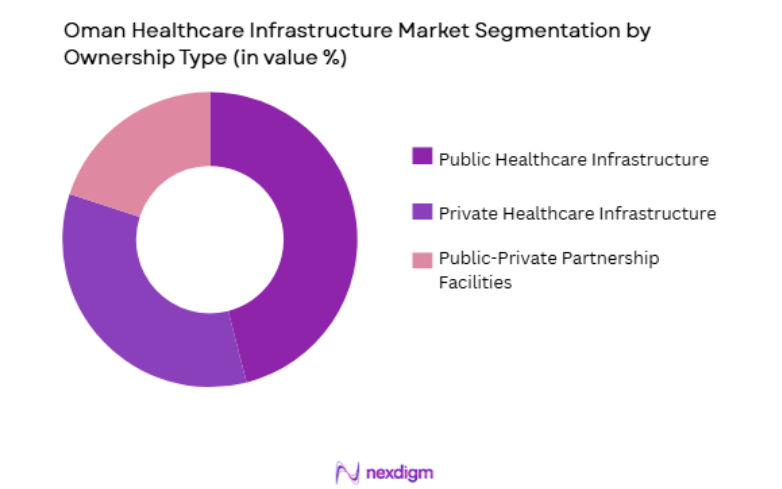
Oman Healthcare Infrastructure market is segmented by ownership type into Public Healthcare Infrastructure, Private Healthcare Infrastructure, and Public-Private Partnership (PPP) Facilities. Recently, Public Healthcare Infrastructure has a dominant market share due to the government’s significant role in providing healthcare services to the population. Oman’s government has been a major investor in healthcare infrastructure, establishing and expanding public hospitals and clinics to meet the growing healthcare needs of its citizens. Public healthcare initiatives are part of the country’s broader goal to improve accessibility, quality, and affordability of healthcare services. The government’s commitment to universal healthcare access and its ongoing investments in public healthcare facilities strengthen the dominance of this segment. Moreover, public healthcare facilities are increasingly equipped with advanced medical technologies and offer specialized services that attract patients from various regions within Oman.
Competitive Landscape
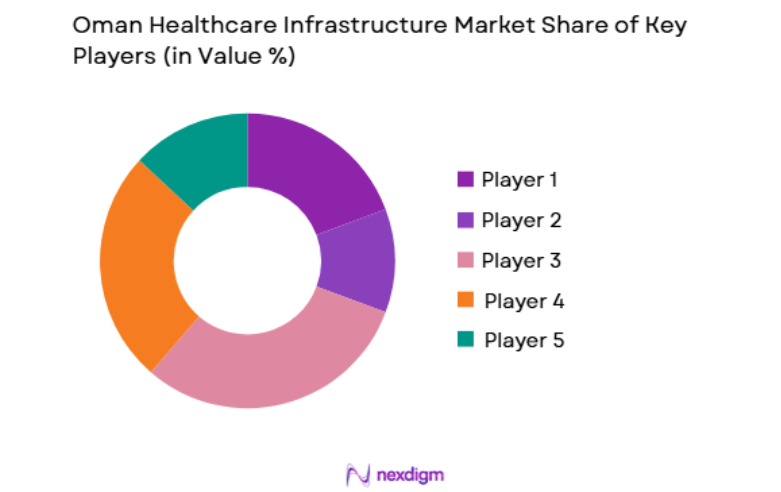
The Oman Healthcare Infrastructure Market is competitive, with both public and private healthcare providers contributing to the market’s growth. The government has made substantial investments in expanding public healthcare facilities, while private healthcare providers are focusing on offering specialized services in high-demand areas such as oncology, cardiology, and orthopedics. There is also an increasing trend of public-private partnerships, which aim to combine the strengths of both sectors in addressing the healthcare needs of the population. As the market expands, consolidation is expected, with larger players investing in the development of multi-specialty hospitals and diagnostic centers. Competitive strategies include innovation in medical technologies, infrastructure development, and improved healthcare service delivery.
| Company Name | Establishment Year | Headquarters | Technology Focus | Market Reach | Key Products | Revenue | Market-Specific Parameter |
| Oman Medical Group | 2001 | Muscat | ~ | ~ | ~ | ~ | ~ |
| Muscat Private Hospital | 2010 | Muscat | ~ | ~ | ~ | ~ | ~ |
| Khoula Hospital | 1978 | Muscat | ~ | ~ | ~ | ~ | ~ |
| Al Seeb Hospital | 2012 | Al Seeb | ~ | ~ | ~ | ~ | ~ |
| Nizwa Hospital | 1995 | Nizwa | ~ | ~ | ~ | ~ | ~ |
Oman Healthcare Infrastructure Market Analysis
Growth Drivers
Government Healthcare Investment
Government Healthcare Investment is a key growth driver in the Oman Healthcare Infrastructure Market. The Omani government has been consistently increasing its investment in healthcare infrastructure as part of its Vision 2040 plan, which includes building new hospitals, expanding existing healthcare facilities, and enhancing the quality of care. This investment has resulted in the establishment of modern hospitals, diagnostic centers, and specialized medical institutions, which help address the growing demand for healthcare services due to the rising population and the increasing prevalence of chronic diseases. Government-backed healthcare initiatives not only improve healthcare access but also provide advanced medical technologies and highly trained professionals, which support the overall growth of the healthcare infrastructure. Furthermore, the government’s policy to increase healthcare expenditure and enhance healthcare accessibility in both urban and rural areas strengthens the foundation for continuous infrastructure growth.
Growing Demand for Specialized Healthcare Services
Growing Demand for Specialized Healthcare Services is another major driver of the Oman Healthcare Infrastructure Market. With an increasing population and the rising prevalence of chronic diseases, there is a higher demand for specialized healthcare services, including cardiology, oncology, orthopedics, and women’s health. As the Omani population ages, healthcare providers are focusing on expanding specialized services to meet the needs of patients requiring advanced treatment. The government and private sector have responded by building and upgrading hospitals with advanced diagnostic and treatment technologies. For instance, the expansion of cancer treatment centers and the establishment of specialized heart hospitals are part of efforts to provide high-quality care. Additionally, the development of specialized healthcare services helps position Oman as a regional leader in medical tourism, attracting patients from neighboring countries seeking advanced treatments that may not be available in their home countries.
Market Challenges
High Operational Costs
High Operational Costs represent a significant challenge for the Oman Healthcare Infrastructure Market. The establishment of modern healthcare facilities requires significant capital investment in infrastructure, medical technologies, and highly trained healthcare staff. Operational expenses, such as the maintenance of medical equipment, salaries of specialized medical professionals, and the cost of consumables, also add to the financial burden of healthcare providers. The high operational costs make it difficult for smaller private healthcare providers to compete with larger institutions that have more resources. Additionally, while the government has been investing in healthcare, funding constraints and budgetary challenges may limit the ability to sustain rapid growth in the healthcare infrastructure sector. Smaller healthcare providers in remote areas face difficulties in maintaining operational efficiency due to limited financial resources, which may hinder the overall expansion of the healthcare sector.
Regulatory Compliance and Quality Control
Regulatory Compliance and Quality Control present significant challenges for healthcare providers in Oman, as they must meet stringent local and international healthcare standards. The implementation of these regulations, which include patient safety protocols, medical certifications, and quality assurance measures, often requires significant investment in training, technology, and management systems. Healthcare providers must ensure compliance with regulations that govern facility construction, medical device usage, and patient data security, which can be complex and time-consuming. Non-compliance with regulatory requirements may lead to penalties, loss of accreditation, or reputational damage, which can significantly affect healthcare providers. As the demand for specialized healthcare services grows, maintaining compliance with regulatory standards becomes increasingly challenging, especially for newly established healthcare facilities in the private sector.
Opportunities
Expansion of Medical Tourism
Expansion of Medical Tourism represents a key opportunity in the Oman Healthcare Infrastructure Market, as Oman is increasingly becoming a destination for medical tourists seeking high-quality healthcare services. The country’s growing healthcare infrastructure, advanced medical technologies, and skilled healthcare professionals make it an attractive choice for patients from neighboring countries who are seeking specialized treatments, such as surgeries, cancer treatment, and fertility treatments. Oman’s strategic location in the GCC region and its government initiatives to promote medical tourism, including offering attractive treatment packages, further enhance its appeal as a medical tourism destination. The expansion of medical tourism provides significant growth opportunities for both public and private healthcare providers in Oman, particularly in specialized areas such as orthopedics, cardiology, and cosmetic surgery. As medical tourism continues to grow, it will drive further investments in healthcare infrastructure and the development of new medical facilities, which will enhance the country’s reputation as a leading medical destination.
Technological Advancements in Healthcare
Technological Advancements in Healthcare present a growing opportunity in the Oman Healthcare Infrastructure Market as hospitals and diagnostic centers adopt new technologies to improve patient care, operational efficiency, and treatment outcomes. Innovations in medical imaging, robotic surgery, artificial intelligence, and telemedicine have the potential to transform the healthcare landscape in Oman. The implementation of AI in diagnostics, for example, allows healthcare providers to improve accuracy and speed in detecting diseases, while robotic surgery enhances precision in complex procedures, leading to quicker recovery times for patients. Additionally, the increasing adoption of telemedicine platforms allows healthcare providers to extend their services to remote areas and provide consultations and follow-up care to patients without the need for physical visits. As these technologies become more prevalent, they will contribute to the expansion of healthcare services, improve healthcare delivery, and attract further investments in healthcare infrastructure.
Future Outlook
The Oman Healthcare Infrastructure Market is expected to see significant growth in the coming years, driven by government investments, the growing demand for specialized healthcare services, and technological advancements in the healthcare sector. Continued support for medical tourism, along with the increasing adoption of digital health solutions, will contribute to the sector’s expansion. As healthcare providers upgrade facilities and incorporate advanced technologies, the overall quality of care in Oman is expected to improve, positioning the country as a leader in healthcare in the GCC region.
Major Players
- Oman Medical Group
- Muscat Private Hospital
- Khoula Hospital
- Al Seeb Hospital
- Nizwa Hospital
- Aster DM Healthcare
- Al Nahdha Hospital
- Sultan Qaboos University Hospital
- Health Care Corporation
- Al Buraimi Hospital
- Al Hayat Medical Center
- Badr Al Samaa Group
- Royal Hospital
- International Medical Center
- Al Madinah Medical Center
Key Target Audience
- Government and regulatory bodies
- Hospital operators
- Healthcare infrastructure developers
- Medical device manufacturers
- Pharmaceutical companies
- Insurance companies
- Investments and venture capitalist firms
- Healthcare IT providers
Research Methodology
Step 1: Identification of Key Variables
Key market variables, including healthcare facility demand, population growth, government healthcare policies, and technological advancements, were identified to assess the market’s drivers and challenges.
Step 2: Market Analysis and Construction
The market analysis was constructed by examining healthcare infrastructure development, medical facility expansion, patient demographics, and healthcare spending patterns.
Step 3: Hypothesis Validation and Expert Consultation
Market assumptions were validated through consultations with healthcare providers, industry experts, and government officials to confirm emerging trends and market growth drivers.
Step 4: Research Synthesis and Final Output
The final report synthesized data from multiple sources, combining market research, expert insights, and government data to provide a comprehensive overview of the Oman Healthcare Infrastructure Market.

- Executive Summary
- Research Methodology (Definitions, Scope, Industry Assumptions, Market Sizing Approach, Primary & Secondary Research Framework, Data Collection & Verification Protocol, Analytic Models & Forecast Methodology, Limitations & Research Validity Checks)

- Market Definition and Scope
- Value Chain & Stakeholder Ecosystem
- Regulatory / Certification Landscape
- Sector Dynamics Affecting Demand

- Growth Drivers
Government investment in healthcare infrastructure through Oman Vision 2040
Increasing healthcare demand from a growing and aging population
Technological advancements and the integration of digital healthcare solutions - Market Challenges
High capital expenditure for large-scale infrastructure development
Limited availability of skilled labor in the healthcare sector
Regulatory and compliance challenges related to international healthcare standards - Market Opportunities
Collaborations with global healthcare providers for advanced medical infrastructure
Growing potential for healthcare tourism due to proximity to international markets
Increased adoption of telehealth and e-health solutions in remote areas - Trends
Shift toward smart healthcare infrastructure with IoT integration
Growth in private healthcare investments due to government incentives - Government Regulations
Health infrastructure standards set by the Ministry of Health
Healthcare policy reforms to encourage private sector participation
Regulations around healthcare data privacy and cybersecurity - SWOT Analysis
- Porter’s Five Forces

- By Market Value, 2020-2025
- By Installed Units, 2020-2025
- By Average System Price, 2020-2025
- By System Complexity Tier, 2020-2025

- By System Type (In Value%)
Hospital Infrastructure
Diagnostic Lab Infrastructure
Ambulatory Care Infrastructure
Rehabilitation and Long-term Care Infrastructure
Healthcare IT Infrastructure - By Platform Type (In Value%)
Public Healthcare Platforms
Private Healthcare Platforms
Hybrid Healthcare Platforms
Telemedicine Platforms
Mobile Healthcare Solutions - By Fitment Type (In Value%)
New Healthcare Infrastructure Developments
Expansion of Existing Healthcare Infrastructure
Upgrades and Renovations of Existing Facilities
Integration of Advanced Healthcare Technologies - By End User Segment (In Value%)
Hospitals and Medical Centers
Diagnostic Laboratories
Long-term Care and Rehabilitation Centers
Government Healthcare Institutions

- Market Share Analysis
- Cross Comparison Parameters (Government Investment, Private Sector Growth, Healthcare Service Quality, Technological Integration, Regulatory Support, Market Penetration by Private Healthcare, Healthcare Accessibility, Infrastructure Development Speed, Labor Availability, Public-Private Partnerships)
- SWOT Analysis of Key Competitors
- Pricing & Procurement Analysis
- Key Players
Oman Health Ministry
Aster DM Healthcare
NMC Health
Al Hayat Healthcare
International Medical Group
Medcare Hospitals
Qatar Foundation Health
Kingdom Hospital
Muscat Private Hospital
Salalah Private Hospital
Al-Nahda Hospital
Riyadh Care Group
Cleveland Clinic Abu Dhabi
Al Khobar Health Systems
Global Healthcare Solutions

- Increasing demand for specialized care facilities across Oman
- Public healthcare institutions leading infrastructure projects for primary healthcare
- Private sector investments driving innovation in healthcare facilities
- Increasing interest in long-term care infrastructure for an aging population

- Forecast Market Value, 2026-2035
- Forecast Installed Units, 2026-2035
- Price Forecast by System Tier, 2026-2035
- Future Demand by Platform, 2026-2035


 Request a Sample
 Ask for Customization
 Get a Quote
 Enquire Now