
 Download PDF
 Download PDF
Market Overview
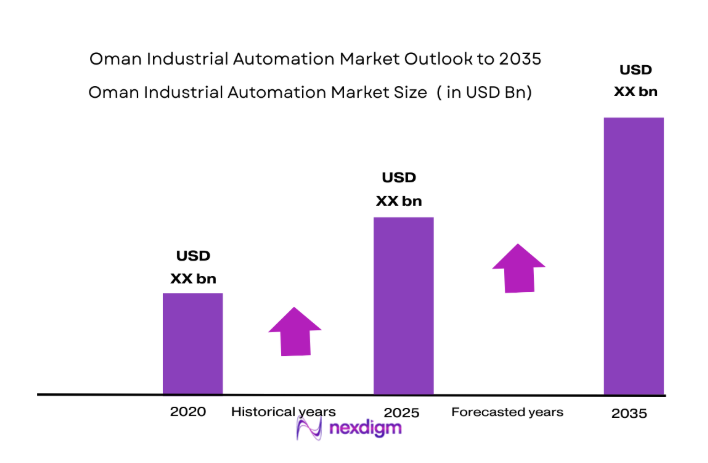
The Oman Industrial Automation market is experiencing significant growth, driven by rising demand for automation technologies in sectors such as manufacturing, oil and gas, and energy. Based on a recent historical assessment, the market size is projected to reach USD ~ billion. Factors such as increased government spending on infrastructure development, the need for operational efficiency, and advancements in AI and robotics are propelling this growth. Companies are investing heavily in automation to enhance productivity, reduce labor costs, and improve safety standards in industrial operations.
Oman’s dominance in the industrial automation market is attributed to its strategic location in the Gulf Cooperation Council (GCC) region, robust infrastructure, and government support for diversification of the economy. The country has become a key player in industries such as oil, gas, and manufacturing, which demand advanced automation systems. Cities like Muscat and Sohar are central to the market due to their industrial hubs and the presence of key infrastructure projects. Oman’s push toward adopting smart technologies and Industry 4.0 also enhances its position in the global market.
Market Segmentation
By Product Type:
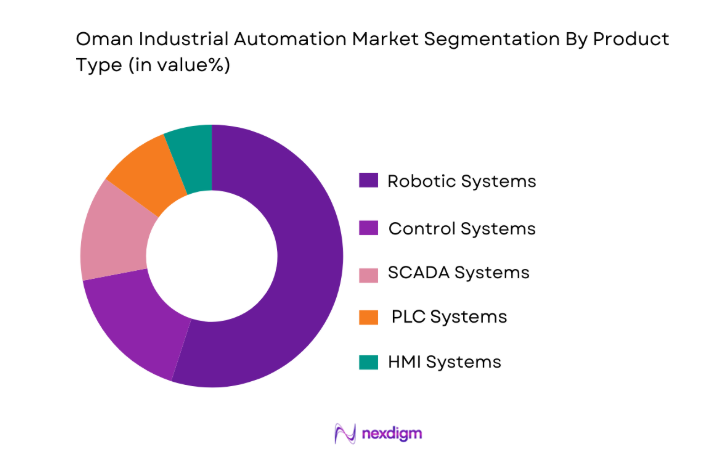
Oman’s industrial automation market is segmented by product type into various automation systems. Recently, robotic systems have dominated the market share due to increasing demand in manufacturing for precision and efficiency. The adoption of robotic systems has grown across industries such as automotive, electronics, and oil and gas, where the need for high productivity and reduced human error is crucial. Additionally, robotic systems are at the forefront of Oman’s push toward modernization and automation in line with global trends. These systems not only enhance operational efficiency but also help in meeting strict safety regulations. Their ability to work in hazardous environments, such as those found in the oil and gas sectors, further bolsters their dominance.
By Application Type:
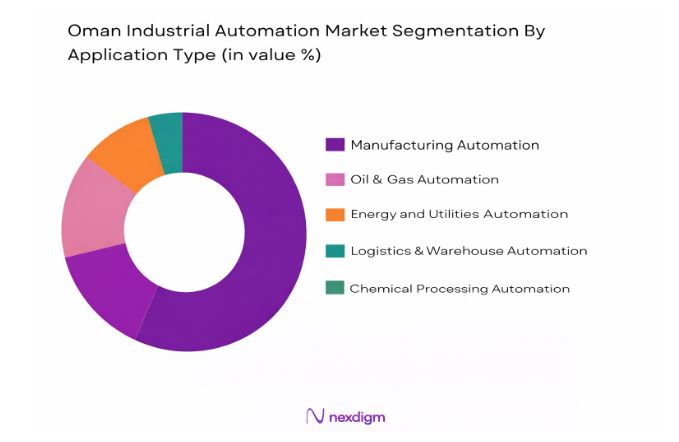
Oman Industrial Automation Market includes key sectors driving efficiency and productivity. Manufacturing Automation enhances production processes, while Oil & Gas Automation focuses on improving safety and operational efficiency. Energy and Utilities Automation optimizes energy generation and distribution, and Logistics & Warehouse Automation streamlines inventory management. Chemical Processing Automation ensures precision and safety in chemical production, contributing to the country’s industrial growth.
Competitive Landscape
The competitive landscape of Oman’s industrial automation market is characterized by the presence of both global and regional players. These companies are focusing on expanding their market footprint through strategic alliances, product innovations, and the introduction of Industry 4.0 solutions. Major players leverage cutting-edge technologies such as AI, IoT, and robotics to provide efficient automation solutions. Increasing collaboration between government bodies and private companies is also fostering a more competitive environment.
| Company Name | Establishment Year | Headquarters | Technology Focus | Market Reach | Key Products | Revenue |
| Siemens AG | 1847 | Germany | ~ | ~ | ~ | ~ |
| Rockwell Automation | 1903 | USA | ~ | ~ | ~ | ~ |
| ABB Ltd | 1988 | Switzerland | ~ | ~ | ~ | ~ |
| Emerson Electric Co. | 1890 | USA | ~ | ~ | ~ | ~ |
| Mitsubishi Electric Corp. | 1921 | Japan | ~ | ~ | ~ | ~ |
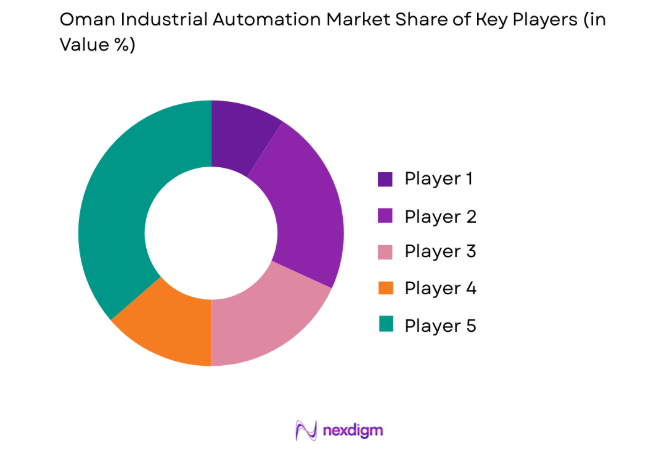
Oman Industrial Automation Market Analysis
Growth Drivers
Increased Government Investment in Industrial Development:
Oman’s government has placed industrial development at the core of its Vision 2040, aimed at diversifying its economy and boosting technological innovation. This investment is directly contributing to the growth of the industrial automation sector. The government’s policy focuses on infrastructure projects, energy, and manufacturing, all of which are integral to the automation industry. Furthermore, with significant investments in sectors like oil and gas, which rely heavily on automation for operations, the market is expected to expand at a rapid pace. This rise in government expenditure not only accelerates the adoption of automation systems but also boosts local manufacturing capabilities, making Oman a competitive player in the region’s automation market. The government is also encouraging the integration of digital technologies into various industries, thus contributing to a robust demand for automation products and solutions.
Adoption of Industry 4.0 Technologies:
The rapid advancement of Industry 4.0 technologies, such as robotics, AI, and IoT, is driving the Oman industrial automation market. These technologies offer enhanced operational efficiency, real-time monitoring, predictive maintenance, and autonomous operations. Companies across various sectors are embracing these technologies to improve productivity, minimize downtime, and streamline processes. As a result, the demand for automated systems is rising, particularly in manufacturing and energy industries. The global push for digital transformation in industries like oil and gas and manufacturing further fuels this growth. Companies are investing in automation systems that enable them to stay competitive in the global market, as they can improve their operational output and better meet customer demands. With continued innovation in Industry 4.0 technologies, the automation sector is set to witness sustained growth in Oman, with more industries adopting these advanced solutions.
Market Challenges
High Initial Investment in Automation Systems:
One of the key challenges faced by businesses in Oman is the high upfront cost of implementing industrial automation systems. While automation offers significant long-term benefits in terms of operational efficiency and cost reduction, the initial investment required to purchase, install, and maintain these systems is considerable. This barrier is particularly pronounced for small and medium-sized enterprises (SMEs), which may not have the financial resources to afford such large investments. Furthermore, the complexity of integrating automation systems with existing infrastructure presents another financial hurdle. For many companies, this results in delays in adopting automation technologies or even opting for less advanced solutions. Despite the potential cost savings, the high capital expenditure remains a significant challenge that needs to be addressed for wider automation adoption across industries in Oman.
Shortage of Skilled Labor for Automation Systems:
Another challenge impacting the growth of Oman’s industrial automation market is the shortage of a skilled workforce to operate and maintain advanced automation systems. As automation becomes increasingly integral to industrial operations, the demand for highly trained professionals with expertise in robotics, AI, and industrial IoT is surging. However, the local labor market in Oman lacks sufficient numbers of skilled workers in these fields, leading to difficulties in implementation and system maintenance. Without proper technical expertise, companies face challenges in maximizing the efficiency of their automation systems. Furthermore, this shortage of skilled labor could result in higher training costs and delays in automation project timelines. Addressing this skills gap will be crucial for the continued growth of the industrial automation market in Oman.
Opportunities
Emerging Demand for Smart Manufacturing Solutions:
The rise of smart manufacturing solutions presents a substantial opportunity for growth in Oman’s industrial automation market. Smart factories, powered by AI, IoT, and robotics, offer enhanced efficiency, reduced waste, and optimized production cycles. With Oman focusing on industrial diversification and the promotion of high-tech industries, manufacturers are increasingly adopting smart solutions to improve their processes. This shift towards smart manufacturing technologies is driven by the need for precision, efficiency, and flexibility in production lines. The integration of sensors and automated control systems into manufacturing processes enables real-time data collection, analysis, and decision-making, which boosts productivity and lowers costs. As manufacturers in Oman increasingly seek ways to stay competitive in a globalized market, the demand for smart manufacturing systems is expected to rise, driving further growth in the industrial automation sector.
Growth in the Oil and Gas Industry:
Oman’s oil and gas industry continues to be a key contributor to the national economy. The demand for industrial automation in this sector is rising as companies strive to improve operational safety, efficiency, and productivity. Automation solutions are essential for managing complex operations in the oil and gas sector, particularly in upstream and downstream activities. The need to maintain optimal performance, reduce downtime, and ensure compliance with stringent environmental regulations is driving the demand for advanced automation systems. As the country focuses on increasing oil production and enhancing the operational efficiency of its refineries, automation technologies such as robotics, control systems, and predictive maintenance solutions will play a critical role. The continued growth of the oil and gas sector in Oman presents a significant opportunity for automation providers to expand their presence in this vital industry.
Future Outlook
Over the next five years, the Oman industrial automation market is expected to see substantial growth, driven by technological advancements, regulatory support, and demand-side factors. Smart manufacturing, robotics, and AI technologies will continue to evolve and be integrated into industrial operations. Government policies promoting digital transformation and industrial diversification will further fuel the adoption of automation systems across key sectors such as manufacturing, oil, and gas. These trends, coupled with increasing investments in infrastructure and energy, will position Oman as a competitive hub for industrial automation in the GCC region.
Major Players
- Siemens AG
- Rockwell Automation
- ABB Ltd
- Emerson Electric Co.
- Mitsubishi Electric Corp.
- Schneider Electric
- Yokogawa Electric Corporation
- Honeywell International Inc.
- General Electric Company
- Fanuc Corporation
- Omron Corporation
- Bosch Rexroth AG
- Festo AG
- Kuka Robotics
- Mitsubishi Heavy Industries
Key Target Audience
- Investments and venture capitalist firms
- Government and regulatory bodies
- Oil and gas companies
- Manufacturing industries
- Energy and utilities
- Logistics and supply chain companies
- Engineering firms
- Automation technology providers
Research Methodology
Step 1: Identification of Key Variables
The first step involves defining the core variables that influence the market, including technological advancements, regulatory frameworks, and demand-side factors. This step ensures that all relevant market drivers and constraints are identified for analysis.
Step 2: Market Analysis and Construction
The next phase is to gather qualitative and quantitative data from primary and secondary sources to construct a comprehensive market model. This analysis focuses on understanding the market’s structure, key players, and future trends.
Step 3: Hypothesis Validation and Expert Consultation
Market hypotheses are validated through consultations with industry experts, stakeholders, and key players. This helps to refine assumptions and ensure the accuracy of the analysis.
Step 4: Research Synthesis and Final Output
The final output synthesizes all collected data into actionable insights, providing a detailed and comprehensive market report for stakeholders.

- Executive Summary
- Research Methodology (Definitions, Scope, Industry Assumptions, Market Sizing Approach, Primary & Secondary Research Framework, Data Collection & Verification Protocol, Analytic Models & Forecast Methodology, Limitations & Research Validity Checks)

- Market Definition and Scope
- Value Chain & Stakeholder Ecosystem
- Regulatory / Certification Landscape
- Sector Dynamics Affecting Demand

- Growth Drivers
Increased Government Investment in Automation
Technological Advancements in Robotics and AI
Rising Demand for Energy Efficiency in Industrial Operations - Market Challenges
High Initial Investment in Automation Systems
Lack of Skilled Workforce for Advanced Automation
Integration and Interoperability Issues - Market Opportunities
Adoption of Predictive Maintenance Solutions
Integration of IoT with Industrial Automation Systems
Growth in the Renewable Energy Sector Driving Automation Needs - Trends
Rise in Use of Industrial Robots in Manufacturing
Increased Adoption of AI for Process Automation
Shift Toward Energy-Efficient Automation Systems - Government Regulations
- SWOT Analysis of Key Competitors

- By Market Value, 2020-2025
- By Installed Units, 2020-2025
- By Average System Price, 2020-2025
- By System Complexity Tier, 2020-2025

- By System Type (In Value%)
Robotic Systems
Control Systems
Supervisory Control and Data Acquisition (SCADA)
Programmable Logic Controllers (PLCs)
Human-Machine Interface (HMI) Systems - By Platform Type (In Value%)
Manufacturing Platforms
Warehouse Platforms
Energy Management Platforms
Process Automation Platforms
Industrial IoT Platforms - By Fitment Type (In Value%)
On-premise Solutions
Cloud-based Solutions
Hybrid Solutions
Modular Solutions
Integrated Solutions - By EndUser Segment (In Value%)
Manufacturing Industries
Oil & Gas Sector
Energy and Utilities
Logistics and Warehousing
Chemical Processing

- Market Share Analysis
- CrossComparison Parameters (System Type, Platform Type, EndUser Segment, Fitment Type, Procurement Channel)
- SWOT Analysis of Key Competitors
- Pricing & Procurement Analysis
- Porter’s Five Forces
- Key Players
Siemens AG
Rockwell Automation
Schneider Electric
ABB Ltd
Emerson Electric Co.
Honeywell International Inc.
Mitsubishi Electric Corporation
Yokogawa Electric Corporation
General Electric Company
Omron Corporation
Bosch Rexroth AG
Fanuc Corporation
Festo AG
L&T Automation
Kuka Robotics

- Manufacturers’ Increasing Focus on Process Efficiency
- Oil & Gas Sector’s Drive for Automation in Harsh Environments
- Logistics Sector Leveraging Automation for Efficiency Gains
- Chemical Processing Industries’ Push Toward Safer and Smarter Operations

- Forecast Market Value, 2026-2035
- Forecast Installed Units 2026-2035
- Price Forecast by System Tier, 2026-2035
- Future Demand by Platform, 2026-2035


 Request a Sample
 Ask for Customization
 Get a Quote
 Enquire Now