
 Download PDF
 Download PDF
Market Overview
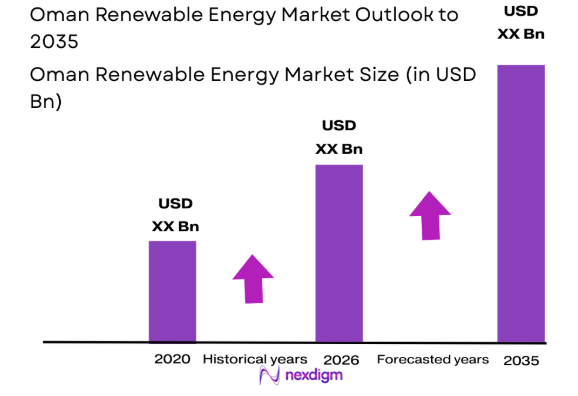
The Oman Renewable Energy Market is currently valued at approximately USD ~ billion, driven by the increasing demand for sustainable energy solutions and government support for clean energy projects. Investment in renewable energy sources, particularly solar and wind power, is expected to continue to drive market growth. Additionally, Oman’s commitment to achieving sustainability goals and reducing its dependency on fossil fuels has bolstered the expansion of renewable energy infrastructure.
The market is dominated by major players in the Middle East, with Oman, Dubai, and Abu Dhabi playing key roles in driving renewable energy adoption. These regions benefit from abundant natural resources, including strong solar and wind potential, making them ideal locations for renewable energy investments. The government’s efforts to diversify its energy sources through strategic initiatives and large-scale projects have solidified the region’s dominance in the renewable energy sector.
Market Segmentation
By Product Type
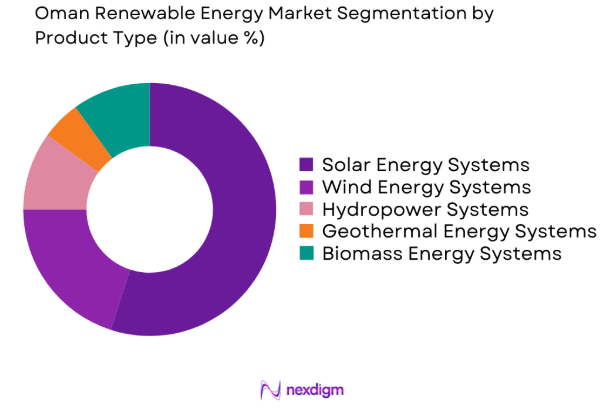
The Oman Renewable Energy market is segmented by product type into solar energy systems, wind energy systems, hydropower systems, geothermal energy systems, and biomass energy systems. Recently, solar energy systems have captured the largest market share due to factors such as abundant sunlight, a favorable geographical location, and ongoing government incentives. The decline in solar panel costs and increasing adoption of solar solutions in both residential and commercial sectors further strengthens its dominance.
By Platform Type
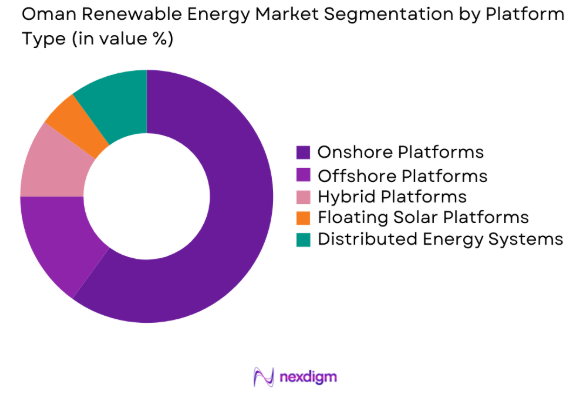
The Oman Renewable Energy market is segmented by platform type into onshore platforms, offshore platforms, hybrid platforms, floating solar platforms, and distributed energy systems. Among these, onshore platforms have seen the highest demand due to their lower installation costs and proven efficiency, making them a preferred choice for large-scale solar and wind projects. The government’s support for land-based energy projects and the abundance of suitable land have further propelled the dominance of onshore platforms.
Competitive Landscape
The competitive landscape of the Oman Renewable Energy market is characterized by a mix of local and international players. Major players are consolidating their positions by securing large-scale projects, leveraging advanced technologies, and forming strategic partnerships with government entities. This consolidation is enhancing market competition and driving innovation. The market is becoming increasingly competitive as firms aim to capture a larger share of the growing renewable energy demand.
| Company Name | Establishment Year | Headquarters | Technology Focus | Market Reach | Key Products | Revenue | Additional Parameter |
| ACWA Power | 2002 | Saudi Arabia | ~ | ~ | ~ | ~ | ~ |
| First Solar | 1999 | USA | ~ | ~ | ~ | ~ | ~ |
| Siemens Gamesa | 1976 | Spain | ~ | ~ | ~ | ~ | ~ |
| Enel Green Power | 2008 | Italy | ~ | ~ | ~ | ~ | ~ |
| Juwi AG | 1996 | Germany | ~ | ~ | ~ | ~ | ~ |
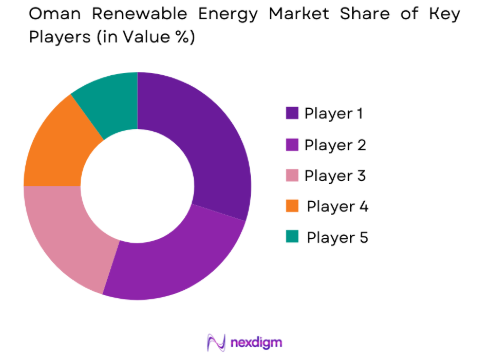
Oman Renewable Energy Market Analysis
Growth Drivers
Government Support for Renewable Energy
The Omani government’s strong commitment to diversifying its energy mix and reducing reliance on fossil fuels plays a pivotal role in the growth of the renewable energy market. Key initiatives, such as the Oman Renewable Energy Strategy, alongside specific policies incentivizing investments in solar and wind power, have attracted both local and international players. These government-backed incentives provide financial support and a favorable regulatory environment, making it more attractive for businesses to invest in renewable energy infrastructure. As a result, these strategic efforts not only drive market growth but also strengthen the country’s position as a competitive player in the renewable energy sector.
Technological Advancements in Renewable Energy
Advancements in renewable energy technologies, including enhanced solar panel efficiency and wind turbine innovations, are driving market growth. The decreasing costs of renewable technologies, especially solar panels, have made renewable energy more affordable and accessible for residential, commercial, and industrial sectors. These cost reductions enable broader adoption across various applications. Furthermore, innovations in energy storage solutions are playing a crucial role in enhancing the reliability and stability of renewable energy systems, addressing intermittency issues. As storage technologies improve, they enable more consistent and dependable energy generation, further encouraging the transition to renewable power sources and supporting the growth of the renewable energy market.
Market Challenges
High Capital Investment for Renewable Projects
The high initial capital investment required for large-scale renewable energy projects remains a significant challenge, despite the growing demand for clean energy. The costs associated with infrastructure development, technology acquisition, and installation are substantial, making it difficult for smaller players to compete in the market. Additionally, the capital-intensive nature of renewable projects puts pressure on governments to allocate sufficient funds, which may not always be feasible, slowing down the pace of energy transition. This financial barrier hampers the ability of many countries and companies to implement large-scale renewable projects, ultimately delaying the widespread adoption of clean energy solutions and the overall progress of the renewable energy sector.
Regulatory Barriers and Delays
The regulatory framework for renewable energy projects in Oman presents challenges that can delay project approvals and implementation. Despite the government’s efforts to support the sector, bureaucratic obstacles such as obtaining necessary permits, licenses, and conducting environmental assessments often slow the progress of new projects. These regulatory complexities can create uncertainty for developers, making it more difficult to plan and execute large-scale renewable energy initiatives. As a result, the slow pace of approvals may discourage private investment, which is crucial for driving market growth. These delays ultimately hinder the acceleration of renewable energy adoption in Oman, limiting the potential for rapid sector development and expansion.
Opportunities
Off-Grid Solar Solutions
There is a growing demand for off-grid solar solutions, especially in remote areas of Oman where traditional energy infrastructure is either absent or expensive to deploy. Off-grid systems, such as solar mini-grids and standalone solar home systems, provide a cost-effective and reliable alternative to conventional energy sources. The Omani government’s strong push for rural electrification, alongside the declining costs of solar technology, is expected to drive the widespread adoption of off-grid solar solutions. These systems not only provide a sustainable energy option but also improve energy access in underserved regions, contributing to Oman’s overall renewable energy goals and facilitating greater energy independence in remote areas.
Integration of Energy Storage Solutions
The integration of energy storage systems, such as batteries, with renewable energy sources presents a major opportunity in the market. These storage solutions address the intermittency challenges associated with renewable energy generation, ensuring a continuous and reliable power supply. The rising interest in hybrid systems, which combine renewable generation with energy storage, is likely to boost demand as businesses and governments aim to enhance grid stability and energy security. By stabilizing the power supply and enabling more efficient use of renewable energy, energy storage systems play a crucial role in accelerating the adoption of renewable sources and improving the overall reliability and resilience of energy infrastructure.
Future Outlook
The future outlook for the Oman Renewable Energy Market remains positive, with a strong push for diversification of energy sources and increased investment in both solar and wind energy. Technological innovations, along with government incentives and support, are expected to accelerate market growth. The shift towards sustainable energy solutions, particularly in light of global climate concerns, will continue to drive demand for renewables in Oman, with a focus on solar, wind, and hybrid systems. The market is poised for further expansion as infrastructure development and private sector involvement increase.
Major Players
- ACWA Power
- First Solar
- Siemens Gamesa
- Enel Green Power
- Juwi AG
- Vestas
- Ørsted
- Iberdrola
- SunPower
- Trina Solar
- Goldwind
- REC Group
- ABB
- Schneider Electric
- GE Renewable Energy
Key Target Audience
- Investments and venture capitalist firms
- Government and regulatory bodies
- Renewable energy project developers
- Solar and wind equipment manufacturers
- Utility companies
- Energy storage solution providers
- Contractors in energy infrastructure
- Independent power producers
Research Methodology
Step 1: Identification of Key Variables
This step involves identifying the core variables affecting the renewable energy market, such as technological advancements, government policies, and market demand.
Step 2: Market Analysis and Construction
In this phase, the market landscape is analyzed to identify trends, opportunities, challenges, and competitive forces, and to build a comprehensive market model.
Step 3: Hypothesis Validation and Expert Consultation
Market hypotheses are validated through consultation with industry experts, government agencies, and key stakeholders to ensure the accuracy of findings and predictions.
Step 4: Research Synthesis and Final Output
The final step synthesizes all research data into a comprehensive report that accurately reflects market trends, forecasts, and strategic recommendations.

- Executive Summary
- Research Methodology (Definitions, Scope, Industry Assumptions, Market Sizing Approach, Primary & Secondary Research Framework, Data Collection & Verification Protocol, Analytic Models & Forecast Methodology, Limitations & Research Validity Checks)

- Market Definition and Scope
- Value Chain & Stakeholder Ecosystem
- Regulatory / Certification Landscape
- Sector Dynamics Affecting Demand
- Strategic Initiatives & Infrastructure Growth

- Growth Drivers
Increased Government Investment in Renewable Energy Infrastructure
Technological Advancements in Solar and Wind Power
Rising Energy Demand and Need for Sustainable Solutions - Market Challenges
Regulatory and Policy Barriers
High Capital Investment for Renewable Energy Projects
Intermittency Issues with Renewable Energy Sources - Market Opportunities
Expansion of Solar Energy in Remote Areas
Development of Energy Storage Solutions
Private Sector Collaboration in Large-scale Projects - Trends
Increased Integration of Hybrid Energy Systems
Growth in Offshore Wind Energy Projects
Technological Advancements in Smart Grid Solutions - Government Regulations
- SWOT Analysis of Key Competitors
- Porter’s Five Forces

- By Market Value, 2020-2025
- By Installed Units, 2020-2025
- By Average System Price, 2020-2025
- By System Complexity Tier, 2020-2025

- By System Type (In Value%)
Solar Energy Systems
Wind Energy Systems
Hydropower Systems
Geothermal Energy Systems
Biomass Energy Systems - By Platform Type (In Value%)
Onshore Platforms
Offshore Platforms
Hybrid Platforms
Floating Solar Platforms
Distributed Energy Systems - By Fitment Type (In Value%)
On-grid Solutions
Off-grid Solutions
Hybrid Solutions
Microgrid Systems
Battery Storage Solutions - By End User Segment (In Value%)
Government Sector
Commercial Sector
Industrial Sector
Residential Sector
Utility Providers - By Procurement Channel (In Value%)
Direct Procurement
Government Tenders
Private Sector Procurement
Third-party Distributors
Online Procurement Platforms

- Market Share Analysis
- Cross Comparison Parameters (System Type, Platform Type, Procurement Channel, End User Segment, Fitment Type, Geographic Region, Technology Integration, Energy Storage Solutions, Government Incentives, Project Size)
- SWOT Analysis of Key Competitors
- Pricing & Procurement Analysis
- Key Players
ACWA Power
First Solar
Siemens Gamesa
Enel Green Power
EDF Renewables
Total Eren
Juwi AG
Vestas
Ørsted
JinkoSolar
Trina Solar
SunPower Corporation
Schneider Electric
Belectric
Mainstream Renewable Power

- Growing Demand from Government Sector for Renewable Projects
- Industrial Sector Adoption of Renewable Energy for Sustainability
- Residential Sector’s Interest in Self-generation Solutions
- Utility Providers Increasing Focus on Renewable Energy Mix

- Forecast Market Value, 2026-2035
- Forecast Installed Units, 2026-2035
- Price Forecast by System Tier, 2026-2035
- Future Demand by Platform, 2026-2035


 Request a Sample
 Ask for Customization
 Get a Quote
 Enquire Now