
 Download PDF
 Download PDF
Market Overview
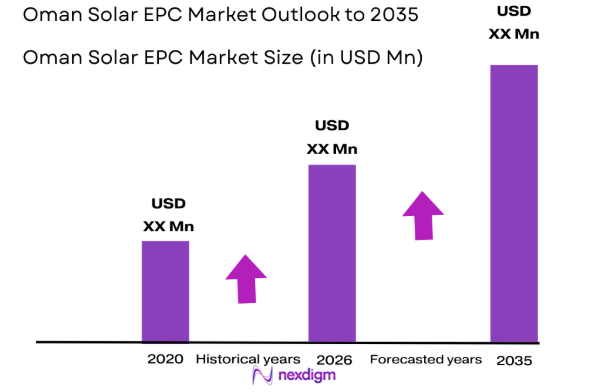
The Oman Solar EPC market is experiencing significant growth, driven by increasing investments in renewable energy projects. With government incentives and global environmental trends pushing for cleaner energy solutions, the market is expanding rapidly. Based on a recent historical assessment, the market size is valued at USD ~ million. Government initiatives and favorable policies have bolstered the demand for solar EPC projects, making solar power an increasingly viable energy solution for the country.
In Oman, cities such as Muscat and Salalah dominate the solar EPC market due to their strategic locations, strong infrastructure, and proximity to potential solar power sites. Muscat, as the capital, has become the center for large-scale solar projects, attracting both domestic and international investments. The region’s abundant sunshine and the government’s commitment to renewable energy make it an ideal location for solar power developments.
Market Segmentation
By System Type
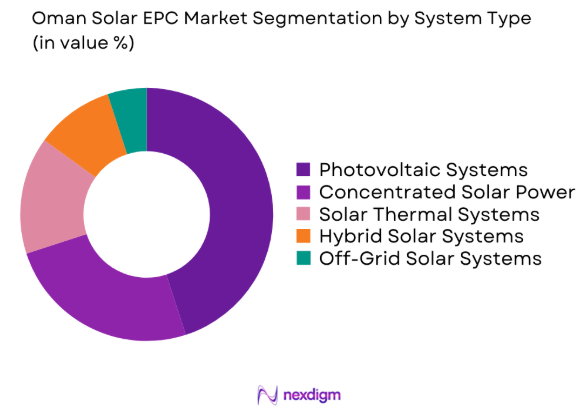
The Oman Solar EPC market is segmented by system type into photovoltaic systems, concentrated solar power systems, solar thermal systems, hybrid solar systems, and off-grid solar systems. Recently, photovoltaic systems have a dominant market share due to factors such as lower installation costs, scalability, and high efficiency in converting sunlight into electricity. The widespread adoption of these systems in both residential and commercial projects has further cemented their position as the leading system type in Oman.
By Platform Type
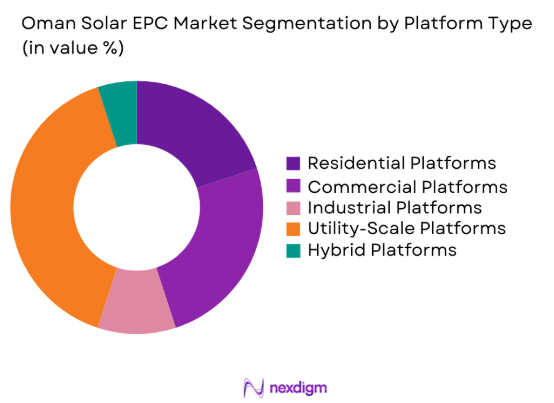
The Oman Solar EPC market is segmented by platform type into residential platforms, commercial platforms, industrial platforms, utility-scale platforms, and hybrid platforms. Utility-scale platforms have recently dominated the market share, driven by government incentives for large-scale projects and the growing demand for solar power from industrial sectors. The significant cost savings and long-term energy reliability of utility-scale solar systems have made them the preferred choice for power generation in Oman.
Competitive Landscape
The Oman Solar EPC market is highly competitive, with a growing number of local and international companies involved in the development of solar projects. Major players in the market focus on system efficiency, cost reduction, and technology innovation to capture market share. While the market is still developing, increasing demand for renewable energy solutions has encouraged market consolidation. Key players continue to expand their presence, leveraging strong government support and financing options to gain a competitive advantage.
| Company Name | Establishment Year | Headquarters | Technology Focus | Market Reach | Key Products | Revenue | Additional Parameter |
| First Solar | 1999 | USA | ~ | ~ | ~ | ~ | ~ |
| SunPower Corporation | 1985 | USA | ~ | ~ | ~ | ~ | ~ |
| JinkoSolar | 2006 | China | ~ | ~ | ~ | ~ | ~ |
| Siemens Gamesa | 1976 | Spain | ~ | ~ | ~ | ~ | ~ |
| Trina Solar | 1997 | China | ~ | ~ | ~ | ~ | ~ |
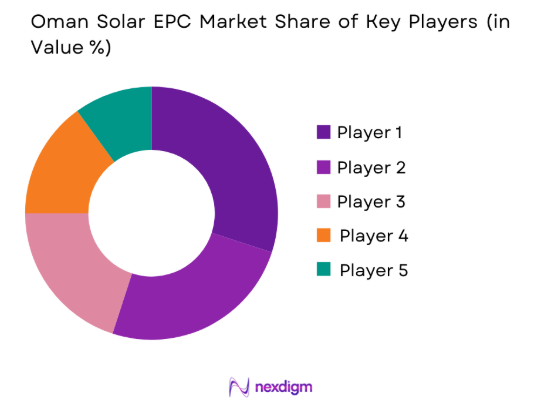
Oman Solar EPC Market Analysis
Growth Drivers
Government Support and Renewable Energy Goals
Government policies and incentives are crucial to the growth of the Oman Solar EPC market. The government has set ambitious renewable energy targets, aiming for 30% of its electricity to come from renewables by 2030, driving demand for solar power solutions. Financial incentives, including tax rebates and long-term contracts, have made solar projects more attractive and affordable for developers and investors. The push for economic diversification and a reduction in carbon emissions further supports the adoption of solar energy. These initiatives not only foster growth in the solar market but also contribute to Oman’s transition towards a more sustainable and diversified energy landscape.
Technological Advancements in Solar Energy
Technological advancements in solar power systems, such as more efficient photovoltaic cells, advanced inverters, and improved energy storage solutions, have lowered costs and enhanced performance. In Oman, these innovations have facilitated the widespread adoption of solar systems across residential, commercial, and utility-scale sectors. The introduction of bifacial solar panels, which capture light from both sides, is particularly beneficial in regions like Oman with high solar radiation. These technological improvements lead to higher energy output and cost-effectiveness, making solar power a more viable solution. As a result, advancements in solar technology are significantly accelerating the growth of the Oman Solar EPC market.
Market Challenges
High Initial Capital Investment
Despite favorable conditions for solar energy development, the high initial capital investment required for large-scale solar projects remains a significant challenge in Oman. The costs associated with land acquisition, system installation, and grid integration are substantial, making it difficult for smaller companies and investors to secure the necessary financing. While long-term savings, incentives, and the reduced cost of solar technology make solar power an attractive solution, the initial financial burden is a barrier to entry for many stakeholders. This challenge limits participation in the market, especially for those lacking access to significant capital, hindering the full potential of solar energy adoption in Oman.
Regulatory and Compliance Barriers
The regulatory environment in Oman presents challenges for solar energy projects, creating hurdles for developers and investors. Despite government incentives, the process for obtaining permits and approvals can be time-consuming and unclear. Compliance with environmental regulations and the need for coordination between various governmental agencies can result in delays, extending project timelines. Developers often face bureaucratic obstacles, which can increase project costs and slow down implementation. These regulatory complexities not only affect the pace of solar energy adoption but also impact the overall growth of the market, as delays in project execution can deter potential investments and slow progress toward renewable energy goals.
Opportunities
Expansion of Solar Power in Industrial and Commercial Sectors
The increasing demand for reliable and cost-effective energy in Oman’s industrial and commercial sectors offers significant opportunities for solar energy developers. Many industries are looking for alternative energy sources to reduce operational costs and enhance sustainability. Solar power systems, particularly large-scale and hybrid solutions, provide an efficient way for businesses to meet their energy needs while lowering costs. With ongoing government support and favorable incentives, the commercial and industrial sectors are expected to play a key role in driving future growth in the Oman Solar EPC market. As businesses increasingly prioritize renewable energy, the adoption of solar systems is set to expand across these sectors.
Off-Grid Solar Solutions for Remote Areas
There is growing potential for off-grid solar systems in Oman’s remote areas, where traditional grid infrastructure is either unavailable or too costly to implement. Off-grid solar solutions, such as small-scale installations and hybrid systems, provide a cost-effective and reliable power source for rural communities and remote industries. The government’s focus on rural electrification, along with rising private sector interest in off-grid projects, is expected to drive increased demand for solar energy solutions. These initiatives are set to play a crucial role in expanding the solar market, particularly in underserved regions, offering a sustainable energy alternative that enhances accessibility and reduces dependency on traditional energy sources.
Future Outlook
The future outlook for the Oman Solar EPC market is promising, with continued growth expected over the next five years. Key drivers such as government support, technological advancements, and increasing demand for renewable energy are expected to drive market expansion. As Oman works toward achieving its renewable energy targets, technological improvements in solar power systems and the increasing adoption of hybrid solar solutions will enhance market potential. Furthermore, regulatory support and investments in energy infrastructure will ensure that the market remains on a growth trajectory, providing opportunities for both local and international companies.
Major Players
- First Solar
- SunPower Corporation
- JinkoSolar
- Siemens Gamesa
- Trina Solar
- First Solar
- Canadian Solar
- LONGiGreen Energy
- SMA Solar Technology
- Vestas
- Enel Green Power
- GE Renewable Energy
- Total Eren
- Scatec Solar
- Lightsource BP
Key Target Audience
- Investments and venture capitalist firms
- Government and regulatory bodies
- Solar energy developers
- Commercial enterprises seeking renewable energy solutions
- Utility companies
- Renewable energy consultants
- Industrial energy managers
- Large-scale project contractors
Research Methodology
Step 1: Identification of Key Variables
The first step involves identifying the critical factors that influence the growth of the solar EPC market, including government policies, technological advancements, and economic factors.
Step 2: Market Analysis and Construction
This step includes gathering quantitative and qualitative data on the market’s size, growth trends, segmentation, and key players.
Step 3: Hypothesis Validation and Expert Consultation
Industry experts are consulted to validate the assumptions and data collected in the previous steps, ensuring the accuracy and relevance of the analysis.
Step 4: Research Synthesis and Final Output
The final step synthesizes the findings into a comprehensive report, providing actionable insights for stakeholders.

- Executive Summary
- Research Methodology (Definitions, Scope, Industry Assumptions, Market Sizing Approach, Primary & Secondary Research Framework, Data Collection & Verification Protocol, Analytic Models & Forecast Methodology, Limitations & Research Validity Checks)

- Market Definition and Scope
- Value Chain & Stakeholder Ecosystem
- Regulatory / Certification Landscape
- Sector Dynamics Affecting Demand
- Strategic Initiatives & Infrastructure Growth

- Growth Drivers
Government Support and Incentives
Technological Advancements in Solar Energy
Falling Solar Panel Prices - Market Challenges
High Initial Capital Investment
Regulatory and Compliance Barriers
Intermittency Issues and Grid Integration - Market Opportunities
Growing Demand for Off-Grid Solutions
Expansion of Hybrid Solar Systems
Private Sector Collaboration and Investment - Trends
Increase in Utility-Scale Solar Projects
Adoption of Energy Storage Systems
Integration of Solar Power with Smart Grids - Government Regulations
- SWOT Analysis of Key Competitors
- Porter’s Five Forces

- By Market Value, 2020-2025
- By Installed Units, 2020-2025
- By Average System Price, 2020-2025
- By System Complexity Tier, 2020-2025

- By System Type (In Value%)
Photovoltaic Systems
Concentrated Solar Power Systems
Solar Thermal Systems
Hybrid Solar Systems
Off-Grid Solar Systems - By Platform Type (In Value%)
Residential Platforms
Commercial Platforms
Industrial Platforms
Utility-Scale Platforms
Hybrid Platforms - By Fitment Type (In Value%)
Rooftop Solutions
Ground-Mounted Solutions
Floating Solar Solutions
Integrated Solutions
Modular Solutions - By End User Segment (In Value%)
Government
Private Sector
Commercial Establishments
Industrial Sectors
Residential Consumers - By Procurement Channel (In Value%)
Direct Procurement
Tenders and Auctions
Third-Party Procurement
Online Platforms
Private Sector Partnerships

- Market Share Analysis
- Cross Comparison Parameters (System Type, Platform Type, Procurement Channel, End User Segment, Fitment Type, Technology Adoption, Market Size, Installation Time, Performance Efficiency, Geographic Region)
- SWOT Analysis of Key Competitors
- Pricing & Procurement Analysis
- Key Players
First Solar
SunPower Corporation
JinkoSolar
Siemens Gamesa
Trina Solar
Vestas
Canadian Solar
Sungrow Power Supply Co.
SMA Solar Technology
Hanwha Q CELLS
Schneider Electric
LONGi Green Energy
NextEra Energy
Tata Power Solar Systems
Abengoa Solar

- Private Sector Adoption of Solar Solutions
- Government’s Role in Solar Power Projects
- Commercial and Industrial Demand
- Residential Market Expansion

- Forecast Market Value, 2026-2035
- Forecast Installed Units, 2026-2035
- Price Forecast by System Tier, 2026-2035
- Future Demand by Platform, 2026-2035


 Request a Sample
 Ask for Customization
 Get a Quote
 Enquire Now