
 Download PDF
 Download PDF
Market Overview
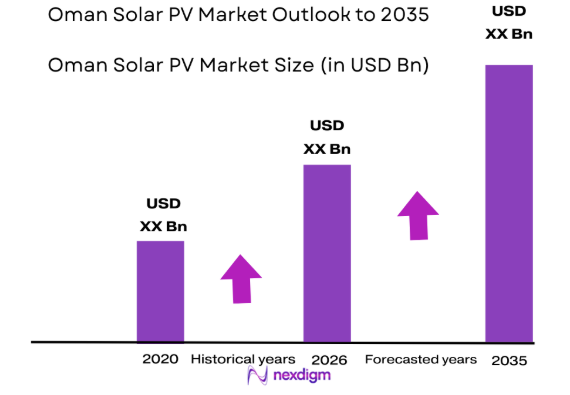
The market for Oman Solar PV systems is rapidly expanding, driven by significant investments in renewable energy, particularly solar power. Based on a recent historical assessment, the market size for solar PV systems is projected to reach USD ~ billion, bolstered by government initiatives such as Oman Vision 2040, which aims to diversify the country’s energy sources and reduce dependence on fossil fuels. Solar PV systems are gaining traction due to favorable climatic conditions, a strong government push for clean energy, and increasing awareness of sustainable energy solutions.
Oman has established itself as a dominant player in the renewable energy sector due to its vast desert areas, ideal for solar power generation. Cities like Muscat and Salalah have become hubs for solar power projects, attracting both domestic and international investments. Oman’s favorable policies, such as incentives for solar projects and a growing demand for clean energy, further solidify the country’s position in the solar energy landscape. The combination of favorable geography, government support, and growing environmental awareness is driving the growth of solar PV systems.
Market Segmentation
By Product Type
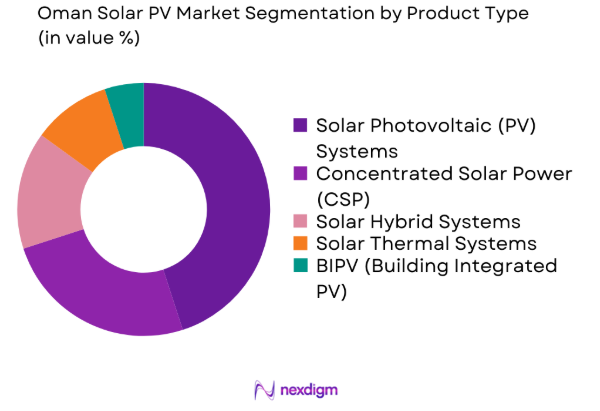
The Oman Solar PV market is segmented by product type into different sub-segments. Recently, Solar Photovoltaic (PV) Systems have captured a dominant market share due to factors such as ease of installation, efficiency, and cost-effectiveness. The high demand for clean energy and the country’s optimal geographical location for solar power generation further contribute to the dominance of this sub-segment. The expansion of commercial and residential installations is driving the demand for Solar PV Systems, making it the leading sub-segment in the market.
By End User Segment
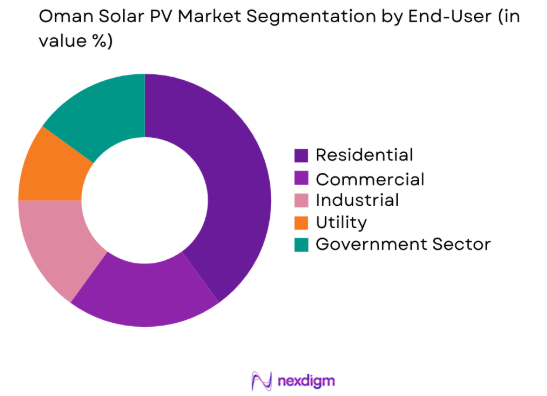
The solar PV market in Oman is also segmented by end-user into residential, commercial, industrial, utility, and government sectors. The residential sector has witnessed the highest demand due to the government’s residential solar incentives and growing consumer awareness about renewable energy’s cost-saving potential. Moreover, residential installations are driven by Oman’s abundant sunlight and the decreasing costs of solar technology, making solar energy more accessible to homeowners. This sub-segment is expected to remain dominant in the coming years.
Competitive Landscape
The competitive landscape of Oman’s solar PV market is characterized by the presence of both international and local players. The market is witnessing consolidation, with global solar companies partnering with local firms to tap into the rapidly growing renewable energy sector. The presence of major players such as First Solar, SunPower, and Jinko Solar, along with a focus on increasing local manufacturing, highlights the competitiveness of this market. Major players continue to expand their reach in Oman’s growing solar energy infrastructure, and strategic partnerships with government entities are crucial for market success.
| Company Name | Establishment Year | Headquarters | Technology Focus | Market Reach | Key Products | Revenue (USD) | Market-specific Parameter |
| First Solar | 1999 | United States | ~ | ~ | ~ | ~ | ~ |
| SunPower | 1985 | United States | ~ | ~ | ~ | ~ | ~ |
| Jinko Solar | 2006 | China | ~ | ~ | ~ | ~ | ~ |
| Trina Solar | 1997 | China | ~ | ~ | ~ | ~ | ~ |
| Canadian Solar | 2001 | Canada | ~ | ~ | ~ | ~ | ~ |
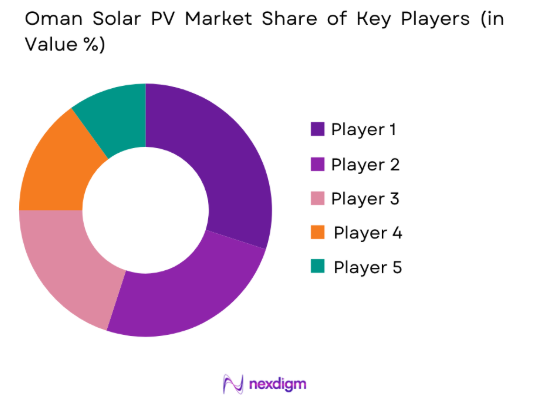
Oman Solar PV Market Analysis
Growth Drivers
Increase in Government Investments in Renewable Energy
Oman’s government has made significant investments in renewable energy, focusing heavily on solar power as part of its Oman Vision 2040. The goal is to diversify the country’s energy mix and decrease reliance on fossil fuels. These investments include offering incentives, tax exemptions, and financial support for solar projects, which have been pivotal in driving the growth of the solar PV market. The government’s commitment to sustainable energy and its proactive policies are expected to further boost the adoption of solar power in Oman. This strong backing is set to ensure continued growth and development in the solar PV market over the coming years.
Technological Advancements in Solar PV Efficiency
Solar technology has seen notable advancements in efficiency, cost reduction, and energy output. The ongoing development of high-efficiency solar panels, along with improvements in energy storage solutions, has significantly boosted the viability of solar PV systems across Oman. These technological innovations have made solar power increasingly affordable and reliable, making it a more attractive option for residential, commercial, and industrial applications. As a result, the adoption of solar PV systems has grown rapidly, expanding its market share. The combined impact of these technological advancements, along with favorable government policies, is accelerating the transition to solar energy, positioning it as a key player in Oman’s energy future.
Market Challenges
High Initial Capital Investment
Despite the decreasing costs of solar panels and related technologies, the initial capital investment for solar PV systems remains a significant hurdle. While the long-term savings from solar energy are substantial, the high upfront costs can be a barrier for many residential and commercial consumers. Although government incentives and financial support are available, they may not be sufficient to offset the substantial installation and infrastructure costs. These high initial expenses make it difficult for some to adopt solar energy, especially for smaller businesses and households. As a result, the market’s growth is hindered, and overcoming this financial barrier remains a key challenge for expanding solar PV adoption in Oman.
Intermittency and Storage Issues
Solar energy’s reliance on sunlight and its intermittent nature create challenges for grid integration. During periods of low sunlight, solar power generation decreases, making it difficult to ensure a consistent energy supply without effective storage solutions. This intermittency can lead to grid instability, especially as solar energy becomes a larger part of the energy mix. To fully harness the potential of solar PV, Oman must invest in advanced energy storage technologies. These systems will store excess energy generated during peak sunlight hours, ensuring a stable and reliable power supply, even when solar generation is low, and addressing the challenges associated with solar energy intermittency.
Opportunities
Expansion of Solar PV in Residential and Commercial Sectors
The residential and commercial sectors in Oman offer significant growth potential for solar PV systems. As awareness of the environmental and financial benefits of solar energy increases, more homeowners and businesses are opting to install solar panels to reduce energy costs. Government incentives further encourage this transition, making solar technology more accessible. As adoption grows in these sectors, the demand for advanced and more efficient solar solutions will rise, creating lucrative opportunities for market players. This trend is expected to continue as both residential and commercial customers seek to maximize their energy savings and contribute to Oman’s renewable energy goals, driving long-term market growth.
Collaborations with International Solar Technology Firms
Omani firms have a significant opportunity to collaborate with international solar technology companies to gain access to advanced technologies and expertise. These partnerships will allow local businesses to develop state-of-the-art solar products, enhance infrastructure, and increase production capacity. Collaborating with global players can also facilitate the transfer of international knowledge and best practices, helping local firms improve their technological capabilities. This integration will not only elevate the quality of solar products but also increase the competitiveness of Oman’s solar PV sector on the global stage. As a result, such collaborations are essential for accelerating the growth and success of Oman’s renewable energy market.
Future Outlook
The future of the solar PV market in Oman looks promising, with strong growth expected over the next five years. As technological innovations continue to reduce the cost of solar energy, and with government support through financial incentives and regulatory frameworks, solar energy is set to become an even more significant contributor to Oman’s energy mix. Furthermore, advancements in energy storage technologies will help overcome current challenges related to intermittency, making solar power more reliable and accessible to various sectors.
Major Players
- First Solar
- SunPower
- Jinko Solar
- Trina Solar
- Canadian Solar
- LONGiSolar
- REC Group
- JA Solar
- Yingli Solar
- GCL-Poly Energy
- Q-Cells
- Sharp Corporation
- Tata Power Solar
- Vestas Wind Systems
- Siemens Gamesa
Key Target Audience
- Investments and venture capitalist firms
- Government and regulatory bodies
- Residential consumers
- Commercial and industrial firms
- Solar energy distributors
- Energy storage companies
- Renewable energy project developers
- Utility companies
Research Methodology
Step 1: Identification of Key Variables
The first step involves identifying key variables influencing the solar PV market in Oman, such as technology adoption, government incentives, and market demand.
Step 2: Market Analysis and Construction
This step includes gathering primary and secondary data to construct an accurate market analysis, focusing on market trends, growth drivers, and key competitors.
Step 3: Hypothesis Validation and Expert Consultation
At this stage, hypotheses regarding the market’s future growth and potential challenges are validated through expert consultations, interviews, and market research.
Step 4: Research Synthesis and Final Output
The final step synthesizes the research findings into a comprehensive report, providing actionable insights and recommendations for stakeholders in the solar PV market.

- Executive Summary
- Research Methodology (Definitions, Scope, Industry Assumptions, Market Sizing Approach, Primary & Secondary Research Framework, Data Collection & Verification Protocol, Analytic Models & Forecast Methodology, Limitations & Research Validity Checks)

- Market Definition and Scope
- Value Chain & Stakeholder Ecosystem
- Regulatory / Certification Landscape
- Sector Dynamics Affecting Demand
- Strategic Initiatives & Infrastructure Growth

- Growth Drivers
Increase in Government Investments in Renewable Energy
Rising Demand for Clean and Sustainable Energy
Technological Advancements in Solar PV Efficiency - Market Challenges
High Initial Capital Investment
Intermittency and Storage Issues
Regulatory and Policy Uncertainty - Market Opportunities
Expansion of Solar PV in Residential and Commercial Sectors
Collaborations with International Solar Technology Firms
Development of Energy Storage Solutions - Trends
Integration of AI and IoT in Solar PV Systems
Surge in Off-grid Solar Solutions
Growth of Solar PV in Urban Areas - Government Regulations
- SWOT Analysis of Key Competitors
- Porter’s Five Forces

- By Market Value, 2020-2025
- By Installed Units, 2020-2025
- By Average System Price, 2020-2025
- By System Complexity Tier, 2020-2025

- By System Type (In Value%)
Solar Photovoltaic (PV) Systems
Concentrated Solar Power (CSP) Systems
Solar Hybrid Systems
Solar Thermal Systems
BIPV (Building Integrated Photovoltaic) Systems - By Platform Type (In Value%)
Ground-mounted Systems
Roof-top Systems
Floating Solar Systems
Building Integrated Systems
Hybrid Platform Systems - By Fitment Type (In Value%)
On-grid Systems
Off-grid Systems
Hybrid Systems
Portable Systems
Integrated Systems - By End User Segment (In Value%)
Residential
Commercial
Industrial
Utility
Government & Public Sector - By Procurement Channel (In Value%)
Direct Procurement
Government Tenders
Private Sector Procurement
Online Bidding Platforms
Third-party Distributors

- Market Share Analysis
- Cross Comparison Parameters (System Type, Platform Type, Procurement Channel, End User Segment, Fitment Type, Market Reach, Technological Focus, Price Point, Regulatory Compliance, Supplier Network)
- SWOT Analysis of Key Competitors
- Pricing & Procurement Analysis
- Key Players
First Solar
SunPower
Jinko Solar
Trina Solar
Canadian Solar
JA Solar
LONGi Solar
Risen Energy
Sungrow Power Supply Co.
Shunfeng International Clean Energy
REC Group
Tata Power Solar Systems Ltd.
Abu Dhabi Future Energy Company (Masdar)
Enel Green Power
Schneider Electric

- Residential Market Growth Driven by Energy Independence
- Commercial Sector’s Push for Sustainable Energy Solutions
- Industrial Adoption of Solar for Cost Reduction
- Government Support for Large-Scale Solar Initiatives

- Forecast Market Value, 2026-2035
- Forecast Installed Units, 2026-2035
- Price Forecast by System Tier, 2026-2035
- Future Demand by Platform, 2026-2035


 Request a Sample
 Ask for Customization
 Get a Quote
 Enquire Now