

 Download PDF
 Download PDF
Market Overview
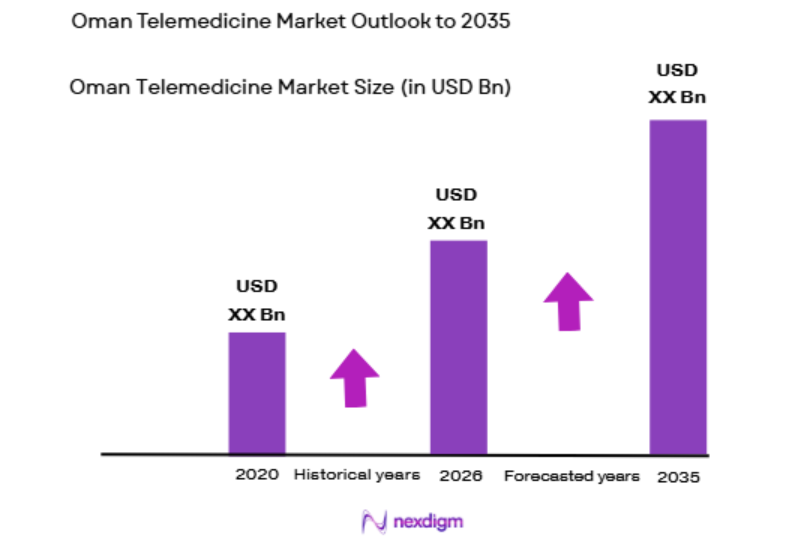
Based on a recent historical assessment, the Oman Telemedicine Market is valued at approximately USD ~ million. This market is driven by increasing healthcare demand, advancements in digital health technologies, and the growing preference for remote healthcare services. Government initiatives to enhance healthcare accessibility and reduce patient congestion through digital platforms have contributed to telemedicine’s rapid adoption. Additionally, the rising prevalence of chronic diseases and the need for continuous care are boosting the market for telemedicine services in Oman.
Muscat, the capital city, plays a central role in the Oman Telemedicine Market due to its concentration of healthcare providers and advanced digital infrastructure. The city is the focal point for digital health adoption, with several public and private healthcare institutions implementing telemedicine services to meet patient needs. The government’s focus on promoting digital health solutions and improving healthcare delivery, especially in underserved areas, positions Muscat as the driving force behind the market’s expansion. As the nation works towards broader healthcare coverage, Muscat continues to dominate the development and integration of telemedicine platforms.
Market Segmentation
By Service Type
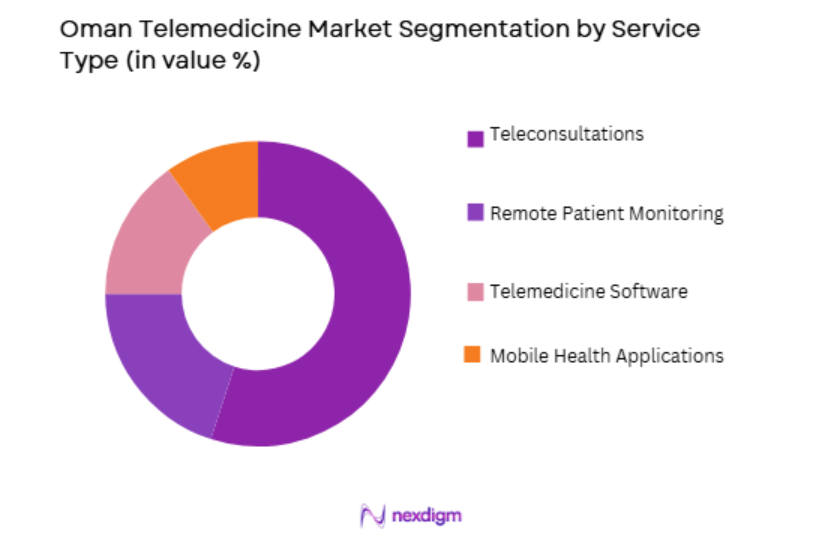
Oman Telemedicine market is segmented by service type into Teleconsultations, Remote Patient Monitoring, Telemedicine Software, and Mobile Health Applications. Recently, Teleconsultations have a dominant market share due to factors such as rising healthcare demand, limited access to specialists, and the need for convenient healthcare services. Teleconsultations allow patients to consult with healthcare providers remotely, ensuring accessibility to medical advice and treatment, especially in rural and remote areas. The convenience of virtual healthcare consultations, which eliminate the need for travel and reduce wait times, makes teleconsultations an attractive service option for both patients and healthcare providers. Moreover, the increased awareness and acceptance of telemedicine in Oman, accelerated by the COVID-19 pandemic, have significantly contributed to the growth of this sub-segment. The government’s support for telemedicine infrastructure and services has also been crucial in driving the widespread adoption of teleconsultations.
By End User
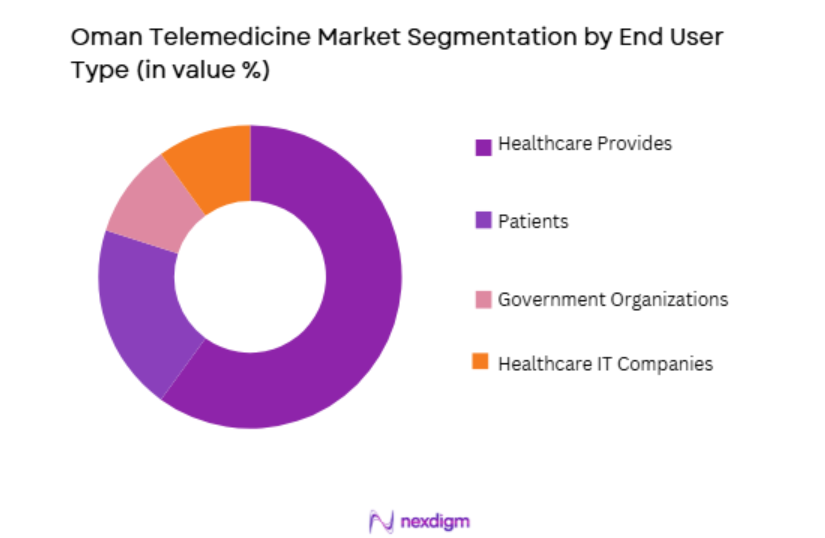
Oman Telemedicine market is segmented by end user into Healthcare Providers, Patients, Government Organizations, and Healthcare IT Companies. Recently, Healthcare Providers have a dominant market share due to the growing adoption of telemedicine platforms by hospitals, clinics, and private practitioners. Healthcare providers in Oman are increasingly integrating telemedicine services into their offerings to improve patient care, expand their reach, and enhance operational efficiency. The healthcare sector’s emphasis on digital transformation, combined with the government’s support for telehealth services, has led to widespread adoption by healthcare providers. Moreover, the increasing demand for specialty care, particularly in remote areas, has made telemedicine a valuable tool for healthcare professionals to provide timely medical consultations and monitor patient health remotely. The integration of telemedicine within healthcare institutions has resulted in a robust expansion of telemedicine services, consolidating the position of healthcare providers as the dominant end user in the market.
Competitive Landscape
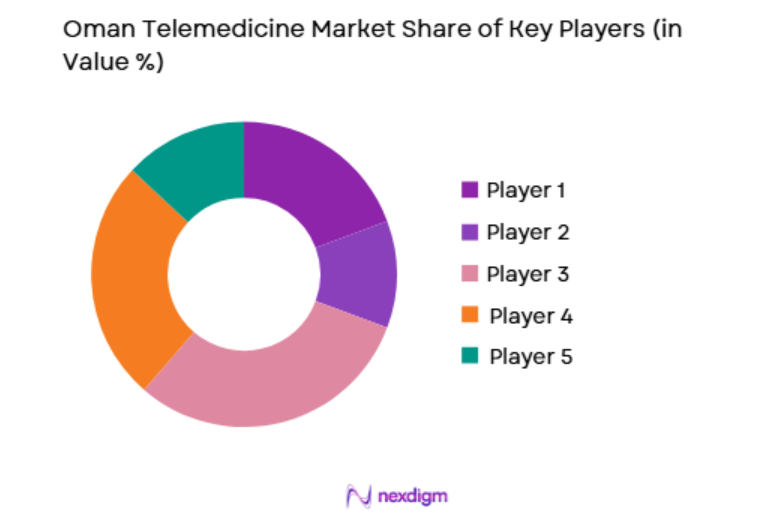
The Oman Telemedicine Market is highly competitive, with both local and international companies offering telemedicine solutions. The market is characterized by an increasing number of partnerships between healthcare providers, telemedicine technology providers, and government entities. Key players in the market are focusing on expanding their digital health services and integrating telemedicine solutions into the existing healthcare infrastructure. Competitive strategies include developing innovative telemedicine platforms, improving user experience, and enhancing connectivity to cater to a growing patient base. With the government’s push for digital health adoption, the market is seeing more collaboration, which further drives the sector’s growth.
| Company Name | Establishment Year | Headquarters | Technology Focus | Market Reach | Key Products | Revenue | Market-Specific Parameter |
| Oman Telemedicine | 2015 | Muscat | ~ | ~ | ~ | ~ | ~ |
| Cerner Corporation | 1979 | Kansas City, USA | ~ | ~ | ~ | ~ | ~ |
| Philips Healthcare | 1891 | Amsterdam, NL | ~ | ~ | ~ | ~ | ~ |
| Teladoc Health | 2002 | New York, USA | ~ | ~ | ~ | ~ | ~ |
| Medtronic | 1949 | Minneapolis, USA | ~ | ~ | ~ | ~ | ~ |
Oman Telemedicine Market Analysis
Growth Drivers
Government Support for Telemedicine Integration
Government Support for Telemedicine Integration is one of the primary growth drivers for the Oman Telemedicine Market. The Omani government has been actively promoting the integration of digital health solutions, including telemedicine, within the national healthcare system. This initiative is part of the country’s broader strategy to improve healthcare access, especially in underserved regions, and to modernize healthcare infrastructure. The Ministry of Health has supported the rollout of telemedicine services in hospitals and clinics across the country, particularly in remote areas where access to healthcare facilities is limited. By subsidizing telemedicine platforms and encouraging healthcare providers to adopt digital health solutions, the government has made telemedicine a viable and essential healthcare service in Oman. This government backing, along with favorable regulations, continues to drive market growth as telemedicine becomes increasingly integrated into the country’s healthcare landscape.
Increasing Demand for Healthcare Services
Increasing Demand for Healthcare Services is another crucial growth driver for the Oman Telemedicine Market. As the population grows and the prevalence of chronic diseases such as diabetes, cardiovascular diseases, and hypertension rises, the demand for healthcare services in Oman is escalating. Telemedicine offers an efficient and convenient way to meet this growing demand by allowing patients to access healthcare remotely, reducing the burden on traditional healthcare facilities. With healthcare costs rising and the strain on hospital resources increasing, telemedicine provides a solution to enhance accessibility to healthcare services, particularly in rural areas. The convenience of virtual consultations, coupled with the flexibility of telemedicine services, makes them increasingly popular among patients seeking timely healthcare services. Moreover, the rise in lifestyle diseases and an aging population further contributes to the need for continuous and accessible healthcare, making telemedicine an attractive and necessary solution in Oman’s healthcare system.
Market Challenges
Regulatory and Compliance Barriers
Regulatory and Compliance Barriers are a significant challenge for the growth of the Oman Telemedicine Market. Although the government has made strides in promoting telemedicine, there are still concerns regarding the regulation of telehealth services, data privacy, and reimbursement policies. Ensuring that telemedicine platforms comply with national healthcare regulations and international standards is critical to maintaining patient safety and the quality of care. Moreover, healthcare providers must adhere to data protection laws to ensure that patient data is securely stored and transmitted. The lack of standardized telemedicine regulations, particularly concerning licensing and cross-border consultations, could impede the growth of the market. Addressing these regulatory hurdles is essential for the continued expansion of telemedicine services in Oman and to foster trust among both healthcare providers and patients.
High Initial Costs and Infrastructure Development
High Initial Costs and Infrastructure Development represent another challenge for the Oman Telemedicine Market. The implementation of telemedicine services requires substantial investments in technology infrastructure, including telemedicine platforms, medical devices, and high-speed internet connectivity. Healthcare providers must also invest in staff training to ensure that medical professionals can effectively use telemedicine tools for patient consultations and remote monitoring. While the government provides some support for digital health initiatives, the financial burden of implementing telemedicine systems can be prohibitive for smaller healthcare providers, particularly in rural areas. Additionally, the need to maintain and upgrade telemedicine infrastructure as technology evolves adds to the ongoing financial challenges. Without adequate funding or public-private partnerships to help offset these costs, the widespread adoption of telemedicine could be slowed, particularly among smaller healthcare facilities.
Opportunities
Expansion of Telemedicine Services to Rural Areas
Expansion of Telemedicine Services to Rural Areas presents a significant opportunity in the Oman Telemedicine Market. Oman’s rural population faces challenges in accessing healthcare due to geographic barriers and limited healthcare infrastructure. Telemedicine can bridge this gap by providing remote consultations, diagnostics, and follow-up care, making healthcare services more accessible to underserved communities. The government’s focus on improving healthcare access through digital solutions has created an opportunity for telemedicine providers to expand their services into rural regions. By offering teleconsultations and remote patient monitoring, telemedicine can help reduce the pressure on urban healthcare facilities and provide patients in rural areas with timely medical advice and treatment options. As the demand for healthcare services grows in remote regions, expanding telemedicine services presents an opportunity to enhance the overall healthcare delivery system in Oman.
Integration of AI and Machine Learning in Telemedicine
Integration of AI and Machine Learning in Telemedicine offers a promising opportunity in the Oman Telemedicine Market. Artificial intelligence (AI) and machine learning (ML) technologies can revolutionize telemedicine services by enhancing diagnostic accuracy, optimizing treatment plans, and providing personalized healthcare recommendations. AI-powered systems can assist healthcare providers by analyzing patient data in real-time, offering insights into potential health risks, and recommending appropriate interventions. The use of machine learning algorithms can improve the efficiency of remote patient monitoring, enabling healthcare providers to detect early warning signs of health issues and take proactive measures. As AI and ML technologies continue to evolve, their integration into telemedicine platforms in Oman will enhance the quality of care, reduce healthcare costs, and improve patient outcomes. This development offers significant growth potential for telemedicine providers and healthcare professionals in Oman.
Future Outlook
The Oman Telemedicine Market is expected to experience continued growth in the coming years, driven by government support, increasing demand for healthcare services, and the integration of advanced technologies such as AI and machine learning. The expansion of telemedicine services to rural areas, coupled with rising adoption by healthcare providers and patients, will contribute to the sector’s growth. Technological innovations, regulatory developments, and greater acceptance of digital health solutions will further fuel the market’s expansion.
Major Players
- Oman Telemedicine
- Cerner Corporation
- Philips Healthcare
- Medtronic
- Teladoc Health
- Allscripts Healthcare
- Siemens Healthineers
- GE Healthcare
- IBM Watson Health
- Oracle Health
- Qualcomm Life
- Samsung Medison
- Zain Telemedicine
- Aster DM Healthcare
- Health Hub
Key Target Audience
- Government and regulatory bodies
- Healthcare IT providers
- Digital health technology developers
- Healthcare system integrators
- Medical device manufacturers
- Pharmaceutical companies
- Investments and venture capitalist firms
- Insurance companies
Research Methodology
Step 1: Identification of Key Variables
Key market variables, such as telemedicine adoption rates, healthcare infrastructure, government initiatives, and technological advancements, were identified to assess the market’s drivers and challenges.
Step 2: Market Analysis and Construction
Market analysis was conducted by examining healthcare facility needs, patient demographics, government healthcare policies, and technological adoption rates across Oman.
Step 3: Hypothesis Validation and Expert Consultation
The hypothesis regarding growth drivers, challenges, and opportunities was validated through consultations with healthcare professionals, technology providers, and industry experts.
Step 4: Research Synthesis and Final Output
The final report synthesized data from primary and secondary sources, combining expert insights, market data, and government initiatives to assess the Oman Telemedicine Market.

- Executive Summary
- Research Methodology (Definitions, Scope, Industry Assumptions, Market Sizing Approach, Primary & Secondary Research Framework, Data Collection & Verification Protocol, Analytic Models & Forecast Methodology, Limitations & Research Validity Checks)

- Market Definition and Scope
- Value Chain & Stakeholder Ecosystem
- Regulatory / Certification Landscape
- Sector Dynamics Affecting Demand

- Growth Drivers
Government Initiatives to Support Telemedicine
Rising Demand for Remote Healthcare Services
Increased Smartphone Penetration - Market Challenges
Data Security and Privacy Concerns
Lack of Infrastructure in Remote Areas
Regulatory and Policy Barriers - Market Opportunities
Expansion of Telemedicine Services to Rural Areas
Growth of AI and Big Data in Telemedicine
Increasing Collaborations Between Healthcare Providers and Tech Companies - Trends
Adoption of AI-Based Diagnostic Tools
Integration of Telemedicine with Wearable Devices - Government Regulations
- SWOT Analysis
- Porter’s Five Forces

- By Market Value, 2020-2025
- By Installed Units, 2020-2025
- By Average System Price, 2020-2025
- By System Complexity Tier, 2020-2025

- By System Type (In Value%)
Remote Monitoring Systems
Telemedicine Software
Telemedicine Platforms
Teleconsultation Solutions
Mobile Health Applications - By Platform Type (In Value%)
Web-Based Platforms
Mobile Applications
Cloud-Based Platforms
Integrated Platforms
On-premise Platforms - By Fitment Type (In Value%)
On-demand Solutions
Subscription-Based Solutions
Customizable Solutions
Cloud-Based Solutions - By End User Segment (In Value%)
Hospitals and Clinics
Healthcare Providers
Patients

- Market Share Analysis
- Cross Comparison Parameters (System Type, Platform Type, End User Segment, Fitment Type, Procurement Channel)
- SWOT Analysis of Key Competitors
- Pricing & Procurement Analysis
- Key Players
Oman Telemedicine Solutions
Teleconsult Oman
MediClinic Oman
HealthTech Solutions
CareTech Systems
Oman Telehealth
Telemedicine Services LLC
Oman Healthcare Group
eHealth Solutions
Oman Health Innovations
Oman Virtual Health
Al Hayat Telemedicine
MediAccess Oman
Oman Virtual Care
Oman Medical Center

- Increasing Adoption by Hospitals and Clinics
- Growing Demand for Remote Consultation Among Patients
- Enhanced Healthcare Access in Rural Regions
Telemedicine Providers’ Focus on Customizing Offerings

- Forecast Market Value, 2026-2035
- Forecast Installed Units, 2026-2035
- Price Forecast by System Tier, 2026-2035
- Future Demand by Platform, 2026-2035


 Request a Sample
 Ask for Customization
 Get a Quote
 Enquire Now