
 Download PDF
Market Overview
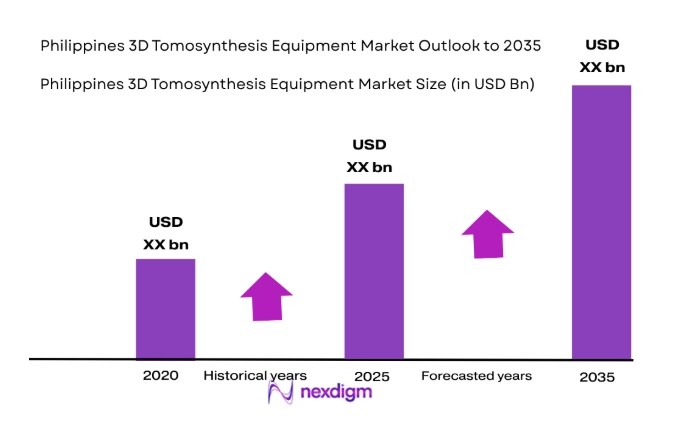
The Philippines 3D Tomosynthesis Equipment Market is experiencing significant growth, with the market size projected to reach USD ~ million based on a recent historical assessment. The growth is primarily driven by advancements in 3D imaging technologies, increasing healthcare awareness, and the rising demand for early breast cancer detection. The demand for high-precision diagnostic systems is being fueled by the expansion of diagnostic centers, along with government initiatives aimed at improving healthcare infrastructure. The market is also benefiting from growing consumer awareness of the importance of breast cancer screenings, particularly in urban regions.
The dominant regions in the market include Metro Manila and other major urban centers. These areas have the highest concentration of healthcare facilities and diagnostic centers offering advanced medical imaging technologies, such as 3D tomosynthesis. Additionally, increased investment in healthcare infrastructure by both the public and private sectors in these regions has led to greater accessibility and adoption of advanced diagnostic equipment. These cities also benefit from a higher concentration of skilled medical professionals, which further supports the expansion of the 3D Tomosynthesis Equipment Market.
Market Segmentation
By Product Type
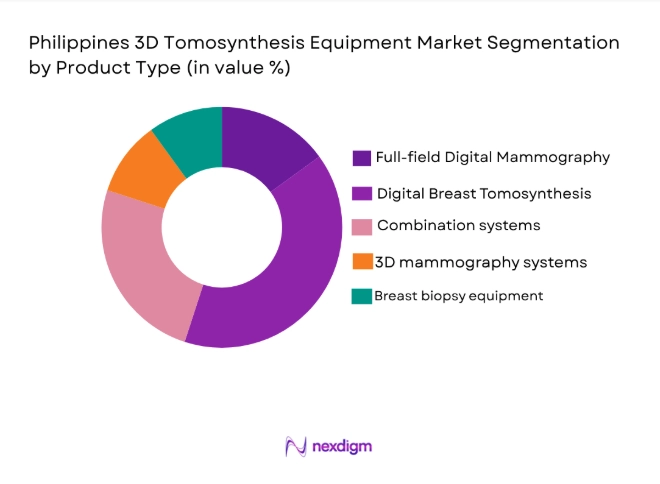
Philippines 3D Tomosynthesis Equipment Market is segmented by product type into Full-field digital mammography (FFDM), Digital breast tomosynthesis (DBT), Combination systems, 3D mammography systems, and Breast biopsy equipment. Recently, Digital breast tomosynthesis (DBT) has a dominant market share due to factors such as increasing breast cancer detection rates, advancements in 3D imaging technologies, and the increasing demand for more accurate diagnostic tools. DBT systems offer superior imaging capabilities and have been preferred by hospitals and diagnostic centers due to their ability to reduce recall rates and enhance early cancer detection.
By Platform Type
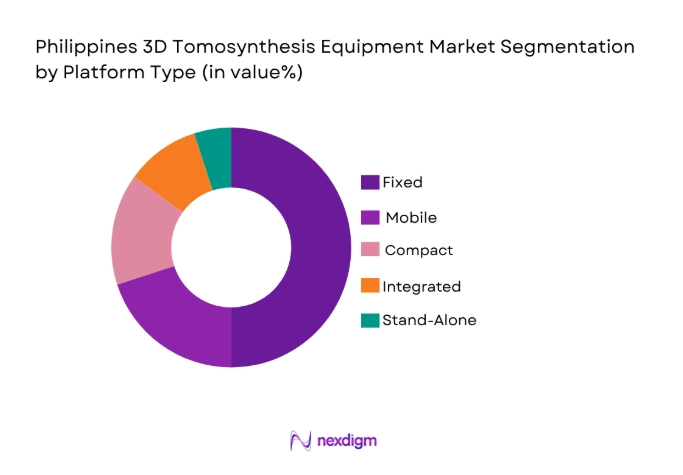
Philippines 3D Tomosynthesis Equipment Market is segmented by platform type into Fixed, Mobile, Compact, Integrated, and Stand-alone. Recently, the Fixed platform has the dominant market share due to factors such as its stability, higher demand in hospitals, and the need for permanent installations in diagnostic centers. Fixed systems are preferred for their larger capacities and higher throughput, making them ideal for hospitals and healthcare facilities with established infrastructure. They are also more cost-effective in the long run due to their durability and lower maintenance needs.
Competitive Landscape
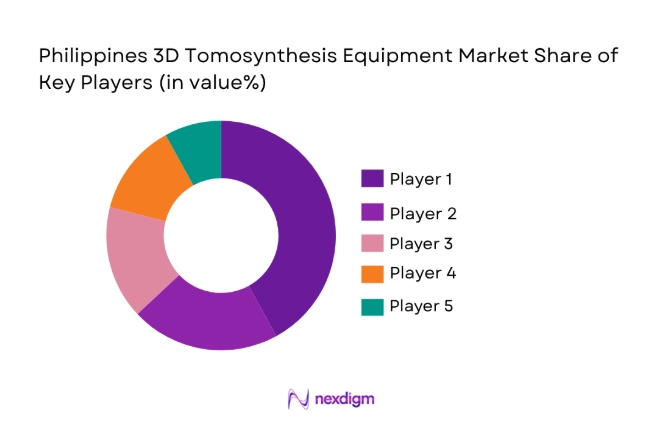
The Philippines 3D Tomosynthesis Equipment Market is highly competitive, with significant consolidation occurring as major players enhance their market presence through strategic partnerships, mergers, and acquisitions. The influence of large international companies has been increasing, with these firms driving the adoption of cutting-edge technology and providing strong after-sales service. However, regional players are also focusing on providing cost-effective solutions to cater to the growing demand from mid-tier healthcare facilities.
| Company Name | Establishment Year | Headquarters | Technology Focus | Market Reach | Key Products | Revenue | Key Market-specific Parameter |
| Philips Healthcare | 1891 | Netherlands | ~ | ~ | ~ | ~ | ~ |
| Siemens Healthineers | 1847 | Germany | ~ | ~ | ~ | ~ | ~ |
| GE Healthcare | 1892 | USA | ~ | ~ | ~ | ~ | ~ |
| Hologic Inc. | 1985 | USA | ~ | ~ | ~ | ~ | ~ |
| Fujifilm Corporation | 1934 | Japan | ~ | ~ | ~ | ~ | ~ |
 Philippines 3D Tomosynthesis Equipment Market Outlook to 2035
Philippines 3D Tomosynthesis Equipment Market Analysis
Growth Drivers
Advancements in Imaging Technology
Advancements in 3D imaging technology are a major growth driver for the Philippines 3D Tomosynthesis Equipment Market. As the medical industry evolves, innovations in imaging capabilities have allowed for better detection of breast cancer at earlier stages, significantly improving patient outcomes. The introduction of high-resolution, three-dimensional mammography systems has made it possible for healthcare providers to perform more accurate screenings with reduced recall rates, providing greater value to both patients and healthcare providers. Furthermore, the incorporation of artificial intelligence (AI) in imaging technology is enhancing diagnostic accuracy, driving the adoption of advanced systems. These improvements in technology are pushing the healthcare sector to adopt 3D tomosynthesis equipment at an accelerated pace, thus driving market growth.
Increasing Healthcare Awareness
Growing healthcare awareness among the general population, especially regarding breast cancer, is another crucial growth driver. As individuals become more educated about the importance of early detection, the demand for advanced diagnostic equipment like 3D tomosynthesis systems has surged. Public health campaigns aimed at promoting breast cancer screenings and the benefits of early diagnosis have helped increase the demand for such technology, further contributing to market growth. Additionally, government initiatives that encourage early cancer detection through subsidized screenings and educational programs have accelerated the adoption of 3D mammography systems across healthcare institutions, benefiting both urban and rural healthcare sectors.
Market Challenges
High Cost of Technology
The high cost of 3D tomosynthesis equipment remains a significant challenge for many healthcare facilities in the Philippines. Although the benefits of early detection are well established, the initial investment required for acquiring 3D imaging systems, along with maintenance costs, poses a barrier to adoption, particularly for smaller healthcare providers and diagnostic centers. These costs can limit access to advanced imaging technologies, particularly in rural or underfunded healthcare facilities, where budget constraints are more pronounced. As a result, many healthcare providers are unable to invest in state-of-the-art equipment, hindering the widespread adoption of 3D tomosynthesis systems in certain regions.
Limited Medical Infrastructure in Rural Areas
Despite the growing demand for advanced healthcare technologies, the Philippines continues to face challenges related to inadequate medical infrastructure in rural areas. In remote regions, there is a lack of well-equipped healthcare facilities, and the adoption of advanced diagnostic technologies, such as 3D tomosynthesis systems, remains limited. In these areas, diagnostic centers are often under-equipped and face significant challenges related to patient accessibility, which further limits the use of advanced imaging systems. While urban centers see widespread adoption of advanced technologies, rural areas are struggling to keep up with the healthcare advancements seen in more developed regions, creating a disparity in healthcare quality across the country.
Opportunities
Government Support for Healthcare Infrastructure
The Philippine government’s increasing investment in healthcare infrastructure presents a significant opportunity for the 3D Tomosynthesis Equipment Market. With initiatives focused on improving healthcare accessibility and affordability, the government is encouraging the expansion of diagnostic centers and healthcare facilities across the country, particularly in underserved rural areas. These investments are creating opportunities for the adoption of advanced technologies like 3D tomosynthesis equipment, as healthcare providers seek to improve their diagnostic capabilities to meet the growing demand for breast cancer detection. Moreover, government subsidies and public health programs aimed at increasing breast cancer screening rates will further drive the market’s growth by making such technologies more accessible to a broader population.
Growth of Mobile Healthcare Solutions
The increasing demand for mobile healthcare solutions presents a unique opportunity for the 3D Tomosynthesis Equipment Market. Mobile healthcare services have become a popular option in the Philippines, especially in remote and underserved areas, where access to permanent healthcare facilities is limited. The integration of portable 3D tomosynthesis systems into mobile diagnostic units offers an innovative solution to this problem. As mobile healthcare services continue to expand, the demand for compact, mobile, and integrated 3D imaging systems will grow, presenting new opportunities for manufacturers to provide affordable and accessible diagnostic solutions to more people across the country.
Future Outlook
The future outlook for the Philippines 3D Tomosynthesis Equipment Market is optimistic, with steady growth expected over the next five years. Technological advancements in imaging, particularly the integration of AI-based diagnostic tools, will continue to drive the adoption of advanced 3D systems. Additionally, regulatory support from the government and growing healthcare awareness among the population are expected to boost market expansion. Demand for early breast cancer detection will remain strong, supported by increasing investments in healthcare infrastructure, both in urban and rural areas.
Major Players
- Philips Healthcare
- Siemens Healthineers
- GE Healthcare
- Fujifilm Corporation
- Hologic Inc.
- Canon Medical Systems
- Carestream Health
- Agfa-Gevaert Group
- Toshiba Medical Systems
- Mindray
- Konica Minolta
- Neusoft Medical Systems
- Hitachi Medical Corporation
- IBA Group
- Varian Medical System
Key Target Audience
- Investments and venture capitalist firms
- Government and regulatory bodies
- Hospitals and healthcare providers
- Diagnostic centers
- Medical equipment distributors
- Healthcare investors
- Cancer research organizations
Research Methodology
Step 1: Identification of Key Variables
The first step involves identifying the critical market variables influencing the demand and adoption of 3D tomosynthesis equipment, including technological advancements, consumer behavior, and market dynamics.
Step 2: Market Analysis and Construction
Market analysis is conducted to assess the size, segmentation, growth trends, and competitive landscape of the market, using both primary and secondary data sources.
Step 3: Hypothesis Validation and Expert Consultation
The hypotheses derived from the initial market analysis are validated through expert consultations and primary research with industry stakeholders to ensure data accuracy.
Step 4: Research Synthesis and Final Output
The final market report is synthesized, with key findings, market projections, and actionable insights provided based on the research conducted in earlier stages.

- Executive Summary
- Research Methodology
(Definitions, Scope, Industry Assumptions, Market Sizing Approach, Primary & Secondary Research Framework, Data Collection & Verification Protocol, Analytic Models & Forecast Methodology, Limitations & Research Validity Checks)

- Market Definition and Scope
- Value Chain & Stakeholder Ecosystem
- Regulatory / Certification Landscape
- Sector Dynamics Affecting Demand
- Strategic Initiatives & Infrastructure Growth

- Growth Drivers
Increasing awareness about breast cancer
Advancements in 3D imaging technology
Government healthcare initiatives - Market Challenges
High installation and maintenance costs
Limited healthcare infrastructure in rural areas
Shortage of trained medical professionals - Market Opportunities
Expanding diagnostic centers
Growth in mobile healthcare services
Increase in government funding for healthcare - Trends
Adoption of AI-based diagnostic tools
Shift toward more compact and portable systems - Government Regulations
- SWOT Analysis
- Porter’s Five Forces

- By Market Value, 2020-2025
- By Installed Units, 2020-2025
- By Average System Price, 2020-2025
- By System Complexity Tier, 2020-2025

- By System Type (In Value%)
Full-field digital mammography (FFDM)
Digital breast tomosynthesis (DBT)
Combination systems
3D mammography systems
Breast biopsy equipment - By Platform Type (In Value%)
Fixed
Mobile
Compact
Integrated
Stand-alone - By Fitment Type (In Value%)
Retrofit
New installation
Replacement
Upgrade - By End User Segment (In Value%)
Hospitals
Diagnostic centers
Research institutes

- Market Share Analysis
- Cross Comparison Parameters
(System Type, Platform Type, Fitment Type, End User, Technology Adoption, Market Presence, Regulatory Compliance) - SWOT Analysis of Key Competitors
- Pricing & Procurement Analysis
- Key Players
Philips Healthcare
Siemens Healthineers
GE Healthcare
Fujifilm Corporation
Hologic Inc.
Canon Medical Systems
Carestream Health
Agfa-Gevaert Group
Toshiba Medical Systems
Mindray
Konica Minolta
Neusoft Medical Systems
Hitachi Medical Corporation
IBA Group
Varian Medical Systems

- Hospitals focusing on early cancer detection
- Diagnostic centers expanding 3D imaging capabilities
- Research institutes adopting advanced imaging systems
- Government-funded healthcare centers

- Forecast Market Value, 2026-2035
- Forecast Installed Units, 2026-2035
- Price Forecast by System Tier, 2026-2035
- Future Demand by Platform, 2026-2035


 Request a Sample
 Ask for Customization
 Get a Quote
 Enquire Now