

 Download PDF
Market Overview
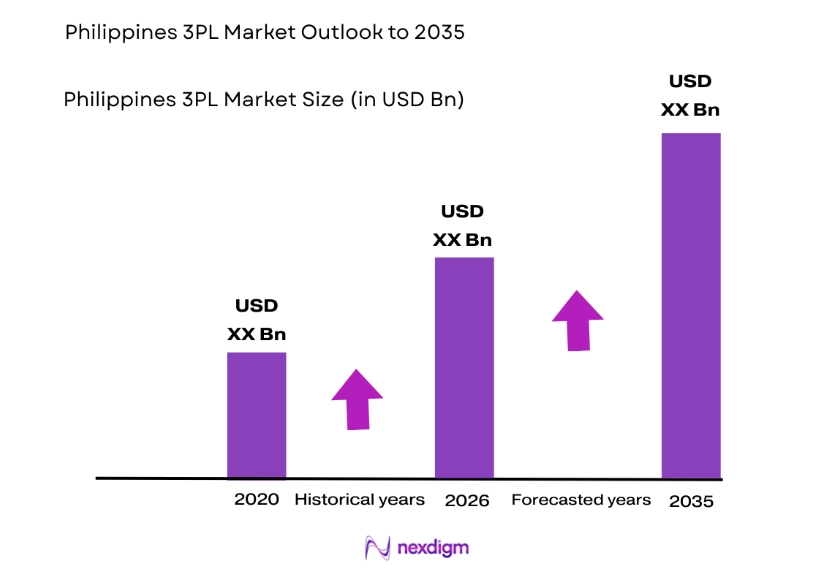
The Philippines third party logistics market demonstrates strong operational scale supported by rapid expansion of domestic distribution networks, international trade activity, and accelerating e-commerce logistics requirements. Based on a recent historical assessment, the Philippines 3PL market generated approximately USD ~ billion in logistics service revenue according to consolidated industry analysis referencing Philippine Statistics Authority transport and logistics activity records and World Bank logistics performance datasets. Growth is strongly driven by expanding consumer demand, increasing import export cargo volumes, and outsourcing of logistics operations by manufacturing, retail, and e commerce companies.
Logistics demand is concentrated around Metro Manila, Cebu, and Davao where large consumer populations, port infrastructure, and industrial activity support intensive freight movement and distribution services. Manila hosts the country’s largest international gateway through the Port of Manila and Ninoy Aquino International Airport, enabling national cargo consolidation and distribution. Cebu serves as a central maritime logistics hub connecting the Visayas region, while Davao facilitates agricultural and export logistics flows across Mindanao supported by expanding industrial zones and regional port infrastructure.
Market Segmentation
By Service Type
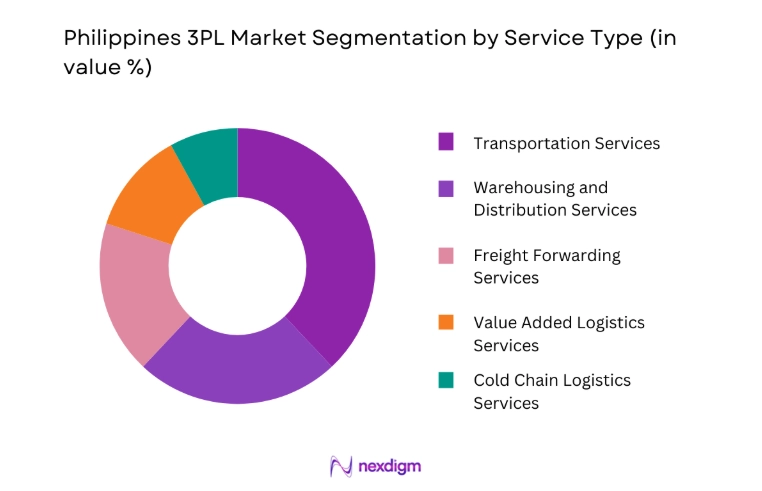
Philippines 3PL market is segmented by Service type into transportation services, warehousing and distribution services, freight forwarding services, value added logistics services, and cold chain logistics services. Recently, transportation services has a dominant market share due to factors such as extensive domestic freight movement across island regions, increasing e commerce delivery volumes, and high reliance on trucking networks for intercity cargo transportation. Companies operating nationwide supply chains depend heavily on third party transportation fleets capable of managing port drayage, inland container movement, and last mile distribution operations. The country’s archipelagic geography also requires integrated road maritime logistics coordination which further strengthens demand for professional transportation service providers operating national delivery networks.
By End User Industry
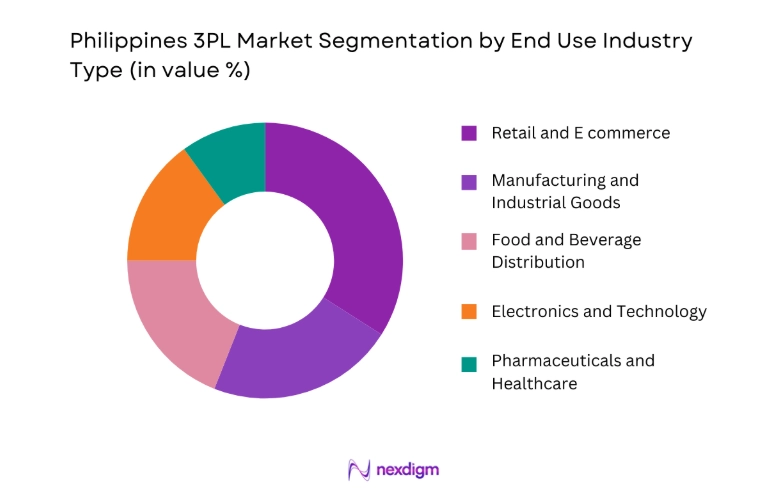
Philippines 3PL market is segmented by End User Industry Type into retail and e commerce, manufacturing and industrial goods, food and beverage distribution, pharmaceuticals and healthcare logistics, and electronics and technology supply chains. Recently, retail and e commerce has a dominant market share due to factors such as rapidly increasing online consumer transactions, nationwide parcel delivery demand, and extensive fulfillment operations supporting digital marketplaces. Large online retail platforms rely heavily on third party logistics companies that manage warehouse fulfillment, inventory storage, packaging operations, and nationwide parcel distribution. Growing digital payment adoption and expanding smartphone penetration also increase online order volumes which strengthens dependence on outsourced logistics service providers capable of handling large scale parcel processing and last mile delivery operations.
Competitive Landscape
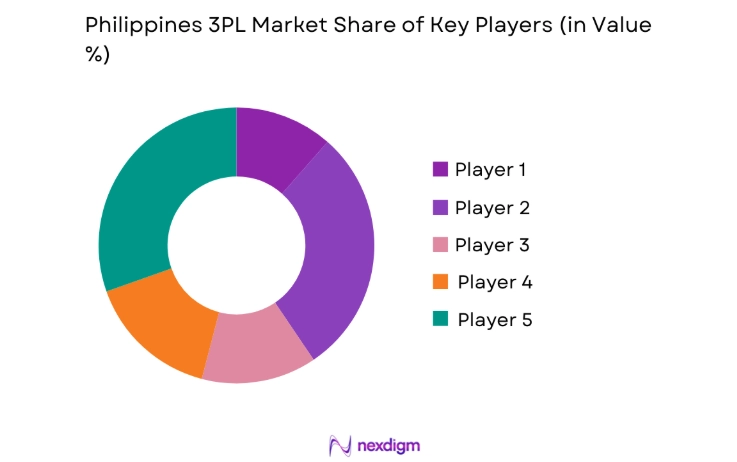
The Philippines 3PL market exhibits a moderately consolidated competitive environment where a combination of global logistics providers and strong domestic logistics companies operate nationwide transportation and warehousing networks. International logistics corporations leverage advanced freight forwarding technology, integrated supply chain solutions, and global trade connectivity while local providers maintain strong domestic distribution capabilities and regional delivery infrastructure. Competitive intensity continues increasing as e commerce growth encourages logistics investments in automated warehouses, digital tracking platforms, and expanded last mile delivery networks.
| Company Name | Establishment Year | Headquarters | Technology Focus | Market Reach | Key Products | Revenue | Warehouse Capacity |
| DHL Supply Chain | 1969 | Germany | ~ | ~ | ~ | ~ | ~ |
| UPS Supply Chain Solutions | 1907 | United States | ~ | ~ | ~ | ~ | ~ |
| FedEx Logistics | 1971 | United States | ~ | ~ | ~ | ~ | ~ |
| Aboitiz InfraCapital Logistics | 1994 | Philippines | ~ | ~ | ~ | ~ | ~ |
| 2GO Logistics | 1949 | Philippines | ~ | ~ | ~ | ~ | ~ |
Philippines 3PL Market Analysis
Growth Drivers
Expansion of E Commerce Fulfillment and Nationwide Parcel Distribution Networks
Rapid expansion of online retail platforms across the Philippines significantly strengthens demand for professional third party logistics services capable of managing high volume parcel deliveries and fulfillment operations nationwide. Digital commerce marketplaces process extremely large volumes of consumer orders including electronics clothing household products groceries and health products requiring efficient warehousing and delivery infrastructure. Logistics companies therefore expand automated sorting centers fulfillment warehouses and nationwide delivery networks connecting distribution hubs with residential consumers. Increasing smartphone penetration and digital payment adoption also encourage greater participation in online retail transactions across urban and regional markets. Retail companies increasingly outsource fulfillment logistics operations to specialized third party providers capable of managing inventory storage packaging operations and parcel dispatch efficiently. Growing demand for faster delivery timelines further strengthens investment in last mile delivery fleets and route optimization technologies. Logistics companies also integrate warehouse management software and predictive demand analytics that improve shipment processing efficiency across national distribution networks. Continuous growth of digital retail therefore remains a primary structural driver expanding the operational scale of third party logistics services across the Philippines supply chain ecosystem.
Growth of International Trade and Import Export Cargo Movement Through Philippine Ports
The Philippines maintains a strong position within regional trade networks across Southeast Asia which significantly increases demand for freight forwarding and logistics coordination services. Large volumes of electronics agricultural commodities manufactured products and consumer goods move through international shipping routes connecting Philippine ports with markets across China Japan South Korea and the United States. Logistics providers therefore coordinate container bookings customs documentation cargo consolidation and multimodal transportation connecting port terminals with inland manufacturing and distribution facilities. Major maritime gateways including the Port of Manila and the Port of Cebu handle extensive container cargo flows supporting international trade operations. Freight forwarding companies manage complex shipping schedules regulatory documentation and cross border transportation processes that enable efficient movement of goods through global supply chains. Manufacturers and exporters increasingly depend on third party logistics partners capable of coordinating international transportation networks. Logistics firms therefore expand cargo handling infrastructure warehouse capacity and digital shipment tracking systems. Continuous growth in regional trade connectivity therefore significantly strengthens demand for integrated logistics services supporting Philippine import export supply chain operations.
Market Challenges
Infrastructure Congestion and Transportation Bottlenecks Affecting Logistics Efficiency
Logistics operators in the Philippines frequently encounter infrastructure constraints including congested urban road networks limited port capacity and fragmented inter island transportation systems which increase delivery times and operational costs. Metro Manila experiences heavy traffic congestion that slows trucking movement connecting warehouses distribution centers and port terminals. Port congestion occasionally delays container handling operations causing shipment backlogs that affect freight scheduling across national supply chains. Logistics providers therefore face operational inefficiencies when coordinating cargo movement between maritime shipping terminals airports and inland distribution facilities. Inter island cargo transportation also requires complex coordination between trucking services roll on roll off vessels and regional shipping routes. Limited rail freight infrastructure further increases reliance on road transportation which intensifies congestion challenges. Logistics companies attempt to mitigate these challenges through route optimization technologies additional warehouse capacity near major ports and investments in distribution hubs located outside congested urban zones. Despite these initiatives infrastructure limitations continue affecting delivery efficiency across domestic logistics networks.
High Operational Costs and Fuel Price Volatility Affecting Logistics Service Pricing
Third party logistics providers operating across the Philippines face significant operational cost pressures arising from fluctuating fuel prices rising labor expenses and increasing warehouse rental costs. Trucking operations depend heavily on diesel fuel consumption which directly influences transportation service pricing structures across supply chains. Fuel price volatility therefore creates uncertainty for logistics operators managing large vehicle fleets engaged in nationwide cargo distribution. Labor costs also increase as logistics companies expand warehouse operations delivery fleets and supply chain management teams supporting e commerce fulfillment services. Rising industrial land prices near major urban centers further increase investment requirements for warehouse construction and logistics park development. Logistics companies therefore continuously adjust service pricing structures while implementing operational efficiency programs designed to reduce cost pressures. Investments in route optimization software vehicle telematics and warehouse automation technologies help improve productivity. However operational cost volatility remains a persistent challenge influencing logistics profitability and service pricing strategies across the Philippine third party logistics industry.
Opportunities
Expansion of Cold Chain Logistics Supporting Food and Pharmaceutical Distribution
Increasing demand for temperature controlled transportation and storage across the Philippines creates significant opportunities for logistics providers specializing in cold chain supply chain services. The food processing industry relies heavily on refrigerated logistics infrastructure capable of preserving freshness of seafood meat dairy products frozen foods and agricultural produce during transportation and storage. Pharmaceutical supply chains also require strict temperature controlled environments for vaccines insulin biologic medicines and other sensitive healthcare products. Logistics companies therefore invest in refrigerated trucks temperature controlled warehouses and real time monitoring technologies capable of maintaining validated cold storage conditions. Expanding supermarket retail networks and food service distribution channels further increase demand for reliable cold chain logistics operations. Healthcare distributors and pharmaceutical companies increasingly outsource temperature sensitive logistics operations to specialized third party providers. Digital monitoring platforms capable of tracking temperature conditions during transportation strengthen regulatory compliance and product safety. Continuous growth of food distribution and pharmaceutical supply chains therefore creates substantial investment opportunities for cold chain logistics infrastructure across the Philippines.
Development of Regional Logistics Parks and Integrated Distribution Infrastructure
Rapid expansion of industrial zones manufacturing clusters and e commerce fulfillment networks across the Philippines encourages large scale development of integrated logistics parks and distribution hubs. Logistics providers and infrastructure developers increasingly construct modern warehouse complexes located near major ports airports and industrial corridors capable of supporting high volume cargo operations. These logistics parks integrate storage facilities container yards transportation terminals and digital logistics management platforms that improve cargo handling efficiency. Manufacturers and retail companies benefit from centralized distribution infrastructure that reduces transportation distances and accelerates delivery timelines. Government infrastructure development initiatives supporting port modernization expressway construction and airport expansion also enhance connectivity between logistics hubs and consumer markets. Logistics companies invest in automated storage retrieval systems robotics enabled sorting facilities and advanced warehouse management technologies within these logistics parks. Expansion of regional distribution infrastructure therefore strengthens the long term capacity of the Philippines logistics ecosystem supporting continued growth in third party logistics services.
Future Outlook
The Philippines 3PL market is expected to experience strong structural growth supported by expanding digital commerce ecosystems, rising international trade activity, and increasing outsourcing of logistics operations by manufacturing and retail companies. Logistics providers are likely to invest heavily in automated warehouses, cold chain infrastructure, and digital supply chain management platforms. Government infrastructure investments in ports, expressways, and airports are also expected to improve logistics efficiency nationwide. Continued growth of regional trade networks and consumer demand will strengthen long term demand for integrated third party logistics services.
Major Players
- DHL Supply Chain
- UPS Supply Chain Solutions
- FedEx Logistics
- DB Schenker
- Kuehne + Nagel
- Nippon Express
- Aboitiz InfraCapital Logistics
- 2GO Logistics
- Yusen Logistics
- Maersk Logistics
- Kerry Logistics
- CJ Logistics
- DSV Global Transport and Logistics
- CEVA Logistics
- Agility Logistics
Key Target Audience
- Global logistics and supply chain operators
- Retail and e commerce companies
- Manufacturing and export oriented companies
- Pharmaceutical distribution companies
- Food and cold chain logistics operators
- Investments and venture capitalist firms
- Government and regulatory bodies
Research Methodology
Step 1: Identification of Key Variables
The research begins with identification of variables influencing logistics demand including trade volumes e commerce growth freight transport activity infrastructure development and supply chain outsourcing trends. Industry datasets from government trade statistics logistics performance indices and transportation activity records are evaluated to define market boundaries.
Step 2: Market Analysis and Construction
Quantitative and qualitative datasets are analyzed to construct the market framework including logistics service segmentation demand drivers and supply chain structure. Industry reports company financial disclosures logistics infrastructure statistics and trade flow analysis are integrated to estimate market scale and competitive positioning.
Step 3: Hypothesis Validation and Expert Consultation
Market assumptions and analytical models are validated through consultations with logistics industry experts transportation analysts supply chain managers and trade specialists. These discussions help confirm logistics demand drivers operational challenges and infrastructure trends shaping the Philippines logistics ecosystem.
Step 4: Research Synthesis and Final Output
All validated insights are consolidated into a structured research framework combining statistical datasets industry analysis and supply chain evaluations. The final report presents an integrated perspective of market size segmentation competitive landscape growth drivers and future industry opportunities.

- Executive Summary
- Research Methodology (Definitions, Scope, Industry Assumptions, Market Sizing Approach, Primary & Secondary Research Framework, Data Collection & Verification Protocol, Analytic Models & Forecast Methodology, Limitations & Research Validity Checks)

- Market Definition and Scope
- Value Chain & Stakeholder Ecosystem
- Regulatory / Certification Landscape
- Sector Dynamics Affecting Demand

- Growth Drivers
Rapid expansion of e commerce platforms increasing demand for outsourced logistics services
Growth of manufacturing and export oriented industries requiring integrated logistics support
Government investments in transport infrastructure including ports roads and logistics corridors - Market Challenges
Fragmented logistics infrastructure across islands increasing transportation complexity
High logistics costs due to fuel price volatility and limited intermodal connectivity
Urban congestion affecting last mile delivery efficiency in major metropolitan areas - Market Opportunities
Expansion of automated warehousing and smart logistics technologies across distribution centers
Growth of cross border trade increasing demand for integrated logistics coordination services
Development of digital logistics platforms improving shipment visibility and operational efficiency - Trends
Adoption of warehouse automation and robotics in major logistics hubs
Integration of digital freight management systems and real time supply chain tracking platforms - Government Regulations
- SWOT Analysis
- Porter’s Five Forces

- By Market Value, 2020-2025
- By Installed Units, 2020-2025
- By Average System Price, 2020-2025
- By System Complexity Tier, 2020-2025

- By System Type (In Value%)
Transportation Management Services
Warehousing and Distribution Services
Freight Forwarding Services
Inventory Management Services
Integrated Supply Chain Solutions - By Platform Type (In Value%)
Domestic Logistics Platforms
International Logistics Platforms
E Commerce Fulfillment Platforms
Integrated Digital Logistics Platforms - By Fitment Type (In Value%)
Contract Logistics Services
Dedicated Logistics Services
Shared Logistics Services
On Demand Logistics Services - By End User Segment (In Value%)
Retail and E Commerce Companies
Manufacturing and Industrial Companies
Food and Beverage Companies

- Market Share Analysis
- Cross Comparison Parameters (Service Portfolio Breadth, Warehouse Infrastructure Capacity, Digital Logistics Platform Capability, Geographic Network Coverage, Transportation Fleet Size, Pricing Strategy, Strategic Partnerships)
- SWOT Analysis of Key Competitors
- Pricing & Procurement Analysis
- Key Players
DHL Supply Chain Philippines
Kuehne + Nagel Philippines
DB Schenker Philippines
Nippon Express Philippines
CEVA Logistics Philippines
Yusen Logistics Philippines
Maersk Logistics Philippines
2GO Group Inc.
Aboitiz Logistics
LBC Express Holdings
J&T Express Philippines
Ninja Van Philippines
FedEx Philippines
UPS Philippines
Royal Cargo Inc.

- Retail and e commerce companies depend on 3PL providers to manage nationwide fulfillment and delivery networks
- Manufacturing companies outsource logistics operations to improve supply chain efficiency and reduce operational costs
- Food and beverage producers rely on specialized logistics providers for temperature controlled distribution
- Small and medium enterprises increasingly utilize 3PL services to support scalable logistics operations

- Forecast Market Value, 2026-2035
- Forecast Installed Units, 2026-2035
- Price Forecast by System Tier, 2026-2035
- Future Demand by Platform, 2026-2035


 Request a Sample
 Ask for Customization
 Get a Quote
 Enquire Now