
 Download PDF
Market Overview
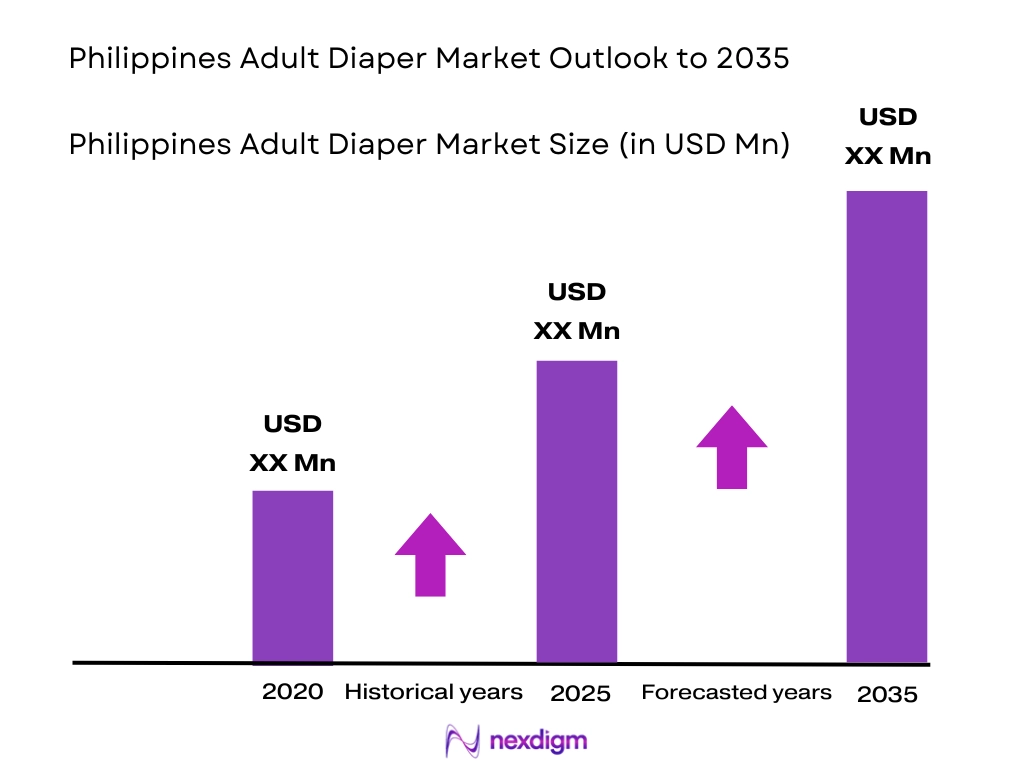
The Philippines adult diaper market is valued at USD ~ million in 2024. This market is primarily driven by the increasing geriatric population and rising awareness of hygiene management, particularly in elderly care. The ageing population in the Philippines has significantly boosted the demand for adult incontinence products. Furthermore, the healthcare infrastructure’s expansion, particularly in urban areas, along with increased purchasing power in the middle class, has also played a crucial role in the market’s growth. Demand for adult diapers is further supported by institutional buyers such as healthcare facilities and long-term care homes.
Metro Manila remains the dominant region for the adult diaper market, accounting for a significant portion of the market share in the Philippines. This is primarily due to the concentration of healthcare facilities, a growing aging population, and higher disposable income levels. Cities such as Quezon City and Makati lead the demand, with institutional purchases and retail growth being stronger in these areas. Additionally, provinces like Cebu and Davao are also witnessing steady demand as urbanization increases and access to healthcare expands.
Market Segmentation
By Product Type
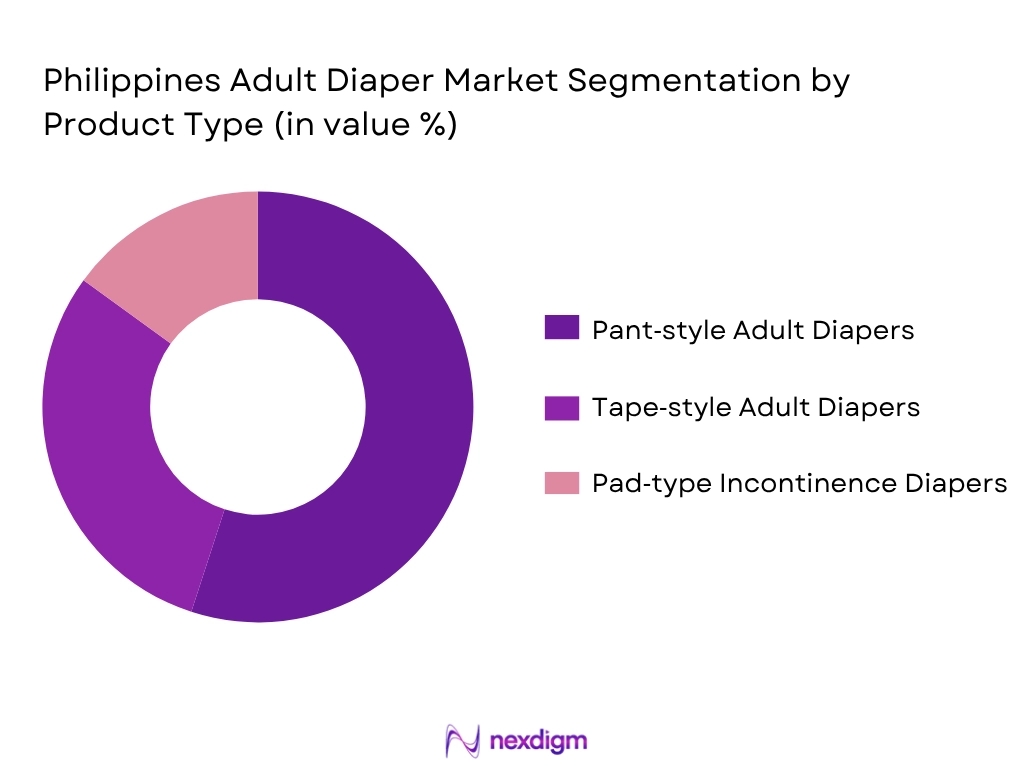
The Philippines adult diaper market is segmented into pant‑style adult diapers, tape‑style adult diapers, and pad‑type incontinence pads. Among these, pant‑style adult diapers hold the largest share of the market. This is largely due to their ease of use, comfort, and increased preference among both elderly individuals and institutional care providers. The convenience factor offered by pant‑style diapers, particularly in terms of ease of application and removal, makes them the most popular choice. Additionally, major brands such as Pampers and Huggies have expanded their offerings in this segment, further increasing the segment’s market share.
By Distribution Channel
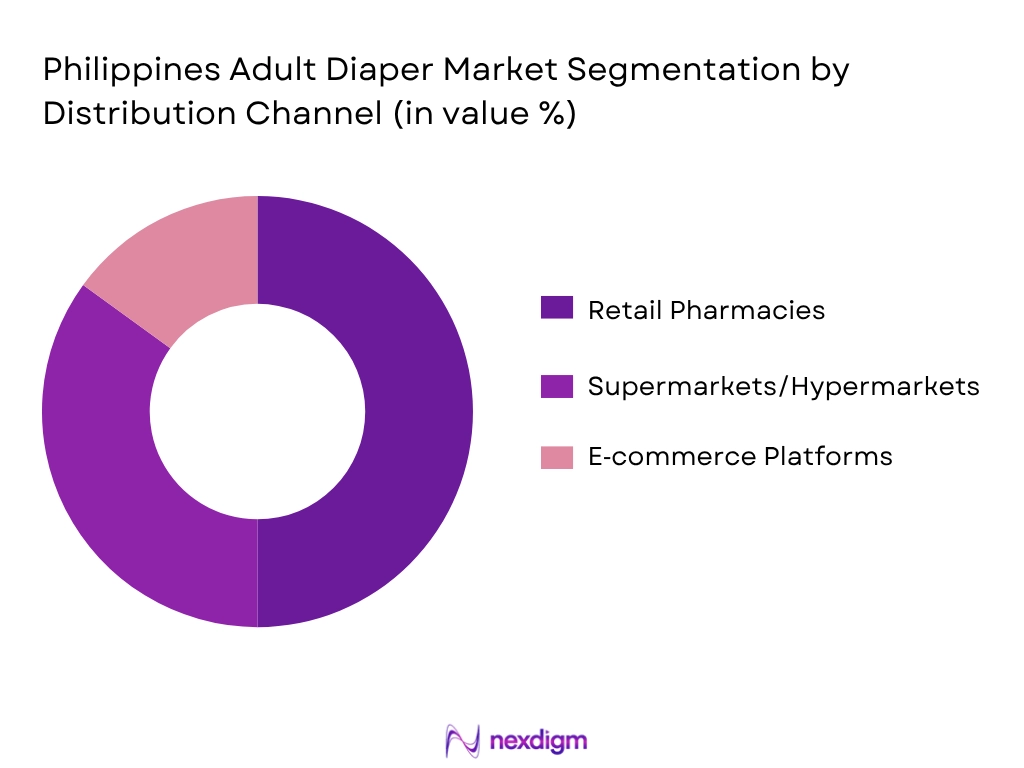
In the distribution channel segment, the Philippines adult diaper market is divided into retail pharmacies, supermarkets/hypermarkets, and e‑commerce platforms. Among these, retail pharmacies capture the largest market share. This dominance is attributed to the accessibility and personalized service that consumers receive when purchasing adult diapers. Many consumers prefer to buy adult diapers from physical pharmacies, where they can seek advice on the most appropriate product for their needs. However, e‑commerce is showing rapid growth due to increased internet penetration and the convenience it provides to consumers, particularly in urban areas.
Competitive Landscape
The Philippines adult diaper market is highly competitive, with several key players vying for market share. Dominating the market are global brands like Procter & Gamble and Kimberly‑Clark, along with local players such as Hanz and Unilab. The competitive landscape is shaped by factors such as product innovation, distribution reach, and brand loyalty. Major players are increasingly focusing on product differentiation, with innovations in the absorbency technology and skin‑friendly materials. Additionally, distribution networks are expanding through both retail channels and online platforms, ensuring wider accessibility.
| Company | Establishment Year | Headquarters | Product Range | Distribution Reach | Market Share | R&D Investment | Brand Loyalty |
| Procter & Gamble | 1837 | USA | ~ | ~ | ~ | ~ | ~ |
| Kimberly‑Clark | 1872 | USA | ~ | ~ | ~ | ~ | ~ |
| Unilab | 1945 | Philippines | ~ | ~ | ~ | ~ | ~ |
| Hanz Healthcare | 2000 | Philippines | ~ | ~ | ~ | ~ | ~ |
| SCA Hygiene | 1989 | Sweden | ~ | ~ | ~ | ~ | ~ |
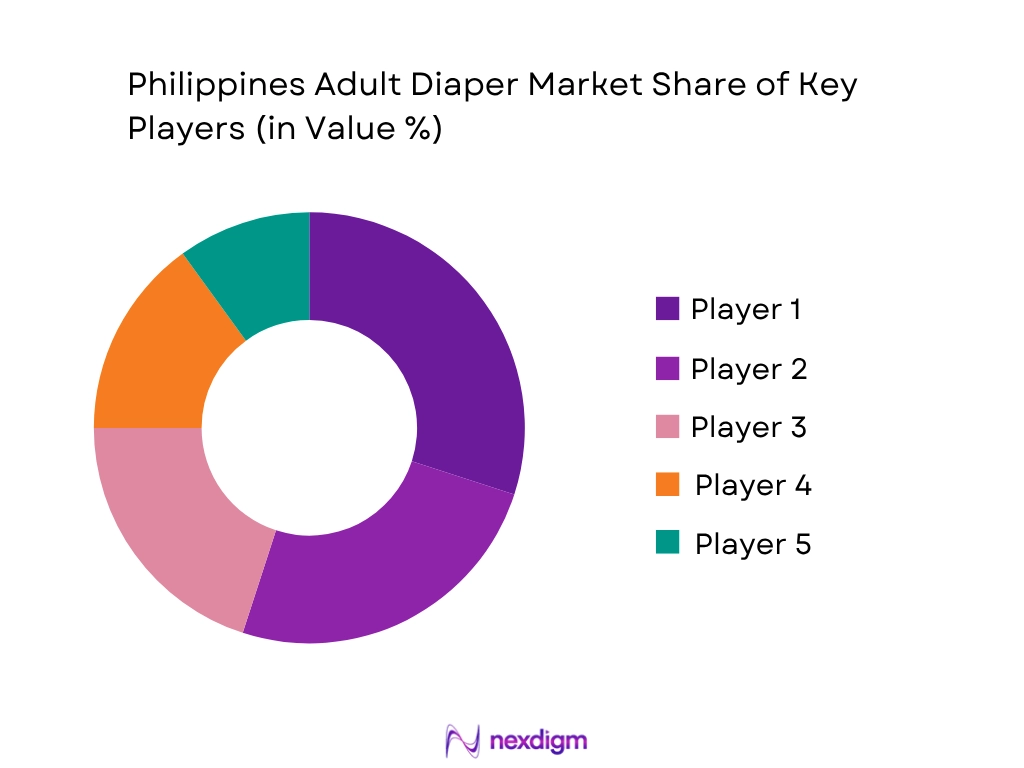
Philippines Adult Diaper Market Analysis
Growth Drivers
Rising awareness about dignity & hygiene
In the Philippines, access to safely managed sanitation services stands at 62 percent of the population, according to the World Bank’s latest data on sanitation access, reflecting ongoing public health efforts to improve hygiene outcomes. Improved WASH (water, sanitation, and hygiene) infrastructure contributes to heightened public awareness of personal dignity and hygiene needs across age groups, including adults requiring incontinence care. As the population reaches approximately 112.7 million people, with urban centres like Metro Manila showing near‑universal access to basic services, consumer sensitivity toward hygiene products has grown. This amplified awareness translates directly into increased demand for adult diapers that align with dignity, comfort, and cleanliness expectations. The linkage between improved sanitation access and hygiene product uptake illustrates the macro‑economic and social conditions encouraging market growth, supported by a developing health environment and expanding consumer expectations around functional hygiene solutions.
Institutional healthcare expansion
Healthcare infrastructure in the Philippines encompasses over 1,200 hospitals, with both public and private sectors playing significant roles in service delivery. The Philippine Health Insurance Corporation (PhilHealth) has expanded its membership base, increasing financial coverage for Filipinos and enhancing institutional health service utilisation. As health facilities grow and adopt standardized care protocols for chronic and elderly care, demand from hospitals, long‑term care institutions, and rehabilitation centres for adult incontinence products has risen. Investments in healthcare workforce and facilities—particularly in urban regions where infrastructure density is higher—directly support institutional procurement of adult diapers as part of patient care kits. With macroeconomic stability indicated by a 5.7 percent GDP growth rate and improved unemployment figures fostering increased consumer participation in health spending, institutional healthcare expansion remains a measurable driver. This growth in formal care settings elevates the role of structured healthcare demand in shaping market uptake for adult diaper products.
Market Challenges
Price sensitivity & inflation impact on consumer choice
Consumer price inflation in the Philippines declined to 3.2 percent in 2024 from 6.0 percent in the previous period, reflecting macroeconomic stabilization efforts. Despite this improvement, general price sensitivity remains significant among Filipino households, particularly for non‑essentials and discretionary health products. With a GDP per capita of USD 4,470 and a substantial portion of the population still navigating cost constraints, households often prioritize basic needs over premium hygiene products. This phenomenon affects adult diaper demand, where higher‑priced premium products face resistance in price‑conscious segments. The interplay of inflation adjustments and disposable income levels directly shapes consumer purchasing decisions, making price competitiveness essential for market players. Consequently, companies must balance affordability with quality to appeal to a broad consumer base sensitive to price fluctuations and real income levels.
Supply chain constraints
While the Philippines’ economy demonstrates resilient growth, logistical challenges still affect supply chain efficiency for consumer goods. Island geography, varying levels of infrastructure across regions, and uneven access to transport networks result in higher distribution costs and extended delivery timelines, particularly for products such as adult diapers that require regular replenishment. Accessibility issues are more pronounced outside Metro Manila and urban centres, limiting product reach in rural provinces. These constraints can lead to stock imbalances and pricing volatility at retail points, which in turn impacts consistent market availability. Moreover, global supply chain disruptions from external shocks (e.g., weather events) further challenge procurement and inventory management for manufacturers and distributors alike. Such supply chain factors create operational hurdles that impede market expansion into underserved areas, underscoring the importance of logistical solutions tailored to the country’s unique geographical and infrastructural context.
Opportunities
Product differentiation
There is increasing consumer interest in adult hygiene products that offer enhanced comfort, skin‑friendly materials, and specialized absorbency features. With sanitation access improving for 62 percent of the population and broader public engagement with health product categories, differentiated offerings such as breathable fabrics or odor control layers resonate strongly with consumer expectations. The economic context of a GDP of USD 461.62 billion and growing urban income levels supports demand for value‑added products over basic alternatives. Innovation in product design, especially for institutional buyers and elderly care consumers, provides a clear avenue for brands to distinguish themselves. Differentiated products not only meet functional needs but also address perceived dignity and quality concerns, encouraging repeat purchases and stronger brand positioning in both retail and institutional channels. This trend supports market players looking to expand beyond price competition into quality‑driven value propositions.
Subscription and chronic care packages
The increasing prevalence of chronic health conditions and long‑term care needs among aging demographics in the Philippines reflects an emerging demand pattern for regular, predictable supply of adult diapers. With a national population exceeding 112 million, and evolving healthcare utilization driven by broader health insurance coverage under PhilHealth and institutional services, subscription‑based delivery models present a strategic channel for sustained consumption. Consumers seeking convenience and assurance of consistent product availability can be served through these recurring delivery frameworks. Although current macroeconomic indicators emphasize stabilization rather than premium consumption, the opportunity for chronic care package adoption persists, particularly among households managing mobility or incontinence challenges. Subscription models reduce the strain on intermittent retail purchases, streamline inventory planning for suppliers, and support long‑term consumer engagement. This alignment between consumer needs and structured supply solutions positions subscription offerings as a forward‑looking opportunity within the adult diaper ecosystem.
Future Outlook
Over the next decade, the Philippines adult diaper market is poised for significant growth, driven by rising healthcare awareness, an aging population, and increasing demand for high-quality, convenient products. The market is expected to see strong innovation in product types, particularly in eco-friendly and skin‑safe variants, to cater to growing consumer demand. Additionally, with rapid growth in e‑commerce platforms and the expansion of healthcare facilities in both urban and rural areas, the market is expected to see a steady increase in both retail and institutional sales.
15 Major Players
- Procter & Gamble
- Kimberly‑Clark
- Unilab
- Hanz Healthcare
- SCA Hygiene
- Essity
- Unicharm
- Molips Corporation
- Pigeon Corporation
- Johnson & Johnson
- Abbott Laboratories
- MediBios Pharma
- Medline Industries
- Hengan International Group
- Fater S.p.A.
Key Target Audience
- Investments and Venture Capitalist Firms
- Healthcare Providers and Long‑Term Care Facilities
- Distributors & Wholesalers in Healthcare
- Retailers (Pharmacies, Supermarkets)
- E‑commerce Platforms & Online Marketplaces
- Government and Regulatory Bodies (Department of Health – Philippines)
- Private Label Manufacturers
- Adult Care Product Manufacturers
Research Methodology
Step 1: Identification of Key Variables
The first phase involves mapping all stakeholders in the adult diaper market. This includes manufacturers, distributors, and end users, with a focus on identifying variables like consumer purchasing patterns, product preferences, and market dynamics. Data from secondary research, including industry reports and government publications, will provide a foundation.
Step 2: Market Analysis and Construction
In this phase, we analyze historical market data, evaluating consumption trends, regional demand, and consumer behavior. Additionally, we assess data regarding the growth of healthcare facilities and institutional purchases, which significantly impact the market.
Step 3: Hypothesis Validation and Expert Consultation
We develop market hypotheses based on secondary research and validate these through expert consultations with industry stakeholders, including product manufacturers and distributors. This phase will also involve direct interviews with key players to refine market assumptions.
Step 4: Research Synthesis and Final Output
This final phase involves synthesizing the findings from the previous steps to generate a comprehensive market report. We will cross-check data and insights with the latest trends, consumer preferences, and regulatory changes to ensure a precise and accurate market analysis.

- Executive Summary
- Research Methodology (Market Definitions and Assumptions, Abbreviations, Data Collection Process, Sampling Methodology, Data Sourcing Approaches, Market Sizing and Forecasting Techniques, Statistical Methods for Data Triangulation, Expert Panel & Stakeholder Interviews, Limitations of the Study, Forecast Reliability, Future Projections, and Conclusion Framework)

- Market Definition and Product Scope
- Market Genesis and Evolution in Philippines
- Ageing Demographic Trends and Incontinence Prevalence
- Healthcare Infrastructure & Institutional Adoption
- Cultural Attitudes Toward Incontinence & Hygiene Management
- Supply Chain & Value Chain

- Growth Drivers, Aging population & incontinence incidence, Rising awareness about dignity & hygiene, Institutional healthcare expansion, E‑commerce reach and digital health platforms)
- Market Challenges (Price sensitivity & inflation impact on consumer choice, Supply chain constraints & import duties, Cultural stigma and under‑reporting)
- Opportunities (Product differentiation, Subscription and chronic care packages, B2B institutional contracts)
- Market Trends (Pant‑style dominance & user convenience, Rise in super‑absorbent polymers, odor control, E‑commerce driven sales acceleration)
- Regulatory and Quality Standards (Bureau of Philippine Standards, FDA compliance)
- SWOT Analysis
- Porter’s Five Forces (Buyer power, Supplier rivalry, new entrants)

- By Market Value (2020-2025)
- By Market Volume (2020-2025)
- By Average Selling Price Trends (2020-2025)
- By Unit Sales by Product Format (2020-2025)

- By Product Format (In Value%)
Pant‑style adult diapers
Tape‑style adult diapers
Pad‑type incontinence pads
Reusable cloth variants
Premium vs. mass variants - By Distribution Channel (In Value%)
Retail pharmacies
Supermarkets & hypermarkets
E‑commerce / online marketplaces (e‑retail penetration)
Institutional & healthcare procurement
Direct‑to‑consumer subscriptions - By End User Cohort (In Value%)
Elderly population (geriatrics)
Post‑surgery patients
Mobility‑impaired/disabled users
Chronic illness care segment - By Price Tier / Premiumization (In Value%)
Value segment
Mid‑tier category
Premium adult incontinence solutions - By Geography (In Value%)
Luzon regional demand
Visayas regional demand
Mindanao regional demand
Metro Manila concentration

- Market Share Analysis (By Value Share, By Volume Share, By Product Category, By Distribution Channel )
- Cross‑Comparison Parameters (Product Portfolio Breadth, Distribution Network Depth, Brand Awareness & Positioning Index, Average Retail / Wholesale Price Bands, Channel Penetration Score, Consumer Satisfaction & Repeat Purchase Metrics, Manufacturing Footprint / Import Dependency, Unique Value Proposition & Innovation Metrics)
- SWOT Analysis of Major Players (Dependence on Retail Channels, Institutional Strength, Brand Recall, Premium Innovation, Private Label Risk)
- SKU-Level Pricing Analysis (Briefs, Pull-Ups, Guards, Pads, Underpads, Overnight Products, Bariatric Products)
- Recent Strategic Developments (Product Launches, Packaging Redesigns, DTC Expansion, Retail Partnerships, Institutional Contracts, Sustainability Initiatives)
- Detailed Profiles of Major Competitors
Procter & Gamble
Kimberly‑Clark
Unicharm
Ontex
Essity
Molips Corporation
JS Unitrade
Drylock Technologies
SCA Hygiene
Hengan International
Nihon Parkerizing
Fater S.p.A.
Lotte Hygienic Materials
Kinder Care
Medline Industries

- Adoption Metrics (Adoption trends across different age groups, Cohort Analysis, Brand Loyalty and Product Switching Behavior)
- Purchase Frequency & Inventory Cycle (Repurchase Rate, Seasonal Purchasing Patterns) Channel Preference Index (Physical retail vs digital retail, In‑store vs Online Buying Preferences)
- Pain Points & Needs Analysis (Leakage, skin irritation, diaper fit issues, Price vs Comfort/Absorbency Trade-Off, Environmental Impact Concerns)
- Decision-Making Criteria( Absorbency, comfort, brand reputation, eco-friendliness, price, Online reviews, physical retail presence)

- By Revenue (2026-2035)
- By Units Sold Projection (2026-2035)
- By Average Unit Price Trend (2026-2035)


 Request a Sample
 Ask for Customization
 Get a Quote
 Enquire Now