

 Download PDF
Market Overview
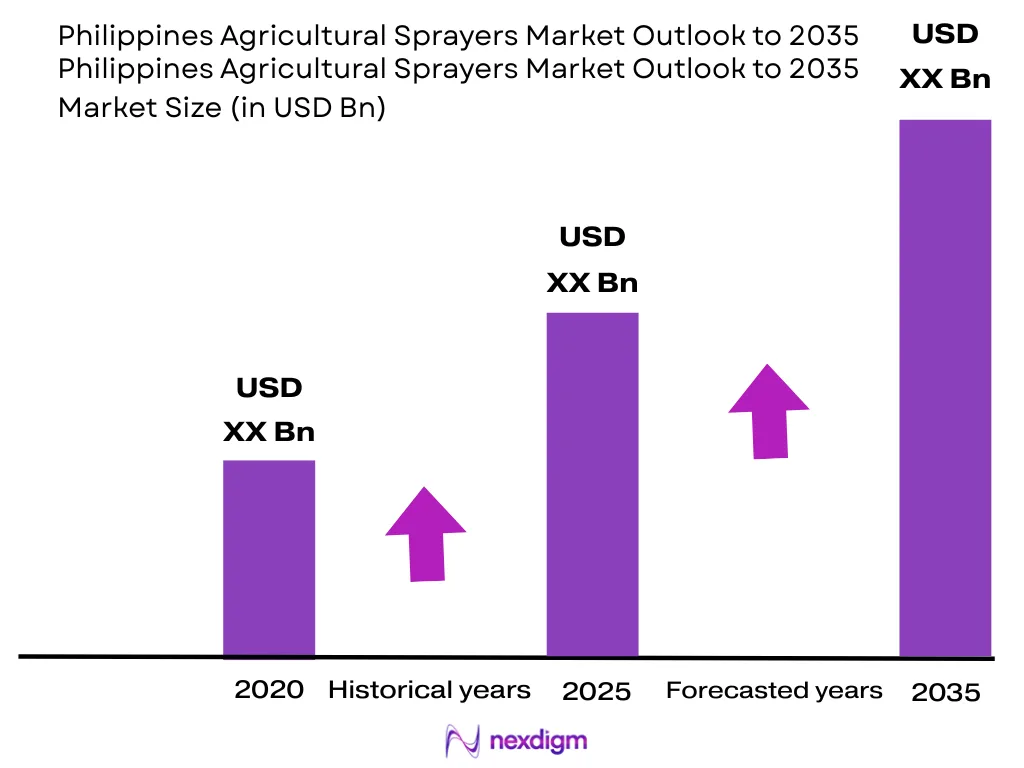
The Philippines Agricultural Sprayers Market was valued at approximately USD ~ billion in 2024 based on a comprehensive assessment of agricultural machinery sales, crop protection equipment demand, and mechanization trends across major farming regions. The market is primarily driven by the Philippines’ position as one of Southeast Asia’s most important producers of rice, corn, sugarcane, coconut, and banana. According to data published by the Philippine Statistics Authority (PSA) and the Department of Agriculture (DA), national food and cash crop production spans millions of hectares of cultivated land, with planted acreage distributed across the country’s major agricultural island groups of Luzon, Visayas, and Mindanao. Rising government emphasis on food self-sufficiency, increasing crop protection chemical usage, and greater adoption of mechanized farming practices have accelerated demand for spraying equipment across both large-scale commercial farming enterprises and smallholder cooperatives. The Philippine Center for Postharvest Development and Mechanization (PhilMech) and the Department of Agriculture’s agricultural modernization programs continue to play a central role in channeling equipment demand and supporting mechanization adoption among the country’s farming communities.
Market Segmentation
By Sprayer Type
Philippines Agricultural Sprayers Market is segmented by sprayer type into knapsack/backpack sprayers, motorized knapsack sprayers, tractor-mounted boom sprayers, mounted sprayers, UAV/drone sprayers, self-propelled sprayers, manual hand sprayers, and orchard and garden sprayers. Knapsack and motorized knapsack sprayers dominate the market due to their affordability, ease of operation, portability, and suitability for the fragmented smallholder farming conditions that characterize Philippine agriculture. The majority of Filipino farmers operate small landholdings of less than two hectares, making compact and manually operated sprayers the most practical and economically accessible equipment choice. These sprayers are widely deployed across rice, corn, vegetable, and fruit crop production systems throughout the archipelago. Government distribution programs administered by PhilMech and the Department of Agriculture have reinforced knapsack and motorized sprayer adoption by providing subsidized or grant-supported equipment access to farmer cooperatives and associations. Growing interest in UAV/drone sprayers, particularly within rice-producing regions such as Central Luzon and Cagayan Valley, is beginning to introduce a technology-driven growth segment within an otherwise price-sensitive market.

By Crop Type
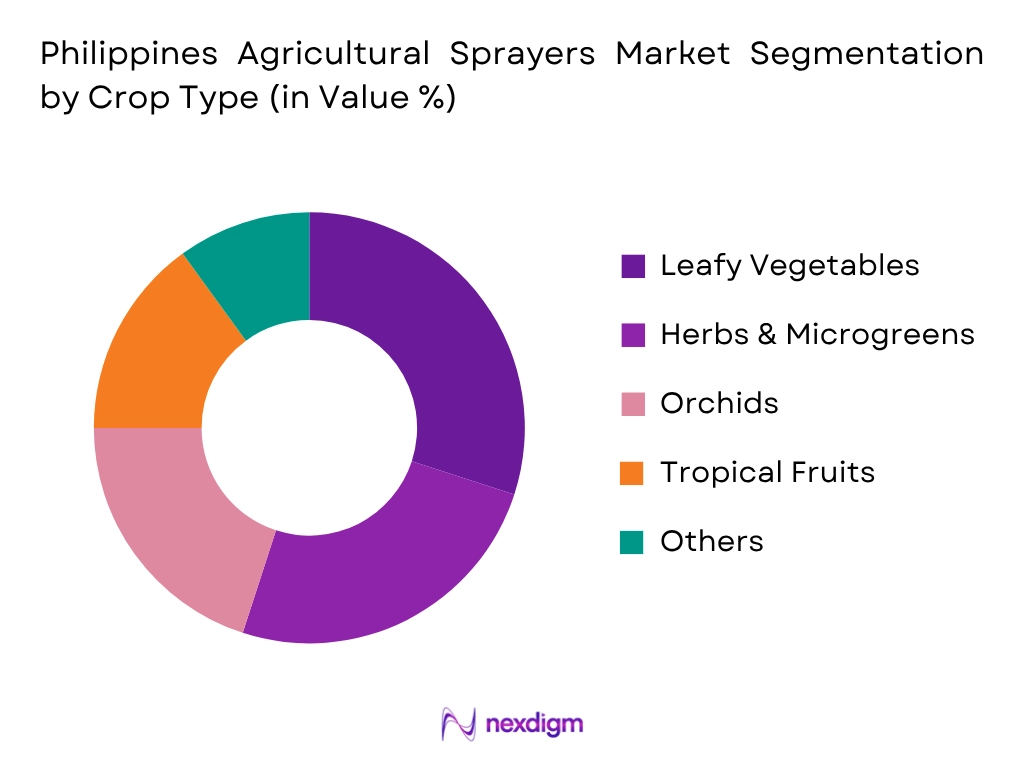
Philippines Agricultural Sprayers Market is segmented by crop type into rice, corn/maize, sugarcane, coconut, banana, vegetables and root crops, cacao and coffee, and other crops. Rice cultivation accounts for the largest share of sprayer demand, driven by the Philippines’ status as one of Asia’s major rice producers and the government’s sustained focus on palay production self-sufficiency. Rice cultivation across irrigated and rain-fed systems requires multiple spray applications throughout the growing season for weed management, blast disease control, and insect pest protection, particularly against brown planthopper, stem borer, and leaf folder infestations. The considerable acreage dedicated to rice production across Central Luzon, Cagayan Valley, and the Ilocos Region sustains strong and recurring demand for spraying equipment. Government programs such as the Rice Competitiveness Enhancement Fund (RCEF), which includes a mechanization component administered through PhilMech, have directly supported the distribution of agricultural sprayers to registered rice farmers nationwide. Corn production in SOCCSKSARGEN and Cagayan Valley further contributes to sprayer demand, as does the growing banana and coconut sectors in Mindanao and the Visayas.
Competitive Landscape
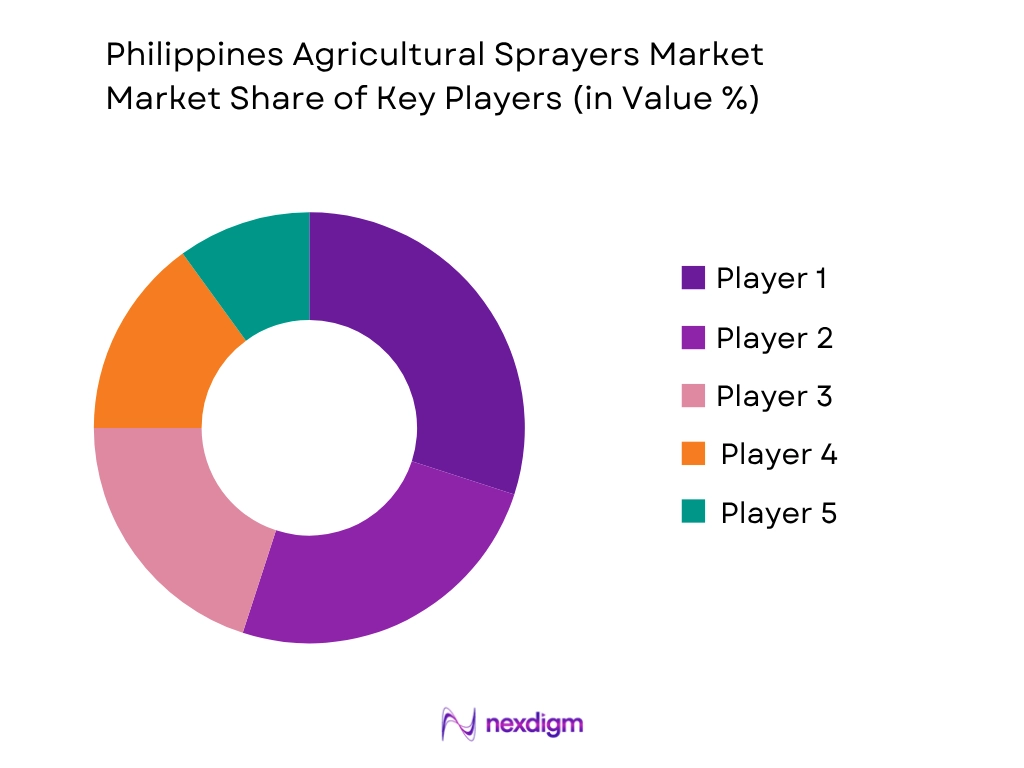
The Philippines Agricultural Sprayers Market is characterized by the presence of international agricultural equipment distributors, locally established agricultural machinery companies, crop protection chemical manufacturers, and government-linked supply programs. The competitive environment is moderately fragmented, with established distributors benefiting from import networks, dealer partnerships, government supply contracts, and after-sales service capabilities. International manufacturers rely on authorized distributors to reach the Philippines’ geographically dispersed farming communities across multiple island groups, while local agricultural machinery companies leverage their distribution reach and understanding of smallholder needs to expand market penetration. Government procurement through PhilMech and the Department of Agriculture represents a critical demand channel that shapes competitive dynamics within the market.
| Company | Establishment Year | Headquarters | Product Portfolio | Precision Agriculture Integration
|
Tank Capacity Range | Dealer Network Strength | After-Sales Support | Innovation Capability |
| John Deere | 1837 | ~ | ~ | ~ | ~ | ~ | ~ | ~ |
| DJI Agriculture | 2006 | ~ | ~ | ~ | ~ | ~ | ~ | ~ |
| AGCO Corporation (Massey Ferguson ) | 1990 | ~ | ~ | ~ | ~ | ~ | ~ | ~ |
| Hardi International | 1957 | ~ | ~ | ~ | ~ | ~ | ~ | ~ |
| Yamaha Motor | 1958 | ~ | ~ | ~ | ~ | ~ | ~ | ~ |
Philippines Agricultural Sprayers Market Analysis’
Growth Drivers
Rice Competitiveness Enhancement Fund and Government Mechanization Programs
The Philippines Agricultural Sprayers Market is strongly supported by government-driven mechanization programs, most notably the Rice Competitiveness Enhancement Fund (RCEF), which allocates significant annual funding for the distribution of agricultural machinery and equipment to registered rice farmers through PhilMech. The RCEF mechanization component has been instrumental in channeling subsidized knapsack sprayers, motorized sprayers, and other crop protection tools to smallholder rice farmers organized through cooperatives and associations across major palay-producing regions. The Department of Agriculture’s broader agricultural modernization agenda, embedded within the Philippine Development Plan, targets improved farm productivity, reduced post-harvest losses, and enhanced food security through expanded mechanization support. Regional agricultural development programs and local government unit agricultural offices further amplify equipment distribution reach at the provincial and municipal levels. According to the Philippine Statistics Authority, national palay production extends across several million hectares of harvested area annually, creating a substantial and geographically dispersed demand base for spraying equipment. The sustained government commitment to rice self-sufficiency and farm productivity improvement through mechanization investments constitutes a fundamental structural driver of market demand.
Growth in Crop Protection Chemical Usage and Pest Management Awareness
Increasing adoption of crop protection chemicals across the Philippines’ diverse agricultural production systems is generating sustained demand for reliable and efficient spraying equipment. Growing awareness among Filipino farmers of the yield benefits associated with timely and effective pest, disease, and weed management is driving greater investment in spraying tools as a core element of crop production practice. Crop protection chemical manufacturers and their distribution networks play an active role in promoting sprayer adoption by bundling equipment recommendations with agrochemical sales and field demonstration programs. The expansion of high-value vegetable, banana, and cacao production in Mindanao and the Visayas, where chemical input intensity tends to be higher than in staple grain production, is contributing to incremental sprayer demand within these growing segments. Agricultural extension services operated by the Department of Agriculture and state universities and colleges continue to promote integrated pest management practices, including the appropriate use of spraying equipment, to improve farmer awareness and input efficiency. These combined dynamics of rising chemical usage, pest management awareness, and extension-driven education are reinforcing equipment demand across the Philippines’ agricultural regions.
Market Challenges
Fragmented Smallholder Landholdings and Low Mechanization Index
The Philippines Agricultural Sprayers Market faces significant structural challenges arising from the country’s highly fragmented agrarian landholding structure, which limits economies of scale for equipment investment among smallholder farmers. The average farm size in the Philippines is estimated at less than two hectares, with a large proportion of the farming population operating landholdings of one hectare or less. This extreme fragmentation reduces the economic justification for individual investment in motorized or advanced spraying equipment and constrains equipment utilization rates. The Philippines’ archipelagic geography, comprising more than 7,600 islands, further complicates equipment distribution, after-sales service delivery, and spare parts availability across geographically isolated farming communities. The country’s mechanization index remains significantly below regional comparators, reflecting persistent structural barriers to equipment adoption including land tenure uncertainty arising from ongoing agrarian reform program implementation. Poor rural road infrastructure in upland and island farming areas also limits equipment mobility and operational efficiency. These structural constraints continue to restrict the pace of market expansion and moderate the transition from manual to mechanized spraying practices across a broad segment of the smallholder farming population.
Typhoon Vulnerability, Climate Risk, and Equipment Damage
The Philippines’ exposure to frequent and severe typhoons represents a distinctive and significant market challenge for agricultural equipment suppliers and farm operators alike. The country experiences an average of approximately twenty tropical cyclones annually, with several making landfall and causing extensive agricultural damage across major farming regions. Typhoons create direct equipment losses through flooding, wind damage, and crop field destruction, disrupting farm operations and undermining equipment investment returns. Post-typhoon rehabilitation periods reduce farmers’ financial capacity to reinvest in replacement equipment, while the uncertainty of climate-related production risks discourages long-term capital commitments in agricultural machinery. Climate variability associated with El Niño and La Niña cycles also affects crop planting calendars, irrigation availability, and pest and disease pressure patterns, creating irregular and unpredictable equipment utilization profiles. The combination of typhoon damage risk, climate variability, and associated financial uncertainty increases the perceived investment risk associated with spraying equipment acquisition among smallholder operators and constrains adoption of higher-value motorized and precision spraying solutions.
Market Opportunities
UAV/Drone Sprayer Adoption in Rice and Banana Production
The Philippines presents significant growth opportunities for UAV/drone spraying technologies, particularly within large-scale rice farming areas and plantation banana production zones where labor scarcity and coverage efficiency requirements are most acute. Drone sprayers have demonstrated meaningful productivity advantages in Philippine rice paddies, where terrain variability, irrigation channel networks, and wet field conditions can complicate conventional ground-based sprayer access. The growing availability of drone spraying service providers operating on a contract basis is making UAV technology accessible to smallholder rice farmers without requiring individual equipment ownership, a model well suited to the Philippines’ landholding structure. Banana plantation operators in Davao Region and other Mindanao growing zones are increasingly evaluating drone spraying for fungicide and foliar fertilizer applications, where coverage frequency and canopy penetration requirements are demanding. The Civil Aviation Authority of the Philippines and the Department of Agriculture are progressively developing regulatory frameworks to support safe and expanded agricultural drone operations. Government programs exploring drone integration within PhilMech’s mechanization support portfolio, combined with growing private sector drone service provider networks, are expected to drive progressive market adoption of UAV spraying technologies across the Philippines’ diverse agricultural landscape.
Cooperative-Based Equipment Sharing and Service Provider Models
The Philippines’ well-established agricultural cooperative infrastructure presents a significant opportunity for expanding spraying equipment access among smallholder farming communities through collective ownership, equipment sharing, and service provider business models. Cooperative-based machinery pools, supported by government grants and rural credit programs administered through the Land Bank of the Philippines and the Agricultural Credit Policy Council, can enable groups of smallholder farmers to collectively invest in and access spraying equipment that would be unaffordable at the individual farm level. The Department of Agriculture and PhilMech have supported cooperative mechanization schemes as a central strategy for broadening equipment access across fragmented smallholder farming communities. Custom spraying service enterprises, operated by rural youth agripreneurs and cooperative machinery pools, are emerging as commercially viable models for delivering timely crop protection services to farmers lacking individual equipment ownership. Government programs linking spraying equipment grants with cooperative organizational capacity building are strengthening the institutional foundations for equipment sharing models. These cooperative and service provider-based approaches represent an important market development pathway for equipment suppliers seeking to expand reach beyond direct-purchase channels within the Philippines’ smallholder-dominated agricultural structure.
Future Outlook
The Philippines Agricultural Sprayers Market is expected to experience sustained growth over the forecast period, supported by continued government investment in agricultural mechanization, growing adoption of crop protection practices, and progressive technology adoption among commercial farm operators. Demand for both affordable smallholder-oriented spraying equipment and technologically advanced drone and precision solutions is anticipated to expand as the farming sector modernizes under government-led programs. The Rice Competitiveness Enhancement Fund’s mechanization component, PhilMech’s distribution programs, and expanding cooperative equipment access schemes are expected to continue driving broad-based equipment adoption across the archipelago. Innovations including UAV spraying services, solar-powered sprayers, mobile-linked application advisory tools, and cooperative equipment sharing models are expected to reshape market dynamics and progressively expand the addressable market beyond traditional knapsack and manual sprayer segments.
Major Players
- John Deere
- DJI Agriculture
- Yamaha Motor
- AGCO Corporation (Massey Ferguson)
- Hardi International
- Kuhn Group
- CNH Industrial (Case IH & New Holland)
- Philippine Agricultural Machinery (PAM)
- Agricorp International
- Grains and Allied Industries Corporation (GAIC)
- Syngenta Philippines
- Bayer CropScience Philippines
- FMC Philippines
- Land Bank of the Philippines (LBP) Agricultural Programs
- Philippine Center for Postharvest Development and Mechanization (PhilMech)
Key Target Audience
- Agricultural Equipment Manufacturers and Distributors
- Agricultural Machinery Dealers and Cooperatives
- Large Commercial Farming Enterprises and Plantation Operators
- Smallholder Farmer Cooperatives and Associations
- Crop Protection Chemical Manufacturers
- Investments and Venture Capitalist Firms
- Government and Regulatory Bodies (Department of Agriculture, PhilMech, Fertilizer and Pesticide Authority, Land Bank of the Philippines)
- Agricultural Equipment Rental and Custom Service Providers
Research Methodology
Step 1: Identification of Key Variables
The initial phase involves constructing an ecosystem map encompassing all major stakeholders within the Philippines Agricultural Sprayers Market. This process includes extensive secondary research through industry publications, government agricultural databases, Department of Agriculture reports, PhilMech procurement records, trade associations, and Philippine Statistics Authority agricultural production data. The objective is to identify critical market variables including equipment demand, crop acreage, mechanization rates, technology adoption, and purchasing behavior across the Philippines’ diverse farming regions and island groups.
Step 2: Market Analysis and Construction
Historical market data relating to agricultural machinery sales, crop production trends, farm equipment penetration, PhilMech distribution records, and spraying technology adoption are collected and analyzed. Demand-side assessment focuses on farm-level purchasing patterns and crop protection requirements across rice, corn, banana, coconut, and high-value crop production systems, while supply-side analysis evaluates manufacturer revenues, dealer sales, production capacities, and distribution networks. Both approaches contribute to market size estimation and forecasting across the Philippines’ major agricultural regions.
Step 3: Hypothesis Validation and Expert Consultation
Preliminary market findings and assumptions are validated through structured interviews with industry participants including agricultural equipment manufacturers, distributors, farm operators, agronomists, PhilMech officials, Department of Agriculture extension officers, cooperative leaders, and industry associations. These consultations provide practical insights regarding market trends, technological developments, regulatory dynamics, operational challenges, and future demand outlook, thereby strengthening the reliability of the research findings within the Philippines’ unique smallholder-dominated agricultural context.
Step 4: Research Synthesis and Final Output
The final stage involves triangulating information collected from primary interviews, secondary research sources, and proprietary databases. Market estimates are refined through cross-verification across multiple data points and stakeholder perspectives. Forecast models are developed using agricultural production outlooks, mechanization program budgets, technology adoption rates, and government investment patterns to generate comprehensive and reliable market intelligence for the Philippines Agricultural Sprayers Market.

- Executive Summary
- Research Methodology (Market Definitions and Assumptions, Abbreviations, Market Sizing Approach, Top-Down Analysis, Bottom-Up Analysis, Demand-Side Assessment, Supply-Side Assessment, Primary Industry Interviews, Distributor and Dealer Validation, Farm-Level Survey Assessment, Data Triangulation, Forecasting Framework, Limitations and Future Conclusions)

- Definition and Scope
- Industry Evolution and Market Genesis
- Timeline of Technological Advancements in Agricultural Spraying
- Agricultural Equipment Value Chain Analysis
- Agricultural Sprayer Supply Chain Analysis

- Growth Drivers (Expansion of Palay and Corn Production, Growth in Crop Protection Chemical Usage, Rising Farm Mechanization Rate, Government Agricultural Modernization Programs, Increasing Smallholder Farmer Support Initiatives)
- Market Challenges (Fragmented Smallholder Landholdings, Limited Access to Rural Finance, Skilled Operator Shortages, Typhoon and Climate Vulnerability, Counterfeit and Low-Quality Equipment)
- Market Opportunities (Drone Sprayer Penetration in Rice Farming, Biological Crop Input Application, Government-Backed Mechanization Programs via PhilMech, Smallholder Cooperative Equipment Access, Sustainable Farming Practices)
- Market Trends (UAV Spraying Adoption in Rice Paddies, Solar-Powered Sprayer Development, Mobile Advisory Integration, Cooperative-Based Equipment Sharing, Low-Drift Nozzle Adoption)
- Government Regulations (Philippine Crop Protection Standards, Fertilizer and Pesticide Authority Regulations, PhilMech Equipment Standards, Environmental Compliance, Philippine Development Plan Agricultural Targets)
- SWOT Analysis
- PESTLE Analysis
- Stakeholder Ecosystem
- Porter’s Five Forces Analysis
- Competition Ecosystem

- By Market Value (2020-2025)
- By Units Sold (2020-2025)
- By Average Selling Price (2020-2025)

- By Sprayer Type (In Value %)
Knapsack/Backpack Sprayers
Motorized Knapsack Sprayers
Tractor-Mounted Boom Sprayers
Mounted Sprayers
UAV/Drone Sprayers
Self-Propelled Sprayers
Manual Hand Sprayers
Orchard and Garden Sprayers - By Application (In Value %)
Herbicide Application
Fungicide Application
Insecticide Application
Foliar Fertilizer Application
Biological Inputs Application - By Crop Type (In Value %)
Rice
Corn/Maize
Sugarcane
Coconut
Banana
Vegetables and Root Crops
Cacao and Coffee
Other Crops - By Distribution Channel (In Value %)
Agricultural Input Retailers and Cooperatives
OEM Direct Sales
Agricultural Equipment Dealers
Government Distribution Programs (PhilMech, DA)
Online Agricultural Platforms - By Region (In Value %)
Central Luzon (Region III)
Cagayan Valley (Region II)
SOCCSKSARGEN (Region XII)
Ilocos Region (Region I)
Western Visayas (Region VI)
Davao Region (Region XI)

- Market Share of Major Players (By Value, Units Sold, Sprayer Type, Crop Segment, Region)
- Cross Comparison Parameters (Boom Width Portfolio, Tank Capacity Range, Field Coverage Efficiency (ha/hr), Precision Spraying Capability, Variable Rate Application Integration, Dealer Network Strength, After-Sales Service Reach, Spray Drift Reduction Technology)
- Competitive Positioning Matrix (Technology Leadership, Pricing Competitiveness, Brand Recognition, Regional Presence)
- SWOT Analysis of Major Players
- Pricing Analysis by Sprayer Category and Capacity
- Detailed Profiles of Major Companies
John Deere
DJI Agriculture
Yamaha Motor
AGCO Corporation (Massey Ferguson)
Hardi International
Kuhn Group
CNH Industrial (Case IH & New Holland)
Philippine Agricultural Machinery (PAM)
Agricorp International
Grains and Allied Industries Corporation (GAIC)
Syngenta Philippines
Bayer CropScience Philippines
FMC Philippines
Land Bank of the Philippines (LBP) Agricultural Programs
Philippine Center for Postharvest Development and Mechanization (PhilMech)

- Farm Equipment Ownership and Utilization Analysis (Hours of Operation, Spraying Frequency, Fleet Age, Seasonal Utilization Rate)
- Farm Mechanization Assessment (Mechanization Index, Equipment Density per Hectare, Technology Adoption Rate)
- Purchasing Power and Investment Capacity Analysis (Farm Income, Access to Rural Credit, ROI Expectations, Capital Expenditure Trends)
- Crop Protection Spending Analysis (Chemical Input Spend, Application Cost per Hectare, Spray Frequency by Crop)
- Farmer Needs and Pain Point Assessment (Labor Availability, Input Efficiency, Downtime Reduction, Coverage Accuracy, Fuel Consumption)

- By Market Value (2026-2035)
- By Units Sold (2026-2035)
- By Average Selling Price (2026-2035)


 Request a Sample
 Ask for Customization
 Get a Quote
 Enquire Now