
 Download PDF
Market Overview
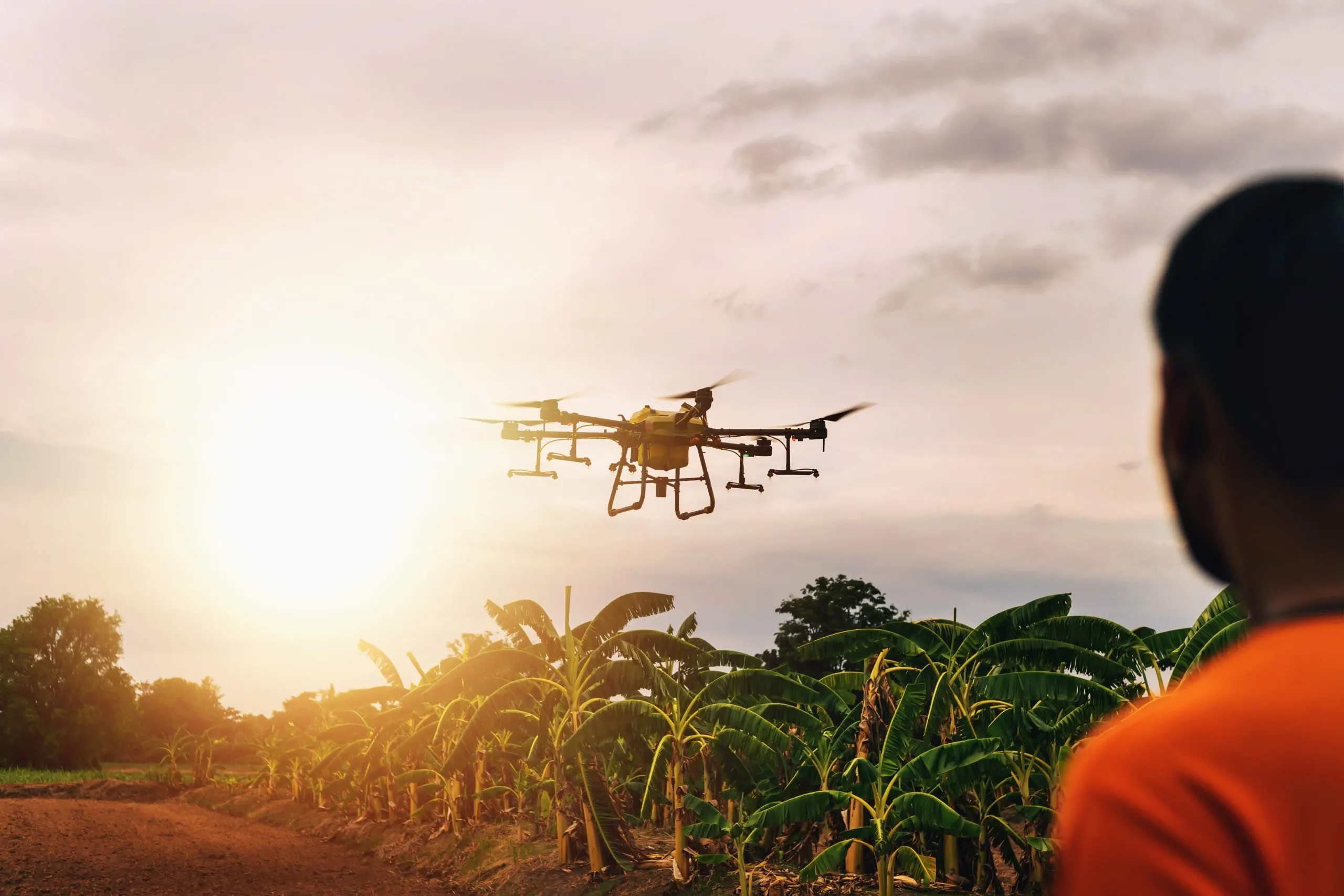
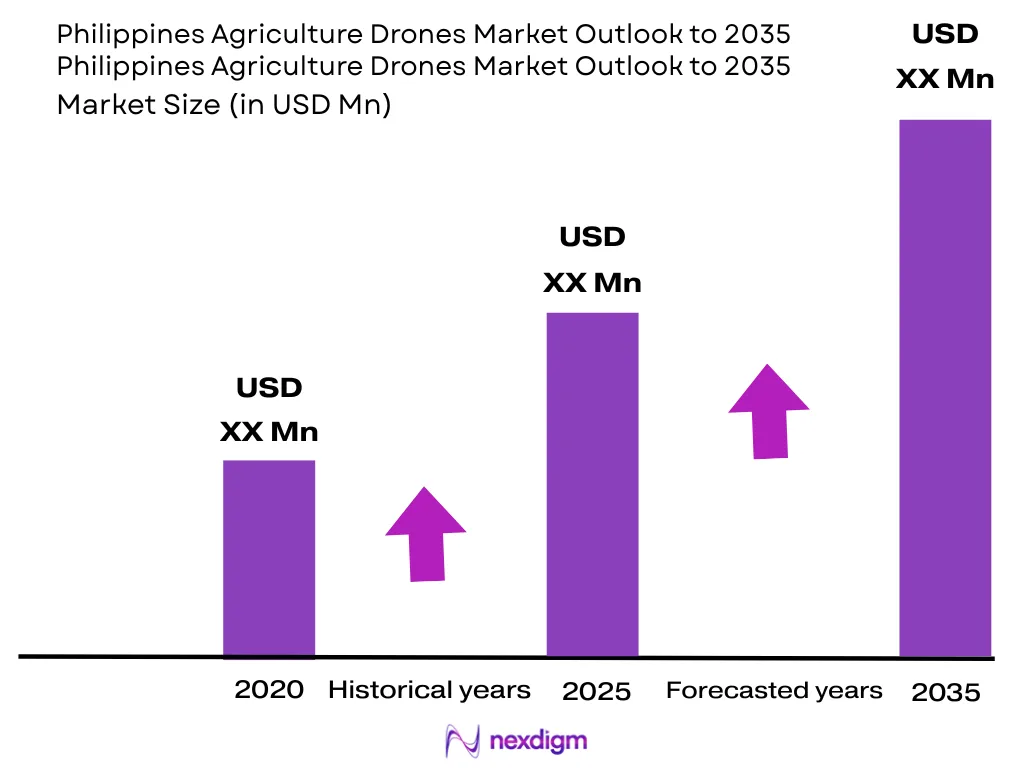
The Philippines Agriculture Drones Market was valued at USD ~ Million in 2024 and has emerged as a growing component of the country’s agricultural modernization agenda. The market is supported by increasing adoption of precision farming technologies, government-backed agricultural development initiatives under the Philippine Rural Development Program (PRDP) and the Modernized Agriculture and Fisheries Act (MAFA), and rising investment in smart farming infrastructure across the archipelago. Agriculture contributes approximately 10% to national GDP and remains a critical livelihood sector for a significant share of the Filipino population, according to data from the Philippine Statistics Authority. The Philippines has approximately 12 million hectares of agricultural land distributed across its major island groups of Luzon, Visayas, and Mindanao, covering a diverse range of crops including rice, corn, sugarcane, coconut, banana, and a wide variety of tropical fruits and vegetables. The growing requirement for efficient input utilization, early pest and disease detection, and yield optimization across diverse and geographically dispersed farming regions has accelerated the adoption of agricultural drones for crop monitoring, precision spraying, field mapping, and yield assessment. Furthermore, the Department of Agriculture (DA) and the Philippine Council for Agriculture and Fisheries (PCAF) continue to encourage agricultural technology adoption, creating favorable conditions for drone-based farming solutions across commercial plantations, cooperatives, and smallholder operations.
Market Segmentation
By Drone Type
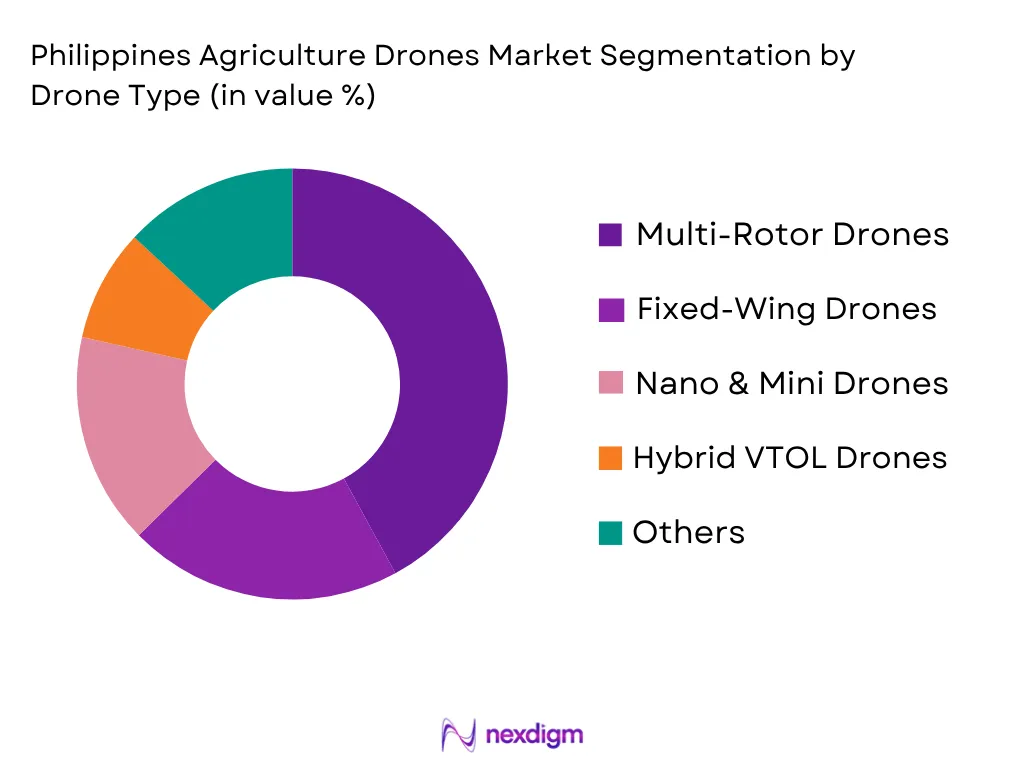
Philippines Agriculture Drones Market is segmented by drone type into multi-rotor drones, fixed-wing drones, hybrid VTOL drones, single rotor drones, and nano & mini agricultural drones. Recently, multi-rotor drones have maintained a dominant market share within this segment owing to their versatility, ease of deployment, precision spraying capability, and suitability for the diverse smallholder and commercial farm operations prevalent across the Philippines. These drones can hover accurately above crop fields and plantation rows, enabling highly targeted pesticide and fertilizer application while minimizing chemical wastage, which is particularly valuable given the Philippines’ dense tropical vegetation and complex terrain. The growing adoption of commercial rice and corn farming in Luzon and Mindanao, alongside expanding banana and pineapple plantation operations, has further strengthened demand for multi-rotor platforms due to their operational flexibility in varied topographic and agricultural environments. In addition, government-supported mechanization programs and increasing awareness among cooperative and commercial farmers regarding operational efficiency have accelerated deployment. Their compatibility with multispectral sensors, thermal imaging systems, and AI-based crop monitoring solutions continues to position multi-rotor drones as the preferred choice across the Philippines’ diverse agricultural landscape.
By Application
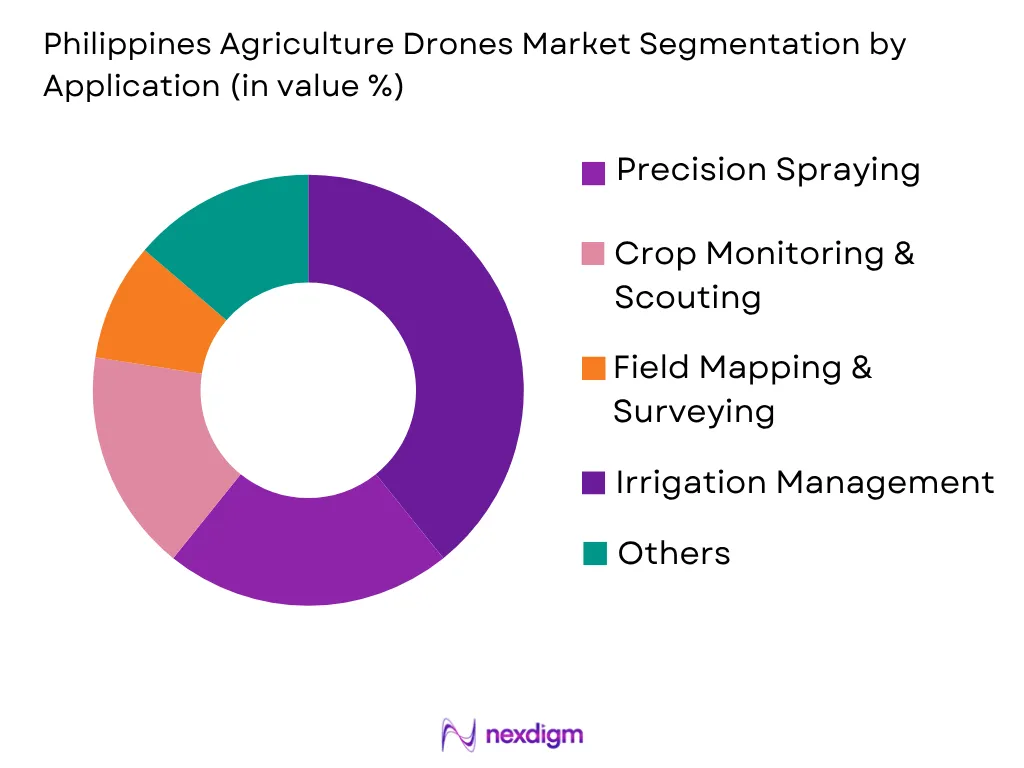
Philippines Agriculture Drones Market is segmented by application into precision spraying, crop monitoring and scouting, field mapping and surveying, yield estimation and analytics, irrigation management, livestock monitoring, and planting and seeding. Precision spraying currently dominates the market owing to the Philippines’ significant reliance on chemical pest and disease management across its major commodity crops including rice, corn, sugarcane, banana, and coconut. Agricultural drones equipped with high-precision spray systems enable targeted pesticide and fungicide application with substantially greater efficiency and lower chemical consumption compared to traditional ground-based or manual methods. The Philippines experiences significant crop losses from rice blast, banana bunchy top virus, and various fungal and bacterial pathogens, creating strong demand for precise and timely chemical intervention enabled by drone spraying. Smallholder rice farmers, cooperative operations, and large-scale plantation managers increasingly rely on drone-assisted spraying to reduce labor dependency, improve chemical coverage uniformity, and respond rapidly to pest outbreaks. The integration of GPS-guided navigation, autonomous flight planning, and variable rate application technologies has further enhanced adoption. As the Philippines’ agricultural sector pursues productivity improvements and post-harvest loss reduction, precision spraying remains the most commercially significant application segment in the market.
Competitive Landscape
The Philippines Agriculture Drones Market is characterized by the presence of global drone manufacturers, regional agritech companies, and locally active distribution partners. International companies such as DJI Agriculture, XAG, Trimble, and AgEagle Aerial Systems have established growing positions through advanced drone technologies, precision spraying systems, and integrated farm analytics platforms. Regional companies such as Poladrone have developed drone solutions tailored to Southeast Asian agricultural conditions and have expanded their presence across Philippine farming operations. Competition is increasingly driven by technological innovation, payload capacity, autonomous flight capabilities, multispectral imaging solutions, after-sales support services, and the ability to serve geographically dispersed farming communities across the Philippine archipelago. Strategic collaborations with agricultural cooperatives, government agencies, and agritech service providers are becoming key differentiators among market participants.
| Company | Establishment Year | Headquarters | Agriculture Drone Portfolio | Max Payload Capacity | Precision Spraying Capability | AI Analytics Integration | Philippines Distribution Network | Precision Agriculture Solutions |
| DJI Agriculture | 2006 | ~ | ~ | ~ | ~ | ~ | ~ | ~ |
| XAG | 2007 | ~ | ~ | ~ | ~ | ~ | ~ | ~ |
| AgEagle Aerial Systems | 2010 | ~ | ~ | ~ | ~ | ~ | ~ | ~ |
| Trimble | 1978 | ~ | ~ | ~ | ~ | ~ | ~ | ~ |
| Poladrone | 2015 | ~ | ~ | ~ | ~ | ~ | ~ | ~ |
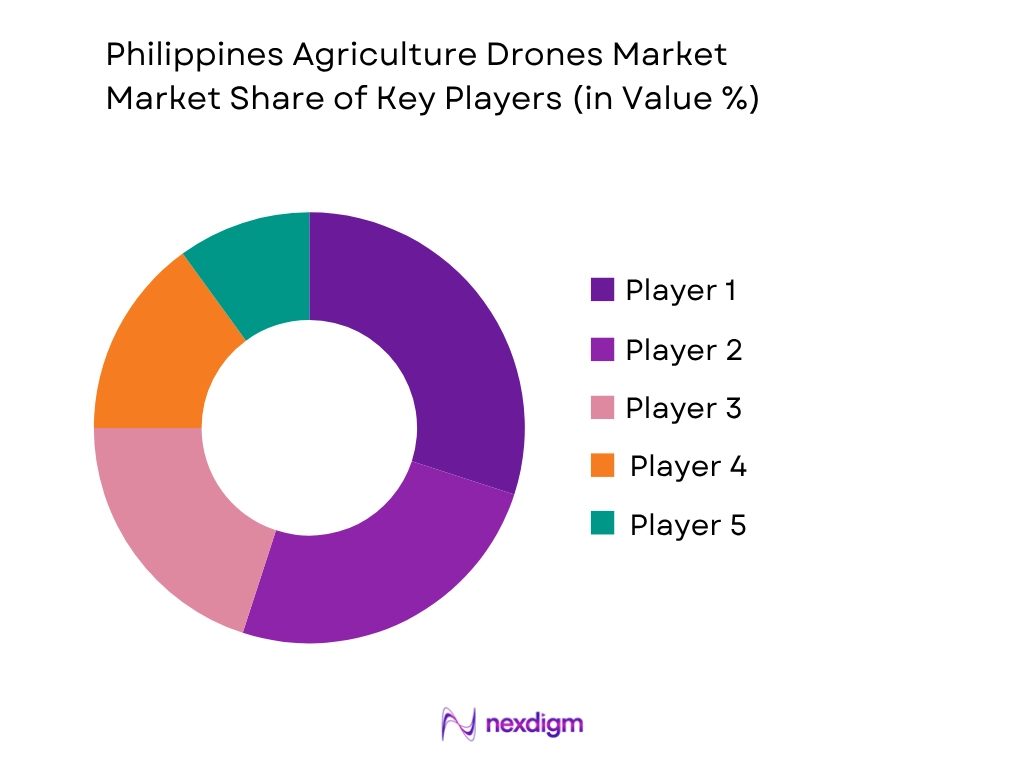
Philippines Agriculture Drones Market Analysis
Growth Drivers
Government Support for Agricultural Modernization and Mechanization
The Philippine government’s sustained investment in agricultural modernization is a major driver for agriculture drone adoption. Under the Philippine Rural Development Program (PRDP), the Modernized Agriculture and Fisheries Act (MAFA), and the Agriculture Fisheries Modernization Program (AFMP), the country is prioritizing technology-driven productivity improvements across its agricultural sector. According to the World Bank, the Philippines’ GDP exceeded USD 435 billion in current prices, reflecting a major Southeast Asian economy with a large agricultural workforce and significant potential for technology-driven transformation. The Department of Agriculture (DA) continues to promote farm mechanization and digital agriculture practices to improve productivity across approximately 12 million hectares of agricultural land. Agriculture employs approximately 25% of the national workforce, underscoring the economic and social significance of farm modernization. The Philippines also faces significant challenges related to post-harvest losses, estimated at 15–20% for staple crops, creating demand for technologies that optimize monitoring, spraying efficiency, and harvest timing. Agriculture drones enable targeted chemical application, crop monitoring, and field analytics that directly support productivity and loss reduction objectives. The country’s plantation agriculture sectors—including banana, coconut, pineapple, and sugarcane—continue expanding their commercial operations, increasing demand for advanced monitoring solutions. Furthermore, rising adoption of digital technologies and geospatial analytics across commercial farming enterprises strengthens the commercial case for drone deployment, making precision agriculture one of the most significant growth catalysts for the Philippines Agriculture Drones Market.
Expansion of Commercial Plantation Agriculture and Export-Oriented Farming
The continued expansion of export-oriented plantation agriculture across Mindanao and other major agricultural regions is accelerating demand for agricultural drones. The Philippines is a leading global producer and exporter of bananas, coconuts, pineapples, and sugarcane, with commercial plantations operating across large contiguous land areas that are well-suited to efficient drone-based monitoring and spraying. The Philippine Statistics Authority reported consistent growth in commercial agriculture output, driven by increasing demand from export markets across Asia, the Middle East, and Europe. Large-scale plantation operators managing banana, pineapple, and sugarcane estates increasingly seek technologies that improve input efficiency, reduce labor dependency, and enable rapid response to pest and disease threats. Drone-based spraying systems provide plantation managers with the ability to apply fungicides, pesticides, and foliar nutrients uniformly across terrain that may be difficult to access with ground-based equipment. Growing investments in irrigated commercial agriculture, cold chain logistics, and export processing infrastructure further increase the need for precision monitoring and input management technologies. As the Philippines seeks to maintain its competitive position in global tropical produce markets while improving domestic food security, agriculture drones are becoming an increasingly valuable component of commercial plantation management and productivity enhancement strategies.
Market Challenges
Archipelagic Geography and Logistics Complexity
One of the defining structural challenges facing the Philippines Agriculture Drones Market is the country’s complex archipelagic geography, comprising more than 7,600 islands spread across the Western Pacific. This geographical structure creates significant logistical challenges for equipment distribution, after-sales service delivery, operator training, and technical support across the country’s diverse farming regions. Agricultural land is distributed across three major island groups—Luzon, Visayas, and Mindanao—as well as numerous smaller islands, many of which lack reliable transportation infrastructure, internet connectivity, and electricity supply. Delivering agricultural drones and associated equipment to remote farming communities in provinces such as Eastern Samar, Agusan del Sur, or Palawan requires complex inter-island logistics that substantially increase distribution costs and delivery lead times. Technical maintenance and repair services are similarly challenging to provide across geographically dispersed agricultural areas, limiting the practical availability of after-sales support outside major regional centers. Furthermore, the Philippines is located within the Pacific typhoon belt and experiences an average of 20 typhoons annually, which can damage drone equipment, disrupt operations, and reduce the commercial viability of drone services in severely affected regions. These structural characteristics require drone manufacturers and service providers to develop specialized distribution strategies and resilient service models tailored to the Philippines’ unique geographic context.
High Initial Capital Investment and Limited Access to Agricultural Financing
The substantial upfront investment required for drone acquisition, software integration, operator training, and maintenance infrastructure presents a significant challenge for widespread adoption across the Philippines’ predominantly smallholder agricultural sector. While commercial plantation operations and larger cooperatives may access technology financing through institutional channels, the majority of Filipino farmers operate small landholdings with very limited capital access. Philippine agriculture is characterized by significant land fragmentation, with a large share of farmers cultivating fewer than two hectares. Advanced agriculture drones equipped with multispectral cameras, precision spraying systems, RTK navigation, and cloud-based analytics require investment levels that are prohibitive for individual smallholders without access to subsidized financing or cooperative procurement arrangements. Limited availability of agricultural credit, low penetration of crop insurance, and currency fluctuations that affect import costs further compound the investment barrier for drone technologies. Government mechanization programs provide some degree of subsidy support; however, demand consistently outpaces available funding. The drone-as-a-service model has emerged as a viable alternative for resource-constrained farmers; however, scaling this model across the archipelago requires significant investment in operator training, equipment fleets, and island-to-island logistics infrastructure. Addressing these financing constraints remains a critical prerequisite for achieving meaningful penetration across the Philippines’ diverse agricultural sector.
Market Opportunities
Integration of Artificial Intelligence and Advanced Farm Analytics
The increasing integration of artificial intelligence, machine learning, remote sensing, and advanced crop analytics presents substantial opportunities for the Philippines Agriculture Drones Market. The Philippines has a growing digital technology ecosystem and a young, technology-literate population, creating a favorable environment for adopting AI-enabled agricultural drone technologies. Agriculture drones equipped with multispectral and thermal imaging systems can generate detailed crop health datasets across rice paddies, corn fields, banana plantations, and coconut groves, supporting predictive disease detection, yield forecasting, and targeted input management. The Philippines faces recurring challenges from rice blast disease, banana fusarium wilt, and coconut scale insect infestations, for which early detection enabled by drone analytics can substantially reduce economic losses. Commercial farms and plantation operators are increasingly seeking data-driven solutions that improve productivity while minimizing resource consumption and environmental impact. As agriculture becomes increasingly technology-driven in the Philippines, drone manufacturers and software providers have significant opportunities to develop integrated solutions combining aerial monitoring, predictive analytics, and autonomous decision support systems tailored to local crop types and agro-ecological conditions across Luzon, Visayas, and Mindanao.
Drone-as-a-Service Models and Agricultural Cooperative Integration
The Philippines’ large network of agricultural cooperatives and rural associations presents a significant opportunity for drone-as-a-service (DaaS) business models that make precision agriculture accessible to smallholder farmers without requiring individual drone ownership. The Department of Agriculture actively promotes cooperative farming and shared machinery arrangements as vehicles for technology dissemination across the agricultural sector. DaaS providers operating through cooperative structures can aggregate demand from multiple smallholders, enabling economically viable drone operations at the community level. This model is particularly relevant for rice and corn farming regions in Central Luzon, Cagayan Valley, and Cotabato Basin, where fragmented landholdings create strong demand for shared precision farming services. Government programs under the Philippine Rural Development Program and the Rice Competitiveness Enhancement Fund (RCEF) provide financial support channels that can facilitate cooperative drone procurement and service deployment. The integration of drone services with mobile-based farm management platforms and weather advisory systems further enhances the value proposition for smallholder operators. As connectivity infrastructure continues improving across rural Philippines, and as drone operation costs decline with advancing technology, the DaaS model is expected to become an increasingly important channel for expanding precision agriculture access and market penetration across the archipelago.
Future Outlook
The Philippines Agriculture Drones Market is expected to witness sustained growth during the forecast period, supported by ongoing agricultural modernization efforts, rising adoption of precision farming practices, and increasing integration of digital technologies within the agricultural sector. Government initiatives under the Philippine Rural Development Program, the Modernized Agriculture and Fisheries Act, and the Rice Competitiveness Enhancement Fund are anticipated to encourage greater deployment of smart farming solutions across commercial plantations, cooperative operations, and smallholder rice and corn farms. Advances in artificial intelligence, machine learning, remote sensing, and autonomous navigation technologies are likely to enhance the effectiveness and affordability of agricultural drones across the Philippine archipelago. Furthermore, increasing emphasis on food security, post-harvest loss reduction, export competitiveness, and sustainable agriculture is expected to create favorable conditions for long-term market expansion. The growing maturity of drone-as-a-service providers and the deepening integration of precision agriculture within government agricultural programs further strengthen the market’s long-term growth prospects.
Major Players
- DJI Agriculture
- XAG
- Trimble
- AgEagle Aerial Systems
- Sentera
- AeroVironment
- Delair
- Parrot Drones
- Drone Volt
- Quantum Systems
- Yamaha Motor
- Flyability
- SZ DJI Technology
- Poladrone
- Avidrone Aerospace
Key Target Audience
- Agriculture Drone Manufacturers
- Precision Agriculture Solution Providers
- Commercial Plantation and Farm Enterprises
- Agricultural Cooperatives and Farmer Associations
- Drone-as-a-Service Providers
- Investments and Venture Capitalist Firms
- Government and Regulatory Bodies (Department of Agriculture; Civil Aviation Authority of the Philippines)
- Agricultural Technology Integrators and Agritech Startups
Research Methodology
Step 1: Identification of Key Variables
The initial phase involves constructing an ecosystem map encompassing all major stakeholders within the Philippines Agriculture Drones Market. This step is supported through extensive secondary research, government publications, industry databases, regulatory frameworks, and technology assessments. The objective is to identify the critical variables influencing market demand, technology adoption, operational efficiency, and competitive dynamics across the Philippines’ diverse archipelagic agricultural landscape.
Step 2: Market Analysis and Construction
In this phase, historical market information is compiled and analyzed using both top-down and bottom-up methodologies. The analysis includes agricultural technology penetration, drone deployment trends, precision farming adoption rates, crop-specific utilization patterns across rice, corn, banana, coconut, and sugarcane sectors, and revenue generation across various drone applications. The collected information is validated through multiple data triangulation techniques.
Step 3: Hypothesis Validation and Expert Consultation
Market assumptions and forecasts are validated through computer-assisted telephone interviews (CATIs) and discussions with agricultural technology providers, drone manufacturers, farm operators, cooperative leaders, and regulatory experts. These consultations provide practical insights into technology adoption barriers, investment trends, customer preferences, and operational requirements across different island groups and farming communities within the Philippines.
Step 4: Research Synthesis and Final Output
The final phase involves synthesizing information obtained through primary and secondary research into a comprehensive market assessment. Direct engagement with industry participants enables verification of segmentation assumptions, competitive positioning, technological developments, and future growth opportunities. The resulting report delivers a robust and validated view of the Philippines Agriculture Drones Market.

- Executive Summary
- Research Methodology (Market Definitions and Assumptions, Abbreviations, Market Sizing Approach, Top-Down Analysis, Bottom-Up Analysis, Demand-Side Assessment, Supply-Side Assessment, Primary Industry Interviews, Data Triangulation, Forecasting Framework, Limitations and Future Conclusions)

- Definition and Scope
- Market Evolution and Industry Genesis
- Timeline of Major Industry Developments
- Agriculture Drone Ecosystem Analysis
- Precision Agriculture Value Chain Analysis

- Growth Drivers (Philippine Rural Development Program, Modernized Agriculture and Fisheries Act, Rising Precision Farming Adoption, Labor Efficiency Requirements, Expansion of Commercial Plantation Agriculture)
- Market Challenges (Archipelagic Geography and Logistics Complexity, High Capital Investment Requirements, Skilled Operator Shortage, Regulatory Compliance Complexity, Vulnerability to Typhoons and Natural Disasters)
- Market Opportunities (AI-Powered Farm Analytics, Drone-as-a-Service Expansion, Smart Irrigation Integration, Autonomous Crop Spraying, Expansion of Export-Oriented Plantation Agriculture)
- Market Trends (Multispectral Imaging Adoption, AI-Based Crop Diagnostics, Autonomous Flight Planning, Cloud-Based Farm Management Platforms, Drone Integration with Weather and Disaster Risk Systems)
- Government Regulations (CAAP Drone Regulations, Department of Agriculture Policies, Philippine Rural Development Program, UAV Licensing Framework, Data Privacy Act Compliance)
- SWOT Analysis
- Porter’s Five Forces Analysis
- PESTLE Analysis
- Stakeholder Ecosystem
- Competition Ecosystem

- By Market Value (2020-2025)
- By Volume (2020-2025)
- By Average Selling Price (2020-2025)

- By Drone Type (In Value %)
Fixed-Wing Drones
Multi-Rotor Drones
Hybrid VTOL Drones
Single Rotor Drones
Nano and Mini Agricultural Drones - By Application (In Value %)
Crop Monitoring and Scouting
Precision Spraying
Field Mapping and Surveying
Crop Health Assessment
Irrigation Management
Livestock Monitoring
Planting and Seeding
Yield Estimation and Analytics - By Farm Type (In Value %)
Rice and Corn Farms
Sugarcane Plantations
Coconut and Banana Plantations
Vegetable and Fruit Farms
Aquaculture and Fishpond Operations
Mixed Farming and Smallholder Operations - By Region (In Value %)
Luzon
Visayas
Mindanao
Metro Manila and Urban Fringe Areas - By End User (In Value %)
Commercial Farms and Plantations
Agricultural Cooperatives
Government Agricultural Agencies
Agricultural Technology Service Providers
Research and Development Institutions
Smart Farming and Agritech Enterprises

- Market Share of Major Players (By Value, Volume, Drone Type, Application)
- Cross Comparison Parameters (Drone Payload Capacity, Flight Endurance, Precision Spraying Capability, AI Analytics Integration, Multispectral Imaging Capability, Distribution Network Reach, After-Sales Service Infrastructure, Agricultural Software Ecosystem)
- SWOT Analysis of Major Players
- Pricing Analysis by Drone Model and Payload Category
- Detailed Profiles of Major Companies
DJI Agriculture
XAG
AeroVironment
AgEagle Aerial Systems
Trimble
Sentera
Parrot Drones
Yamaha Motor
Drone Volt
Quantum Systems
Delair
Flyability
SZ DJI Technology
Poladrone
Avidrone Aerospace

- Agricultural Technology Adoption Analysis (Farm Size, Crop Type, Digital Readiness, Mechanization Level)
- Farmers Purchasing Behaviour Analysis
- Precision Farming Awareness Assessment
- Operational Pain Point Analysis
- Budget Allocation Analysis

- By Market Value (2026-2035)
- By Volume (2026-2035)
- By Average Selling Price (2026-2035)


 Request a Sample
 Ask for Customization
 Get a Quote
 Enquire Now