

 Download PDF
Market Overview
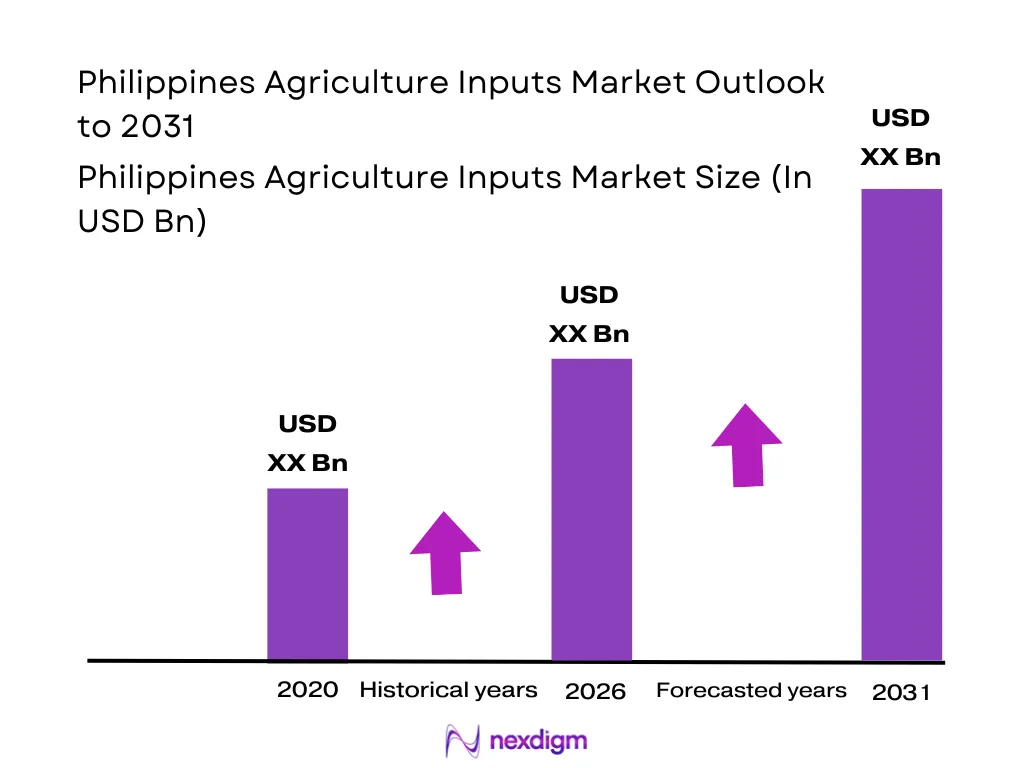
The Philippines Agriculture Inputs Market is supported by increasing agricultural modernization programs, rising food security requirements, and expanding commercial farming activities across the country. The agriculture sector contributed nearly USD 33 billion to the Philippine economy, while fertilizer imports exceeded 2.7 million metric tons and pesticide imports continued to rise due to increasing crop intensity and export-oriented agricultural production. The market is valued at approximately USD ~ billion, driven by growing demand for fertilizers, hybrid seeds, biological crop protection products, irrigation systems, and mechanized farming solutions. Government support for certified seed distribution and irrigation modernization has further strengthened agricultural input consumption across rice, corn, coconut, banana, and sugarcane cultivation.
Regions such as Central Luzon, Cagayan Valley, Davao, and Western Visayas dominate the Philippines Agriculture Inputs Market due to extensive agricultural land utilization, advanced irrigation coverage, and concentration of commercial farming operations. Luzon remains a major agricultural hub because of large-scale rice and corn cultivation requiring high fertilizer and crop protection application intensity. Mindanao leads in banana, pineapple, and coconut plantation farming, increasing demand for fungicides, specialty fertilizers, and precision irrigation systems. Metro Manila and Cebu serve as major distribution and logistics centers because of better port connectivity, warehousing infrastructure, and concentration of agrochemical distributors and agricultural equipment suppliers.
Market Segmentation
By Input Type
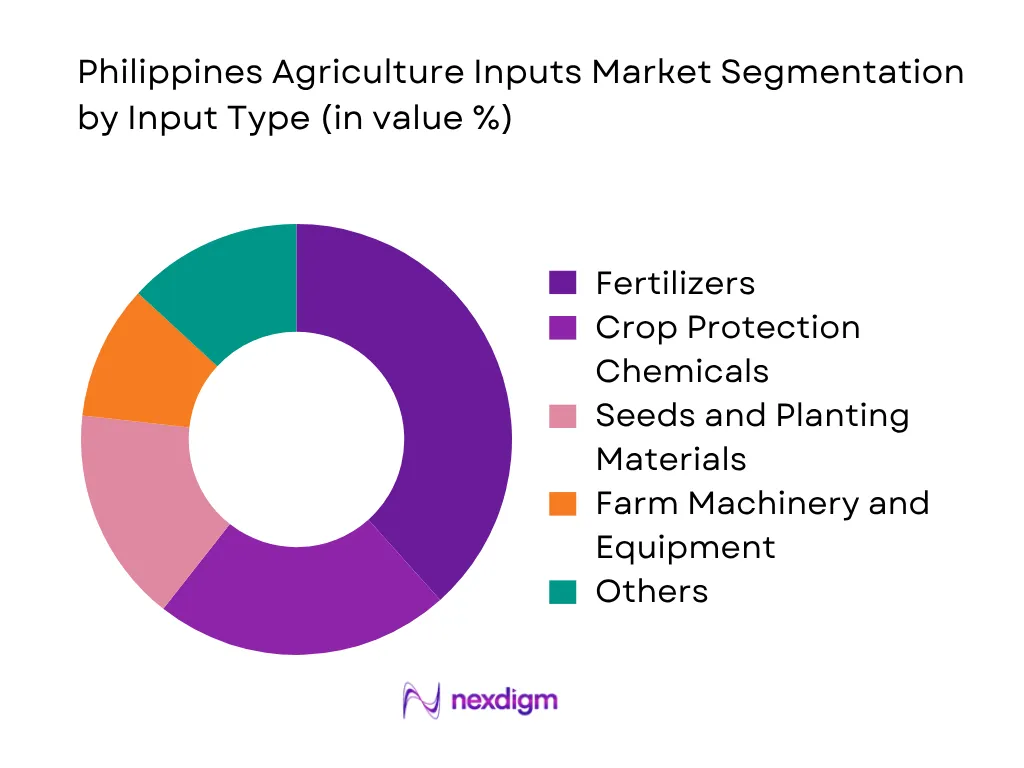
The Philippines Agriculture Inputs Market is segmented by input type into fertilizers, crop protection chemicals, seeds and planting materials, agricultural biologicals and biofertilizers, farm machinery and equipment, irrigation inputs, and soil conditioners and micronutrients. Fertilizers dominate the market because of intensive rice, corn, sugarcane, banana, and coconut cultivation across the Philippines. Continuous cropping cycles and declining soil fertility have increased dependence on nitrogenous and compound fertilizers among both smallholder and commercial farms. Government-supported fertilizer subsidy programs and increasing adoption of hybrid seeds are further strengthening fertilizer demand. Commercial plantations in Mindanao and Central Luzon continue to increase fertilizer utilization to improve crop productivity and export quality standards. Specialty fertilizers and micronutrients are also gaining traction because of precision farming practices and rising awareness regarding balanced nutrient management.
By Crop Type
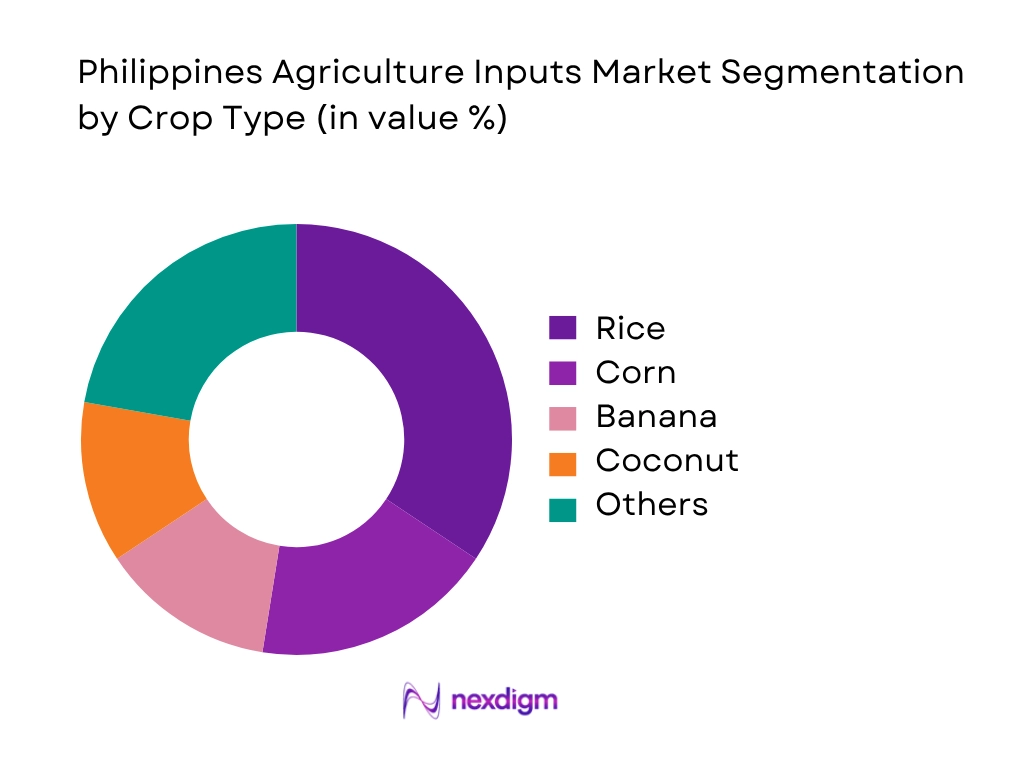
The Philippines Agriculture Inputs Market is segmented by crop type into rice, corn, coconut, sugarcane, banana, pineapple, fruits and vegetables, and high-value commercial crops. Rice dominates the market because it remains the country’s primary staple crop and receives significant government support through irrigation, seed distribution, and mechanization programs. Rice cultivation requires intensive fertilizer application, herbicide utilization, and certified seed adoption to improve yield productivity and reduce crop losses caused by pests and climate-related disruptions. Major rice-producing provinces in Luzon and Visayas maintain high agricultural input consumption because of multiple annual cropping cycles and extensive irrigated farmland. In addition, increasing food security concerns and modernization initiatives under government agricultural development programs continue supporting the expansion of advanced crop protection and nutrient management solutions across rice cultivation systems.
Competitive Landscape
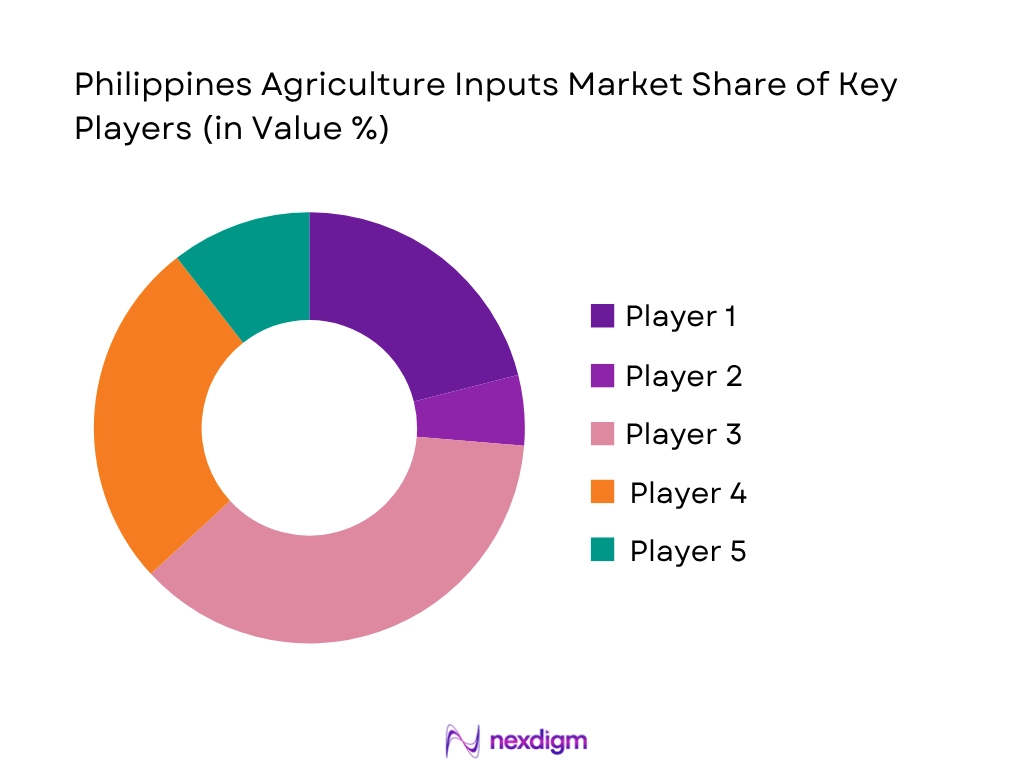
The Philippines Agriculture Inputs Market is moderately consolidated, with multinational agrochemical companies, domestic fertilizer manufacturers, seed technology providers, and agricultural distributors competing through product innovation, dealer network expansion, and sustainable agriculture initiatives. Companies are increasingly investing in biological crop protection solutions, hybrid seed development, precision nutrient management, and digital agriculture technologies to strengthen market positioning. Rising demand for export-quality agricultural production and climate-resilient farming solutions is intensifying competition across fertilizers, crop protection chemicals, and agricultural biologicals.
| Company | Establishment Year | Headquarters | Key Product Focus | Distribution Strength | Production Facilities | Import Dependency | Sustainability Focus | Innovation Focus |
| Yara International | 1905 | Oslo, Norway | ~ | ~ | ~ | ~ | ~ | ~ |
| Bayer AG | 1863 | Leverkusen, Germany | ~ | ~ | ~ | ~ | ~ | ~ |
| Syngenta Group | 2000 | Basel, Switzerland | ~ | ~ | ~ | ~ | ~ | ~ |
| Corteva Agriscience | 2019 | Indiana, USA | ~ | ~ | ~ | ~ | ~ | ~ |
| UPL Limited | 1969 | Mumbai, India | ~ | ~ | ~ | ~ | ~ | ~ |
Philippines Agriculture Inputs Market Analysis
Growth Drivers
Rising Government Support for Agricultural Modernization and Food Security
The Philippines government continues increasing investments in agricultural modernization programs, directly supporting fertilizer consumption, mechanization adoption, and certified seed utilization across the country. The Department of Agriculture received a budget allocation exceeding PHP 181 billion, while the Rice Competitiveness Enhancement Fund continued distributing farm machinery, irrigation support, and hybrid seeds across major rice-producing provinces. Palay production surpassed 20 million metric tons, increasing fertilizer and crop protection demand among commercial and smallholder farms. Expansion of irrigation infrastructure and modernization initiatives is strengthening agricultural productivity expectations, accelerating utilization of precision farming technologies and specialty agricultural inputs.
Expansion of Commercial Crop Production and Export-Oriented Agriculture
The expansion of banana, pineapple, coconut, and high-value crop exports is significantly increasing agricultural input demand in the Philippines. Banana exports generated over USD 1 billion in export revenues, while pineapple exports continued expanding because of strong international demand. Commercial plantations in Mindanao are intensifying utilization of fungicides, micronutrients, and irrigation systems to improve export quality standards and productivity. Coconut production exceeded 14 million metric tons, further supporting demand for fertilizers and biological crop solutions. Export-focused agribusiness companies are increasingly adopting precision agriculture and sustainable crop management systems to strengthen global competitiveness and improve crop resilience.
Market Challenges
Heavy Dependence on Imported Fertilizers and Global Supply Chain Volatility
The Philippines Agriculture Inputs Market remains heavily dependent on imported fertilizers and agricultural chemicals because of limited domestic manufacturing capacity. Fertilizer imports exceeded 2.7 million metric tons, exposing the market to international supply chain disruptions and logistics-related uncertainties. Global geopolitical tensions, elevated shipping costs, and energy market instability continue affecting fertilizer availability and procurement efficiency. The country’s archipelagic geography also creates additional transportation and inland distribution challenges, particularly across remote farming regions. Smallholder farmers remain highly vulnerable to delays in agricultural input availability and import-driven supply fluctuations.
Climate Vulnerability and Extreme Weather Disruptions
Frequent typhoons, floods, droughts, and changing rainfall patterns continue disrupting agricultural productivity across the Philippines. More than 20 tropical cyclones entered the Philippine Area of Responsibility, causing agricultural damage exceeding PHP 57 billion across rice, corn, banana, and coconut cultivation. Flooding and drought conditions reduce fertilizer efficiency, damage crops, and disrupt seasonal planting schedules, creating unstable agricultural input demand patterns. Climate-related pest outbreaks and declining soil health are also increasing operational uncertainty for agrochemical distributors, fertilizer suppliers, and plantation operators dependent on predictable crop production cycles.
Market Opportunities
Growing Adoption of Biological Inputs and Sustainable Agriculture Practices
Increasing emphasis on sustainable farming and organic agriculture is creating strong opportunities for biological crop protection products, organic fertilizers, and biofertilizers in the Philippines. Organic-certified agricultural land exceeded 290,000 hectares due to government support for environmentally sustainable farming systems. Export-oriented plantations are increasingly integrating biological inputs and eco-friendly nutrient management solutions to comply with international sustainability standards. Rising concerns regarding soil degradation and excessive chemical fertilizer dependence are encouraging farmers to adopt microbial soil enhancers, compost-based fertilizers, and integrated pest management solutions across high-value crop cultivation.
Expansion of Precision Agriculture and Farm Mechanization Technologies
The increasing penetration of smart farming technologies and mechanized agricultural systems presents substantial opportunities for advanced agricultural inputs. More than 31,000 agricultural machinery units were distributed under government mechanization programs between 2022 and 2024, supporting expansion of precision farming practices. Commercial plantations are investing in GPS-based nutrient application systems, drone-assisted crop spraying, automated irrigation technologies, and digital farm monitoring platforms to improve productivity and reduce crop losses. Rising labor shortages and increasing rural migration are also accelerating demand for mechanized farming operations and technologically integrated agricultural input solutions.
Future Outlook
The Philippines Agriculture Inputs Market is expected to witness strong long-term expansion due to increasing food security initiatives, modernization of agricultural infrastructure, and rising adoption of precision farming technologies. Demand for specialty fertilizers, hybrid seeds, biological crop protection products, and smart irrigation systems is expected to increase significantly as commercial farming operations expand across rice, banana, coconut, and high-value crop cultivation. Government support for mechanization, certified seed distribution, and sustainable agriculture practices is likely to strengthen agricultural productivity and input utilization. Technological advancements in digital agriculture, drone-assisted crop management, and precision nutrient application are expected to improve operational efficiency and reduce crop losses. Increasing export-oriented agricultural production and climate-resilient farming initiatives are also expected to support long-term market development across the Philippines.
Major Players
- Yara International
- Nutrien Ltd.
- Bayer AG
- Syngenta Group
- Corteva Agriscience
- UPL Limited
- BPI Agriculture Development Center
- Atlas Fertilizer Corporation
- Planters Products Inc.
- Monsanto Philippines Inc.
- East-West Seed
- Harbest Agribusiness Corporation
- Philippine Phosphate Fertilizer Corporation
- Bioseed Research Philippines Inc.
- Tata Chemicals Limited
Key Target Audience
- Agricultural Input Manufacturers
- Fertilizer Importers and Distributors
- Agrochemical and Crop Protection Companies
- Seed Technology Providers
- Commercial Plantation Operators
- Agricultural Cooperatives and Farmer Associations
- Investments and Venture Capitalist Firms
- Government and Regulatory Bodies
Research Methodology
Step 1: Identification of Key Variables
The initial stage involved identifying critical variables influencing the Philippines Agriculture Inputs Market, including fertilizer consumption, hybrid seed penetration, mechanization rates, irrigation infrastructure, crop protection intensity, and distribution channel expansion. Extensive secondary research was conducted using government publications, agricultural databases, customs statistics, and industry reports to map the agricultural ecosystem and value chain structure.
Step 2: Market Analysis and Construction
Historical market analysis was conducted using agricultural production statistics, import-export data, fertilizer utilization rates, crop acreage analysis, and mechanization trends across the Philippines. Market estimations were derived through bottom-up calculations based on agricultural input consumption patterns, crop cultivation intensity, and distributor revenue mapping across key agricultural provinces.
Step 3: Hypothesis Validation and Expert Consultation
The preliminary findings were validated through consultations with agrochemical distributors, fertilizer manufacturers, seed companies, cooperatives, plantation operators, and agricultural equipment suppliers. These interactions provided operational insights regarding procurement cycles, seasonal demand fluctuations, product adoption patterns, and future investment priorities within the agricultural inputs ecosystem.
Step 4: Research Synthesis and Final Output
The final phase involved consolidating qualitative and quantitative findings to produce a comprehensive market assessment. Cross-validation was conducted using agricultural production statistics, customs trade data, distributor insights, and manufacturer disclosures to ensure consistency and reliability of market estimates, segmentation analysis, and future growth projections for the Philippines Agriculture Inputs Market.

- Executive Summary
- Research Methodology (Market Definitions and Assumptions, Abbreviations, Research Framework, Bottom-Up Market Estimation, Top-Down Validation, Agricultural Consumption Mapping, Import-Export Trade Assessment, Primary Interviews with Agrochemical Distributors and Cooperatives, Forecasting Model, Limitations and Assumptions)

- Definition and Scope
- Evolution of Agricultural Input Consumption in the Philippines
- Industry Ecosystem and Stakeholder Mapping
- Supply Chain and Value Chain Analysis
- Raw Material Procurement Landscape
- Agricultural Distribution and Retail Flow
- Import Dependency Analysis

- Growth Drivers
Rising Government Support for Agricultural Modernization and Food Security
Expansion of Commercial Crop Production and Export-Oriented Agriculture
Increasing Adoption of Hybrid Seeds and Precision Nutrient Management
Growth in Farm Mechanization and Smart Agriculture Technologies
Expansion of Irrigation Infrastructure and Climate-Resilient Farming - Market Challenges
Heavy Dependence on Imported Fertilizers and Volatility in Global Supply Chains
Climate Vulnerability and Frequent Extreme Weather Events
Counterfeit Agrochemical Products and Quality Compliance Issues
Limited Farmer Affordability and Credit Accessibility - Market Opportunities
Growing Adoption of Biological Inputs and Sustainable Agriculture Practices
Expansion of Precision Agriculture and Farm Mechanization Technologies
Increasing Demand for Specialty Fertilizers and Micronutrients
Expansion of AgriTech Platforms and Digital Farm Advisory Services - Market Trends
Rising Adoption of Climate-Resilient Seed Varieties
Expansion of Biofertilizers and Biopesticides
Drone-Based Crop Protection Application Growth
Precision Farming and IoT-Based Monitoring Adoption
Sustainable and Organic Farming Expansion - Government Regulations
Fertilizer and Pesticide Regulatory Framework
Seed Certification and Accreditation Policies
Agricultural Import and Tariff Regulations
Organic Agriculture Certification Standards
Environmental and Sustainability Compliance Policies - Porter’s Five Forces Analysis
- PESTLE Analysis
- Pricing Analysis
- Competition Ecosystem

- By Value, 2020-2025
- By Volume, 2020-2025
- By Average Selling Price, 2020-2025

- By Input Type (in Value %)
Fertilizers
Crop Protection Chemicals
Seeds & Planting Materials
Agricultural Biologicals & Biofertilizers
Farm Machinery & Equipment
Irrigation Equipment & Inputs
Soil Conditioners & Micronutrients - By Fertilizer Type (in Value %)
Nitrogenous Fertilizers
Phosphatic Fertilizers
Potassic Fertilizers
NPK Fertilizers
Organic Fertilizers
Micronutrient Fertilizers - By Crop Protection Type (in Value %)
Herbicides
Insecticides
Fungicides
Rodenticides
Bio-Pesticides
Others - By Seed Type (in Value %)
Hybrid Seeds
Open Pollinated Variety (OPV) Seeds
Genetically Modified (GM) Seeds
Certified Seeds
Farm-Saved Seeds - By Crop Type (in Value %)
Rice
Corn
Coconut
Sugarcane
Fruits & Vegetables
Others - By Farming Type (in Value %)
Subsistence Farming
Commercial Farming
Contract Farming
Organic Farming
Plantation Farming - By Distribution Channel (in Value %)
Agrochemical Dealers & Distributors
Retail Agricultural Stores
Cooperatives
Direct Company Sales
Online & Digital Platforms - By Region (in Value %)
Luzon
Visayas
Mindanao
NCR & Peri-Urban Agricultural Zones

- Market Share Analysis of Major Players on the Basis of Revenue and Volume
- Cross Comparison Parameters (Company Overview, Product Portfolio Breadth, Fertilizer Blending Capacity, Crop Protection Product Range, Hybrid Seed Portfolio, Distribution Reach, Dealer Network Strength, Import Dependency Ratio, Production Facilities, Precision Agriculture Capability, Sustainability Initiatives, Farmer Engagement Programs, Pricing Positioning, Innovation Pipeline, Strategic Partnerships, EBITDA Margins)
- Competitive Benchmarking Matrix
- SWOT Analysis of Major Players
- Pricing Analysis by Product Category and SKU
- Detailed Profiles of Major Companies
Yara International
Nutrien Ltd.
Bayer AG
Syngenta Group
Corteva Agriscience
UPL Limited
BPI Agriculture Development Center
Atlas Fertilizer Corporation
Planters Products Inc.
Monsanto Philippines Inc.
East-West Seed
Harbest Agribusiness Corporation
Philippine Phosphate Fertilizer Corporation
Bioseed Research Philippines Inc.
Tata Chemicals Limited

- Input Consumption Frequency Analysis
- Farmer Spending and Procurement Analysis
- Brand Loyalty and Switching Behavior
- Purchase Decision Parameters
- Technology Adoption and Mechanization Readiness

- By Value, 2026-2031
- By Volume, 2026-2031
- By Average Selling Price, 2026-2031


 Request a Sample
 Ask for Customization
 Get a Quote
 Enquire Now