
 Download PDF
Market Overview
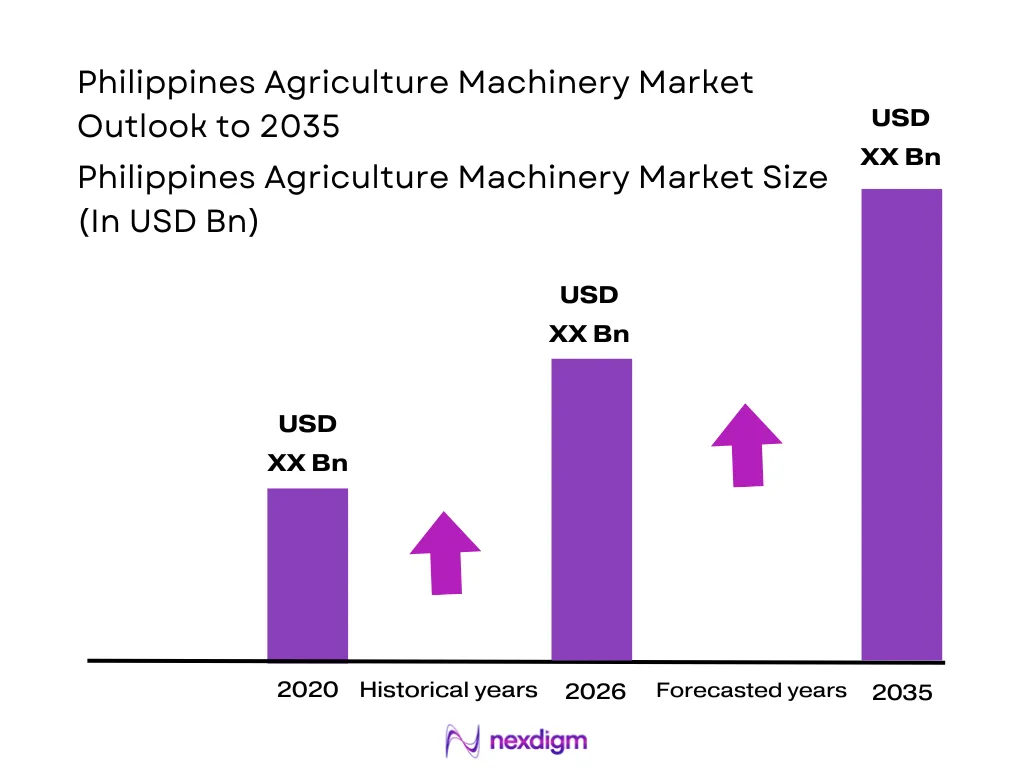
The Philippines Agriculture Machinery Market is supported by rising farm mechanization requirements, increasing labor shortages in rural agricultural regions, and expanding government-backed modernization programs. The market is valued at approximately USD ~ billion, driven by increasing adoption of tractors, combine harvesters, rice transplanters, and post-harvest equipment across rice, corn, and plantation farming applications. National agricultural output exceeded PHP 1.8 trillion, while irrigated agricultural land surpassed 1.9 million hectares, strengthening demand for efficient mechanized farming systems. Increasing commercial farming activities and modernization of cooperative farming operations continue to support machinery penetration across major agricultural provinces.
Regions such as Central Luzon, Cagayan Valley, Western Visayas, and Mindanao dominate the Philippines Agriculture Machinery Market because of their strong rice, corn, banana, coconut, and pineapple cultivation activities. Provinces including Nueva Ecija, Isabela, Bukidnon, and Davao maintain high agricultural machinery utilization due to large cultivated land areas, irrigation infrastructure, and cooperative-based farming systems. Luzon remains a major mechanization hub because of intensive paddy cultivation and government-supported mechanization initiatives, while Mindanao is emerging rapidly due to expanding plantation agriculture requiring advanced harvesting and post-harvest equipment. International suppliers from Japan, India, and China continue to dominate machinery inflows because of cost-efficient equipment and strong dealership networks.
Market Segmentation
By Machinery Type
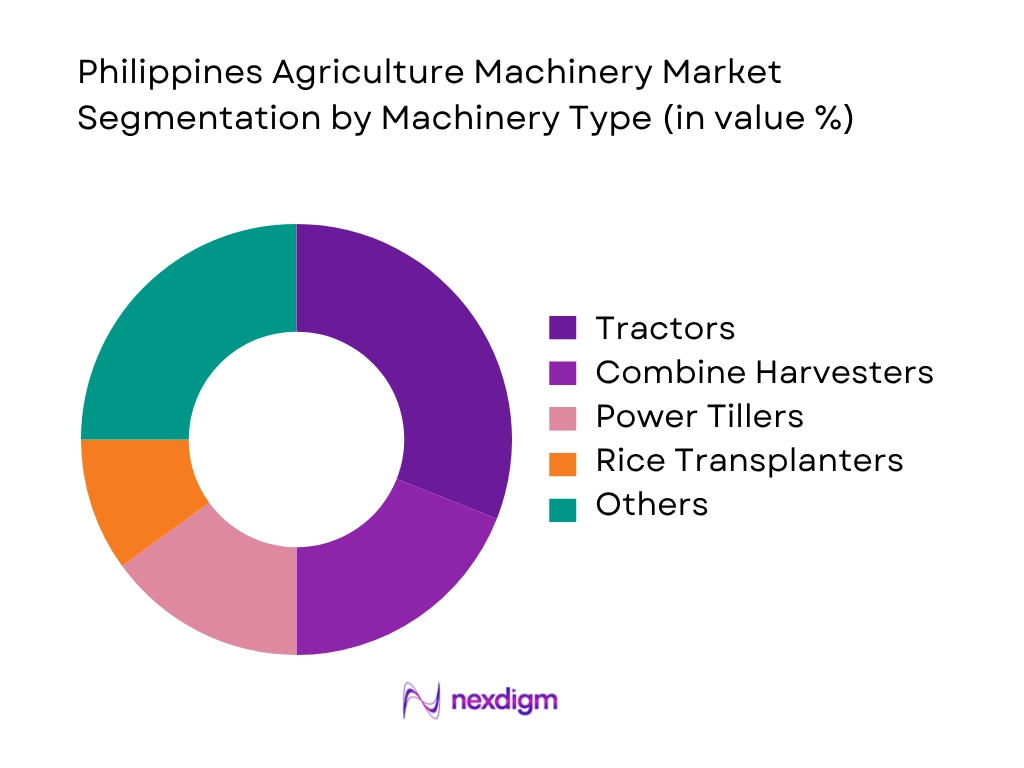
The Philippines Agriculture Machinery Market is segmented by machinery type into tractors, combine harvesters, power tillers, rice transplanters, irrigation machinery, crop sprayers, post-harvest processing equipment, seed drills and planters, threshers, and balers and forage equipment. Tractors dominate the Philippines Agriculture Machinery Market under the machinery type segmentation because of their multi-functional applications across land preparation, transportation, seeding, and cultivation activities. Compact tractors are highly preferred among rice and corn farmers due to their operational suitability for fragmented landholdings and wetland farming conditions. Government mechanization subsidies and cooperative ownership models have accelerated tractor adoption in major agricultural regions. Increasing labor shortages and rising agricultural wage costs continue to strengthen demand for tractors among small and medium-sized farms.
By Crop Type
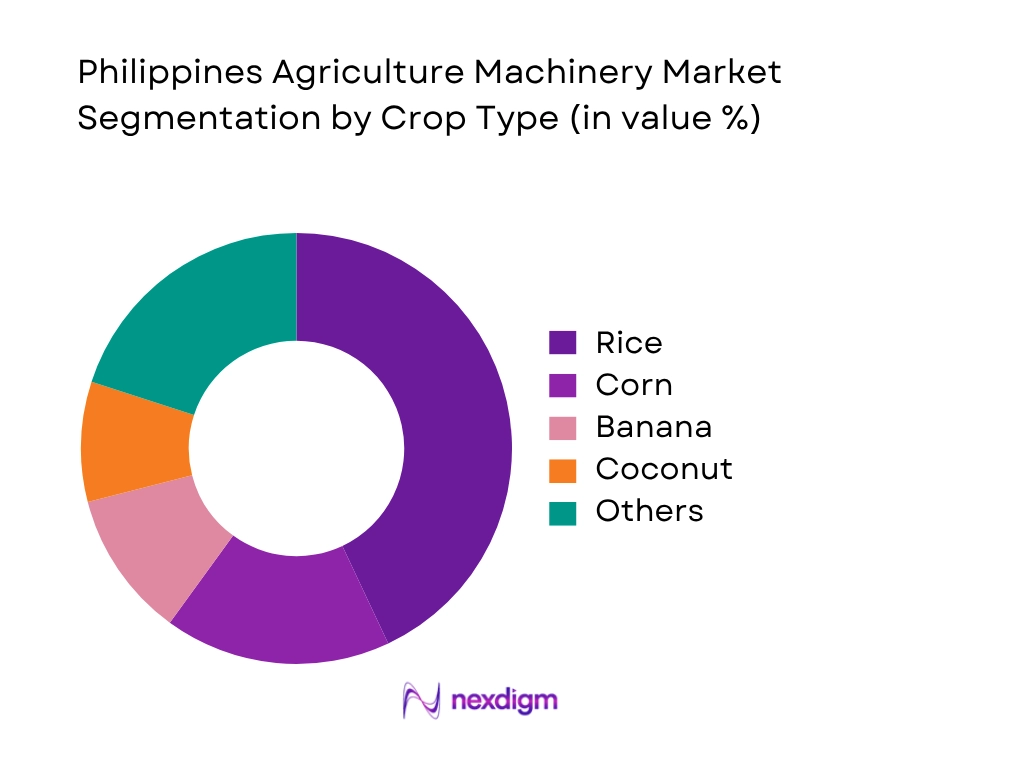
The Philippines Agriculture Machinery Market is segmented by crop type into rice, corn, banana, coconut, sugarcane, pineapple, vegetables and horticulture, and oil palm and plantation crops. Rice cultivation dominates the Philippines Agriculture Machinery Market under crop type segmentation because rice remains the country’s primary staple crop with extensive cultivation across Luzon and Visayas. Government-backed farm mechanization programs focused heavily on rice productivity enhancement through distribution of combine harvesters, power tillers, and rice transplanters. Mechanized rice farming significantly improves harvesting efficiency and reduces post-harvest losses. The presence of strong agricultural cooperatives and irrigation systems in major rice-producing provinces further strengthens machinery utilization. Increasing rural labor shortages and operational efficiency requirements continue to accelerate mechanization within the rice farming ecosystem.
Competitive Landscape
The Philippines Agriculture Machinery Market is moderately consolidated with competition dominated by global agricultural equipment manufacturers and regional distributors. Market participants compete based on product durability, fuel efficiency, pricing strategy, dealership expansion, and aftersales service capability. Manufacturers are increasingly focusing on compact machinery solutions suitable for fragmented agricultural landholdings. Expansion of financing partnerships, precision farming integration, and localized assembly operations are emerging as major competitive strategies across the industry.
| Company | Establishment Year | Headquarters | Key Product Focus | Dealer Network Strength | Local Assembly Presence | Precision Farming Integration | Financing Partnerships | Primary End-Use Focus |
| Kubota Philippines Inc. | 1890 | Osaka, Japan | ~ | ~ | ~ | ~ | ~ | ~ |
| Yanmar Philippines Corporation | 1912 | Osaka, Japan | ~ | ~ | ~ | ~ | ~ | ~ |
| John Deere | 1837 | Illinois, USA | ~ | ~ | ~ | ~ | ~ | ~ |
| Mahindra Tractors | 1945 | Mumbai, India | ~ | ~ | ~ | ~ | ~ | ~ |
| New Holland Agriculture | 1895 | Pennsylvania, USA | ~ | ~ | ~ | ~ | ~ | ~ |
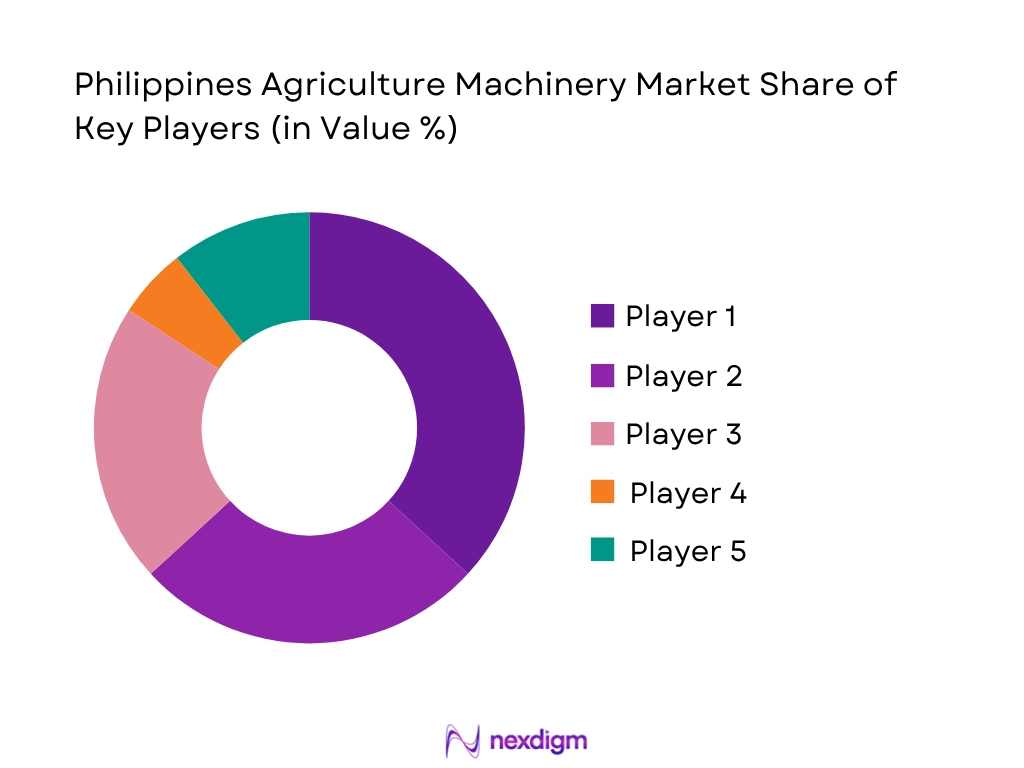
Philippines Agriculture Machinery Market Analysis
Growth Drivers
Rising Farm Labor Shortages and Wage Inflation
The Philippines agriculture sector continues to face structural labor shortages, significantly accelerating demand for agricultural mechanization and farm equipment adoption. Employment in the agriculture sector declined from 10.79 million workers to 10.23 million workers between 2022 and 2024 according to the Philippine Statistics Authority. Simultaneously, agricultural daily wages in major farming regions increased above PHP 470 per day compared to approximately PHP 395 earlier, increasing operational costs for farmers. Rapid urbanization and migration toward construction and service industries are reducing labor availability in rural provinces. Rice and corn farming operations require labor-intensive land preparation and harvesting activities, encouraging cooperatives and commercial farms to adopt combine harvesters, compact tractors, and rice transplanters to improve efficiency and reduce dependency on seasonal labor.
Government Subsidies and Farm Mechanization Programs
Government-backed mechanization initiatives are substantially supporting the Philippines Agriculture Machinery Market through direct machinery distribution and agricultural modernization programs. More than PHP 30 billion was allocated under farm modernization and mechanization initiatives between 2022 and 2024 to improve agricultural productivity. Over 29,000 units of agricultural machinery including tractors, combine harvesters, and rice transplanters were distributed to cooperatives and farmer associations nationwide. National palay production exceeded 20 million metric tons, increasing demand for efficient harvesting and post-harvest equipment. Irrigated agricultural land coverage also surpassed 1.9 million hectares, strengthening operational requirements for mechanized farming systems and irrigation-compatible machinery across rice and corn producing regions.
Market Challenges
Fragmented Land Holdings Limiting Large-Scale Mechanization
Fragmented agricultural land ownership remains a major challenge limiting large-scale mechanization adoption in the Philippines Agriculture Machinery Market. The average farm size in the country remains below 2 hectares, while smallholder farms account for the majority of agricultural holdings. Such fragmented land structures reduce operational efficiency for high-horsepower tractors and large combine harvesters, especially in paddy cultivation areas with narrow farm boundaries and uneven terrain. Agriculture continues to employ more than 22% of the national workforce, yet productivity per worker remains relatively low because of limited mechanized integration. Smaller farms generate lower annual farm income, reducing affordability and slowing widespread adoption of advanced agricultural equipment despite ongoing government support.
Dependence on Imported Equipment and Components
The Philippines Agriculture Machinery Market remains heavily dependent on imported tractors, harvesters, diesel engines, and spare parts, exposing the sector to foreign exchange volatility and logistics disruptions. Imports of agricultural machinery and equipment exceeded USD 780 million during 2024, with Japan, China, Thailand, and India accounting for the majority of machinery inflows. The Philippine peso traded above PHP 56 against the US dollar during multiple periods, increasing procurement costs for distributors and dealers dependent on imported equipment. Continued port congestion and logistics delays also affected machinery availability during peak planting seasons. Limited domestic manufacturing capability for advanced harvesting and precision farming equipment further increases dependency on imported machinery kits and spare parts.
Market Opportunities
Expansion of Precision Agriculture and Smart Farming Technologies
The growing digitalization of agriculture in the Philippines is creating strong opportunities for precision farming equipment, GPS-enabled machinery, and smart irrigation systems. Internet penetration exceeded 89 million users, improving digital accessibility across rural provinces and farming communities. Government agricultural modernization programs are increasingly integrating drone-assisted crop monitoring, climate-adaptive farming technologies, and satellite-based farm mapping systems. Commercial plantations in Mindanao are actively integrating GPS-guided tractors and remote-monitoring irrigation systems to optimize fertilizer application, fuel usage, and labor productivity. Increasing climate-related agricultural disruptions are also encouraging adoption of data-driven farming technologies that improve operational efficiency and crop management across major agricultural regions.
Growth of Agricultural Cooperatives and Equipment Leasing Models
The expansion of agricultural cooperatives and shared-equipment programs is creating significant opportunities for machinery suppliers and farm equipment leasing providers in the Philippines Agriculture Machinery Market. The country had more than 19,000 registered agricultural cooperatives by 2024, many of which actively participate in machinery acquisition and equipment-sharing programs. Agricultural financing and mechanization loan releases exceeded PHP 237 billion, supporting machinery leasing and cooperative-based ownership models nationwide. Shared ownership structures are improving machinery accessibility in fragmented farming communities where direct ownership remains financially difficult. This trend is increasing utilization rates of tractors, combine harvesters, and post-harvest equipment while encouraging distributors to expand rental-based and service-oriented business models across provincial agricultural markets.
Future Outlook
The Philippines Agriculture Machinery Market is expected to witness substantial expansion over the coming years due to increasing mechanization requirements, rising labor shortages, and strong government support for agricultural modernization. Demand for compact tractors, combine harvesters, rice transplanters, and precision farming equipment is expected to increase significantly across rice, corn, and plantation farming applications. Manufacturers are increasingly focusing on localized assembly operations, dealership expansion, and financing partnerships to improve equipment accessibility among small and medium-sized farmers. Technological advancements in GPS-enabled machinery, telematics integration, and smart irrigation systems are expected to strengthen operational efficiency and productivity across agricultural regions. The expansion of cooperative farming models and machinery leasing services is also expected to accelerate mechanization penetration throughout the Philippines.
Major Players
- Kubota Philippines Inc.
- Yanmar Philippines Corporation
- John Deere
- New Holland Agriculture
- AGCO Corporation
- Mahindra Tractors
- Iseki & Co., Ltd.
- CLAAS KGaA mbH
- Daedong Corporation (Kioti)
- Ford Tractor Philippines
- SDF Group (SAME Deutz-Fahr)
- Zoomlion Heavy Industry Science & Technology Co., Ltd.
- LS Mtron
- Kukje Machinery Co., Ltd. (Branson)
- Buhler Industries Inc. (Versatile)
Key Target Audience
- Agricultural Equipment Manufacturers
- Farm Equipment Importers and Distributors
- Agricultural Cooperatives and Associations
- Commercial Plantation Operators
- Agricultural Financing and Leasing Companies
- Smart Farming Technology Providers
- Investments and Venture Capitalist Firms
- Government and Regulatory Bodies
Research Methodology
Step 1: Identification of Key Variables
The initial stage involved identifying critical variables influencing the Philippines Agriculture Machinery Market, including farm mechanization rates, labor availability, agricultural productivity, crop cultivation patterns, and machinery import dependency. Extensive secondary research was conducted using government databases, trade publications, agricultural statistics, and industry reports to understand the overall ecosystem and value chain structure.
Step 2: Market Analysis and Construction
Historical market analysis was conducted using agricultural machinery sales data, import-export statistics, cultivated land area analysis, and mechanization trends across key farming regions. Market estimations were developed through bottom-up calculations based on machinery categories, average selling prices, and regional demand assessment for tractors, harvesters, and irrigation systems.
Step 3: Hypothesis Validation and Expert Consultation
Preliminary market findings were validated through interviews with agricultural equipment distributors, OEM representatives, cooperative managers, and government officials. These consultations provided operational insights regarding machinery utilization patterns, financing accessibility, seasonal demand fluctuations, dealership expansion strategies, and future mechanization requirements across major agricultural provinces.
Step 4: Research Synthesis and Final Output
The final phase involved consolidating qualitative and quantitative findings to produce a comprehensive assessment of the Philippines Agriculture Machinery Market. Cross-validation was conducted using trade data, government statistics, and primary interviews to ensure consistency and reliability of market estimates, segmentation analysis, competitive benchmarking, and future opportunity evaluation.

- Executive Summary
- Research Methodology (Market Definitions and Assumptions, Abbreviations, Research Framework, Bottom-Up Market Estimation, Top-Down Validation, Farm Mechanization Mapping, Agricultural Equipment Demand Assessment, Trade Flow Analysis, Import Dependency Analysis, Primary Interviews with OEMs and Dealers, Forecasting Framework, Limitations and Assumptions)

- Definition and Scope
- Evolution of Agricultural Mechanization in the Philippines
- Agricultural Ecosystem and Stakeholder Mapping
- Supply Chain and Value Chain Analysis
- Farm Equipment Distribution Landscape
- Import and Trade Dependency Analysis

- Growth Drivers
Rising Farm Labor Shortages and Wage Inflation
Government Subsidies and Farm Mechanization Programs
Expansion of Commercial Farming Activities
Increasing Demand for Post-Harvest Efficiency
Growth in Agricultural Financing and Leasing Models - Market Challenges
Fragmented Land Holdings Limiting Large-Scale Mechanization
Dependence on Imported Equipment and Components
Limited Rural Service Infrastructure
High Initial Capital Requirement for Machinery Acquisition - Market Opportunities
Expansion of Precision Agriculture and Smart Farming Technologies
Growth of Agricultural Cooperatives and Equipment Leasing Models
Increasing Demand for Compact and Multi-Purpose Machinery
Localization of Agricultural Equipment Assembly Operations - Market Trends
Rising Adoption of Compact Tractors
Increasing GPS and Telematics Integration
Growth in Shared Machinery Usage Models
Emergence of Electrified Farm Equipment
Digitalization of Farm Equipment Sales and Service - Government Regulations
Agricultural Mechanization Policies
Import Duties and Taxation Structure
Equipment Safety and Emission Standards
Agricultural Credit and Subsidy Programs - Porter’s Five Forces Analysis
- PESTLE Analysis
- Pricing Analysis
- Competition Ecosystem

- By Value, 2020-2025
- By Volume, 2020-2025
- By Average Selling Price, 2020-2025
- By Import Volume, 2020-2025
- By Farm Mechanization Rate, 2020-2025

- By Machinery Type (in Value %)
Tractors
Harvesting Machinery
Planting & Seeding Machinery
Tillage & Land Preparation Machinery
Irrigation Machinery
Crop Protection & Spraying Equipment
Post-Harvest Machinery
Others - By Crop Type (in Value %)
Rice
Corn
Sugarcane
Coconut
Fruits & Vegetables
Others - By Farm Size (in Value %)
Small Farms
Medium Farms
Large Commercial Farms
Cooperative Farms - By Application (in Value %)
Land Preparation
Planting & Seeding
Crop Protection
Irrigation
Harvesting
Post-Harvest Processing - By Distribution Channel (in Value %)
Authorized Dealers
Distributors
Cooperatives
Direct Company Sales
Online Platforms - By Region (in Value %)
Luzon
Visayas
Mindanao
Davao Region

- Market Share Analysis of Major Players on the Basis of Revenue and Volume
- Cross Comparison Parameters (Company Overview, Product Portfolio Breadth, Tractor Horsepower Portfolio, Combine Harvester Capacity, Dealer and Service Network, Spare Parts Availability, Financing Partnerships, Manufacturing Presence, Precision Farming Integration, Aftermarket Service Capability, Regional Penetration, Product Durability, Warranty Structure, Equipment Utilization Efficiency, Innovation Pipeline, Strategic Collaborations)
- Competitive Benchmarking Matrix
- SWOT Analysis of Major Players
- Pricing Analysis by Machinery Type and Horsepower Range
- Detailed Profiles of Major Companies
Kubota Philippines Inc.
Yanmar Philippines Corporation
John Deere
New Holland Agriculture
AGCO Corporation
Mahindra Tractors
Iseki & Co., Ltd.
CLAAS KGaA mbH
Daedong Corporation (Kioti)
Ford Tractor Philippines
SDF Group (SAME Deutz-Fahr)
Zoomlion Heavy Industry Science & Technology Co., Ltd.
LS Mtron
Kukje Machinery Co., Ltd. (Branson)
Buhler Industries Inc. (Versatile)

- Farm Equipment Utilization Analysis
- Farmer Income and Spending Assessment
- Brand Loyalty and Equipment Replacement Cycle
- Purchase Decision Parameters
- Farm Productivity and Mechanization Mapping

- By Value, 2026-2035
- By Volume, 2026-2035
- By Average Selling Price, 2026-2035
- By Import Volume, 2026-2035
- By Farm Mechanization Rate, 2026-2035


 Request a Sample
 Ask for Customization
 Get a Quote
 Enquire Now