

 Download PDF
Market Overview
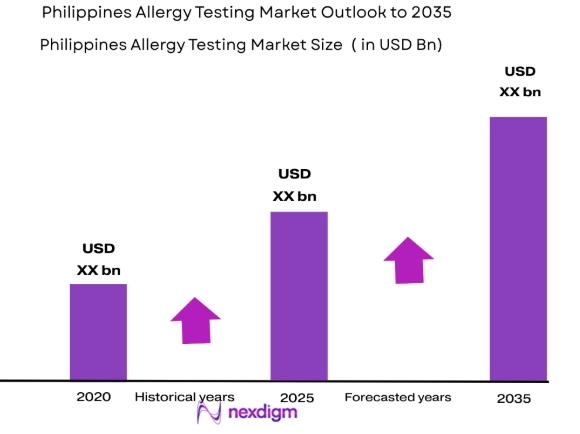
The Philippines allergy testing market has witnessed steady growth due to rising awareness of allergies and the increasing demand for early detection and management. Based on a recent historical assessment, the market size for allergy testing in the Philippines is valued at approximately USD ~ billion in 2024. The demand for allergy testing has been driven by the rise in allergic conditions, such as rhinitis and asthma, alongside increased healthcare awareness among consumers. Additionally, improvements in diagnostic technologies, such as skin and blood tests, have contributed to market growth, making testing more accessible to a wider population.
Dominant cities in the Philippines, such as Metro Manila and Cebu, drive the market due to their more advanced healthcare infrastructure and higher rates of awareness and diagnosis of allergies. Metro Manila, with its concentration of hospitals, diagnostic centers, and clinics, plays a crucial role in the uptake of allergy testing. The demand is also growing in urban areas like Davao and Iloilo, as healthcare facilities in these regions improve, making it easier for patients to access allergy testing services. The increasing urbanization and healthcare awareness in these regions continue to propel market growth.
Market Segmentation
By Product Type
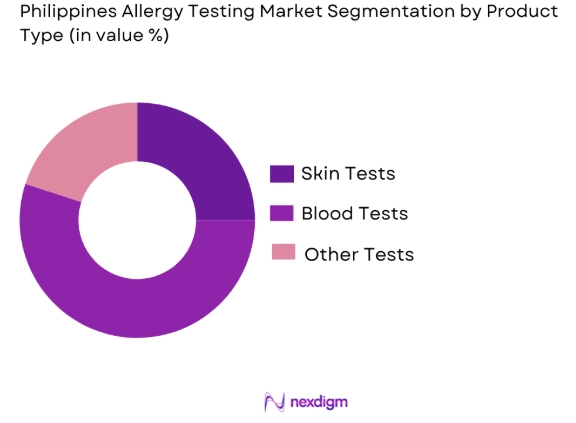
The Philippines allergy testing market is segmented by product type into skin tests, blood tests, and other diagnostic methods. Recently, the blood test sub-segment has dominated the market share due to factors such as growing demand for accurate and non-invasive testing methods. Blood tests are preferred by healthcare providers as they offer higher precision, faster results, and are suitable for a wider range of allergens. As technology has advanced, blood tests are now more affordable and accessible, making them the preferred choice for both diagnostic centers and home-use applications.
By Age Group
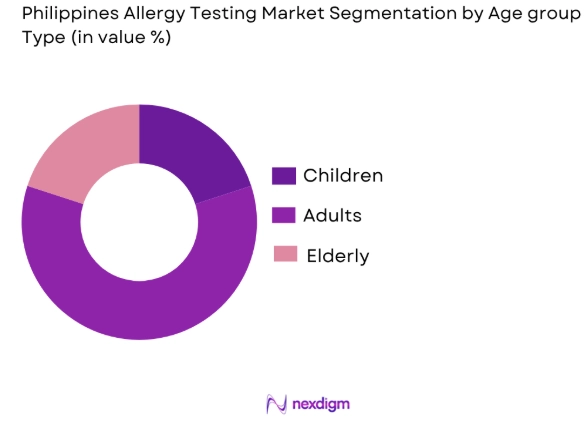
The Philippines allergy testing market is segmented by age group into children, adults, and elderly populations. The adult sub-segment has the largest market share due to the increasing prevalence of allergies in middle-aged individuals. With a growing focus on preventive healthcare and chronic conditions like asthma, adults are seeking more regular allergy testing, which has become a common practice. Additionally, adult consumers are increasingly inclined to manage their allergic conditions actively, pushing the demand for allergy testing services in both urban and rural areas.
Competitive Landscape
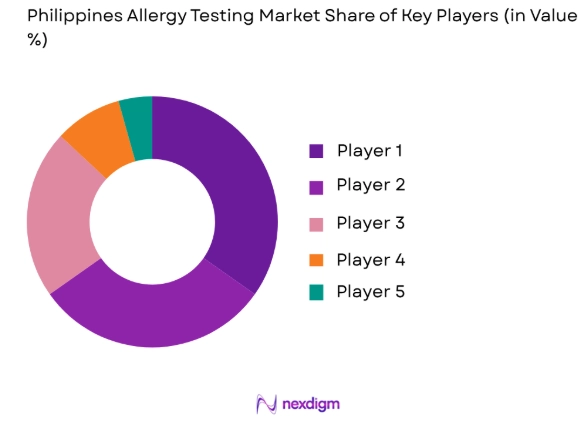
The Philippines allergy testing market is characterized by moderate consolidation, with a few leading players offering comprehensive diagnostic solutions. Major players continue to expand their footprint through partnerships, technological advancements, and enhanced distribution channels. The market is witnessing increasing competition, especially with the rise of digital platforms offering at-home testing kits. These players are leveraging innovations such as AI-driven diagnostics to differentiate their offerings.
| Company Name | Establishment Year | Headquarters | Technology Focus | Market Reach | Key Products | Revenue | Market-Specific Parameter |
| Thermo Fisher Scientific | 1956 | USA | ~ | ~ | ~ | ~ | ~ |
| Siemens Healthineers | 1847 | Germany | ~ | ~ | ~ | ~ | ~ |
| Abbott Laboratories | 1888 | USA | ~ | ~ | ~ | ~ | ~ |
| Danaher Corporation | 1969 | USA | ~ | ~ | ~ | ~ | ~ |
| BioMerieux | 1963 | France | ~ | ~ | ~ | ~ | ~ |
Philippines Allergy Testing Market Analysis
Growth Drivers
Increased Awareness of Allergies:
The growing awareness about allergies in the Philippines has been a major driver for the allergy testing market. More individuals are recognizing the impact of allergies on their daily lives and are actively seeking diagnosis and management. This rise in awareness is largely due to widespread educational campaigns on the risks of allergies and the potential complications from untreated conditions. The government and healthcare organizations have increasingly focused on educating the public about allergic conditions like rhinitis, asthma, and skin allergies, which has led to greater acceptance of allergy testing services. Additionally, improved access to healthcare services and the rising prevalence of allergies among both children and adults are contributing to higher demand for testing. As more people understand the importance of early diagnosis in managing allergies, the market for testing solutions continues to grow, with increased penetration in both urban and rural areas.
Technological Advancements in Allergy Testing
Technological advancements in diagnostic tools have significantly contributed to the growth of the allergy testing market. With the availability of more accurate, efficient, and cost-effective tests, healthcare providers and diagnostic centers are increasingly adopting advanced technologies for allergy diagnosis. The shift from traditional testing methods, such as skin tests, to more reliable and less invasive blood tests has been a game-changer in the industry. These advancements have made testing more accessible to a wider population by reducing time and cost barriers. Moreover, the introduction of AI-driven allergy testing solutions has improved the speed and accuracy of results, enabling healthcare providers to offer better services to their patients. The use of portable testing kits and at-home diagnostic solutions has further boosted market growth by catering to the growing demand for convenience and easy accessibility.
Market Challenges
High Cost of Allergy Testing:
One of the key challenges in the Philippines allergy testing market is the high cost of advanced allergy testing solutions. Despite the increasing demand for accurate and timely allergy diagnoses, the cost of tests remains a significant barrier for many individuals. This is especially true for lower-income populations and rural areas where access to healthcare services is limited. Although the introduction of more affordable testing methods has helped mitigate some of these costs, advanced blood and skin tests, along with associated diagnostic services, can still be prohibitively expensive for a large section of the population. Additionally, healthcare providers and diagnostic centers face challenges in investing in high-end diagnostic equipment due to the high initial capital required. This cost disparity across different regions of the country presents a challenge in making allergy testing services more accessible to everyone.
Lack of Healthcare Infrastructure in Rural Areas
Another challenge facing the Philippines allergy testing market is the lack of adequate healthcare infrastructure in rural areas. While urban areas like Metro Manila have advanced medical facilities and diagnostic centers offering allergy testing, rural regions still face significant gaps in healthcare access. The scarcity of specialized allergy testing equipment, trained professionals, and diagnostic centers in these areas makes it difficult for residents to access timely allergy diagnoses and treatment. Furthermore, limited transportation options, high healthcare costs, and a lack of awareness about available services further exacerbate the problem. This results in a large portion of the population in rural regions either delaying or forgoing allergy testing altogether, impacting the overall growth of the market.
Opportunities
Growth of Digital Health Platforms
One of the significant opportunities in the Philippines allergy testing market lies in the growth of digital health platforms. As telemedicine and digital health solutions gain traction, there is an increasing potential for remote allergy testing services. These platforms can offer convenient, cost-effective, and accessible testing options to individuals in both urban and rural areas. Through mobile apps and online consultations, consumers can gain access to allergy testing kits delivered to their doorsteps, allowing for easier diagnosis without visiting a clinic. This expansion of digital health services provides an opportunity for companies to tap into a broader consumer base, particularly those seeking the convenience of home-based testing. As internet penetration and mobile device usage increase in the Philippines, digital health platforms can become a key player in driving the growth of the allergy testing market.
Expansion of At-home Allergy Testing Kits
The growing demand for at-home allergy testing kits presents a promising opportunity for the Philippines allergy testing market. With rising awareness about allergies and the increasing preference for convenient healthcare solutions, more individuals are opting for at-home testing kits. These kits allow individuals to perform initial tests in the comfort of their homes, making the process more accessible and cost-effective. The expansion of e-commerce platforms also plays a significant role in making these kits readily available to a wider audience. As the Philippines population becomes more health-conscious, the demand for at-home testing kits is expected to rise, creating opportunities for companies to develop and market innovative solutions tailored to the needs of consumers seeking easy-to-use, accurate, and affordable testing options.
Future Outlook
The Philippines allergy testing market is expected to experience continued growth over the next five years. Driven by increasing healthcare awareness, technological advancements, and rising demand for convenient testing solutions, the market is set to expand. The adoption of AI-driven diagnostics and the rise of digital health platforms are likely to be key drivers of growth, making allergy testing more accessible to a broader population. Furthermore, regulatory support for innovative diagnostic tools and a greater focus on preventive healthcare will contribute to the ongoing development of the market. As healthcare infrastructure improves, especially in rural areas, the market will see further expansion, ensuring that allergy testing services reach all corners of the country.
Major Players
- ThermoFisher Scientific
- Siemens Healthineers
- Abbott Laboratories
- Danaher Corporation
- BioMerieux
- Roche Diagnostics
- HYCOR Biomedical
- Alere Inc.
- Eppendorf AG
- EKF Diagnostics
- Medtronic
- Sysmex Corporation
- ChembioDiagnostics
- Grifols SA
- LabCorp
Key Target Audience
- Investments and venture capitalist firms
- Government and regulatory bodies
- Pharmaceutical companies
- Healthcare providers
- Medical device manufacturers
- Diagnostic laboratories
- Insurance companies
- E-commerce platforms
Research Methodology
Step 1: Identification of Key Variables
Key variables for market analysis, such as technological advancements, regulatory factors, and consumer trends, were identified to create a comprehensive market model.
Step 2: Market Analysis and Construction
Market data was collected through primary and secondary research, with a focus on historical trends, technological innovations, and regional demand patterns.
Step 3: Hypothesis Validation and Expert Consultation
Validated hypotheses were cross-checked with industry experts, key stakeholders, and market leaders to ensure accuracy and reliability.
Step 4: Research Synthesis and Final Output
The research findings were synthesized to generate market insights, growth projections, and competitive strategies for stakeholders in the Philippines allergy testing market.

- Executive Summary
- Research Methodology (Definitions, Scope, Industry Assumptions, Market Sizing Approach, Primary & Secondary Research Framework, Data Collection & Verification Protocol, Analytic Models & Forecast Methodology, Limitations & Research Validity Checks)

- Market Definition and Scope
- Value Chain & Stakeholder Ecosystem
- Regulatory / Certification Landscape
- Sector Dynamics Affecting Demand
- Strategic Initiatives & Infrastructure Growth

- Growth Drivers
Increased Awareness of Allergies
Technological Advancements in Allergy Testing - Market Challenges
High Cost of Allergy Testing
Lack of Healthcare Infrastructure in Rural Areas - Market Opportunities
Growth of Digital Health Platforms
Expansion of At-home Allergy Testing Kits - Government Regulations
- SWOT Analysis of Key Competitors
- Porter’s Five Forces

- By Market Value, 2020-2025
- By Installed Units, 2020-2025
- By Average System Price, 2020-2025
- By System Complexity Tier, 2020-2025

- By Product Type (In Value%)
Skin Test
Blood Test
Others - By Age Group (In Value%)
Children
Adults
Elderly - By End User Segment (In Value%)
Hospitals
Clinics
Home Care Settings - By Procurement Channel (In Value%)
Direct Procurement
Government Tenders
Private Sector Procurements

- Market Share Analysis
- Cross Comparison Parameters (Age Type, Allergen Type, Product Type, End User Segment, Sample Type, Test Accuracy, Sensitivity Level, Turnaround Time, Automation Level, Cost Competitiveness, Technology Integration, Product Portfolio, Regulatory Compliance, Market Presence, After-sales Support)
- SWOT Analysis of Key Competitors
- Pricing & Procurement Analysis
- Key Players
Thermo Fisher Scientific
Siemens Healthineers
Roche Diagnostics
Danaher Corporation
Abbott Laboratories
BioMerieux
Quidel Corporation
HYCOR Biomedical
Alere Inc.
Eppendorf AG
EKF Diagnostics
Medtronic
Sysmex Corporation
Chembio Diagnostics
Grifols SA

- Increasing Adoption of Allergy Testing in Hospitals
- Rising Demand for Allergy Testing in Diagnostic Centers
- Growth of Allergy Testing in Home Care Settings
- Expansion of Clinics Offering Allergy Testing Services

- By Market Value, 2026-2035
- By Installed Units, 2026-2035
- By Average System Price, 2026-2035
- By System Complexity Tier, 2026-2035


 Request a Sample
 Ask for Customization
 Get a Quote
 Enquire Now