

 Download PDF
Market Overview
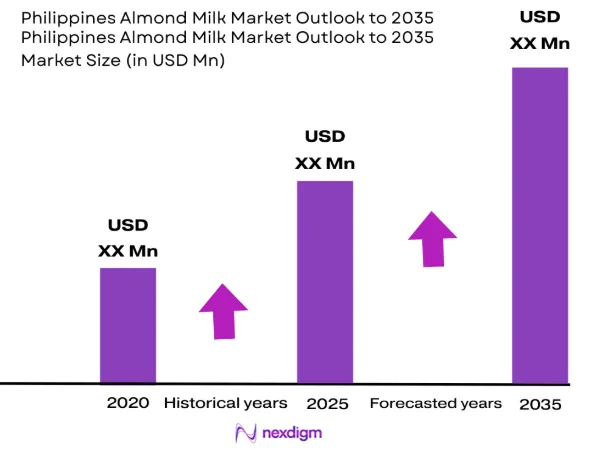
The Philippines almond milk market forms part of the broader plant-based milk and dairy alternatives industry. The Philippines plant-based milk market was valued at approximately USD ~ million, while the broader dairy alternatives market was estimated at around USD ~ million. Growth is supported by increasing lactose intolerance awareness, rising vegan and flexitarian dietary preferences, and expanding availability of almond milk products across modern retail channels and e-commerce platforms. The Philippines dairy market reached USD ~ billion, creating a substantial base for dairy alternative penetration. Increasing urban health consciousness and premium beverage consumption continue to support almond milk demand in the country.
Market Segmentation
By Product Type
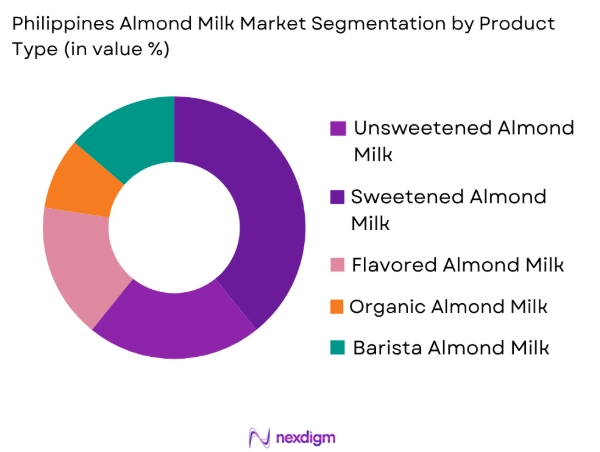
The Philippines Almond Milk Market is segmented by product type into unsweetened almond milk, sweetened almond milk, flavored almond milk, organic almond milk, and barista almond milk. Unsweetened almond milk holds the dominant share due to increasing consumer preference for low-calorie and sugar-free beverage options. Health-conscious consumers, gym-goers, diabetics, and individuals seeking weight-management solutions increasingly choose unsweetened variants because they align with wellness-focused lifestyles. Major international brands entering the Philippines emphasize clean-label and low-sugar positioning, which further strengthens demand. The segment also benefits from its versatility in smoothies, cereals, coffee, and cooking applications. Growth in vegan and lactose-intolerant populations has reinforced adoption among households seeking dairy-free alternatives. Furthermore, retailers allocate greater shelf space to unsweetened products due to higher repeat purchase rates and stronger demand among urban consumers. Premium grocery chains and online grocery platforms have expanded accessibility, making unsweetened almond milk the preferred category across major metropolitan areas.
By Distribution Channel
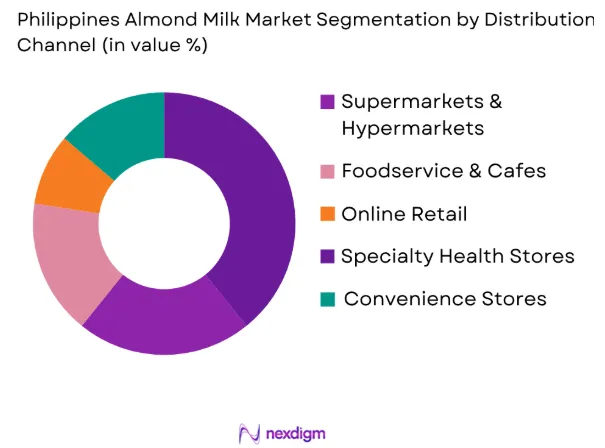
The Philippines Almond Milk Market is segmented by distribution channel into supermarkets & hypermarkets, convenience stores, online retail, specialty health stores, and foodservice outlets. Supermarkets and hypermarkets dominate due to their extensive product assortment, established cold-chain infrastructure, and ability to stock multiple international almond milk brands. Leading retail chains provide consumers with opportunities to compare brands, package sizes, and nutritional profiles in a single location. These stores also frequently run promotional campaigns that encourage trial purchases among first-time consumers. Urban consumers continue to rely on modern retail outlets for premium imported food products, making supermarkets the primary channel for almond milk sales. The segment benefits from strategic placement within health food and dairy alternative sections, improving product visibility. Although online retail is expanding rapidly, supermarkets maintain a competitive advantage through immediate product availability and greater consumer trust in imported food quality and authenticity.
Competitive Landscape
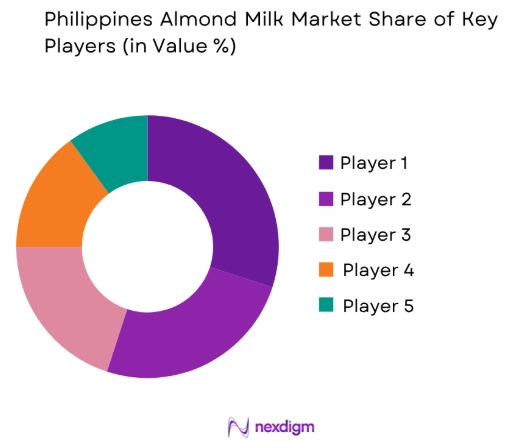
The Philippines Almond Milk Market is characterized by the presence of multinational dairy alternative brands, regional beverage companies, and specialty health food suppliers. Competition is largely based on nutritional positioning, product variety, organic certifications, flavor innovations, and retail distribution strength. Imported products dominate shelf presence, while local distributors play a critical role in expanding market accessibility.
| Company | Establishment Year | Headquarters | Product Portfolio | Distribution Reach | Flavored Variants | E-Commerce Presence | Packaging Formats | Foodservice Presence |
| Blue Diamond Almond Breeze | 1910 | ~ | ~ | ~ | ~ | ~ | ~ | ~ |
| Silk | 1977 | ~ | ~ | ~ | ~ | ~ | ~ | ~ |
| Alpro | 1980 | ~ | ~ | ~ | ~ | ~ | ~ | ~ |
| Califia Farms | 2010
|
~ | ~ | ~ | ~ | ~ | ~ | ~ |
| So Good | 1980
|
~ | ~ | ~ | ~ | ~ | ~ | ~ |
Philippines Almond Milk Market Analysis
Growth Drivers
Rising Health and Wellness Consciousness
The growing focus on preventive healthcare and nutrition is supporting demand for almond milk in the Philippines. The country’s GDP reached USD 461.62 billion, while GDP per capita stood at USD 3,984.8, indicating rising consumer purchasing power and increasing expenditure on premium food and beverage products. The Philippines recorded economic growth of 5.7, supported by strong household consumption and expanding urban middle-class populations. Urban population levels exceeded 57 million residents, creating a large consumer base with access to supermarkets, premium grocery stores, and e-commerce channels where almond milk products are primarily sold. Increasing health awareness has encouraged consumers to seek lactose-free, cholesterol-free, and plant-based beverage alternatives. Almond milk benefits from this trend because it aligns with low-calorie, vegan, and flexitarian dietary preferences that are becoming more visible in Metro Manila, Cebu, and Davao. The country’s demographic dividend is also supporting demand, with the working-age population continuing to expand and driving consumption of convenience-oriented wellness products. Growing disposable incomes, higher workforce participation, and increasing exposure to global dietary trends collectively strengthen the market environment for almond milk and other dairy alternatives.
Expansion of Modern Retail and E-Commerce Infrastructure
The expansion of organized retail and digital commerce is creating significant growth momentum for almond milk products across the Philippines. The country’s population exceeded 114 million people, providing a substantial consumer base for packaged food and beverage manufacturers. Economic output of USD 461.62 billion supports continued investment in retail infrastructure, logistics networks, and cold-chain capabilities that improve accessibility of imported almond milk brands. Metro Manila remains the largest retail hub, while Cebu and Davao continue to witness expansion of supermarket chains, convenience stores, and online grocery platforms. Strong domestic demand remains one of the major drivers of economic growth according to the World Bank, benefiting premium food categories including plant-based beverages. Rising internet penetration and digital payment adoption have enabled consumers to purchase almond milk through online marketplaces and grocery delivery applications. Imported food products are increasingly accessible beyond traditional retail locations, helping almond milk brands expand geographic reach. Improved logistics infrastructure, growing warehouse capacity, and higher consumer confidence in online food purchases are accelerating category visibility and supporting long-term market development.
Market Challenges
Dependence on Imported Almond-Based Products
The Philippines almond milk market remains highly dependent on imported finished products and imported almond raw materials because domestic almond cultivation is negligible. This dependency exposes the market to international supply chain disruptions, currency fluctuations, and logistics constraints. The Philippines imported billions of dollars worth of food and agricultural products annually, reflecting the country’s reliance on foreign supply sources for specialty food categories. Although the economy generated USD 461.62 billion in output, fluctuations in global shipping routes and international commodity markets continue to affect the availability of premium imported products. Almond milk brands operating in the Philippines source products primarily from the United States, Australia, and Europe, increasing exposure to external trade conditions. Geographic challenges associated with distributing imported products across more than 7,600 islands further complicate inventory management and product availability. Rising demand for plant-based beverages may outpace distribution efficiency in secondary cities, creating temporary shortages and increasing operational complexity for distributors. The absence of local almond processing facilities also limits opportunities for domestic value addition within the supply chain.
Premium Product Positioning and Limited Consumer Awareness
Although awareness of plant-based nutrition is increasing, almond milk remains a premium category relative to conventional dairy products. GDP per capita of USD 3,984.8 highlights improving purchasing power but also indicates that a significant portion of consumers remain price-sensitive when making food purchasing decisions. The Philippines continues to have a large population segment focused on value-oriented consumption, making mass adoption of premium imported beverages more challenging. Outside major metropolitan centers such as Metro Manila, Cebu, and Davao, awareness regarding almond milk’s nutritional benefits remains relatively limited. Traditional dairy products continue to enjoy strong consumer familiarity, extensive retail presence, and established consumption habits. In addition, plant-based diets remain an emerging concept for many consumers despite increasing interest among younger demographics. The challenge for almond milk manufacturers lies in balancing premium positioning with affordability while simultaneously investing in consumer education. Brands must communicate benefits related to lactose intolerance, wellness, and dietary flexibility to expand adoption beyond early health-conscious consumers.
Market Opportunities
Growing Adoption of Plant-Based and Flexitarian Diets
A significant opportunity exists for almond milk manufacturers due to the increasing acceptance of plant-based and flexitarian eating patterns among Filipino consumers. The Philippines has a working-age population exceeding 60 million individuals, creating a large target audience for modern dietary products. Research focusing on Metro Manila consumers indicates growing interest in plant-based food choices and increasing willingness to incorporate dairy alternatives into daily diets. Economic growth of 5.6 and sustained household consumption continue to support spending on healthier food options. Global plant-based milk consumption is expanding rapidly, and Asia-Pacific remains the largest regional market for plant-based beverages, creating favorable conditions for product innovation and portfolio expansion. Younger consumers are increasingly exposed to international wellness trends through digital platforms, social media, and global foodservice brands. Almond milk producers can capitalize on this trend through fortified products, flavored variants, sugar-free offerings, and barista-focused formulations. Expanding consumer understanding of dairy-free nutrition creates opportunities for brands to broaden market penetration and build long-term customer loyalty.
Expansion Through Foodservice and Café Channels
The rapid development of café culture and premium foodservice establishments creates a substantial opportunity for almond milk suppliers. Major urban centers continue to experience growth in specialty coffee shops, international café chains, and health-focused restaurants that increasingly offer dairy-free beverage options. The Philippines’ urban population exceeded 57 million residents, providing a concentrated customer base for foodservice operators. Strong domestic consumption and economic expansion support continued investment in hospitality and foodservice infrastructure. Globally, barista-style plant-based milk products have become an important growth segment as consumers seek dairy alternatives in coffee beverages. The same trend is becoming increasingly visible across Metro Manila and other major cities where younger consumers frequently visit cafés and specialty beverage outlets. Almond milk manufacturers can leverage foodservice partnerships to increase product visibility and encourage trial among first-time users. Successful penetration of cafés, hotels, restaurants, and quick-service outlets can accelerate category awareness while creating recurring institutional demand for almond milk products.
Future Outlook
The Philippines Almond Milk Market is expected to experience sustained growth through the forecast period driven by rising health awareness, growing adoption of plant-based diets, and expanding availability across retail channels. Consumers are increasingly seeking lactose-free, cholesterol-free, and environmentally sustainable beverage alternatives. Product innovation, including fortified and flavored almond milk variants, is expected to improve category penetration. Expansion of modern retail infrastructure and digital grocery platforms will further enhance accessibility. The growing café culture and demand for dairy-free coffee solutions are also likely to create additional opportunities for almond milk manufacturers and distributors.
Major Players
- Blue Diamond Almond Breeze
- Califia Farms
- Silk
- So Good
- Alpro
- Earth’s Own
- Pacific Foods
- Pureharvest
- Minor Figures
- Oatly
- Vitasoy
- Nature’s Choice
- Sanitarium Health Food Company
- Pure Almond
- Elmhurst 1925
Key Target Audience
- Almond Milk Manufacturers
- Plant-Based Beverage Producers
- Food & Beverage Distributors
- Supermarket and Hypermarket Chains
- Specialty Health Food Retailers
- Foodservice Operators and Café Chains
- Investments and Venture Capitalist Firms
- Government and Regulatory Bodies (Department of Trade and Industry, Food and Drug Administration Philippines, Department of Agriculture, Board of Investments)
Research Methodology
Step 1: Identification of Key Variables
The research process begins with mapping the Philippines almond milk ecosystem, including manufacturers, distributors, retailers, importers, foodservice operators, and consumers. Secondary research is conducted through industry publications, government databases, trade statistics, and company reports to identify critical market variables.
Step 2: Market Analysis and Construction
Historical market data relating to plant-based beverages, dairy alternatives, retail sales channels, and consumer purchasing behavior are analyzed. Market size estimates are developed using both top-down and bottom-up approaches while assessing product penetration and channel performance.
Step 3: Hypothesis Validation and Expert Consultation
Preliminary findings are validated through interviews with distributors, retailers, category managers, importers, and industry experts. These consultations provide operational insights regarding demand trends, competitive dynamics, and consumer preferences.
Step 4: Research Synthesis and Final Output
All quantitative and qualitative findings are consolidated and cross-verified. Final market estimates are refined using triangulation techniques to ensure consistency, accuracy, and reliability across all segments and forecast assumptions

- Executive Summary
- Research Methodology (Market Definitions and Assumptions, Abbreviations, Market Sizing Approach, Bottom-Up Analysis, Top-Down Validation Framework, Primary Research Interviews, Demand Side Assessment, Supply Side Assessment, Data Triangulation Model, Limitations and Forecasting Assumptions)

- Definition and Scope
- Market Evolution and Industry Genesis
- Timeline of Plant-Based Beverage Development in the Philippines
- Almond Milk Ecosystem Overview
- Supply Chain Analysis

- Growth Drivers (Rising Lactose Intolerance Awareness, Expanding Vegan Population, Increasing Health Consciousness, Growing Modern Retail Network, Rising Disposable Income)
- Market Challenges (Premium Product Pricing, Import Dependency, Limited Consumer Awareness, Competition from Soy and Oat Milk, Supply Chain Constraints)
- Market Opportunities (Functional Nutrition Products, Organic Almond Milk Demand, Foodservice Expansion, Product Localization, E-Commerce Growth)
- Market Trends (Sugar-Free Variants, Clean Label Products, Fortified Almond Milk, Sustainable Packaging, Barista Almond Milk)
- Government Regulations (FDA Philippines Standards, Product Registration Requirements, Nutritional Labeling Guidelines, Import Regulations, Food Safety Compliance)
- SWOT Analysis
- Stakeholder Ecosystem
- PESTLE Analysis
- Porter’s Five Forces Analysis
- Competition Ecosystem

- By Market Value (2020-2025)
- By Volume Consumption (2020-2025)
- By Average Selling Price (2020-2025)

- By Product Type (In Value %)
Unsweetened Almond Milk
Sweetened Almond Milk
Flavored Almond Milk
Organic Almond Milk
Fortified Almond Milk - By Packaging Type (In Value %)
Cartons
Bottles
Tetra Packs
Single-Serve Packs
Bulk/Foodservice Packs - By Distribution Channel (In Value %)
Supermarkets and Hypermarkets
Convenience Stores
Specialty Health Stores
Online Retail and E-Commerce
Direct-to-Consumer Channels - By End User (In Value %)
Household Consumers
Cafés and Coffee Chains
Restaurants and Foodservice Operators
Hotels and Hospitality Sector
Corporate and Institutional Buyers - By Region (In Value %)
Metro Manila
Luzon
Visayas
Mindanao
Emerging Urban Centers

- Market Share of Major Players (Value, Volume, By Product Type)
- Cross Comparison Parameters (Product Portfolio Breadth, Almond Milk SKU Count, Fortification Portfolio, Organic Product Availability, Retail Distribution Reach, E-Commerce Presence, Packaging Innovation & Sustainability Initiatives, Foodservice & Café Penetration)
- SWOT Analysis of Major Players
- Pricing Analysis by SKU and Pack Size
- Detailed Profiles of Major Companies
Blue Diamond Almond Breeze
Silk (Danone)
Califia Farms
Alpro
Pacific Foods
Nature’s Heart
So Good (Sanitarium)
Vitasoy International
Oatly Group
Nestlé
Earth’s Own
Isola Bio
Pure Harvest
137 Degrees
Minor Figures

- Consumer Demographics and Consumption Patterns
- Urban vs Rural Consumption Trends
- Health and Wellness Purchasing Behavior
- Dietary Preference Analysis (Vegan, Vegetarian, Flexitarian, Lactose-Intolerant Consumers)
- Consumer Spending Analysis
- Brand Awareness and Loyalty Assessment
- Consumer Pain Point Mapping
- Purchase Decision-Making Framework
- Average Basket Value Analysis
- Preferred Purchase Channel Assessment

- By Market Value (2026-2035)
- By Volume Consumption (2026-2035)
- By Average Selling Price (2026-2035)


 Request a Sample
 Ask for Customization
 Get a Quote
 Enquire Now