
 Download PDF
Market Overview
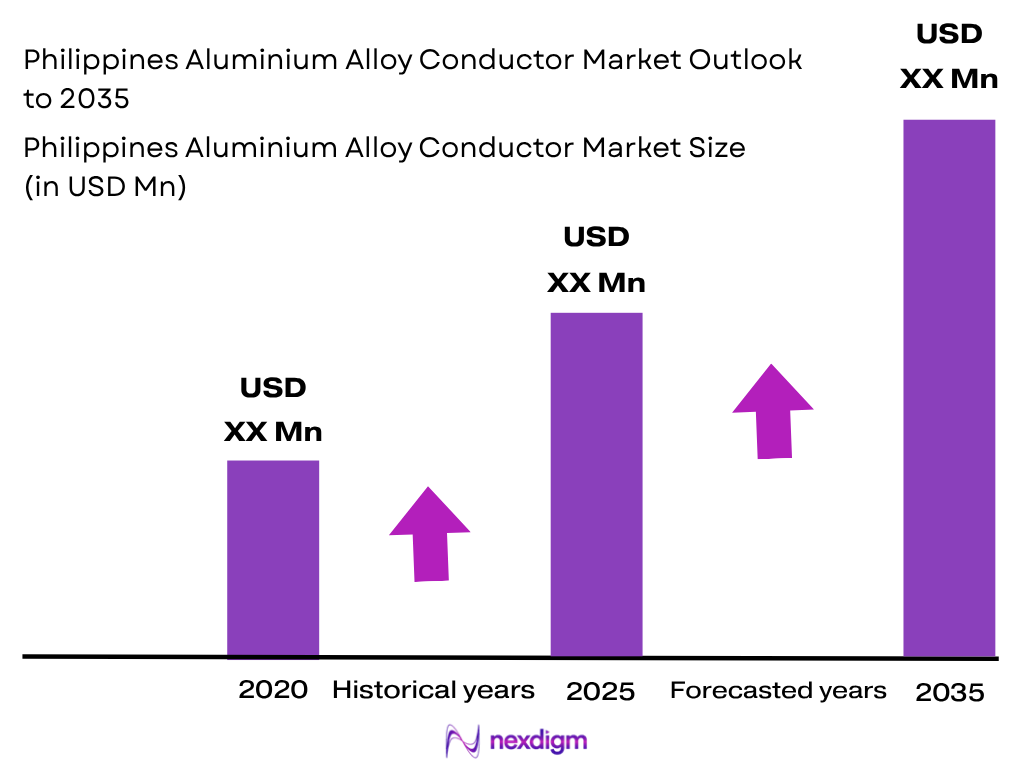
The Philippines Aluminium Alloy Conductor Market is valued at ~USD XX million in 2024 and is supported by increasing investments in electricity transmission infrastructure, renewable energy integration, and grid expansion across Luzon, Visayas, and Mindanao. The Philippines operates three major interconnected power grids, with transmission infrastructure managed by the National Grid Corporation of the Philippines (NGCP). Wikipedia Demand for aluminium alloy conductors is driven by the requirement for lightweight, corrosion-resistant, and high-capacity transmission solutions suitable for long-distance power transfer across geographically dispersed islands. The market is further supported by electricity demand growth from industrial zones, urban developments, and renewable energy projects. Aluminium-based conductors are widely adopted in overhead transmission systems due to their lower weight compared with copper alternatives and suitability for utility applications.
The Philippines Aluminium Alloy Conductor Market is concentrated in major electricity demand centres including Metro Manila, Central Luzon, Calabarzon, Cebu, and Mindanao industrial corridors. Luzon remains a critical demand region due to the concentration of commercial activity, manufacturing facilities, and population centres around Metro Manila. Central Luzon and Calabarzon are supported by industrial parks, economic zones, and manufacturing clusters requiring reliable electricity transmission. Visayas and Mindanao represent important growth areas due to ongoing grid interconnection projects and renewable energy development. The Philippines’ archipelagic geography, consisting of multiple islands requiring interconnected electricity networks, creates demand for advanced transmission systems. Wikipedia Aluminium alloy conductors support these requirements through improved mechanical performance, reduced structural loading, and suitability for long-span overhead transmission applications.
Market Segmentation
By Conductor Type
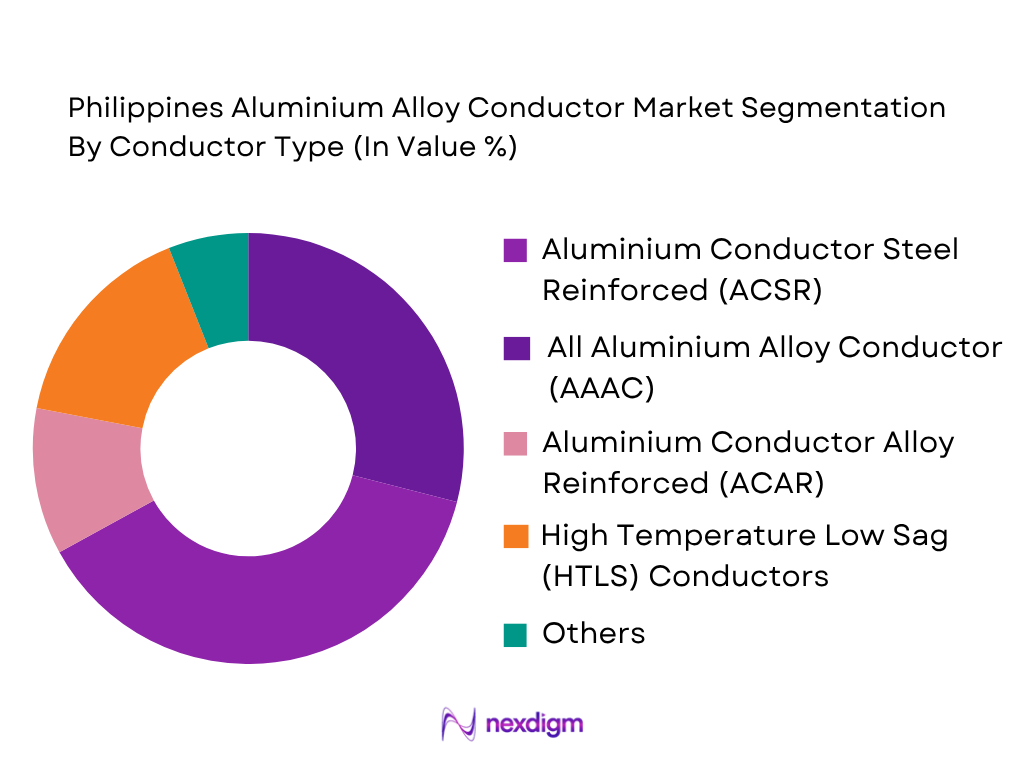
The Philippines Aluminium Alloy Conductor Market is segmented by conductor type into All Aluminium Alloy Conductors (AAAC), Aluminium Conductor Steel Reinforced (ACSR), Aluminium Conductor Alloy Reinforced (ACAR), High Temperature Low Sag (HTLS) Conductors, Aluminium Conductor Composite Reinforced (ACCR), and other advanced aluminium alloy conductors. All Aluminium Alloy Conductors (AAAC) represent the dominant segment with an estimated ~38% market share in 2024 due to their corrosion resistance, lightweight structure, and suitability for tropical environments. AAAC conductors are increasingly preferred for distribution and transmission applications where reduced weight, improved conductivity, and resistance against coastal corrosion are important factors. The Philippines’ extensive coastline and exposure to humid conditions support adoption of corrosion-resistant conductor technologies. Traditional ACSR conductors continue to maintain demand due to established utility usage, while HTLS conductors are gaining attention for capacity enhancement in existing transmission corridors.
By Application
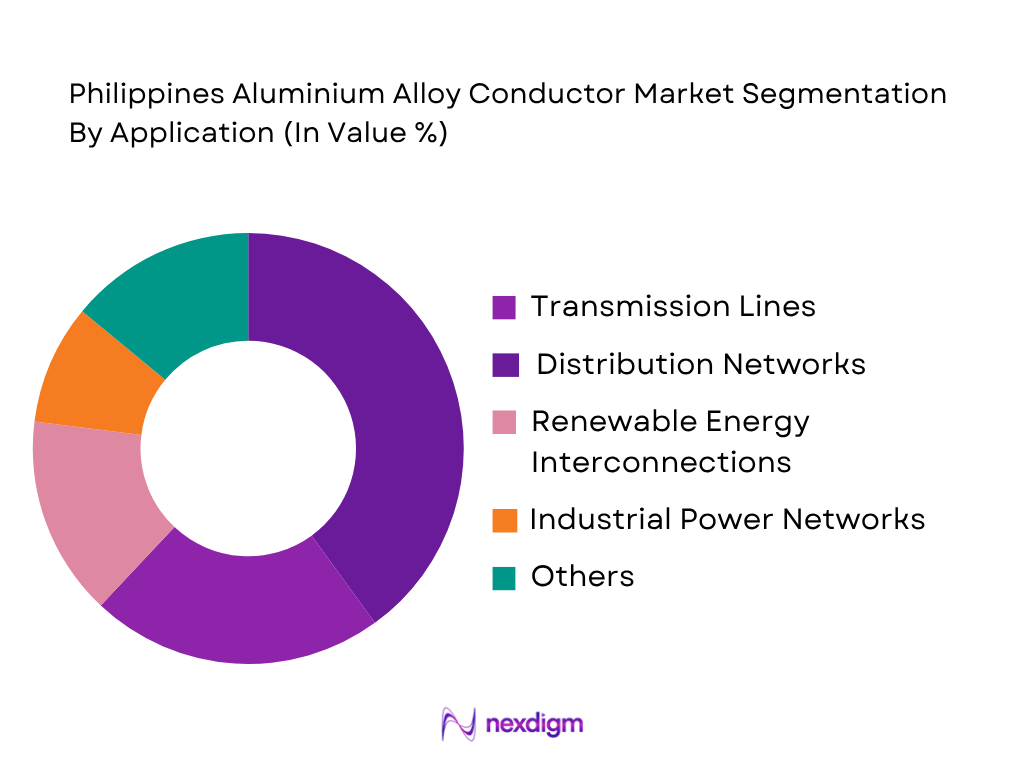
The Philippines Aluminium Alloy Conductor Market is segmented by application into power transmission networks, power distribution networks, renewable energy grid connections, industrial power infrastructure, rural electrification projects, urban electricity networks, island grid interconnection projects, and smart grid infrastructure. Power Transmission Networks dominate with approximately ~40% market share in 2024 due to extensive requirements for upgrading and expanding electricity transmission infrastructure across the country. The Philippines’ three-grid structure requires continuous investment in transmission connectivity between generation sources and consumption centres. Wikipedia Aluminium alloy conductors are widely used in overhead transmission systems because of their balance between conductivity, weight efficiency, and mechanical strength. Renewable energy grid connections are emerging as a significant application area due to increasing renewable energy capacity and the requirement for efficient evacuation networks.
Competitive Landscape
The Philippines Aluminium Alloy Conductor Market consists of international conductor manufacturers and regional suppliers supplying utilities, EPC contractors, and infrastructure developers. Competition is influenced by conductor technology capabilities, manufacturing capacity, compliance with transmission standards, and ability to support large-scale grid expansion projects.
| Company | Establishment Year | Headquarters | Key Products | Aluminium Alloy Technology | Transmission Capability | Manufacturing Capacity | Regional Presence | Utility Project Experience |
| Prysmian Group | 1879 | Milan, Italy | ~ | ~ | ~ | ~ | ~ | ~ |
| Nexans | 2000 | Paris, France | ~ | ~ | ~ | ~ | ~ | ~ |
| Southwire Company | 1950 | Georgia, USA | ~ | ~ | ~ | ~ | ~ | ~ |
| LS Cable & System | 1962 | Anyang, South Korea | ~ | ~ | ~ | ~ | ~ | ~ |
| ZTT Group | 1996 | Jiangsu, China | ~ | ~ | ~ | ~ | ~ | ~ |
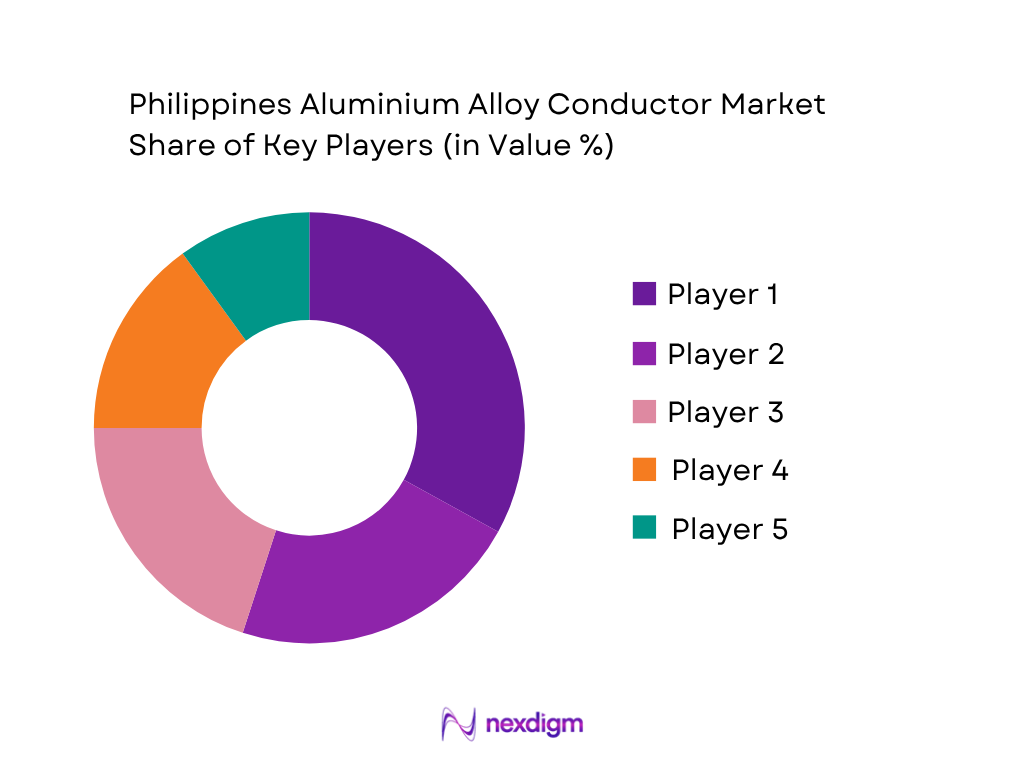
Philippines Aluminium Alloy Conductor Market Analysis
Growth Drivers
Expansion of Transmission Infrastructure
The Philippines Aluminium Alloy Conductor Market is supported by continuous expansion of electricity transmission infrastructure to address rising power demand across Luzon, Visayas, and Mindanao. The country operates three major interconnected power grids, requiring extensive overhead transmission networks to improve electricity reliability and connectivity across geographically dispersed islands. The Philippines recorded a population of approximately 115 million people, creating sustained electricity infrastructure requirements for residential, commercial, and industrial consumers. According to the World Bank, the Philippines economy recorded GDP of approximately USD 461 billion in current prices, reflecting continued economic activity requiring dependable electricity supply. The National Grid Corporation of the Philippines continues to develop transmission projects to strengthen grid capacity, improve interconnection, and integrate additional generation sources. Aluminium alloy conductors are increasingly relevant for these projects because of their lightweight characteristics, corrosion resistance, and suitability for long-span transmission applications. Expansion of substations, high-voltage transmission corridors, and regional connectivity projects supports demand for advanced conductor technologies capable of improving transmission efficiency and reducing infrastructure loading.
Renewable Energy Grid Development
Renewable energy expansion is creating additional demand for aluminium alloy conductors through the requirement for efficient electricity evacuation networks connecting generation sites with consumption centres. The Philippines continues to increase renewable energy deployment, particularly solar, wind, and hydroelectric power projects located in areas requiring extended transmission connections. According to the International Energy Agency, electricity demand in Southeast Asia continues to rise due to industrial development, urbanization, and economic expansion. The Philippines government has targeted higher renewable energy integration through national energy planning initiatives, increasing requirements for modern transmission infrastructure. The Department of Energy reported continued development of renewable energy projects, including solar and wind facilities requiring grid connection solutions. Aluminium alloy conductors support these applications through high conductivity, reduced weight, and improved mechanical performance for overhead transmission systems. Renewable energy projects located in remote regions, including island provinces, require reliable transmission infrastructure, creating opportunities for advanced conductor adoption. Growth in renewable energy capacity, combined with increasing electricity consumption from manufacturing and commercial sectors, strengthens demand for aluminium alloy conductor solutions.
Market Challenges
Dependence on Imported Aluminium Alloy Conductors
The Philippines Aluminium Alloy Conductor Market faces challenges due to dependence on imported advanced conductor products and limited domestic manufacturing capability for specialized aluminium alloy technologies. The country imports significant volumes of electrical equipment and industrial materials to support infrastructure development. According to the Philippine Statistics Authority, the Philippines recorded merchandise imports exceeding USD 130 billion, highlighting the country’s reliance on international supply chains for industrial products and infrastructure components. Advanced aluminium alloy conductors, including high-temperature low-sag and composite reinforced conductors, often require specialized manufacturing technologies that are concentrated among international suppliers. Dependence on overseas manufacturers exposes the market to logistics disruptions, foreign exchange fluctuations, and extended procurement timelines. Additionally, local manufacturers face challenges in developing advanced alloy processing capabilities, quality certification requirements, and large-scale production facilities. The geographically distributed nature of Philippine electricity networks increases supply chain complexity because transmission projects require timely delivery of conductors to different islands. These factors create operational challenges for utilities, EPC contractors, and infrastructure developers implementing large-scale transmission projects.
Complex Island Grid Infrastructure
The Philippines Aluminium Alloy Conductor Market experiences challenges associated with the country’s archipelagic geography and complex electricity transmission requirements. The Philippines consists of more than 7,600 islands, creating significant infrastructure challenges for developing interconnected electricity networks. According to the Philippine Statistics Authority, the country’s extensive island geography requires specialized infrastructure planning to provide reliable electricity access across different regions. Transmission development involves complex logistics, including transportation of heavy electrical components, construction in remote locations, and adaptation to diverse environmental conditions. The country is also exposed to frequent tropical storms and typhoons, which can affect overhead transmission infrastructure and increase maintenance requirements. According to the World Bank, the Philippines remains among the countries highly exposed to climate-related risks, influencing infrastructure resilience requirements. Aluminium alloy conductors must therefore meet demanding mechanical strength, corrosion resistance, and durability requirements for tropical environments. Transmission projects also require coordination among multiple government agencies, utilities, and local authorities, which can extend project implementation timelines. These geographical and environmental factors create challenges for rapid deployment of advanced conductor systems.
Market Opportunities
Renewable Energy Transmission Expansion
Renewable energy transmission expansion represents a significant opportunity for the Philippines Aluminium Alloy Conductor Market as the country develops additional electricity generation capacity requiring efficient grid connectivity. The Philippines continues to promote renewable energy investments, with solar, wind, and hydro projects requiring dedicated transmission and distribution infrastructure. According to the Department of Energy Philippines, renewable energy remains a major component of national energy planning, supporting increased requirements for power evacuation networks. The country recorded electricity consumption exceeding 100,000 GWh, according to energy sector statistics, demonstrating the requirement for expanded transmission capacity to support growing demand. Aluminium alloy conductors provide opportunities for renewable energy projects because they enable efficient power transfer over long distances while reducing structural loading on transmission towers. Solar and wind projects are frequently located in areas distant from major electricity demand centres, requiring reliable transmission connections. Development of renewable energy zones, offshore wind projects, and regional grid strengthening initiatives will increase demand for advanced conductor technologies. These opportunities are further supported by government initiatives focused on improving energy security and increasing renewable energy integration.
High Temperature Low Sag Conductor Adoption
High Temperature Low Sag (HTLS) conductor adoption presents an opportunity for the Philippines Aluminium Alloy Conductor Market as utilities seek to increase transmission capacity without extensive construction of new corridors. Existing transmission networks in densely populated regions face limitations due to land availability and increasing electricity demand. According to the World Bank, urbanization continues to influence infrastructure requirements in developing economies, with the Philippines experiencing continued expansion of urban centres and industrial zones. HTLS conductors enable utilities to improve electricity transfer capability through existing transmission infrastructure by operating at higher temperatures while maintaining controlled sag performance. This technology is particularly relevant for metropolitan areas such as Metro Manila and industrial regions where expanding transmission corridors can be challenging. The Philippines’ growing manufacturing sector and expanding commercial infrastructure require improved electricity reliability and network efficiency. Adoption of advanced aluminium alloy technologies can support grid modernization efforts, improve transmission performance, and enhance resilience of existing electricity networks. Increased focus on smart grid systems and infrastructure optimization creates additional opportunities for advanced conductor deployment across transmission projects.
Future Outlook
The Philippines Aluminium Alloy Conductor Market is expected to witness continued development driven by electricity demand growth, renewable energy expansion, and transmission infrastructure modernization. Future demand will be influenced by renewable energy evacuation networks, island grid interconnection projects, and replacement of aging transmission components. Advanced conductor technologies such as HTLS conductors are expected to gain adoption where utilities require higher transmission capacity without extensive infrastructure expansion. Development of industrial zones and urban electricity networks will further support demand for efficient aluminium alloy conductor solutions.
Major Players
- Prysmian Group
- Nexans
- Southwire Company
- LS Cable & System
- ZTT Group
- Sumitomo Electric Industries
- Furukawa Electric
- Apar Industries
- Midal Cables
- Sterlite Power
- Henan Tong-Da Cable
- Hellenic Cables
- Tratos Group
- Universal Cable (Philippines)
- Philflex
Key Target Audience
- Electricity Transmission Utilities
- Distribution Utilities
- Renewable Energy Developers
- Industrial Power Infrastructure Developers
- Electrical Equipment Manufacturers
- Investments and Venture Capitalist Firms
- Government and Regulatory Bodies (Department of Energy Philippines, Energy Regulatory Commission Philippines)
- EPC Contractors and Transmission Infrastructure Developers
Research Methodology
Step 1: Identification of Key Variables
The initial phase involves developing a detailed ecosystem map covering aluminium alloy conductor manufacturers, transmission utilities, distribution companies, EPC contractors, renewable energy developers, and regulatory authorities. Key variables include conductor technology adoption, transmission infrastructure expansion, voltage requirements, application demand, and supply chain structure.
Step 2: Market Analysis and Construction
This phase evaluates historical market trends by analysing aluminium alloy conductor consumption across transmission, distribution, renewable energy, and industrial applications. Supply-side assessment includes manufacturing capabilities, import dependency, production technologies, and supplier networks supporting Philippine electricity infrastructure.
Step 3: Hypothesis Validation and Expert Consultation
Market assumptions are validated through discussions with industry participants including conductor manufacturers, utility representatives, EPC companies, and infrastructure specialists. These interactions provide insights into procurement practices, technology preferences, project requirements, and future adoption patterns.
Step 4: Research Synthesis and Final Output
The final stage integrates primary and secondary findings through data triangulation. Market estimates are validated by evaluating infrastructure development trends, electricity demand patterns, technology adoption, and industry feedback to provide a comprehensive assessment of the Philippines Aluminium Alloy Conductor Market.

- Executive Summary
- Research Methodology (Market Definition and Scope, Philippines Aluminium Alloy Conductor Market Classification, Aluminium Alloy Conductor Technology Mapping, All Aluminium Alloy Conductor (AAAC) Assessment, Aluminium Conductor Steel Reinforced (ACSR) Evaluation, Aluminium Conductor Alloy Reinforced (ACAR) Analysis, High Temperature Low Sag (HTLS) Conductor Assessment, Aluminium Alloy Composition Analysis, Electrical Conductivity Evaluation, Tensile Strength Assessment, Thermal Performance Evaluation, Corrosion Resistance Assessment, Sag Performance Analysis, Current Carrying Capacity Evaluation, Transmission Line Application Mapping, Distribution Network Assessment, Renewable Energy Grid Integration Analysis, Power Transmission Infrastructure Assessment, Domestic Manufacturing Capability Assessment, Import Dependency Analysis, Supply-Side Assessment, Demand-Side Assessment, Top-Down Market Sizing, Bottom-Up Market Sizing, Primary Industry Interviews, Data Triangulation, Forecasting Framework)

- Definition and Scope
- Philippines Aluminium Alloy Conductor Industry Evolution
- Aluminium Alloy Conductor Value Chain Analysis
- Aluminium Alloy Conductor Supply Chain Analysis

- Growth Drivers (Expansion of Transmission Infrastructure, Renewable Energy Grid Development, Rural Electrification Programs, Electricity Demand Growth, Industrial Manufacturing Expansion, High Voltage Transmission Network Development, Island Grid Connectivity Requirements, Grid Modernization Initiatives, Replacement of Conventional Conductors, Advanced Conductor Technology Adoption)
- Market Challenges (Dependence on Imported Aluminium Alloy Conductors, Aluminium Raw Material Price Volatility, Limited Domestic Advanced Conductor Manufacturing Capability, High Transmission Project Costs, Complex Island Grid Infrastructure, Climate and Typhoon Exposure, Technical Specification Requirements, Installation Challenges, Supply Chain Dependency, Long Infrastructure Development Timelines)
- Market Opportunities (Renewable Energy Transmission Expansion, Offshore Wind Power Grid Development, Solar Energy Evacuation Networks, Smart Grid Deployment, High Temperature Low Sag Conductor Adoption, Domestic Aluminium Processing Development, Grid Efficiency Improvement Projects, Rural Electrification Expansion, Advanced Transmission Capacity Enhancement, Regional Power Connectivity Development)
- Market Trends (Increasing Adoption of AAAC Conductors, Growth of Renewable Energy Transmission Systems, Expansion of High Voltage Networks, Replacement of Traditional ACSR Conductors, Development of Smart Grid Infrastructure, Increasing Demand for Lightweight Conductors, Digital Grid Monitoring Integration, Advanced Aluminium Alloy Technologies)
- Government Regulations and Standards (Philippine Grid Code Requirements, Department of Energy Power Development Programs, National Grid Corporation Transmission Standards, Energy Regulatory Commission Guidelines, Electrical Safety Standards, Renewable Energy Development Regulations, Transmission Line Design Standards, Environmental Compliance Requirements)
- SWOT Analysis
- Porter’s Five Forces Analysis
- PESTLE Analysis
- Stakeholder Ecosystem
- Competition Ecosystem

- By Market Value (2020-2025)
- By Aluminium Alloy Conductor Production Volume (2020-2025)
- By Installed Conductor Length (2020-2025)
- By Transmission Line Conductor Consumption Volume (2020-2025)
- By Distribution Network Conductor Consumption Volume (2020-2025)
- By Average Selling Price per Conductor Kilometer (2020-2025)

- By Conductor Type (In Value %)
All Aluminium Alloy Conductors (AAAC)
Aluminium Conductor Alloy Reinforced (ACAR)
High Temperature Low Sag (HTLS) Conductors
Other Advanced Aluminium Alloy Conductors - By Voltage Level (In Value %)
Extra High Voltage Transmission Lines
High Voltage Transmission Lines
Medium Voltage Distribution Networks
Low Voltage Distribution Networks - By Application (In Value %)
Power Transmission Networks
Power Distribution Networks
Renewable Energy Grid Connections
Industrial Power Infrastructure
Rural Electrification Projects
Urban Electricity Networks
Island Grid Interconnection Projects
Smart Grid Infrastructure - By End-Use Sector (In Value %)
Electric Utilities
Renewable Energy Developers
Industrial Manufacturing Facilities
Mining and Mineral Processing Industries
Commercial Infrastructure
Government Infrastructure Projects - By Installation Type (In Value %)
Overhead Transmission Lines
Overhead Distribution Lines
Underground Power Networks
Substation Interconnection Systems
Industrial Electrical Networks - By Region (In Value %)
National Capital Region
Central Luzon
Calabarzon
Central Visayas
Western Visayas
Eastern Visayas
Mindanao Region

- Market Share of Major Players (By Philippines Revenue, Aluminium Alloy Conductor Portfolio, AAAC Manufacturing Capability, ACAR Technology Capability, HTLS Product Availability, Transmission Project Experience, Production Capacity, Distribution Network Coverage, Utility Customer Base, Renewable Energy Application Coverage, Technical Support Capability, Customization Capability, Import Supply Capability)
- Cross Comparison Parameters (Aluminium Alloy Technology Capability, Conductor Current Carrying Capacity, Transmission Voltage Application Capability, Corrosion Resistance Performance, High Temperature Operation Capability, Manufacturing Capacity, Philippines Utility Project Experience, Renewable Energy Grid Integration Capability)
- SWOT Analysis of Major Players
- Detailed Profiles of Major Companies
Prysmian Group
Nexans
Southwire Company
LS Cable & System
ZTT Group
Sumitomo Electric Industries
Furukawa Electric
Apar Industries
Midal Cables
Sterlite Power
Henan Tong-Da Cable
Hellenic Cables
Tratos Group
Universal Cable (Philippines)
Philflex

- Transmission Utility Requirement Assessment
- Distribution Utility Demand Analysis
- Renewable Energy Project Requirement Assessment
- Solar Power Transmission Application Analysis
- Wind Energy Grid Connection Assessment
- Industrial Power Infrastructure Demand Analysis
- Rural Electrification Requirement Analysis
- Island Grid Connectivity Assessment
- High Voltage Transmission Requirement Analysis

- By Market Value (2026-2035)
- By Aluminium Alloy Conductor Production Volume (2026-2035)
- By Installed Conductor Length (2026-2035)
- By Transmission Line Conductor Consumption Volume (2026-2035)
- By Distribution Network Conductor Consumption Volume (2026-2035)
- By Average Selling Price per Conductor Kilometer (2026-2035)


 Request a Sample
 Ask for Customization
 Get a Quote
 Enquire Now