
 Download PDF
Market Overview
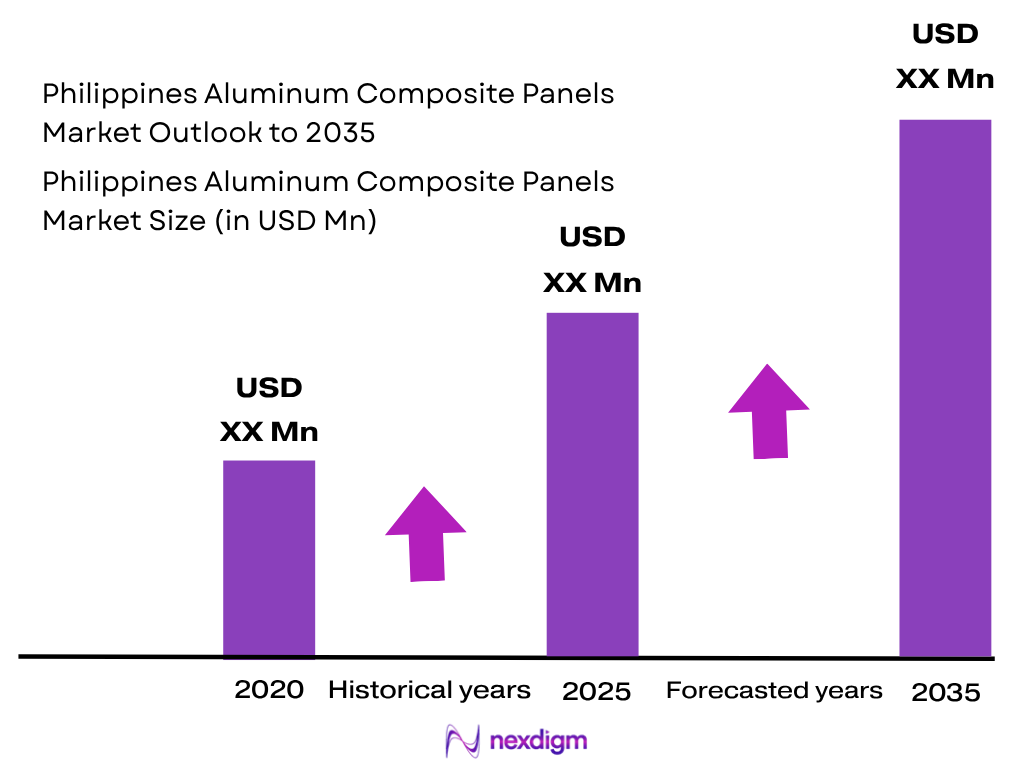
The Philippines Aluminum Composite Panels Market is valued at ~USD XX million in 2024 and is expected to expand at a CAGR of ~XX% during 2026-2035, supported by increasing construction activities, urban redevelopment, and demand for lightweight facade materials. Aluminum composite panels are widely used in exterior cladding, commercial buildings, signage, interior applications, and modern architectural projects. The market growth is influenced by rising investments in residential towers, office developments, retail complexes, and infrastructure projects across major urban areas.
Metro Manila dominates the Philippines Aluminum Composite Panels Market due to its concentration of commercial developments, high-rise residential projects, business districts, and infrastructure modernization initiatives. Cities including Quezon City, Makati, Taguig, Cebu City, and Davao are also significant demand centers because of expanding real estate construction, hospitality developments, and retail infrastructure. The Philippines primarily depends on domestic distributors and imported ACP products from major Asian manufacturing hubs, especially China, South Korea, and Japan, due to established supply networks and product availability.
Market Segmentation
By Core Material Type
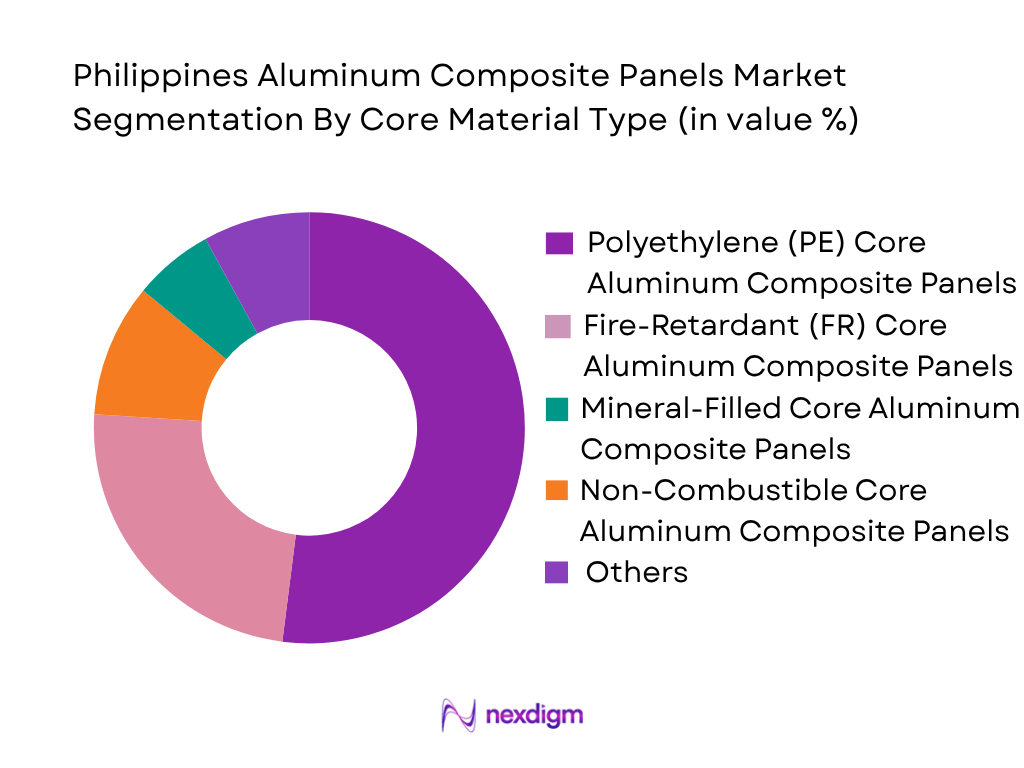
The Philippines Aluminum Composite Panels Market is segmented by core material type into polyethylene (PE) core aluminum composite panels, fire-retardant (FR) core aluminum composite panels, mineral-filled core ACP, non-combustible core ACP, aluminum honeycomb composite panels, and hybrid core panels. Polyethylene (PE) core aluminum composite panels represent the dominant segment with a market share of ~XX% in 2024 due to their widespread adoption across commercial buildings, residential developments, retail establishments, and signage applications. PE-core ACP panels are preferred because of their cost efficiency, lightweight properties, easy fabrication process, and availability through local construction material suppliers. Contractors and fabricators in the Philippines have extensive experience using PE-core systems for standard facade and interior applications. However, increasing fire safety awareness and stricter building safety requirements are gradually supporting demand for FR-core and mineral-filled ACP products in premium commercial and high-rise developments.
By Application
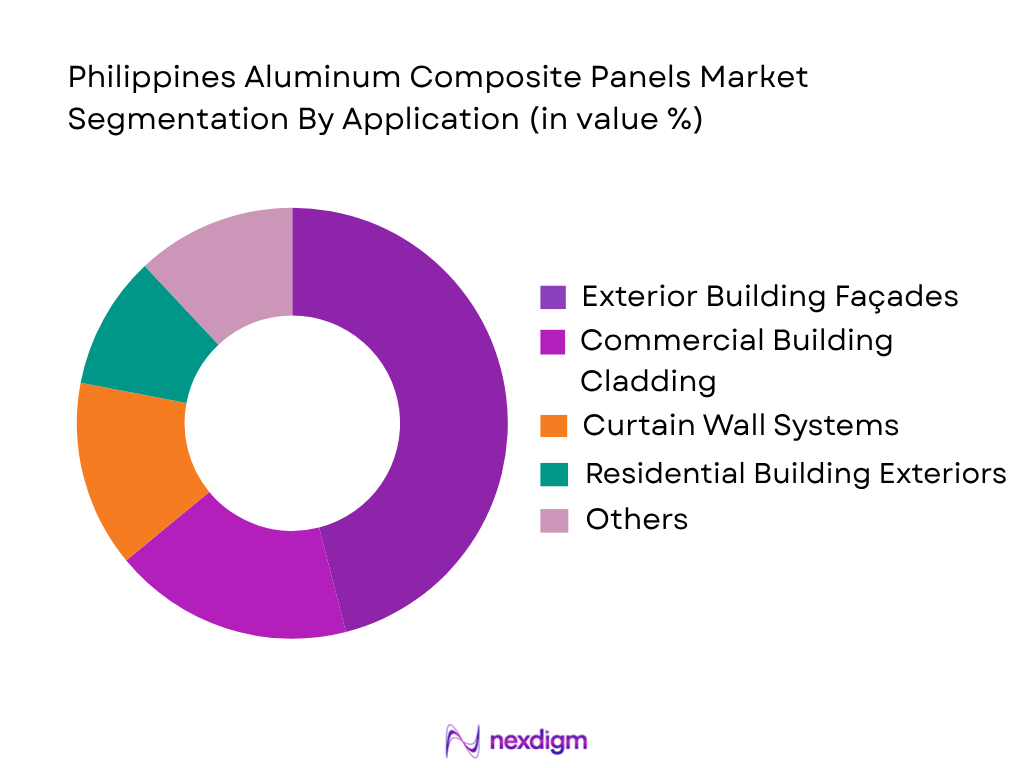
The Philippines Aluminum Composite Panels Market is segmented by application into exterior building facades, curtain wall systems, ventilated facade systems, commercial building cladding, residential building exteriors, industrial cladding, transportation infrastructure, interior wall applications, and signage applications. Exterior building facades represent the dominant application segment with a market share of ~XX% in 2024 due to increasing utilization of ACP systems in high-rise buildings, commercial offices, shopping malls, hotels, and mixed-use developments. Aluminum composite panels are extensively selected for exterior applications because of their lightweight structure, corrosion resistance, weather durability, aesthetic flexibility, and compatibility with modern architectural designs. Expansion of construction activities in Metro Manila, Cebu, and other urban centers is strengthening demand for contemporary facade solutions. Additionally, building renovation projects are increasing ACP adoption as developers seek cost-effective solutions for improving building appearance and performance.
Competitive Landscape
The Philippines Aluminum Composite Panels Market is characterized by the presence of international ACP manufacturers, regional suppliers, and domestic distributors serving construction companies, facade contractors, and architectural firms. Competition is influenced by product quality, fire performance, surface finishes, supply availability, customization capabilities, and distribution networks. Major participants compete through expanded product portfolios, imported premium-grade ACP solutions, and partnerships with construction developers and facade installers.
| Company | Establishment Year | Headquarters | Product Portfolio | Core Technologies | Manufacturing Presence | Distribution Network | Major Applications | Sustainability Focus |
| 3A Composites | 2002 | Switzerland | ~ | ~ | ~ | ~ | ~ | ~ |
| Alucobond (3A Composites) | 1969 | Germany | ~ | ~ | ~ | ~ | ~ | ~ |
| Mitsubishi Chemical Group | 1933 | Japan | ~ | ~ | ~ | ~ | ~ | ~ |
| Jyi Shyang Industrial Co. Ltd. | 1977 | Taiwan | ~ | ~ | ~ | ~ | ~ | ~ |
| Seven System | 1998 | China | ~ | ~ | ~ | ~ | ~ | ~ |
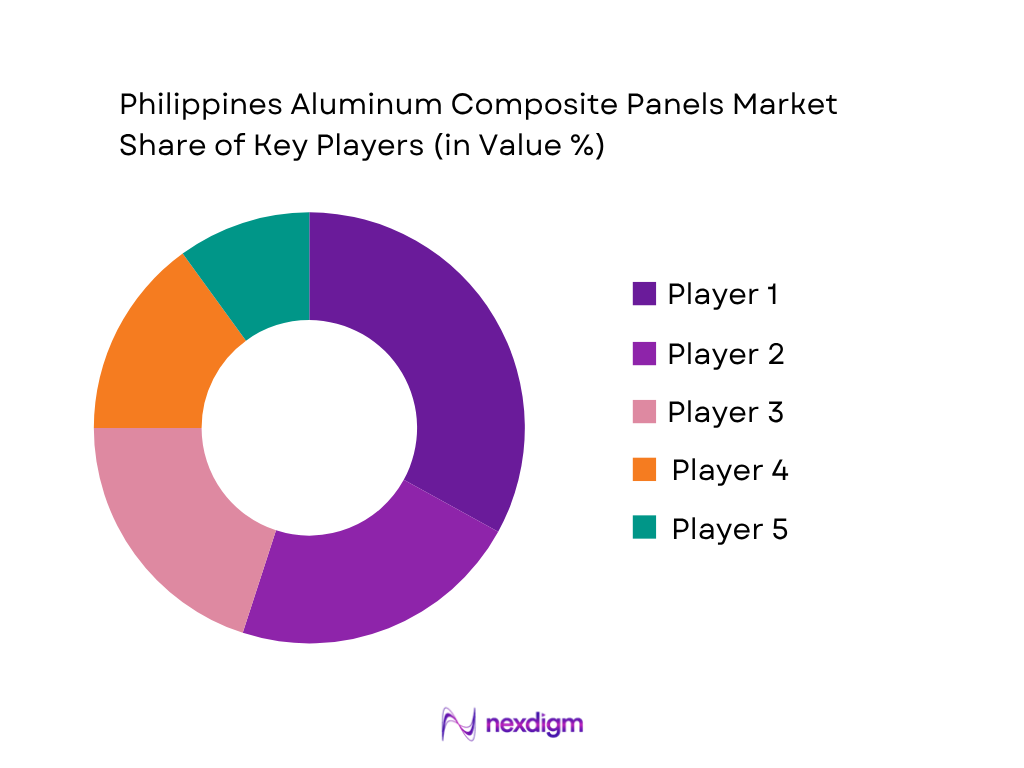
Philippines Aluminum Composite Panels Market Analysis
Growth Drivers
Expansion of Construction and Infrastructure Development Activities
The Philippines Aluminum Composite Panels Market is supported by continuous expansion in construction activities across commercial, residential, and infrastructure segments. The construction sector remains a major contributor to economic activity, with the Philippine Statistics Authority reporting continued construction output supported by private developments and government infrastructure spending. The World Bank reported that the Philippines economy reached approximately USD 461 billion in current GDP value, reflecting broader economic activity supporting urban expansion and investment in built infrastructure. Government infrastructure programs, including transportation networks, public facilities, airports, and urban development projects, are increasing demand for lightweight facade materials such as aluminum composite panels. The Department of Public Works and Highways has maintained infrastructure allocations exceeding PHP 900 billion, supporting construction activity and demand for building envelope solutions. Expansion of high-rise residential projects, business districts, retail complexes, and mixed-use developments across Metro Manila, Cebu, and Davao is strengthening ACP adoption due to lightweight properties, faster installation, corrosion resistance, and architectural flexibility. Additionally, modernization projects are encouraging contractors to adopt advanced facade materials that provide improved appearance, durability, and reduced maintenance requirements, supporting long-term demand for ACP systems in the Philippines.
Urbanization and Growth of Commercial Real Estate Development
The Philippines Aluminum Composite Panels Market is benefiting from rapid urbanization and increasing commercial real estate development across major economic centers. The World Bank reported that the Philippines has an urban population exceeding 55 million people, resulting in higher demand for office spaces, retail developments, residential towers, and hospitality infrastructure. Metro Manila, Cebu, and Davao continue to attract commercial investments due to expanding business districts, technology parks, and mixed-use developments. The Philippine Statistics Authority has reported continued economic activity supported by household consumption, services expansion, and private sector investments, creating favorable conditions for construction growth. Aluminum composite panels are increasingly preferred by architects and developers because of their lightweight structure, aesthetic customization, weather resistance, and suitability for modern building designs. Development of areas such as Bonifacio Global City, Makati, and Cebu IT Park has increased demand for premium facade systems. Additionally, growth in tourism infrastructure and hospitality projects is supporting ACP adoption in hotels, resorts, and entertainment facilities. Increasing urban density, redevelopment of commercial properties, and demand for visually appealing building exteriors are creating sustained opportunities for ACP manufacturers and suppliers.
Market Challenges
Dependence on Imported Raw Materials and Supply Chain Constraints
The Philippines Aluminum Composite Panels Market faces challenges due to dependence on imported aluminum materials, polymer cores, and finished composite panels from international suppliers. The World Bank reported that the Philippines remains highly connected with global trade networks, with merchandise trade exceeding USD 200 billion annually, making construction material supply chains vulnerable to international disruptions. The country relies significantly on imports from manufacturing hubs such as China, Japan, and South Korea for specialized construction materials and ACP products. Changes in global aluminum availability, shipping conditions, foreign exchange fluctuations, and international manufacturing schedules can affect material procurement and project timelines. Local distributors and contractors may experience challenges in maintaining consistent inventory levels, particularly for premium fire-resistant ACP products and customized facade solutions. Smaller construction companies operating outside major urban areas may face additional difficulties accessing advanced ACP systems due to limited regional distribution networks. Increasing demand for specialized finishes, higher-performance panels, and certified products requires suppliers to maintain broader inventories and stronger logistics capabilities. Improving domestic supply networks, strengthening distributor relationships, and enhancing inventory management practices remain important for reducing supply chain risks in the Philippine ACP market.
Fire Safety Compliance and Increasing Demand for Advanced ACP Systems
Fire safety compliance is becoming an important challenge for the Philippines Aluminum Composite Panels Market as developers and contractors increasingly prioritize facade performance and building safety standards. The Philippines follows building safety requirements through the National Building Code and fire safety regulations implemented by government authorities. High-rise residential buildings, commercial towers, and public infrastructure projects are increasingly requiring materials with improved fire resistance, encouraging adoption of fire-retardant and non-combustible ACP systems. The Philippine Statistics Authority has reported continued construction activity growth, increasing the importance of safe and durable building materials in urban developments. While polyethylene-core ACP panels remain popular due to affordability and ease of installation, increasing awareness regarding facade fire performance is encouraging movement toward FR-core and mineral-filled ACP solutions. This transition creates challenges for suppliers because advanced ACP products require greater technical expertise, certification support, and specialized installation practices. Contractors must also improve knowledge regarding fire-rated facade systems and compliance requirements. Increasing demand for certified materials and stronger enforcement of safety standards is expected to influence ACP product selection across commercial, residential, and infrastructure projects.
Market Opportunities
Adoption of Sustainable and Energy-Efficient Building Envelope Solutions
The Philippines Aluminum Composite Panels Market presents opportunities through increasing adoption of sustainable construction practices and energy-efficient building solutions. The World Bank has identified climate resilience and sustainable infrastructure development as key priorities for the Philippines due to rapid urbanization and environmental challenges. Developers are increasingly focusing on building materials that support long-term efficiency, durability, and reduced maintenance requirements. Aluminum composite panels provide opportunities in sustainable construction due to their lightweight characteristics, recyclable aluminum content, durability, and compatibility with modern facade systems. The Philippine Green Building Council has promoted sustainable building practices, encouraging commercial developers and institutional projects to integrate environmentally responsible materials. Expansion of green-certified buildings, corporate offices, and mixed-use developments is creating demand for advanced ACP products, including recyclable panels, fire-resistant solutions, and improved-performance facade systems. Developers are increasingly evaluating facade materials as part of sustainability strategies focused on improving building performance and extending asset life. This trend provides opportunities for ACP manufacturers and distributors to introduce environmentally focused solutions aligned with sustainable construction requirements in the Philippine market.
Expansion of Building Renovation and Facade Modernization Activities
Building renovation and facade modernization activities are creating new opportunities for the Philippines Aluminum Composite Panels Market due to increasing demand for upgrading existing commercial and public structures. The World Bank has highlighted infrastructure modernization as an important requirement for emerging economies, including the Philippines, where urban centers require improvement of aging buildings and facilities. Older commercial properties in Metro Manila and other major cities require facade upgrades to improve appearance, durability, and building performance. Aluminum composite panels provide an effective renovation solution because they offer lightweight installation, weather resistance, design flexibility, and compatibility with existing structures. Property owners are increasingly investing in facade improvements to enhance tenant attraction, extend building lifespan, and improve overall asset value. Government infrastructure modernization programs and redevelopment of transportation facilities are also supporting demand for ACP applications. Additionally, renovation activities in hotels, retail centers, offices, and mixed-use properties are increasing requirements for customized ACP finishes and advanced facade systems. Growing focus on modernization of existing buildings rather than only new construction is expected to create additional opportunities for ACP suppliers, installers, and architectural solution providers.
Future Outlook
Over the next decade, the Philippines Aluminum Composite Panels Market is expected to demonstrate steady expansion driven by urbanization, infrastructure development, and increasing adoption of modern facade systems. Growth opportunities will emerge from commercial real estate expansion, residential high-rise construction, and renovation activities. Rising awareness regarding fire-resistant building materials and sustainable construction practices is expected to encourage adoption of advanced ACP technologies. The market will also benefit from increasing demand for customized architectural finishes and lightweight building envelope solutions.
Major Players
- Alucobond (3A Composites)
- Mitsubishi Chemical Group
- Jyi Shyang Industrial Co. Ltd.
- Seven System
- Yaret Industrial Group
- Goodsense Material
- Alpolic
- Viva Composite Panel
- Multipanel UK
- Alstrong Enterprises
- Jiangsu Kingboard
- Changzhou Jingmei
- Shanghai Huayuan New Composite Materials
- Guangzhou Xinghe ACP
- Alumax Industrial
Key Target Audience
- Real Estate Developers and Property Development Companies
- Architectural Facade Contractors and Installation Companies
- Construction Companies and Engineering Procurement Contractors
- Aluminum Composite Panel Manufacturers and Distributors
- Building Material Importers and Trading Companies
- Investments and Venture Capitalist Firms
- Government and Regulatory Bodies (Department of Public Works and Highways, Department of Trade and Industry, Housing and Land Use Regulatory Board)
- Commercial Building Owners and Facility Management Companies
Research Methodology
Step 1: Identification of Key Variables
The initial phase involves developing an ecosystem map covering manufacturers, importers, distributors, construction companies, facade contractors, architects, and end-use industries operating within the Philippines Aluminum Composite Panels Market. Secondary research is conducted to identify important market variables including construction demand, material adoption trends, application segments, and supply chain structures.
Step 2: Market Analysis and Construction
This stage focuses on analyzing historical market trends, construction activity, ACP consumption patterns, product categories, and application-level demand. Market sizing is developed through evaluation of supply-side production, import activity, distributor networks, and demand from residential, commercial, and infrastructure projects.
Step 3: Hypothesis Validation and Expert Consultation
Market assumptions are validated through discussions with industry participants including ACP suppliers, construction contractors, facade specialists, and building material distributors. These consultations provide insights into pricing trends, product preferences, competitive positioning, and future adoption patterns.
Step 4: Research Synthesis and Final Output
The final stage combines primary and secondary research findings to create a comprehensive assessment of the Philippines Aluminum Composite Panels Market. Data points are verified through triangulation of industry information, supplier analysis, construction sector indicators, and market-specific evaluations.

- Executive Summary
- Research Methodology (Market Definition and Scope, Philippines Aluminum Composite Panels Market Classification, Market Sizing Approach, Top-Down Analysis, Bottom-Up Analysis, Demand-Side Assessment, Supply-Side Assessment, Primary Industry Interviews, Data Triangulation, Forecasting Framework, Construction Sector Assessment, Facade Material Analysis, Import Dependency Evaluation, Domestic Distribution Assessment, Regulatory Framework Assessment, Competitive Benchmarking Methodology)

- Definition and Scope
- Philippines Aluminum Composite Panels Industry Evolution and Development of Architectural Facade Systems, Lightweight Cladding Solutions, Exterior Building Envelope Applications, Interior Decorative Panels, Digital Printing ACP Applications, Fire-Retardant ACP Technologies, Sustainable Aluminum Composite Materials, High-Rise Building Facades, Commercial Complex Cladding, Retail Architecture Solutions, Transportation Infrastructure Applications and Modern Construction Materials Adoption
- Aluminum Composite Panels Value Chain Analysis
- Aluminum Composite Panels Supply Chain Analysis
- Aluminum Raw Material Suppliers, Aluminum Coil Manufacturers, Polyethylene and Mineral Core Suppliers, Coating Material Providers, ACP Manufacturers, Importers and Distributors, Facade Fabricators, Architectural Consultants, Construction Contractors, Real Estate Developers, Commercial Property Owners, Retail Developers, Infrastructure Project Contractors and Building Material Dealers

- Growth Drivers (Rapid Urban Development, Expansion of Commercial Construction, High-Rise Building Development, Growth of Retail and Hospitality Infrastructure, Demand for Lightweight Facade Materials, Increasing Modern Architectural Designs, Expansion of Real Estate Projects, Growing Signage and Advertising Industry)
- Market Challenges (Dependence on Imported ACP Materials, Fluctuating Aluminum Prices, Limited Domestic Manufacturing Capacity, Fire Safety Compliance Requirements, Competition from Alternative Facade Materials, Quality Variation Among Suppliers, Skilled Installation Requirements, Weather Exposure Challenges)
- Market Opportunities (Facade Renovation Projects, Sustainable Aluminum Composite Panels, Fire-Retardant ACP Adoption, Green Building Development, Smart Building Facades, Premium Architectural Applications, Infrastructure Modernization Projects, Customized ACP Designs, Expansion of Regional Construction Markets)
- Market Trends (Increasing Adoption of FR ACP Systems, Customized Facade Designs, Digital Printing on ACP Panels, Sustainable Aluminum Recycling, Premium Architectural Finishes, Lightweight Building Materials, Modern Retail Facade Development, Energy-Efficient Building Envelope Solutions)
- Government Regulations and Standards (National Building Code of the Philippines, Fire Code of the Philippines, Construction Product Certification Requirements, Green Building Standards, Material Safety Regulations, Import Regulations, Building Permit Requirements, Facade Installation Guidelines)
- SWOT Analysis
- Porter’s Five Forces Analysis
- PESTLE Analysis
- Stakeholder Ecosystem
- Competition Ecosystem

- By Market Value (2020-2025)
- By Consumption Volume (2020-2025)
- By Installed Surface Area (2020-2025)
- By Average Selling Price per Square Meter (2020-2025)
- By Imported ACP Volume (2020-2025)
- By Domestic ACP Distribution Volume (2020-2025)
- By Exterior Facade Application Volume (2020-2025)
- By Interior Decoration Application Volume (2020-2025)
- By Signage and Advertising Application Volume (2020-2025)

- By Core Material Type (In Value %)
Polyethylene (PE) Core Aluminum Composite Panels
Fire-Retardant (FR) Core Aluminum Composite Panels
Mineral-Filled Core Aluminum Composite Panels
Non-Combustible Core Aluminum Composite Panels
Aluminum Honeycomb Composite Panels
Hybrid Core Aluminum Composite Panels - By Application (In Value %)
Exterior Building Facades
Commercial Building Cladding
Residential Building Exteriors
Curtain Wall Systems
Ventilated Facade Systems
Interior Wall Applications
Retail and Shopping Mall Interiors
Transportation Infrastructure Cladding
Signage and Advertising Panels
Industrial Building Cladding - By End-Use Sector (In Value %)
Commercial Buildings
Residential Buildings
Retail and Shopping Centers
Hospitality and Tourism Facilities
Government and Public Buildings
Transportation Infrastructure
Industrial Facilities
Educational Institutions
Healthcare Facilities
Entertainment and Leisure Buildings - By Distribution Channel (In Value %)
Direct Manufacturer Sales
Importers and Distributors
Construction Material Dealers
Architectural Product Suppliers
Online Building Material Platforms
Specialized Facade Contractors - By Region (In Value %)
National Capital Region (Metro Manila)
Central Luzon
CALABARZON
Central Visayas
Western Visayas
Davao Region
Northern Mindanao
Rest of Philippines

- Market Share of Major Players (By Philippines Revenue, ACP Product Portfolio, Core Material Technology, Fire-Retardant ACP Capability, Production Capacity, Import Distribution Network, Surface Finish Portfolio, Facade Application Coverage, Customer Base, Project Portfolio, Technical Support Capability)
- Cross Comparison Parameters (Core Material Technology, Fire Performance Classification, Aluminum Thickness Range, Coating Technology, Weather Resistance Capability, Surface Finish Variety, Distribution Network Strength, Architectural Project Reference Portfolio)
- SWOT Analysis of Major Players
- Competitive Positioning Matrix
- ACP Product Quality Benchmarking and Performance Assessment
- Exterior Weathering and Durability Capability Assessment
- Philippines Distribution Network and Technical Support Assessment
- Major Companies
3A Composites GmbH / ALUCOBOND
Mitsubishi Chemical Group / ALPOLIC
Arconic Architectural Products
Foshan Qi Aluminum Composite Panel Co., Ltd.
Goodsense Building Materials Co., Ltd.
Yaret Industrial Group
Jyi Shyang Industrial Co., Ltd.
Multipanel UK
Alstrong Enterprises India Ltd.
Laminators Incorporated
Viva Composite Panel
Alucoworld
Seven Trust Group
Guangzhou Xinghe ACP Co., Ltd.
Alushine Group

- Architectural Facade Requirement Assessment
- Commercial Building Cladding Demand Analysis
- Residential Construction Material Preference Analysis
- Retail and Shopping Mall Facade Requirement Assessment
- Hospitality Building Exterior Application Assessment
- Infrastructure Project Material Requirement Analysis
- Contractor Installation Preference Assessment
- Developer Material Selection Analysis
- Interior Design Application Assessment

- By Market Value (2026-2035)
- By Consumption Volume (2026-2035)
- By Installed Surface Area (2026-2035)
- By Average Selling Price per Square Meter (2026-2035)
- By Imported ACP Volume (2026-2035)
- By Domestic Distribution Volume (2026-2035)
- By Exterior Facade Application Volume (2026-2035)
- By Interior Decoration Application Volume (2026-2035)
- By Signage and Advertising Application Volume (2026-2035)


 Request a Sample
 Ask for Customization
 Get a Quote
 Enquire Now