
 Download PDF
Market Overview
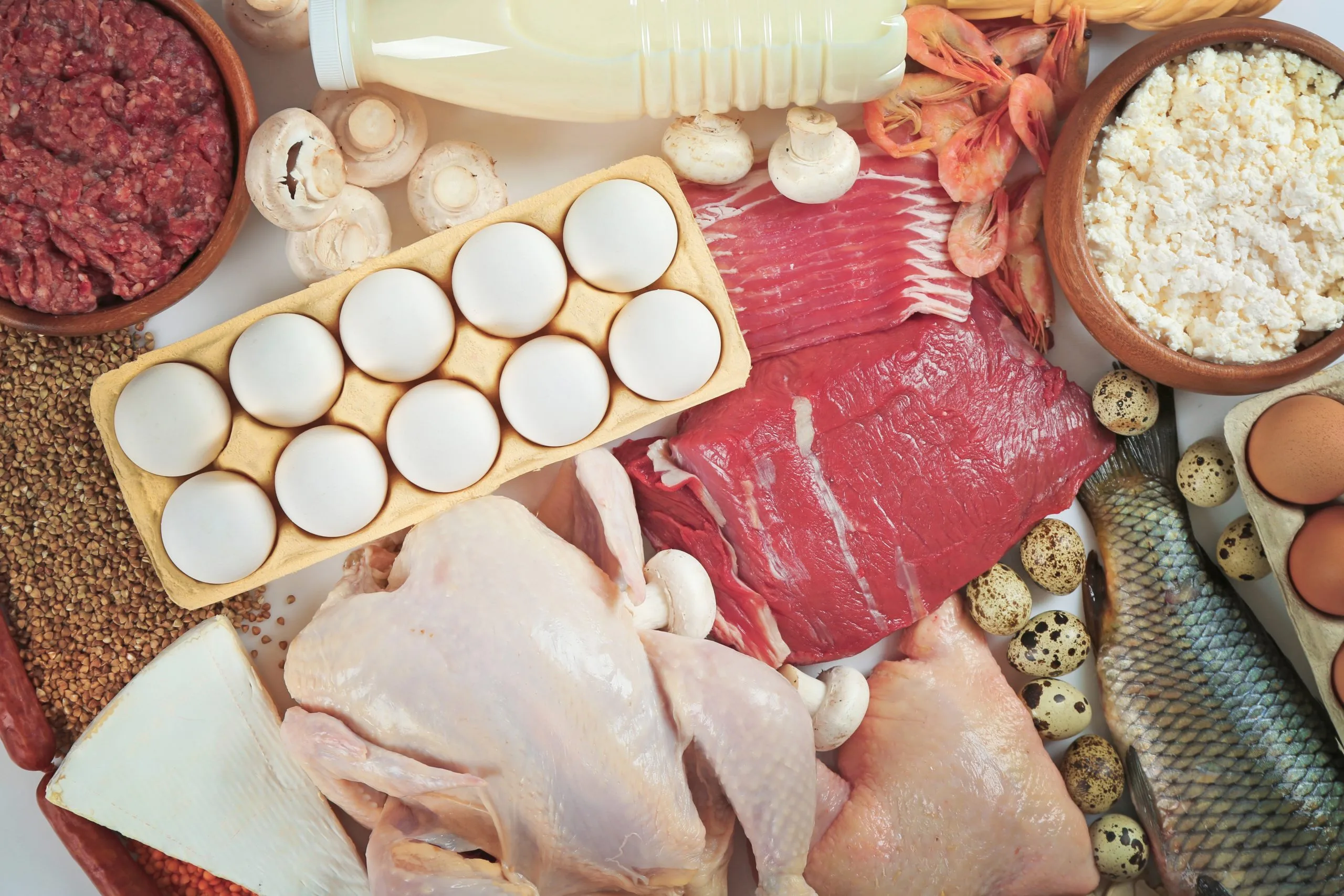
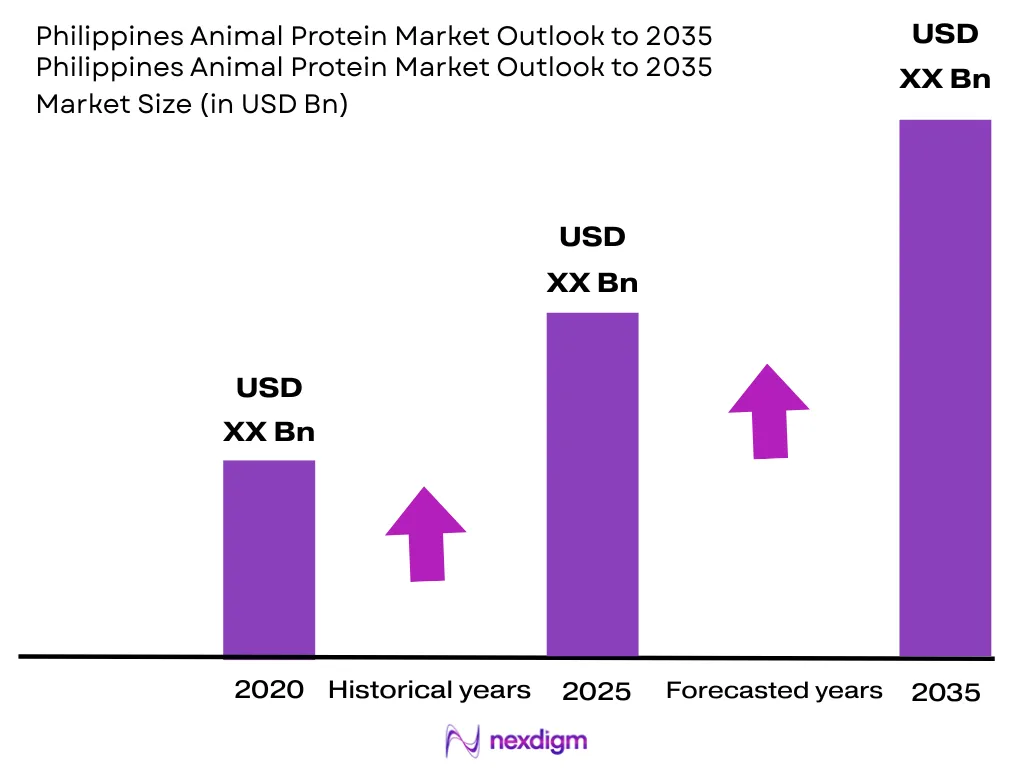
The Philippines Animal Protein Market was valued at USD ~ Billion in 2024, based on historical production, domestic consumption, exports, and processing revenues across pork, poultry, beef and carabeef, aquaculture and fish protein, and egg products. The Philippines produced approximately 6.8 million metric tons of meat and poultry during the latest reporting period, including approximately 2.3 million metric tons of pork, around 2 million metric tons of poultry meat, and approximately 270,000 metric tons of beef and carabeef, according to statistics published by the Philippine Statistics Authority (PSA), the Department of Agriculture (DA), and the Bureau of Animal Industry (BAI). The Philippines is also one of Southeast Asia’s largest aquaculture producers, with tilapia, milkfish (bangus), and shrimp representing significant contributors to the country’s overall animal protein supply, supported by the Bureau of Fisheries and Aquatic Resources (BFAR). The market continues to be driven by a population of approximately 117 million people with strong cultural attachment to pork as the dominant protein staple, rapid urbanisation, expanding modern retail and food delivery penetration, and an ongoing structural recovery of the domestic pork industry following the severe African Swine Fever (ASF) outbreak that significantly disrupted production from 2019 onward.
Market Segmentation
By Protein Type
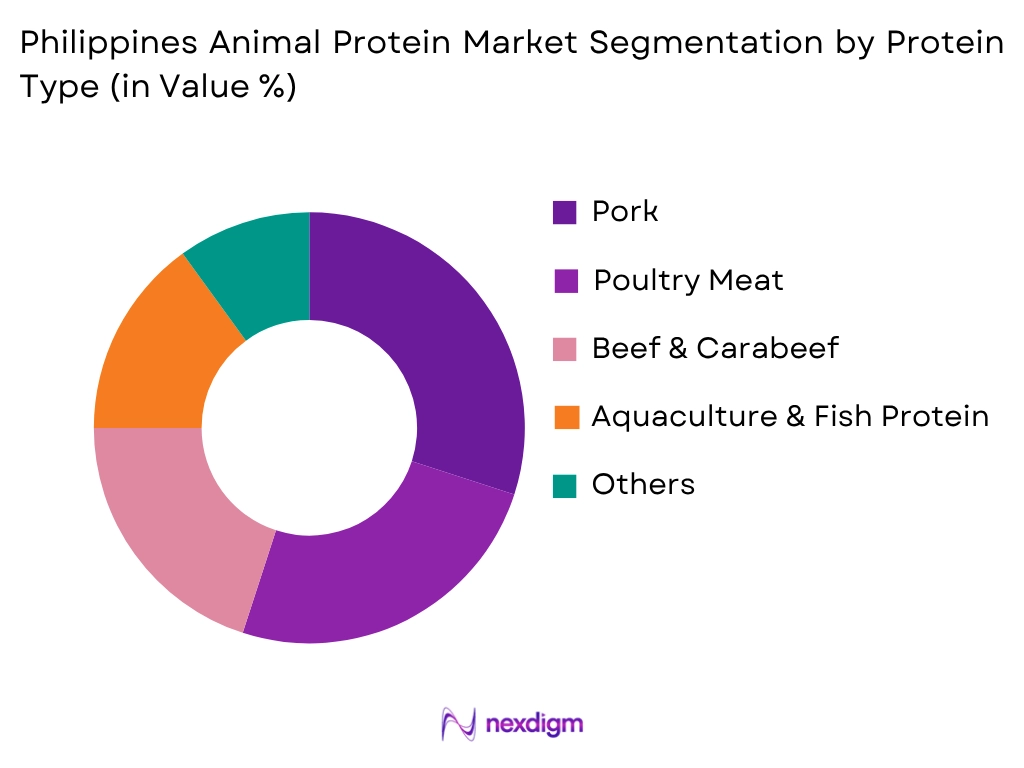
The Philippines Animal Protein Market is segmented by protein type into Pork, Poultry Meat, Beef & Carabeef, Aquaculture & Fish Protein (Tilapia, Milkfish/Bangus, Shrimp), Eggs, and Processed Animal Protein Products. Pork holds the most culturally significant position in the Philippine diet, forming the foundation of iconic national dishes including adobo, lechon, sisig, and crispy pata, and historically representing the largest protein category by both volume and value prior to the ASF outbreak. According to PSA, the Philippines is in a sustained recovery phase for hog production following the ASF epidemic, with the national hog inventory still working toward pre-ASF baseline levels through investment in biosecure commercial farming operations led by San Miguel Foods, Foodsphere, and other major integrators. Poultry meat has emerged as an increasingly important protein category, partially substituting for pork during the ASF disruption period and benefiting from the rapid expansion of vertically integrated operations including San Miguel Foods (Magnolia), Bounty Fresh Food, and Vitarich Corporation. The Philippines’ extensive aquaculture sector, supported by the country’s archipelagic geography spanning over 7,600 islands, makes tilapia and milkfish (bangus) dietary staples particularly in coastal and lakeside communities, while the country also maintains a globally significant shrimp export industry. Processed animal protein products — including the Philippines’ distinctively large canned meat, hotdog, and processed ham market led by brands such as CDO, Purefoods, and Swift — represent a substantial and culturally embedded segment of the overall market.
By Distribution Channel
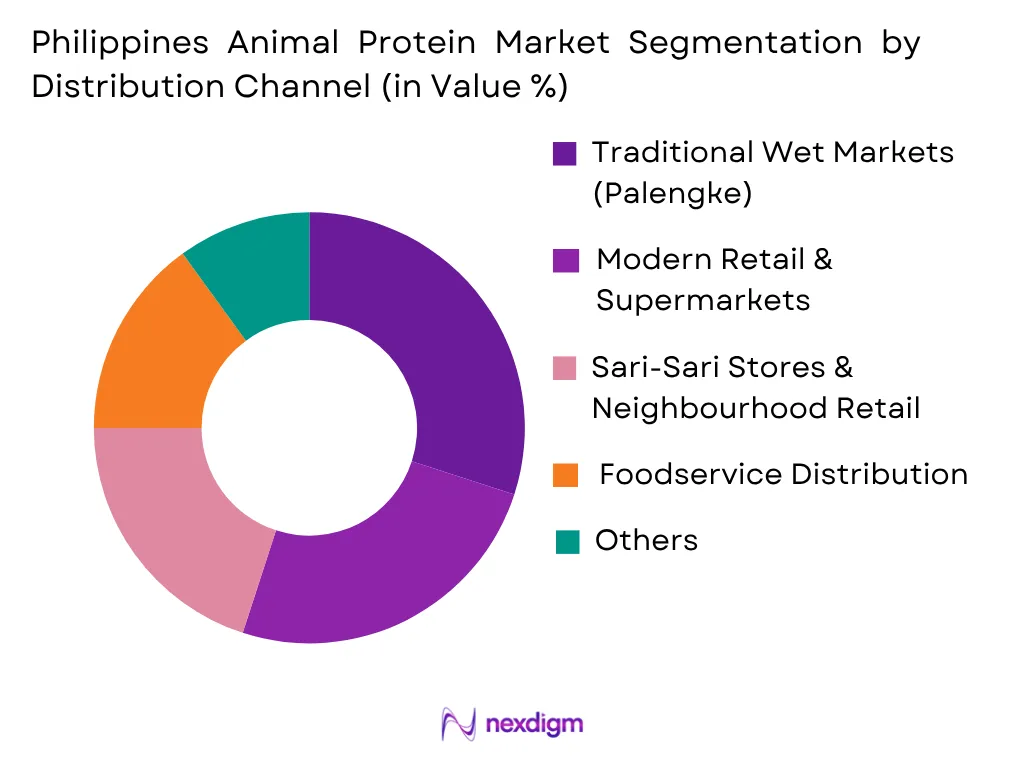
The Philippines Animal Protein Market is segmented by distribution channel into Wet Markets (Palengke), Modern Retail & Supermarkets, Sari-Sari Stores & Neighbourhood Retail, Wholesale Distributors, Foodservice Distribution, and Online Grocery & Direct-to-Consumer Platforms. Traditional wet markets, known locally as palengke, remain the dominant channel for fresh meat and poultry purchases across the Philippines, deeply embedded in Filipino shopping culture and offering consumers the ability to negotiate prices, select specific cuts, and purchase freshly slaughtered products. Modern retail and supermarkets — including SM Supermarket, Robinsons Supermarket, Puregold, and S&R Membership Shopping — are expanding their share of organised protein retail, particularly in Metro Manila and other major urban centres, offering hygienically packaged, NMIS-certified, and branded meat products with cold chain assurance. Sari-sari stores, the ubiquitous neighbourhood micro-retail outlets found throughout Philippine communities, play an important role in distributing processed and canned animal protein products, particularly canned meats, hotdogs, and instant noodles with meat flavouring, to lower-income and rural households. The foodservice sector, encompassing the Philippines’ extensive fast food and quick service restaurant industry led by Jollibee Foods Corporation and numerous international chains, generates substantial consistent demand for processed chicken, pork, and beef products. Online grocery and food delivery platforms including GrabFood, Foodpanda, and Lazada are experiencing rapid growth, particularly across Metro Manila and other highly urbanised regions.
Competitive Landscape
The Philippines Animal Protein Market is characterised by a dual-track competitive structure comprising large diversified conglomerates with vertically integrated poultry, pork, and processed meat operations, alongside a large fragmented base of backyard and smallholder hog and poultry raisers that continues to supply a meaningful share of total production. San Miguel Corporation, through its San Miguel Foods division, maintains the most extensive integrated presence spanning poultry (Magnolia), pork, and processed meats (Monterey), supported by the country’s largest feed milling operations. Other major integrators including Bounty Fresh Food, Vitarich Corporation, and Universal Robina Corporation’s agro-industrial division compete primarily in the poultry segment through vertically integrated breeding, feed, and processing operations. The processed and canned meat segment — a distinctively large category in Philippine food culture — is dominated by Foodsphere (CDO), Purefoods-Hormel, and Swift Foods (RFM Corporation), which compete through extensive sari-sari store and supermarket distribution networks. Following the ASF outbreak, competitive dynamics in the pork sector have shifted decisively toward larger commercial integrators with biosecure farming infrastructure, as smallholder backyard producers faced disproportionate production losses and have been slower to recover, accelerating industry consolidation.
| Company | Establishment Year | Headquarters | Primary Protein Focus | Processing Facilities
|
Export Presence | Production Integration | Sustainability Programs | Value-Added Product Portfolio |
| San Miguel Foods (San Miguel Corporation) | 1965 | ~ | ~ | ~ | ~ | ~ | ~ | ~ |
| Bounty Fresh Food (Robina Farms) | 1980 | ~ | ~ | ~ | ~ | ~ | ~ | ~ |
| Vitarich Corporation | 1980 | ~ | ~ | ~ | ~ | ~ | ~ | ~ |
| Foodsphere Inc. (CDO Foodsphere) | 1975 | ~ | ~ | ~ | ~ | ~ | ~ | ~ |
| Swift Foods Inc. (RFM Corporation) | 1957 | ~ | ~ | ~ | ~ | ~ | ~ | ~ |
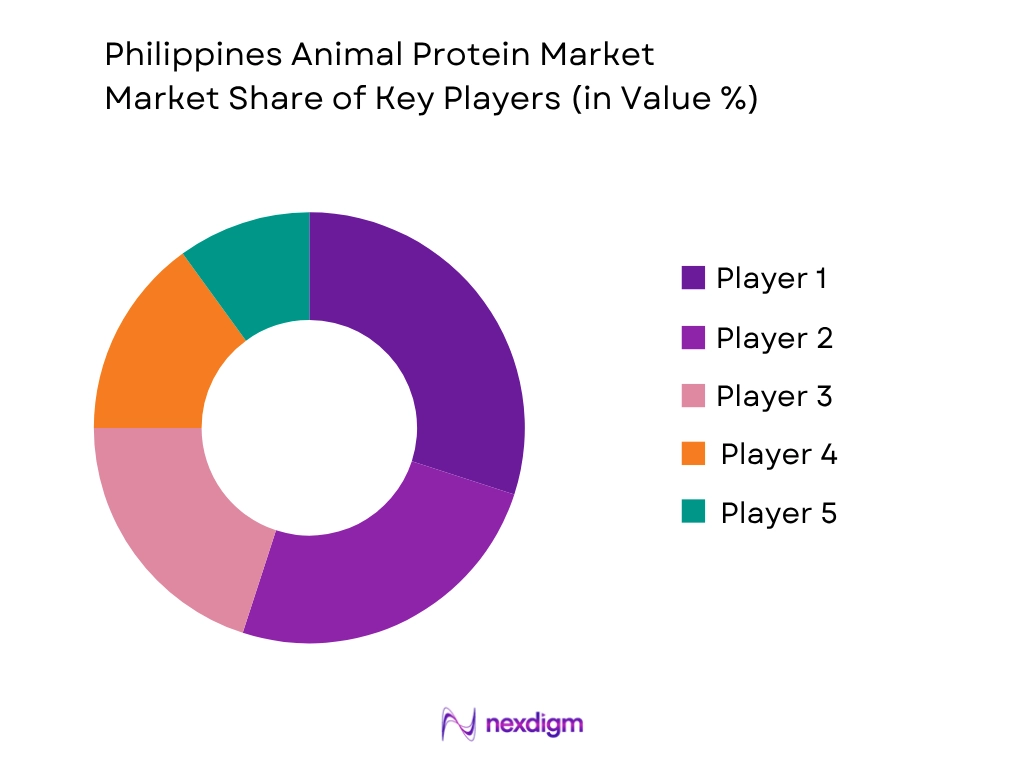
Philippines Animal Protein Market Analysis
Growth Drivers
Large and Young Population with Rising Urbanisation and Pork-Centric Dietary Culture
The Philippines’ population of approximately 117 million people, combined with one of Southeast Asia’s youngest demographic profiles and a rapidly urbanising society, continues to be the fundamental driver of animal protein demand growth. According to the Philippine Statistics Authority (PSA), the country’s median age remains below 26 years, with a substantial and growing working-age population driving household formation, rising disposable incomes, and expanding food consumption across all protein categories. The PSA reported that the Philippines’ urban population has grown steadily, with Metro Manila and other major urban centres such as Cebu and Davao experiencing significant population concentration that supports modern retail and foodservice expansion. Pork’s unmatched cultural centrality in Filipino cuisine — as the essential ingredient in adobo, lechon, sisig, sinigang, and countless regional dishes — ensures sustained baseline demand even amid periodic supply disruptions from disease outbreaks. The World Bank estimated the Philippines’ GDP at approximately USD 470 billion in 2024, with the IMF projecting continued robust economic growth driven by business process outsourcing (BPO) sector expansion, remittance inflows from approximately 10 million overseas Filipino workers (OFWs), and growing domestic consumption. These remittance flows — which the Bangko Sentral ng Pilipinas (BSP) reported exceeded USD 38 billion in 2024 — provide a significant and resilient source of household income supporting sustained food and protein expenditure across millions of Filipino families, even during periods of broader economic volatility.
Post-ASF Pork Industry Recovery and Expanding Commercial Poultry Integration
The Philippine animal protein sector is undergoing a significant structural transformation as the pork industry progressively recovers from the African Swine Fever (ASF) outbreak through accelerated investment in biosecure commercial farming, while the poultry sector continues to expand its vertically integrated production base. According to the Department of Agriculture (DA) and PSA, the ASF epidemic that began in 2019 resulted in significant culling and production losses across the national hog herd, prompting major integrators including San Miguel Foods, Foodsphere, and emerging commercial operators to invest substantially in biosecure, climate-controlled, and disease-resistant farming infrastructure to rebuild production capacity on a more resilient foundation. The DA’s National Livestock Program and hog repopulation initiatives have provided support for both commercial and smallholder farmers transitioning to improved biosecurity standards. Simultaneously, the poultry sector has benefited significantly from ASF-driven protein substitution, with San Miguel Foods (Magnolia), Bounty Fresh Food, and Vitarich Corporation expanding integrated breeding, feed milling, and processing capacity to meet growing chicken demand. According to PSA, Philippine poultry production has grown consistently over the past five years, reflecting both genuine demand growth and the structural shift in consumer protein-sourcing patterns following the pork supply disruption. This dual dynamic — pork industry consolidation toward biosecure commercial operations and continued poultry sector expansion — is expected to drive sustained market value growth and improved production resilience through the outlook period to 2035.
Market Challenges
African Swine Fever and Recurring Livestock Disease Vulnerability
The Philippine animal protein sector — and the pork industry in particular — remains acutely vulnerable to recurring livestock disease outbreaks that have caused severe and sustained production disruption over the past several years. According to the Department of Agriculture (DA) and the Bureau of Animal Industry (BAI), the African Swine Fever (ASF) outbreak that began in 2019 has continued to resurface periodically across different provinces and regions, with the disease proving exceptionally difficult to fully eradicate given the Philippines’ large population of smallholder and backyard hog raisers operating with limited biosecurity infrastructure. The PSA estimated that ASF-related production losses contributed to significant pork price inflation during peak disruption periods, prompting the government to implement temporary tariff reductions and expanded import quotas on pork to stabilise domestic supply and consumer prices — measures that created additional competitive pressure for domestic producers. Beyond ASF, the Philippine livestock and poultry sector also faces periodic risks from Highly Pathogenic Avian Influenza (HPAI) outbreaks affecting commercial and backyard poultry operations, as well as Foot-and-Mouth Disease (FMD) risks in cattle and carabao populations. The Bureau of Animal Industry continues to strengthen national disease surveillance, vaccination programs, and farm biosecurity certification standards, but the scale of the Philippines’ smallholder livestock base — particularly in pork production — makes comprehensive disease control an ongoing and resource-intensive challenge that continues to shape industry structure and competitive dynamics.
Typhoon and Climate Vulnerability, Feed Import Dependency, and Archipelagic Logistics Constraints
The Philippines’ unique archipelagic geography and exceptional exposure to tropical typhoons create distinctive structural challenges for the animal protein supply chain that are less pronounced in continental markets. According to the Philippine Atmospheric, Geophysical and Astronomical Services Administration (PAGASA), the Philippines experiences an average of 20 tropical cyclones annually, with severe typhoons periodically causing significant damage to poultry houses, aquaculture facilities, feed mills, and cold chain infrastructure, particularly across the typhoon-prone regions of Luzon and the Visayas. These recurring weather events create production volatility, infrastructure damage costs, and periodic localised supply disruptions that complicate national-scale production planning. Additionally, according to the DA, the Philippines imports the substantial majority of its corn and soybean meal feed ingredient requirements, making domestic poultry and pork production costs highly sensitive to global grain price fluctuations and foreign exchange movements, with feed typically accounting for 60–70% of total production costs in commercial poultry and hog operations. The country’s archipelagic structure spanning over 7,600 islands also creates significant inter-island logistics and cold chain infrastructure challenges, with many outer island provinces lacking adequate refrigerated transport and storage facilities, resulting in higher distribution costs, greater post-harvest losses, and persistent regional disparities in animal protein access and affordability between Metro Manila and more remote provincial markets.
Market Opportunities
Biosecure Commercial Pork Farm Investment and Branded Processed Meat Growth
The structural transformation of the Philippine pork industry toward biosecure commercial farming presents one of the most significant investment opportunities within the broader animal protein market. According to the Department of Agriculture and the Philippine Statistics Authority, the post-ASF industry recovery is creating sustained demand for biosecure farm infrastructure investment, disease-resistant genetics, and modern feed milling and processing capacity as both large integrators and rehabilitating smallholder farmers seek to rebuild production on more resilient foundations. The DA’s Bantay ASF sa Barangay program and National Livestock Program continue to provide technical and financial support for biosecurity upgrades, creating partnership opportunities for agri-tech companies, feed manufacturers, and veterinary pharmaceutical providers. Simultaneously, the Philippines’ distinctively large processed and canned meat market — encompassing one of the world’s most developed canned meat and hotdog consumption cultures — continues to offer substantial growth potential for branded value-added product development. Companies including Foodsphere (CDO), Purefoods-Hormel, and Swift Foods are well positioned to capture growing demand for convenient, affordable, and shelf-stable processed protein products, particularly given the Philippines’ extensive sari-sari store distribution network reaching even the most remote communities. Rising consumer interest in premium and health-conscious processed meat variants, including reduced-sodium and preservative-free product lines, presents additional differentiation opportunities for established processors.
Aquaculture Modernisation, Export Diversification, and Digital Food Retail Expansion
The Philippines’ extensive aquaculture sector presents significant opportunities for modernisation, productivity improvement, and export market diversification. According to the Bureau of Fisheries and Aquatic Resources (BFAR) and the Philippine Statistics Authority, the Philippines maintains one of Southeast Asia’s largest aquaculture industries, with tilapia and milkfish (bangus) production supporting both significant domestic consumption and growing export opportunities, while the shrimp sector continues to develop export capacity for premium international markets. The BFAR’s National Aquaculture Program and various government modernisation initiatives are supporting investment in improved fish seed quality, intensive pond and cage culture systems, and sustainable aquaculture certification adoption that could unlock greater export market access in the United States, European Union, Japan, and other premium seafood markets. Simultaneously, the rapid growth of digital food retail and delivery platforms — including GrabFood, Foodpanda, and various online grocery services — is creating new direct-to-consumer channels for fresh, frozen, and processed animal protein products, particularly across the Philippines’ highly digitally engaged and increasingly urban consumer base. Investment in cold chain logistics connecting production regions to these digital retail channels, combined with continued government support for agricultural modernisation under programs such as the Plant, Plant, Plant Program and various Department of Agriculture livestock development initiatives, is expected to create substantial growth opportunities across the value-added and digitally distributed segments of the Philippine animal protein market through 2035.
Future Outlook
The Philippines Animal Protein Market is expected to maintain steady long-term growth through 2035, supported by population expansion, sustained urbanisation, continued recovery and consolidation of the pork industry toward biosecure commercial operations, and ongoing expansion of vertically integrated poultry production. The processed and canned meat segment is anticipated to maintain its distinctive cultural significance and growth trajectory, supported by extensive sari-sari store and modern retail distribution networks. The aquaculture sector is expected to benefit from modernisation investment and export diversification efforts, while government programs supporting biosecurity, disease control, and farm modernisation are anticipated to progressively strengthen the resilience of the domestic livestock production base against future disease outbreaks and climate-related disruptions. Continued growth of digital food retail and delivery platforms, combined with rising urban consumer demand for branded and convenient protein products, are expected to further reshape distribution channel dynamics across the Philippine animal protein market through the outlook period.
Major Players
- San Miguel Foods (San Miguel Corporation)
- Bounty Fresh Food (Robina Farms)
- Vitarich Corporation
- Foodsphere Inc. (CDO Foodsphere)
- Swift Foods Inc. (RFM Corporation)
- Universal Robina Corporation (URC Agro-Industrial)
- Pilmico Foods Corporation (Aboitiz)
- Purefoods-Hormel Company
- Tyson Agro-Ventures Philippines
- Holiday Hills Stockfarm
- San Miguel Pure Foods Pork
- Splash Foods Corporation
- Charoen Pokphand Philippines (CP Foods PH)
- Philfoods Phil Marketing
- Century Pacific Food (Seafood Division)
Key Target Audience
- Animal Protein Producers and Meat Processing Companies
- Livestock Producers and Integrated Farming Companies
- Food Processing and Packaged Food Manufacturers
- Retail Chains, Wholesale Distributors and Foodservice Operators
- Exporters, Importers and International Trading Companies
- Investments and Venture Capitalist Firms
- Government and Regulatory Bodies (Department of Agriculture (DA), National Meat Inspection Service (NMIS), Bureau of Animal Industry (BAI), Bureau of Fisheries and Aquatic Resources (BFAR), Philippine Statistics Authority (PSA))
- Cold Chain Logistics, Storage and Distribution Companies
Research Methodology
Step 1: Identification of Key Variables
The research process begins by identifying the complete ecosystem of the Philippines Animal Protein Market, including livestock producers, feed suppliers, meat processors, aquaculture operators, distributors, exporters, retailers, and regulatory agencies. Extensive secondary research is conducted using government publications, trade associations, customs statistics, company reports, and proprietary industry databases. This stage helps determine the major variables influencing production, consumption, trade, pricing, and investment trends across the market.
Step 2: Market Analysis and Construction
Historical market information is compiled and analysed to estimate the overall market size using both top-down and bottom-up approaches. Production volumes, domestic consumption, processing revenues, import statistics, livestock inventories, slaughter volumes, aquaculture output, and pricing trends are evaluated to construct a comprehensive market model. Demand-side and supply-side assessments are performed to validate the consistency of market estimates across various industry participants.
Step 3: Hypothesis Validation and Expert Consultation
The preliminary market findings are validated through computer-assisted telephone interviews (CATIs) and structured discussions with executives from meat processing companies, livestock producers, aquaculture operators, distributors, industry associations, and regulatory authorities. These consultations provide valuable insights regarding production capacity, utilisation rates, investment priorities, pricing dynamics, and emerging market opportunities, ensuring that the assumptions used in the research accurately reflect current industry conditions.
Step 4: Research Synthesis and Final Output
The final stage integrates findings obtained from secondary research and primary interviews to develop a comprehensive market assessment. Market estimates are cross-verified using company financial reports, trade databases, production statistics, PSA agricultural data, and industry publications. The resulting analysis provides detailed insights into market size, competitive positioning, segmentation, growth drivers, challenges, future opportunities, and strategic recommendations for stakeholders operating within the Philippines Animal Protein Market.

- Executive Summary
- Research Methodology (Market Definitions and Assumptions, Abbreviations, Market Sizing Framework, Top-Down Analysis, Bottom-Up Analysis, Demand-Side Assessment, Supply-Side Assessment, Primary Industry Interviews, Trade Flow Validation, Data Triangulation, Forecasting Framework, Limitations and Future Conclusions)

- Definition and Scope
- Market Evolution and Industry Genesis
- Timeline of Major Industry Developments
- Philippines Animal Protein Industry Ecosystem
- Supply Chain Analysis

- Growth Drivers (Large and Young Population with Rising Urbanisation, Pork as Culturally Dominant Protein Staple, Expanding Commercial Poultry Sector Integration, Government Agricultural Modernisation Programs, Growing Modern Retail and Food Delivery Penetration, Aquaculture Export Competitiveness)
- Market Challenges (African Swine Fever and Recurring Livestock Disease Outbreaks, High Feed Import Dependency and Cost Volatility, Typhoon and Climate Vulnerability of Agricultural Production, Fragmented Backyard Farming Sector, Cold Chain Infrastructure Gaps in Outer Islands, Import Competition Under Trade Liberalisation)
- Market Opportunities (Pork Industry Recovery and Biosecure Farm Investment, Branded and Processed Meat Product Growth, Aquaculture Modernisation and Export Diversification, Digital Agriculture and Food Delivery Platform Expansion, Poultry Sector Vertical Integration Growth, Government Food Security and Farm Modernisation Investment)
- Market Trends (Post-ASF Biosecure Farming Adoption, Branded Packaged Meat Product Premiumisation, Online Meat and Grocery Delivery Growth, NMIS Food Safety Compliance Expansion, Modern Retail Penetration into Provincial Markets, Sustainable Aquaculture Certification Adoption)
- Government Regulations (National Meat Inspection Service (NMIS) Standards, Department of Agriculture (DA) Regulations, Bureau of Animal Industry (BAI) Livestock Health Oversight, Bureau of Fisheries and Aquatic Resources (BFAR) Aquaculture Regulations, Republic Act 10611 Food Safety Act, Republic Act 11321 Sagip Saka Act, Tariff Modification Orders on Meat Imports)
- Trade Policy Analysis (ASEAN Free Trade Area (AFTA) Benefits, Meat Import Tariff Quotas, Executive Order Tariff Reductions, Veterinary Health Certificate Requirements, Market Access Negotiations)
- Feed Industry Assessment (Corn and Soybean Meal Import Dependency, Feed Conversion Efficiency, Feed Cost Structure, Domestic Feed Milling Capacity)
- SWOT Analysis
- PESTLE Analysis
- Porter’s Five Forces Analysis
- Stakeholder Ecosystem
- Competition Ecosystem

- By Market Value (2020-2025)
- By Volume Consumption (2020-2025)
- By Average Selling Price (2020-2025)

- By Protein Type (In Value %)
Pork
Poultry Meat
Beef & Carabeef
Aquaculture & Fish Protein (Tilapia, Milkfish/Bangus, Shrimp)
Eggs
Processed Animal Protein Products - By Product Form (In Value %)
Fresh/Chilled
Frozen
Processed & Value-Added
Cooked & Ready-to-Eat
Marinated & Seasoned Products - By End User (In Value %)
Retail Consumers
Foodservice & HoReCa
Food Processing Industry
Institutional Buyers
Export Buyers - By Distribution Channel (In Value %)
Wet Markets (Palengke)
Modern Retail & Supermarkets
Sari-Sari Stores & Neighbourhood Retail
Wholesale Distributors
Foodservice Distribution
Online Grocery & Direct-to-Consumer Platforms - By Production System (In Value %)
Backyard & Smallholder Farming
Integrated Contract Farming
Commercial Industrial Farming
Aquaculture & Fish Pond Farming
Certified Organic & Free-Range Production - By Animal Protein Grade (In Value %)
Commodity Grade
Premium Grade
NMIS Certified (Inspected & Passed)
Halal Certified
Export Grade - By Region (In Value %)
National Capital Region (NCR)
Central Luzon
CALABARZON
Western Visayas
Central Visayas
Davao Region
Northern Mindanao
Other Regions

- Market Share of Major Players (By Value, Production Volume, Export Volume, Protein Category, Processing Capacity)
- Cross Comparison Parameters (Slaughter Capacity, Processing Capacity, Export Market Presence, Feed Integration Level, Cold Storage Capacity, Product Portfolio Diversity, Sustainability & Food Safety Certifications, Value-Added Product Portfolio)
- SWOT Analysis of Major Players
- Pricing Analysis (By Protein Category, Processing Level, Export vs Domestic Pricing)
- Detailed Profiles of Major Companies
San Miguel Foods (San Miguel Corporation)
Bounty Fresh Food (Robina Farms)
Vitarich Corporation
Foodsphere Inc. (CDO Foodsphere)
Swift Foods Inc. (RFM Corporation)
Universal Robina Corporation (URC Agro-Industrial)
Pilmico Foods Corporation (Aboitiz)
Purefoods-Hormel Company
Tyson Agro-Ventures Philippines
Holiday Hills Stockfarm
San Miguel Pure Foods Pork
Splash Foods Corporation
Charoen Pokphand Philippines (CP Foods PH)
Philfoods Phil Marketing
Century Pacific Food (Seafood Division)

- Consumption Pattern Assessment (Per Capita Meat Consumption, Protein Preference, Meal Frequency, Household Penetration)
- Demographic Demand Analysis (Income Group, Age Group, Urban-Rural Split, Regional Preferences)
- Household Expenditure Analysis
- Protein Affordability Assessment
- Fresh vs Frozen Product Preference

- By Market Value (2026-2035)
- By Volume Consumption (2026-2035)
- By Average Selling Price (2026-2035)


 Request a Sample
 Ask for Customization
 Get a Quote
 Enquire Now