
 Download PDF
Market Overview
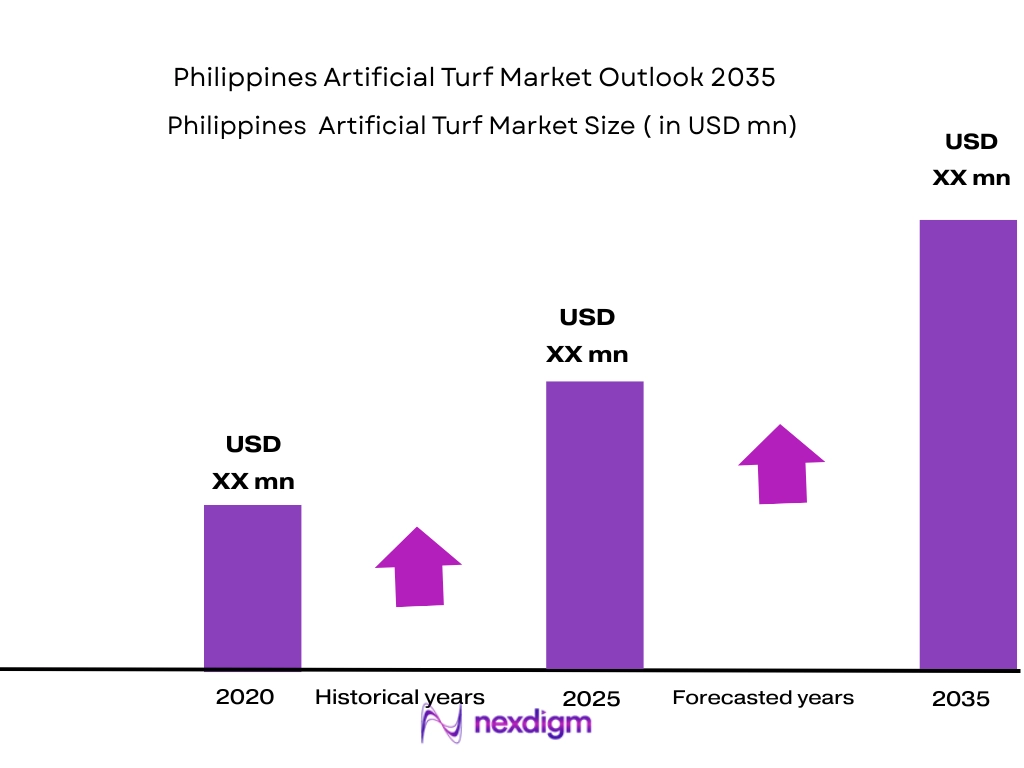
The Philippines Artificial Turf Market is valued at approximately USD ~ million, with growth driven by the expanding sports infrastructure and increasing preference for low-maintenance solutions in residential and commercial landscaping. The rising adoption of artificial turf in sports fields and public parks, along with government initiatives promoting eco-friendly urban development, has further accelerated the market’s growth. The demand for durable, all-weather surfaces in sports venues such as football and multi-purpose grounds is also a key factor contributing to the overall market size.
Major cities in the Philippines, including Manila, Cebu, and Davao, dominate the artificial turf market due to their ongoing urbanization and large-scale sports development projects. Manila, as the capital and a major economic hub, leads the demand for artificial turf in sports and recreation areas. Additionally, Davao and Cebu are increasingly adopting artificial turf for public spaces and commercial establishments, driven by the need for sustainable landscaping solutions that can withstand tropical weather conditions. These cities’ rapid infrastructure development and focus on environmental sustainability further boost market growth.
Market Segmentation
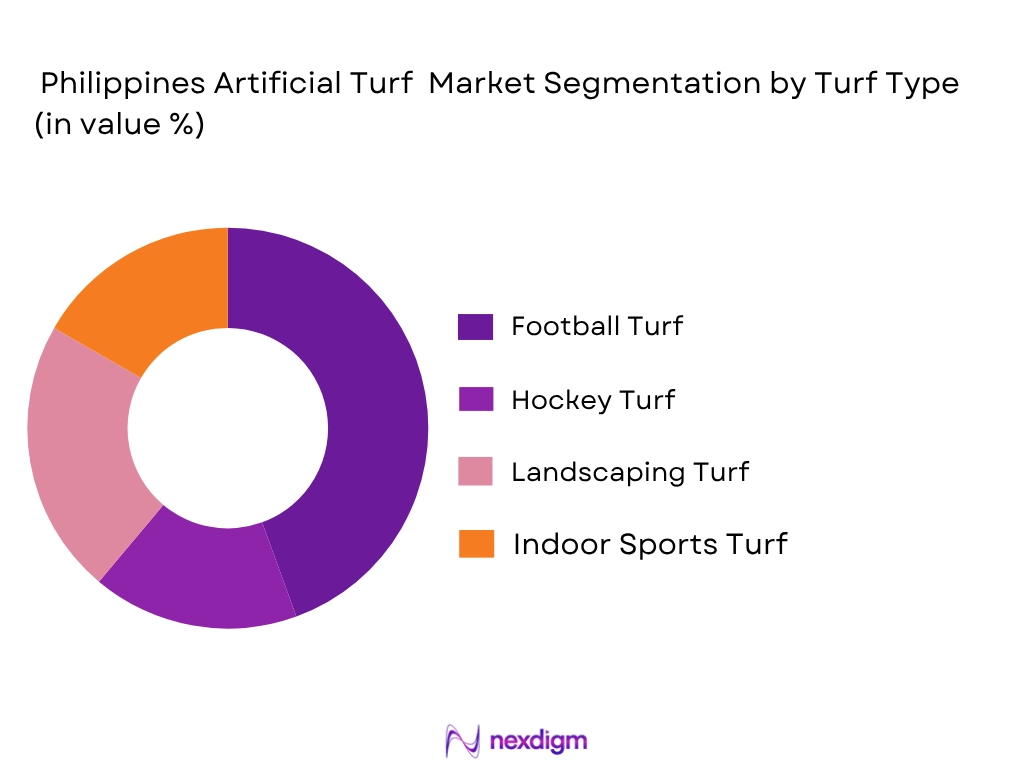
By Turf Type
The Philippines artificial turf market is segmented by turf type into football turf, hockey turf, landscaping turf, indoor sports turf, and others. Among these, football turf is the dominant sub-segment. This is primarily due to the growing interest in football as a sport and the increasing investment in football stadiums and sports complexes across the country. The high demand for durable and low-maintenance turf that can withstand intense usage has made football turf the preferred choice for both recreational and professional sports facilities. The popularity of football at the grassroots level, supported by government initiatives and private investments, has been a driving factor for the growth of football turf.
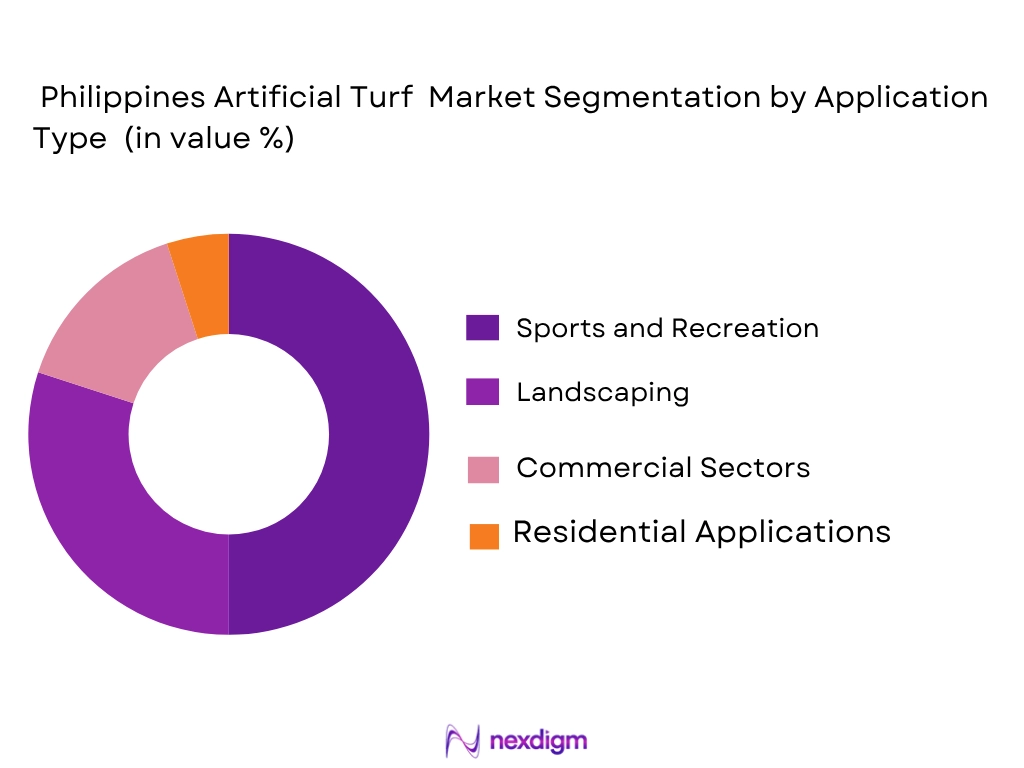
By Application
The market is also segmented by application into sports and recreation, landscaping and urban development, and commercial applications. Among these, the sports and recreation segment holds the largest share. This is attributed to the increasing use of artificial turf in sports fields, especially in football, rugby, and multi-purpose grounds, which require low maintenance and high durability. With the rising popularity of sports and recreational activities, both in urban and rural areas, artificial turf is the preferred choice for schools, stadiums, and public sports complexes. The sports sector is heavily investing in artificial turf due to its long lifespan, cost-effectiveness, and ability to withstand harsh weather conditions.
Competitive Landscape
The Philippines artificial turf market is highly competitive, with several key players contributing to the market’s growth. The market is dominated by local and international manufacturers, with companies like FieldTurf, Astroturf, and GreenFields leading the charge. These players are known for their innovation, quality standards, and extensive distribution networks, making them key contributors to the market’s expansion. The market consolidation is also visible through strategic partnerships and investments aimed at expanding production capabilities and regional market reach.
| Company Name | Establishment Year | Headquarters | Product Portfolio | Market Strategy | Key Markets | Revenue (2024) |
| FieldTurf | 1988 | USA | ~ | ~ | ~ | ~ |
| Astroturf | 1965 | USA | ~ | ~ | ~ | ~ |
| GreenFields | 2003 | Netherlands | ~ | ~ | ~ | ~ |
| SIS Pitches | 2004 | UK | ~ | ~ | ~ | ~ |
| Shaw Sports Turf | 1990 | USA | ~ | ~ | ~ | ~ |
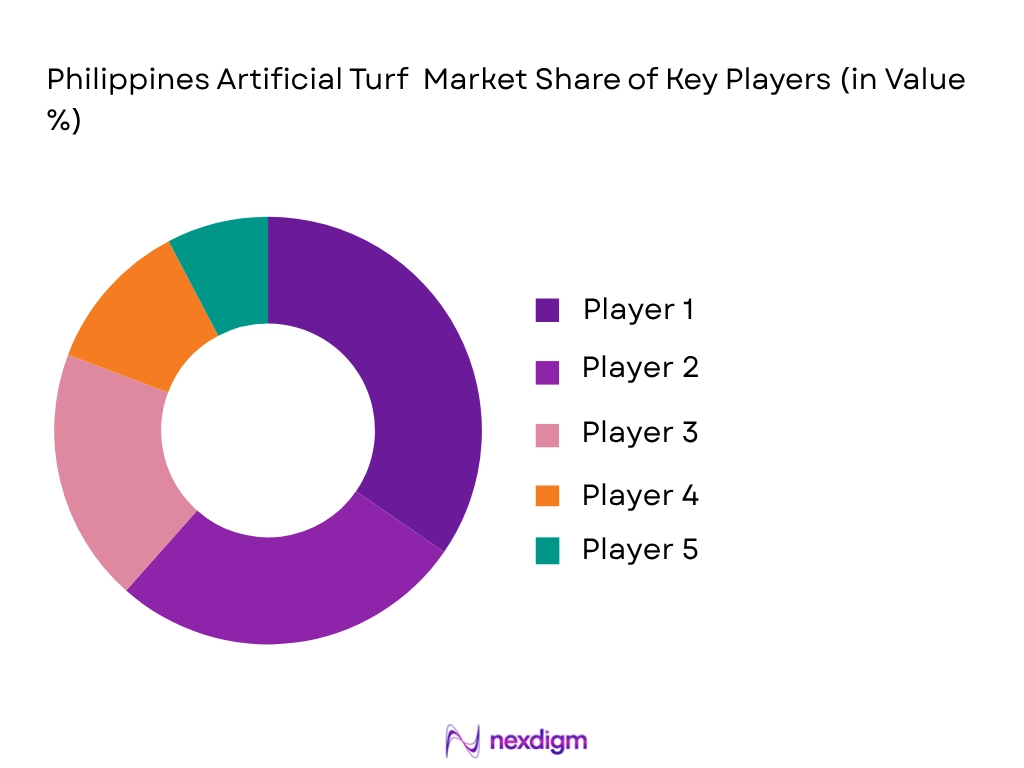
Philippines Artificial Turf Market Analysis
Growth Drivers
Government Initiatives Supporting Artificial Turf Adoption in Sports and Urban Areas
The Philippine government has been proactive in promoting sustainable urban development, including the adoption of artificial turf in public spaces and sports facilities. Government programs aim to reduce maintenance costs and enhance the durability of public sports fields. These initiatives have been especially prevalent in major cities like Manila and Cebu, where the demand for low-maintenance yet high-performance sports surfaces is increasing. Local authorities are also focusing on the environmental advantages of artificial turf, such as water conservation and reduced chemical use, which are driving more investments in artificial turf systems. These government efforts, aligned with national infrastructure development, provide a solid foundation for artificial turf growth, making it a preferred choice for both recreational and professional sports venues.
Increasing Demand for Low-Maintenance Landscaping Solutions
In recent years, there has been a marked shift in the Philippines towards low-maintenance landscaping solutions, with artificial turf becoming a top choice. The harsh tropical climate in many regions, characterized by heavy rainfall and high temperatures, makes maintaining natural grass lawns a challenge. Artificial turf offers an attractive alternative due to its durability, ability to withstand various weather conditions, and minimal upkeep requirements. Homeowners, commercial spaces, and urban developers are increasingly adopting artificial turf to reduce maintenance costs while achieving aesthetically pleasing landscapes. This shift is further bolstered by growing awareness of the environmental benefits of synthetic turf, such as water conservation and the reduction of pesticide usage, making it a viable and sustainable option for many projects.
Market Challenges
High Initial Cost and Installation Expenses
One of the primary challenges hindering the widespread adoption of artificial turf in the Philippines is the high initial investment required for both purchase and installation. Although artificial turf offers long-term savings due to its low maintenance, the upfront costs can be significant compared to traditional grass. This high expense, which includes site preparation, turf material, and professional installation, is often seen as a barrier, especially for smaller projects or budget-conscious homeowners. Additionally, the complexity of installation can drive up costs further. Despite the long-term cost benefits, the initial financial hurdle remains a key challenge, particularly in a market that is still in the early stages of widespread artificial turf adoption.
Limited Awareness About Artificial Turf’s Long-Term Benefits
Despite the increasing use of artificial turf in various applications, there remains a significant gap in awareness regarding its long-term benefits in the Philippines. Many property owners and sports facility managers are still hesitant to invest in artificial turf due to misconceptions about its durability and environmental impact. Some still consider synthetic turf to be inferior to natural grass in terms of performance and environmental friendliness. This lack of awareness hampers the market’s growth, as potential customers may not fully understand the value of investing in artificial turf, such as reduced water usage, lower maintenance costs, and long lifespan. Educational campaigns and outreach initiatives are crucial to addressing these misconceptions and driving further adoption.
Opportunities
Technological Advancements in Artificial Turf Manufacturing
The Philippines artificial turf market is positioned for growth as technological advancements in manufacturing continue to improve the quality, durability, and environmental sustainability of synthetic turf products. Innovations such as enhanced UV resistance, advanced drainage systems, and environmentally friendly materials are making artificial turf more durable, safer, and eco-friendly. Furthermore, manufacturers are increasingly focusing on creating turf that mimics the look and feel of natural grass, making it more appealing for both sports fields and residential landscaping. These technological developments offer significant opportunities for market growth, as they make artificial turf a more attractive and versatile option for a wider range of applications, from sports venues to private gardens.
Rising Interest in Sustainable and Green Building Practices
As sustainability becomes a key focus in urban development, there is a growing interest in incorporating green building practices, which includes the use of artificial turf in residential, commercial, and recreational projects. This shift is driven by the increasing awareness of environmental issues such as water conservation and the need for eco-friendly landscaping solutions. Artificial turf requires significantly less water than natural grass, making it an ideal choice for cities facing water shortages or areas where water conservation is a priority. The integration of artificial turf in green building projects, particularly in urban landscapes and eco-friendly developments, presents a strong opportunity for the market, as it aligns with the global trend toward sustainable construction and urban planning.
Future Outlook
Over the next 5 years, the Philippines artificial turf market is expected to witness substantial growth driven by continuous urbanization, increasing government support for eco-friendly urban projects, and the expansion of sports facilities across the country. The growing demand for low-maintenance landscaping solutions and high-performance turf for sports fields is anticipated to further fuel market growth. Additionally, advancements in turf technology, such as improved durability and sustainability, will likely enhance the adoption of artificial turf in various sectors.
Major Players
- FieldTurf
- Astroturf
- GreenFields
- SIS Pitches
- Shaw Sports Turf
- SportGroup
- Royal Grass
- Turf Solutions
- ACT Global Sports
- Polytan
- Hellas Construction
- Beaulieu International Group
- Madex International
- NanoSynthetics
- Brock International
Key Target Audience
- Investments and Venture Capitalist Firms
- Government and Regulatory Bodies
- Sports Infrastructure Developers
- Sports Facilities Managers
- Commercial Real Estate Developers
- Urban Planning Agencies
- Landscaping Service Providers
- Major Retailers in the Sports and Recreation Sector
Research Methodology
Step 1: Identification of Key Variables
In the initial phase, the key variables affecting the Philippines Artificial Turf Market are identified through comprehensive desk research and consultations with industry experts. This involves defining stakeholders and collecting secondary data from reputable sources to outline the key factors influencing the market.
Step 2: Market Analysis and Construction
This phase focuses on evaluating historical data of the artificial turf market in the Philippines, including market penetration, growth trends, and revenue generation. Market dynamics, such as supply chain analysis and consumer behavior, are also studied to construct a solid market model.
Step 3: Hypothesis Validation and Expert Consultation
To refine the hypotheses about market growth, experts and industry practitioners are consulted through structured interviews. These consultations help verify the data gathered, providing insights into product trends, consumer needs, and other vital factors.
Step 4: Research Synthesis and Final Output
The final stage involves synthesizing all findings from data collection, analysis, and expert insights. The results are reviewed and validated by interacting directly with industry stakeholders to confirm the conclusions, ensuring the final report is comprehensive and accurate.

- Executive Summary
- Research Methodology (Market Definitions and Assumptions, Abbreviations, Market Sizing Approach, Consolidated Research Approach, Understanding Market Potential Through In-Depth Industry Interviews, Primary Research Approach, Limitations and Future Conclusions)

- Definition and Scope
- Market Dynamics Overview
- Market Genesis
- Major Players and Market Timeline
- Business Cycle and Trends
- Supply Chain and Value Chain Analysis

- Growth Drivers
Government Initiatives Supporting Artificial Turf Adoption in Sports and Urban Areas
Increasing Demand for Low-Maintenance Landscaping Solutions
Growth of Sports Infrastructure Projects in the Philippines
Environmental Benefits of Artificial Turf Over Natural Grass
Expansion of Artificial Turf Applications in Residential Areas - Market Challenges
High Initial Cost and Installation Expenses
Limited Awareness About Artificial Turf’s Long-Term Benefits
Regulatory Issues Related to Environmental Impact
Competition with Natural Turf and Other Surface Alternatives Durability Concerns in Tropical Climate - Opportunities
Technological Advancements in Artificial Turf Manufacturing
Rising Interest in Sustainable and Green Building Practices
Expansion of Artificial Turf in Non-Sports Applications
Growth of Sports and Leisure Facilities in Underdeveloped Areas - Trends
Increase in Artificial Turf Adoption for Multi-Sport Grounds
Focus on Eco-Friendly and Sustainable Turf Solutions
Rising Popularity of Artificial Turf in Residential Landscaping
Integration of Smart Technologies for Turf Management
Advances in Turf Durability and Performance in High-Traffic Areas - Government Regulations
Product Quality Standards and Certification for Artificial Turf
Safety Standards for Sports and Recreational Turf Installations
Environmental Guidelines for Turf Disposal and Recycling
Building Codes and Regulations Related to Turf Use in Commercial Projects
Policies Supporting Green Infrastructure and Sustainable Development - SWOT Analysis
- Porter’s Five Forces Analysis

- By Value, 2020-2025
- By Volume, 2020-2025
- By Average Price, 2020-2025

- By Turf Type (In Value %)
Football Turf
Hockey Turf
Landscaping Turf
Indoor Sports Turf
- By Application (In Value %)
Sports and Recreation
Landscaping
Commercial Sectors
Residential Applications - By Distribution Channel (In Value %)
Direct Sales
Online Platforms
Specialized Installers and Retailers
Construction and Infrastructure Partners
Others - By Price Tier (In Value %)
Economy / Entry-Level
Mid-Tier
Premium / High-End

- Market Share of Major Players by Value/Volume
- Market Share of Major Players by Turf Type
- Market Share of Major Players by Distribution Channel
- Cross Comparison Parameters(Company Overview, Business Strategies, Recent Developments, Strengths, Weaknesses, Organizational Structure, Revenues, Revenues by Turf Type, Number of Retail Outlets, Distribution Channels, Margins, Production Capabilities, Unique Value Offering)
- SWOT Analysis of Major Players
- Pricing Analysis Based on Turf Categories for Major Players
- Detailed Profiles of Major Companies
FieldTurf
SIS Pitches
AstroTurf
GreenFields
Shaw Sports Turf
Hellas Construction
Royal Grass
SportGroup
BlazeSports
Other Key Player

- Market Demand and Utilization
- Purchasing Power and Budget Allocations
- Regulatory and Compliance Requirements
- Needs, Desires, and Pain Point Analysis
- Decision-Making Process

- By Value, 2026-2035
- By Volume, 2026-2035
- By Average Price, 2026-2035


 Request a Sample
 Ask for Customization
 Get a Quote
 Enquire Now