
 Download PDF
Market Overview
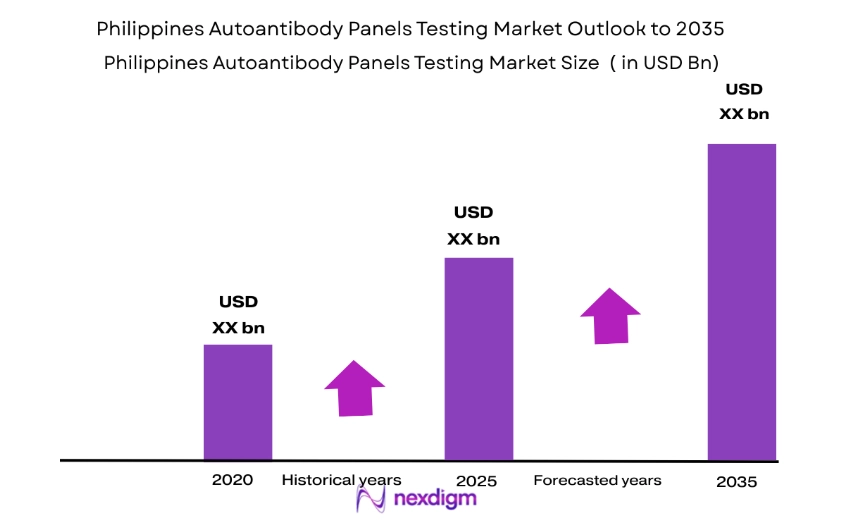
The Philippines autoantibody panels market is expected to experience significant growth due to the increasing prevalence of autoimmune diseases in the country. With rising healthcare demands and technological advancements in diagnostic tools, the market is positioned to expand rapidly. The adoption of autoantibody panels in clinical laboratories, hospitals, and diagnostic centers is being driven by their ability to provide early detection and personalized treatment for autoimmune disorders, enhancing patient outcomes. Based on a recent historical assessment, the market size for autoantibody panels is projected to be valued at USD ~ million, highlighting the growing adoption of these diagnostic tools.
The dominant players in the Philippines market include urban centers such as Metro Manila, Cebu, and Davao, where healthcare infrastructure and investment are concentrated. These regions benefit from a higher density of healthcare facilities, advanced diagnostic technology adoption, and government support for healthcare reforms. Metro Manila, in particular, continues to lead due to its well-established medical infrastructure and access to global healthcare innovations, while Cebu and Davao are catching up with increasing demand for diagnostic services. The Philippines’ growing urbanization, along with improved healthcare accessibility, is positioning these regions as key drivers for the market’s growth.
Market Segmentation
By Product Type:
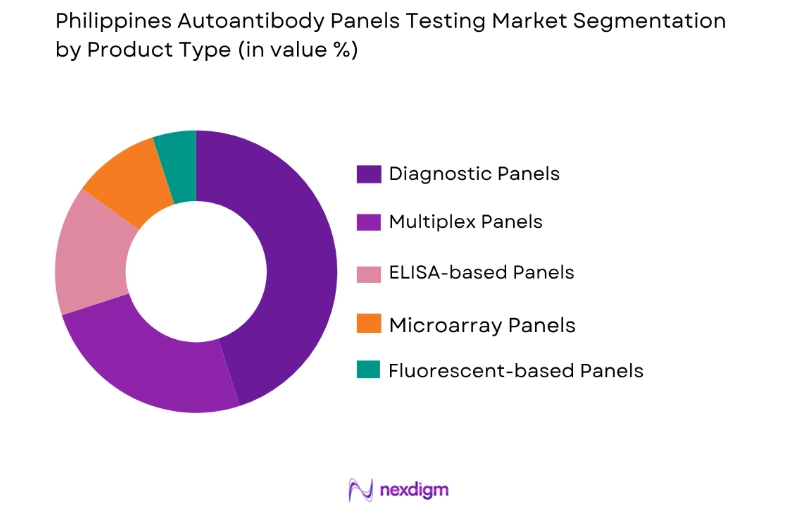
The Philippines autoantibody panels market is segmented by product type into diagnostic panels, multiplex panels, ELISA-based panels, microarray panels, and fluorescent-based panels. Recently, diagnostic panels have captured the dominant market share due to their widespread usage and cost-effectiveness in detecting autoimmune diseases such as rheumatoid arthritis and lupus. Their reliability, coupled with established infrastructure in hospitals and clinics, has made them a preferred choice for practitioners. Furthermore, the ease of use and cost-efficient nature of diagnostic panels make them accessible to a larger patient demographic, bolstering their demand across public and private healthcare sectors.
By End-User Segment:
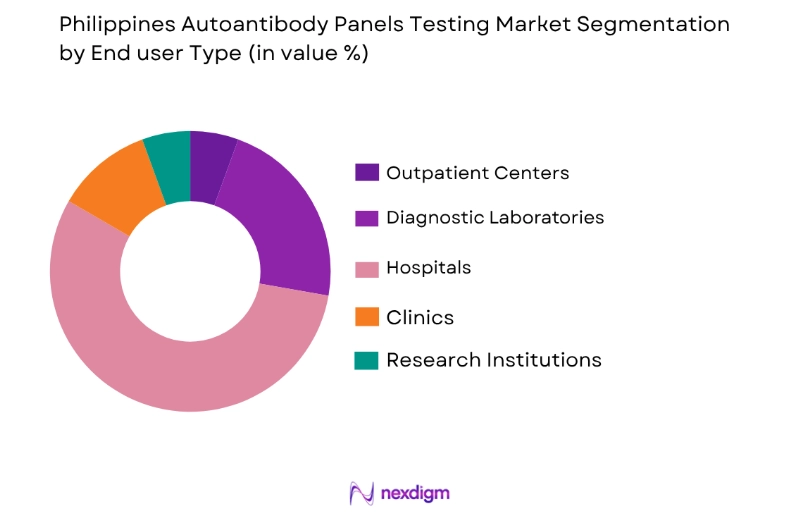
The market is segmented by end-user into hospitals, diagnostic laboratories, research institutions, clinics, and outpatient centers. Recently, hospitals have dominated the market share due to the growing demand for comprehensive diagnostic services within a centralized healthcare setting. Hospitals are equipped with advanced diagnostic technologies and cater to a wide range of patients, making them a primary source of revenue for autoantibody panel manufacturers. The increasing investment in healthcare infrastructure and government initiatives for enhancing hospital facilities have further bolstered the dominance of hospitals in the market.
Competitive Landscape
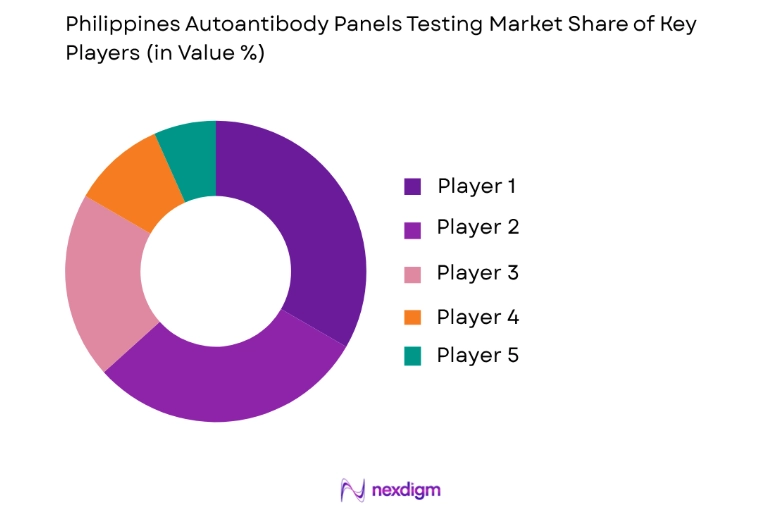
The competitive landscape of the autoantibody panels market in the Philippines is marked by the presence of both international and local players who are focusing on product innovation, strategic partnerships, and distribution expansion. The market is moderately fragmented with companies consolidating through mergers, acquisitions, and partnerships. Key players are working towards enhancing their market presence by improving the accuracy, speed, and cost-efficiency of their diagnostic solutions, positioning themselves as leaders in the growing demand for autoimmune disease testing.
| Company Name | Establishment Year | Headquarters | Technology Focus | Market Reach | Key Products | Revenue (USD million) | Market-Specific Parameter |
| Roche Diagnostics | 1896 | Basel, Switzerland | ~ | ~ | ~ | ~ | ~ |
| Thermo Fisher Scientific | 1956 | Waltham, USA | ~ | ~ | ~ | ~ | ~ |
| Siemens Healthineers | 1847 | Erlangen, Germany | ~ | ~ | ~ | ~ | ~ |
| Abbott Laboratories | 1888 | Abbott Park, USA | ~ | ~ | ~ | ~ | ~ |
| Bio-Rad Laboratories | 1952 | Hercules, USA | ~ | ~ | ~ | ~ | ~ |
Philippines Autoantibody Panels Market Analysis
Growth Drivers
Increased Prevalence of Autoimmune Diseases:
The Philippines is witnessing an alarming rise in autoimmune diseases due to factors like urbanization, changes in diet, and genetic predispositions. This surge in cases has significantly increased the demand for advanced diagnostic tools like autoantibody panels. The Philippines’ healthcare system is striving to meet this growing demand by integrating these panels into diagnostic practices for more accurate and timely diagnoses. As healthcare professionals and institutions increasingly rely on autoimmune disorder tests, it provides opportunities for market players to introduce more effective solutions tailored to regional healthcare needs. With a greater understanding of autoimmune conditions and their early signs, there is a heightened urgency in using these panels for early diagnosis, which in turn accelerates their demand in hospitals and clinics. Furthermore, improved awareness and advocacy by the government and healthcare organizations about autoimmune diseases have driven awareness, contributing to the adoption of autoantibody tests as part of routine diagnostics.
Technological Advancements in Diagnostic Tools:
With advances in immunology, laboratory technology, and biotechnology, autoantibody panels have become more efficient, precise, and user-friendly. Innovations such as multiplex testing panels, ELISA-based platforms, and microarray technologies are enhancing the accuracy and speed of diagnosis. These innovations have made it easier to test for a wide variety of autoimmune diseases simultaneously, which has proven crucial for both clinicians and patients. Enhanced technology also allows for better detection sensitivity and earlier detection of conditions like lupus, rheumatoid arthritis, and multiple sclerosis, leading to better patient outcomes. As technology improves, the integration of artificial intelligence (AI) and automation in diagnostic platforms is expected to further increase the demand for these tests, making them a staple in clinical laboratories and research institutions across the country.
Market Challenges
High Cost of Autoantibody Panels:
One of the key challenges hindering the growth of the autoantibody panels market in the Philippines is the relatively high cost associated with these diagnostic tests. The expense of advanced testing panels, particularly multiplex and microarray panels, often limits their adoption in lower-tier healthcare facilities, especially in rural or less-developed areas. While hospitals and large diagnostic laboratories can afford to integrate these advanced diagnostic tools, smaller clinics and outpatient centers may not be able to keep up with the technological demands. This cost barrier leads to unequal access to healthcare services across different demographic groups. Moreover, the lack of insurance coverage for these tests exacerbates the problem, with patients having to bear out-of-pocket costs, further reducing the willingness to adopt these testing solutions on a wide scale.
Limited Healthcare Infrastructure in Rural Areas:
Another challenge facing the market is the limited healthcare infrastructure in rural and remote regions of the Philippines. While urban areas like Metro Manila and Cebu are well-equipped with modern healthcare facilities, many provinces struggle with inadequate access to advanced diagnostic tools. In these areas, healthcare facilities may not have the necessary resources to purchase or maintain sophisticated diagnostic panels, limiting their availability to the rural population. Additionally, the lack of trained personnel in these areas hampers the effective use of autoantibody panels, as proper handling and interpretation of results require highly skilled professionals. Without infrastructure improvements, the market may face difficulties in achieving widespread adoption of these technologies.
Opportunities
Expanding Demand for Personalized Medicine:
As personalized medicine becomes more prevalent in the Philippines, there is a growing opportunity for the autoantibody panels market. Personalized medicine focuses on tailoring treatments based on individual genetic and molecular profiles, which relies heavily on accurate diagnostic tests. Autoantibody panels play a critical role in this approach by helping physicians identify specific markers in patients that predict the progression of autoimmune diseases. With personalized treatment becoming more recognized and adopted in the healthcare system, the demand for autoantibody panels is set to increase. This shift is supported by technological innovations in diagnostic testing, enabling more precise identification of disease markers. The expanding trend of precision medicine creates new avenues for the autoantibody panels market to integrate with genomic medicine and patient-specific therapeutic approaches.
Government Initiatives to Improve Healthcare Access:
The Philippines government is making concerted efforts to improve the healthcare system, particularly in rural and underserved regions. Various initiatives, such as the Universal Health Care Act, aim to expand healthcare access and affordability for all citizens, which is likely to drive the demand for advanced diagnostic tools, including autoantibody panels. The government’s investment in public health initiatives and the upgrade of healthcare infrastructure is expected to foster an environment that supports the wider adoption of these diagnostic technologies. Additionally, the introduction of policies that incentivize the use of modern diagnostic equipment in hospitals and clinics will further stimulate growth in the market for autoantibody panels. The government’s efforts to address gaps in healthcare coverage and improve diagnostics provide a significant opportunity for manufacturers to expand their product offerings in the Philippines.
Future Outlook
The future outlook for the autoantibody panels market in the Philippines is positive, with continued growth driven by technological advancements and increasing healthcare demand. Over the next five years, the market is expected to experience robust expansion as healthcare access improves, particularly in rural regions, supported by government policies. Technological innovations will make diagnostic tools more affordable and efficient, further driving adoption. With the rising burden of autoimmune diseases and a shift toward personalized medicine, autoantibody panels will become an integral part of the diagnostic process in the Philippines.
Major Players
- Roche Diagnostics
- ThermoFisher Scientific
- Siemens Healthineers
- Abbott Laboratories
- Bio-Rad Laboratories
- Danaher Corporation
- PerkinElmer
- Sysmex Corporation
- Ortho Clinical Diagnostics
- Beckman Coulter
- Horiba Medical
- Medtronic
- Hologic
- Fujifilm Corporation
- Johnson & Johnson
Key Target Audience
- Investments and venture capitalist firms
- Government and regulatory bodies
- Hospitals and healthcare providers
- Diagnostic laboratories
- Biotechnology companies
- Pharmaceutical companies
- Healthcare equipment distributors
- Health insurance companies
Research Methodology
Step 1: Identification of Key Variables
This step involves identifying and defining the key market variables, such as market size, growth drivers, trends, and challenges, which will form the foundation of the research.
Step 2: Market Analysis and Construction
Data from primary and secondary sources is collected and analyzed to build a comprehensive market model, including segmentation and geographic analysis.
Step 3: Hypothesis Validation and Expert Consultation
Hypotheses are validated through consultations with industry experts, healthcare professionals, and regulatory bodies to ensure the reliability of the findings.
Step 4: Research Synthesis and Final Output
The synthesized research findings are compiled into a final report that includes in-depth analysis, actionable insights, and market forecasts.

- Executive Summary
- Research Methodology (Definitions, Scope, Industry Assumptions, Market Sizing Approach, Primary & Secondary Research Framework, Data Collection & Verification Protocol, Analytic Models & Forecast Methodology, Limitations & Research Validity Checks)

- Market Definition and Scope
- Value Chain & Stakeholder Ecosystem
- Regulatory / Certification Landscape
- Sector Dynamics Affecting Demand

- Growth Drivers
Rising Prevalence of Autoimmune Diseases
Increased Healthcare Spending and Infrastructure Development
Technological Advancements in Autoantibody Testing - Market Challenges
Lack of Skilled Personnel in Diagnostic Laboratories
High Cost of Advanced Autoantibody Panels
Regulatory and Certification Barriers for New Products - Market Opportunities
Expanding Demand for Personalized Medicine
Growth of the Aging Population
Collaborations Between Diagnostic Companies and Research Institutions - Trends
Increasing Adoption of Multiplex Testing Panels
Integration of Artificial Intelligence in Diagnostics
Growth in Point-of-Care Testing Solutions - Government Regulations
- SWOT Analysis of Key Competitors

- By Market Value, 2020-2025
- By Installed Units, 2020-2025
- By Average System Price, 2020-2025
- By System Complexity Tier, 2020-2025

- By System Type (In Value%)
Diagnostic Panels
Multiplex Panels
ELISA-based Panels
Microarray Panels
Fluorescent-based Panels - By Platform Type (In Value%)
Automated Platforms
Manual Platforms
Point-of-Care Platforms
Centralized Laboratory Platforms
Research Platforms - By Fitment Type (In Value%)
On-premise Solutions
Cloud-based Solutions
Hybrid Solutions
Integrated Solutions
Modular Solutions - By EndUser Segment (In Value%)
Hospitals
Diagnostic Laboratories
Research Institutions
Clinics

- Market Share Analysis
- CrossComparison Parameters (System Type, Platform Type, Procurement Channel, EndUser Segment, Fitment Type)
- SWOT Analysis of Key Competitors
- Pricing & Procurement Analysis
- Porter’s Five Forces
- Key Players
Roche Diagnostics
Thermo Fisher Scientific
Siemens Healthineers
Abbott Laboratories
Becton Dickinson and Company
Bio-Rad Laboratories
Medtronic
Danaher Corporation
Ortho Clinical Diagnostics
DiaSorin
A. Menarini Diagnostics
Cepheid
PerkinElmer
Sysmex Corporation
Horiba Medical

- Increasing Adoption by Hospitals and Diagnostic Laboratories
- Rise in Diagnostic Testing at Outpatient Centers
- Integration of Autoantibody Panels in Research Institutions
- Growing Demand from Private Healthcare Providers

- Forecast Market Value, 2026-2035
- Forecast Installed Units, 2026-2035
- Price Forecast by System Tier, 2026-2035
- Future Demand by Platform, 2026-2035


 Request a Sample
 Ask for Customization
 Get a Quote
 Enquire Now