
 Download PDF
Market Overview
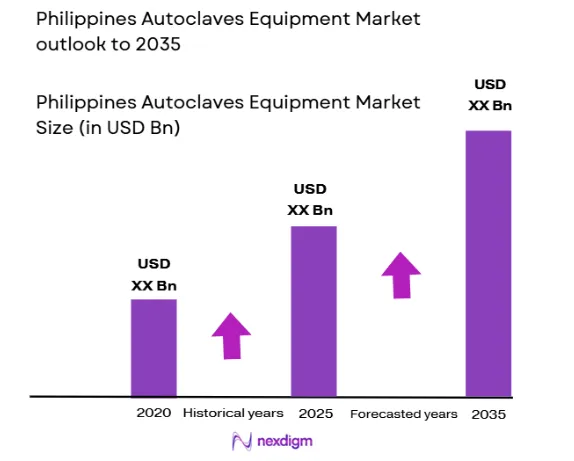
The Philippines Autoclaves Equipment market demonstrates steady expansion driven by rising healthcare investments and infection control standards, with the market valued at approximately USD ~ billion based on a recent historical assessment. Growth is primarily supported by hospital infrastructure upgrades, increasing diagnostic testing volumes, and pharmaceutical manufacturing expansion. Demand is further accelerated by regulatory emphasis on sterilization compliance and the integration of advanced autoclave technologies, particularly in urban healthcare systems and private sector facilities.
Metro Manila remains the dominant hub due to its concentration of tertiary hospitals, pharmaceutical companies, and diagnostic laboratories, supported by higher healthcare spending capacity and advanced infrastructure. Cebu and Davao also show strong adoption trends due to regional hospital modernization and growing medical tourism activities. Industrial sterilization demand is concentrated in economic zones across Luzon, driven by food processing and biotech firms, while government healthcare expansion programs contribute to demand growth in secondary cities.
Market Segmentation
By Product Type:
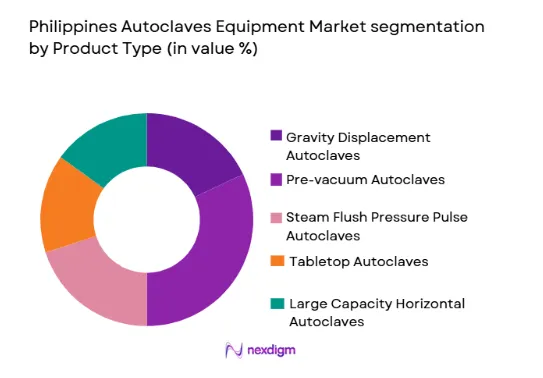
Philippines Autoclaves Equipment market is segmented by product type into Gravity Displacement Autoclaves, Pre-vacuum Autoclaves, Steam Flush Pressure Pulse Autoclaves, Tabletop Autoclaves, and Large Capacity Horizontal Autoclaves. Recently, Pre-vacuum Autoclaves have a dominant market share due to factors such as their superior sterilization efficiency, faster cycle times, and suitability for complex medical instruments. Hospitals and large laboratories increasingly prefer these systems because they ensure deeper penetration of steam into porous materials and wrapped instruments. Additionally, regulatory compliance requirements in high-risk medical environments have accelerated adoption. Their compatibility with automated monitoring systems and ability to handle high throughput further strengthen their position in both public and private healthcare institutions.
By EndUser:
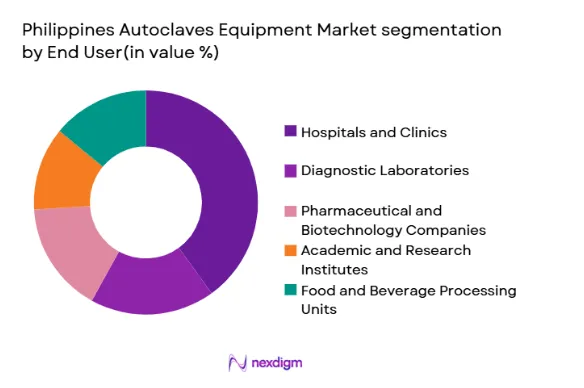
Philippines Autoclaves Equipment market is segmented by end-user segment into Hospitals and Clinics, Diagnostic Laboratories, Pharmaceutical and Biotechnology Companies, Academic and Research Institutes, and Food and Beverage Processing Units. Recently, Hospitals and Clinics have a dominant market share due to high patient inflow, strict sterilization requirements, and continuous surgical procedures requiring reliable sterilization equipment. The expansion of private hospitals and government investments in healthcare infrastructure have increased procurement volumes. Additionally, infection control protocols and accreditation requirements drive frequent upgrades and replacements of autoclave systems, reinforcing the segment’s leading position.
Competitive Landscape
The Philippines Autoclaves Equipment market is moderately consolidated, with a mix of global manufacturers and regional distributors shaping competitive dynamics. International players dominate high-end segments through advanced technology offerings and strong compliance standards, while local distributors compete on pricing and service support. Strategic partnerships, after-sales service capabilities, and regulatory compliance expertise are key differentiators. Companies are increasingly focusing on automation, energy efficiency, and digital integration to strengthen their competitive positioning.
| Company Name | Establishment Year | Headquarters | Technology Focus | Market Reach | Key Products | Revenue (USD) | Additional Parameter (Service Network Strength) |
| Tuttnauer | 1925 | Netherlands | ~ | ~ | ~ | ~ | ~ |
| Steris | 1985 | USA | ~ | ~ | ~ | ~ | ~ |
| Getinge | 1904 | Sweden | ~ | ~ | ~ | ~ | ~ |
| Belimed | 1966 | Switzerland | ~ | ~ | ~ | ~ | ~ |
| Shinva Medical | 1943 | China | ~ | ~ | ~ | ~ | ~ |
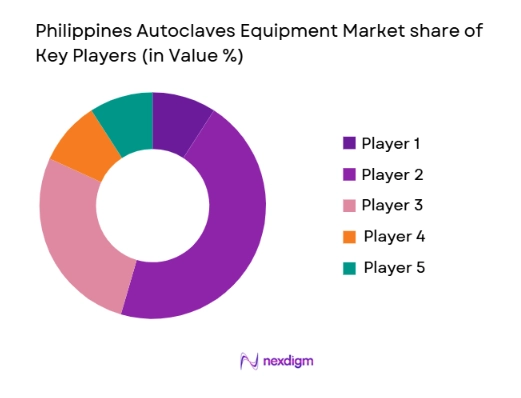
Philippines Autoclaves Equipment Market Analysis
Growth Drivers
Expansion of Healthcare Infrastructure and Hospital Modernization Programs:
The expansion of healthcare infrastructure and hospital modernization programs is a critical driver of the Philippines Autoclaves Equipment market as the country continues to invest in improving healthcare accessibility and quality. Government initiatives aimed at upgrading public hospitals and building new healthcare facilities have significantly increased the demand for sterilization equipment. Private sector participation has also intensified, with hospital chains expanding their networks and upgrading existing facilities to meet international standards. This has resulted in increased procurement of advanced autoclave systems capable of handling higher patient volumes and complex procedures. Additionally, rising medical tourism has encouraged hospitals to adopt globally compliant sterilization technologies to maintain accreditation and patient trust. Urban healthcare centers are rapidly transitioning toward automated sterilization systems, further boosting demand. Regional healthcare facilities are also receiving funding support, contributing to equipment adoption beyond metropolitan areas. The need for infection control and prevention has become more pronounced, especially in post-pandemic healthcare environments. This has driven continuous replacement cycles and technological upgrades in sterilization equipment. As healthcare infrastructure continues to evolve, the demand for reliable and efficient autoclaves is expected to remain strong across the country.
Rising Demand from Pharmaceutical and Biotechnology Manufacturing Sectors:
The rising demand from pharmaceutical and biotechnology manufacturing sectors significantly contributes to the growth of the Philippines Autoclaves Equipment market as the country strengthens its domestic production capabilities. Pharmaceutical companies are expanding production facilities to reduce dependency on imports and meet local demand for medicines. This expansion requires stringent sterilization processes to comply with global manufacturing standards, thereby increasing the adoption of high-capacity autoclaves. Biotechnology firms engaged in research and vaccine development also rely heavily on sterilization equipment to maintain contamination-free environments. Regulatory bodies enforce strict compliance requirements, further driving the need for advanced sterilization technologies. The growth of contract manufacturing organizations has also contributed to increased demand for autoclaves. Additionally, investments in research and development facilities have created new opportunities for specialized sterilization systems. Industrial sterilization needs in food and beverage processing further complement this demand. Automation and digital monitoring features are becoming essential in pharmaceutical settings, leading to higher adoption of technologically advanced autoclaves. As the pharmaceutical and biotech sectors continue to expand, they will remain a key driver for sustained market growth.
Market Challenges
High Capital Investment and Maintenance Costs for Advanced Autoclave Systems:
High capital investment and maintenance costs for advanced autoclave systems pose a significant challenge to the Philippines Autoclaves Equipment market as many healthcare providers operate under budget constraints. Advanced autoclaves with automation and digital monitoring features require substantial upfront investment, which can be prohibitive for smaller hospitals and clinics. Maintenance costs, including periodic servicing and replacement of critical components, add to the financial burden. Limited access to financing options further restricts adoption among mid-tier healthcare facilities. Additionally, imported equipment often comes with higher costs due to tariffs and logistics expenses. Operational costs such as energy consumption and water usage also contribute to overall expenditure. Smaller diagnostic laboratories may opt for lower-cost alternatives, affecting the adoption of advanced systems. The lack of skilled technicians for maintenance can lead to increased downtime and additional repair costs. Budget limitations in public healthcare institutions further exacerbate the issue. These cost-related challenges continue to hinder widespread adoption of high-end sterilization technologies across the country.
Limited Technical Expertise and Operational Challenges in Rural Healthcare Facilities:
Limited technical expertise and operational challenges in rural healthcare facilities present a major barrier to the Philippines Autoclaves Equipment market as many regions lack trained personnel to operate advanced sterilization systems. Healthcare workers in remote areas often have limited exposure to sophisticated equipment, leading to inefficiencies and improper usage. This results in suboptimal sterilization outcomes and increased equipment wear and tear. Training programs are not uniformly available across the country, creating disparities in skill levels. Additionally, the absence of reliable maintenance services in rural areas complicates equipment upkeep. Infrastructure limitations such as inconsistent power supply and water availability further affect autoclave performance. Smaller facilities may rely on outdated equipment due to these constraints. Logistics challenges also delay equipment servicing and spare parts availability. Government efforts to bridge the healthcare gap are ongoing but require significant time and investment. These operational challenges continue to limit the penetration of advanced autoclave systems in rural regions.
Opportunities
Adoption of Smart and IoT-Enabled Sterilization Systems in Healthcare Facilities:
Adoption of smart and IoT-enabled sterilization systems in healthcare facilities presents a significant opportunity for the Philippines Autoclaves Equipment market as hospitals increasingly seek efficient and data-driven solutions. Smart autoclaves equipped with real-time monitoring and predictive maintenance capabilities enhance operational efficiency and reduce downtime. These systems allow healthcare providers to track sterilization cycles and ensure compliance with regulatory standards. Integration with hospital management systems further improves workflow efficiency. The demand for automation is particularly high in large hospitals handling high patient volumes. Digitalization initiatives in healthcare are encouraging the adoption of connected devices. Remote diagnostics and maintenance capabilities reduce service costs and improve equipment lifespan. Manufacturers are focusing on developing user-friendly interfaces to facilitate adoption. Training programs are also being introduced to support technology integration. As healthcare facilities prioritize efficiency and compliance, smart autoclaves are expected to witness increased adoption across the market.
Expansion of Sterilization Demand in Food Processing and Industrial Applications:
Expansion of sterilization demand in food processing and industrial applications offers a strong growth opportunity for the Philippines Autoclaves Equipment market as food safety standards become increasingly stringent. Food processing companies require reliable sterilization systems to ensure product safety and compliance with export regulations. The growth of packaged food consumption has increased the need for sterilization technologies. Industrial applications such as laboratory testing and material processing also contribute to demand. Government regulations related to food safety and quality control further drive adoption. Small and medium enterprises in the food sector are gradually investing in sterilization equipment to enhance product quality. Technological advancements are making autoclaves more accessible and efficient for industrial use. Partnerships between equipment manufacturers and industrial firms are expanding market reach. The diversification of autoclave applications beyond healthcare is creating new revenue streams. As industrial sectors continue to grow, they will play an important role in market expansion.
Future Outlook
The Philippines Autoclaves Equipment market is expected to witness steady growth over the next five years driven by continued healthcare infrastructure expansion and increasing regulatory focus on sterilization standards. Technological advancements such as automation and IoT integration will enhance system efficiency and adoption. Government initiatives aimed at improving healthcare access will further support market demand. Additionally, rising industrial sterilization requirements and pharmaceutical sector growth will contribute to sustained expansion.
Major Players
- Tuttnauer
- Steris
- Getinge
- Belimed
- Shinva Medical
- Astell Scientific
- LTE Scientific
- Yamato Scientific
- Panasonic Healthcare
- Priorclave
- Sakura Seiki
- Fedegari Group
- Zirbus Technology
- Consolidated Sterilizer Systems
- Benchmark Scientific
Key Target Audience
- Hospitals and healthcare providers
- Pharmaceutical manufacturers
- Biotechnology companies
- Food processing companies
- Medical device manufacturers
- Government and regulatory bodies
- Investments and venture capitalist firms
- Private diagnostic laboratory chains
Research Methodology
Step 1: Identification of Key Variables
Key variables such as demand drivers, pricing trends, regulatory factors, and technological advancements are identified. These variables form the foundation for understanding market behavior and growth potential.
Step 2: Market Analysis and Construction
Data is collected from industry databases, company reports, and healthcare statistics. The market structure is built by analyzing supply-demand dynamics and segmentation patterns.
Step 3: Hypothesis Validation and Expert Consultation
Initial findings are validated through consultations with industry experts, healthcare professionals, and equipment suppliers. This ensures accuracy and relevance of the analysis.
Step 4: Research Synthesis and Final Output
All validated data is synthesized into a structured report. Insights are refined and presented to provide a comprehensive understanding of the market.

- Executive Summary
- Research Methodology (Definitions,Scope, Industry Assumptions,Market Sizing Approach, Primary & Secondary Research Framework, Data Collection & Verification Protocol, Analytic Models & Forecast Methodology, Limitations & Research Validity Checks)

- Market Definition and Scope
- Value Chain & Stakeholder Ecosystem
- Regulatory / Certification Landscape
- Sector Dynamics Affecting Demand
- Strategic Initiatives & Infrastructure Growth

- Growth Drivers
Rising healthcare infrastructure investments across urban and rural Philippines
Increasing infection control regulations in hospitals and clinics
Expansion of pharmaceutical manufacturing and biotech research activities
Growing demand for sterilization in food processing industries
Technological advancements in automated and smart autoclave systems - Market Challenges
High initial capital investment for advanced autoclave systems
Limited technical expertise in operating complex sterilization equipment
Maintenance and operational cost constraints for smaller facilities
Supply chain disruptions affecting equipment availability
Regulatory compliance complexities for imported equipment - Market Opportunities
Expansion of public healthcare facilities in underserved regions
Adoption of digital monitoring and remote-controlled autoclaves
Growth in private diagnostic and specialty clinics - Trends
Shift toward energy-efficient and eco-friendly sterilization systems
Integration of IoT and automation in autoclave operations
Increasing preference for compact tabletop autoclaves in clinics
Rising outsourcing of sterilization services
Adoption of predictive maintenance technologies - Government Regulations & Defense Policy
Strengthening of sterilization standards under national healthcare regulations
Import guidelines and certification requirements for medical devices
Government initiatives supporting hospital modernization programs - SWOT Analysis
- Stakeholder and Ecosystem Analysis
- Porter’s Five Forces Analysis
- Competition Intensity and Ecosystem Mapping

- By Market Value, 2020-2025
- By Installed Units, 2020-2025
- By Average System Price, 2020-2025
- By System Complexity Tier, 2020-2025

- By System Type (In Value%)
Gravity Displacement Autoclaves
Pre-vacuum Autoclaves
Steam Flush Pressure Pulse Autoclaves
Tabletop Autoclaves
Large Capacity Horizontal Autoclaves - By Platform Type (In Value%)
Hospital Sterilization Units
Laboratory Sterilization Platforms
Industrial Sterilization Systems
Dental Clinic Autoclaves
Pharmaceutical Production Units - By Fitment Type (In Value%)
Standalone Systems
Built-in Sterilization Units
Portable Autoclaves
Modular Integrated Systems
Retrofit Installations - By EndUser Segment (In Value%)
Hospitals and Clinics
Diagnostic Laboratories
Pharmaceutical and Biotechnology Companies
Academic and Research Institutes
Food and Beverage Processing Units - By Procurement Channel (In Value%)
Direct Procurement from Manufacturers
Distributor and Dealer Networks
Government Tenders and Contracts
Online Medical Equipment Platforms
Leasing and Rental Services - By Material / Technology (in Value %)
Stainless Steel Chamber Autoclaves
Carbon Steel Autoclaves
Electric Steam Generation Systems
Gas-fired Autoclaves
IoT-enabled Smart Autoclaves

- Market structure and competitive positioning
- Market share snapshot of major players
- CrossComparison Parameters (Product Portfolio Breadth, Pricing Strategy, Distribution Network Strength, Technology Integration Level, After Sales Service Capability, Regulatory Compliance Support, Customization Options, Energy Efficiency Ratings, Brand Reputation, Local Manufacturing Presence)
- SWOT Analysis of Key Players
- Pricing & Procurement Analysis
- Key Players
Tuttnauer Philippines Inc.
Steris Philippines Medical Systems
Getinge Philippines Healthcare Solutions
Belimed Southeast Asia Philippines
Astell Scientific Philippines
LTE Scientific Philippines
Yamato Scientific Philippines
Panasonic Healthcare Philippines
Shinva Medical Philippines
Priorclave Asia Philippines
Sakura Seiki Philippines
Fedegari Group Philippines
Zirbus Technology Philippines
Consolidated Sterilizer Systems Philippines
Benchmark Scientific Philippines

- Hospitals dominate demand due to high patient volume and strict sterilization protocols
- Pharmaceutical firms require high-capacity autoclaves for production compliance
- Diagnostic labs focus on compact and cost-efficient sterilization systems
- Academic institutes prioritize flexible and multi-purpose autoclave units

- Forecast Market Value, 2026-2035
- Forecast Installed Units, 2026-2035
- Price Forecast by System Tier, 2026-2035
- Future Demand by Platform, 2026-2035


 Request a Sample
 Ask for Customization
 Get a Quote
 Enquire Now