

 Download PDF
 Download PDF
Market Overview
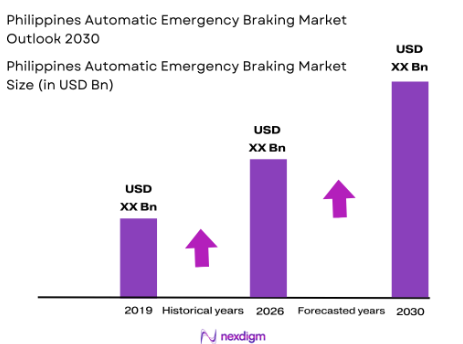
The Philippine Automatic Emergency Braking (AEB) market is valued at USD X billion in 2024. The market is driven by the increasing emphasis on road safety, as road accidents continue to be a pressing issue in the country. In 2023, the Philippines saw over 50,000 road accidents, highlighting the need for advanced driver-assistance systems (ADAS) like AEB. Additionally, the growing adoption of these systems by original equipment manufacturers (OEMs) and the government’s push towards safer roads further propel the demand for AEB technology. Government incentives, regulatory mandates, and consumer preference for safer vehicles also play a significant role in driving market growth.
Metro Manila, Cebu, and Davao are key regions driving AEB adoption in the Philippines. Metro Manila, with its high traffic density and road safety concerns, represents a significant market for AEB systems. The government’s road safety initiatives, combined with the growing vehicle fleet, contribute to the adoption of advanced safety features like AEB. Cebu and Davao have seen growth in the commercial vehicle market, where AEB systems are increasingly being integrated to improve fleet safety, reduce accidents, and cut insurance costs.
Market Segmentation
By AEB Technology Type
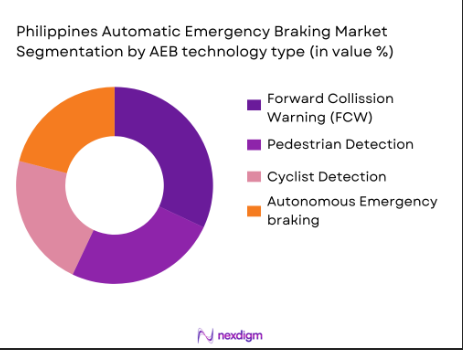
The AEB market in the Philippines is primarily segmented by the type of technology used. Forward Collision Warning (FCW) systems lead the market, as they are often integrated into vehicles as a basic safety feature. Autonomous Emergency Braking (AEB), which actively applies the brakes to prevent collisions, is gaining traction as it is being increasingly adopted by OEMs in mid-range and high-end passenger vehicles. Furthermore, systems with Pedestrian and Cyclist Detection have been gaining popularity, especially in urban areas, due to increased awareness of safety in crowded environments. This technological trend is driven by advancements in sensor technology, making AEB systems more effective and affordable.
By Vehicle Type
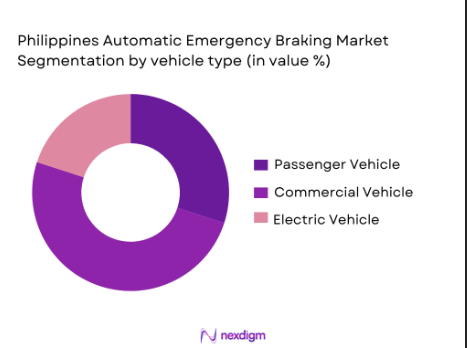
In terms of vehicle type, passenger vehicles dominate the AEB market in the Philippines, as consumers increasingly demand safety features like AEB for personal cars. The rising middle-class population, along with increased awareness of road safety, has resulted in a growing adoption of AEB-equipped vehicles. Commercial vehicles, particularly in the logistics and fleet sectors, are also contributing significantly to the market, with fleet operators investing in AEB technology to reduce accidents and minimize operational risks. Electric Vehicles (EVs) are expected to show higher adoption rates for AEB in the coming years, as EV manufacturers are integrating more advanced safety systems into their vehicles to compete in a safety-conscious market.
Competitive Landscape
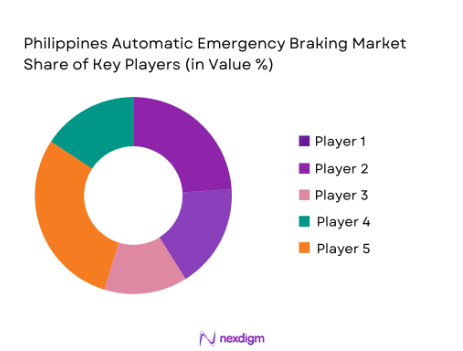
The Philippines AEB market is characterized by competition from both global and local players. Toyota, Honda, and Nissan dominate the market, with their widespread adoption of AEB in passenger vehicles. Mitsubishi Motors Philippines and Suzuki Philippines are also key players, working to integrate AEB technology into their vehicle portfolios to meet consumer demand for safety. The competitive landscape in the market is further intensified by technology developers like Aptiv and Bosch, which supply AEB components such as sensors and radars.
| Company Name | Establishment Year | Headquarters | Market Focus | Key Product Offering | Technology |
| Toyota Motor Corporation | 1937 | Aichi, Japan | Global, Philippines | Toyota Corolla, Camry | AEB, Pedestrian Detection |
| Honda Motor Co., Ltd. | 1948 | Tokyo, Japan | Global, Philippines | Honda CR-V, Civic | FCW, AEB |
| Nissan Motor Co., Ltd. | 1933 | Yokohama, Japan | Global, Philippines | Nissan Altima, Rogue | Cyclist Detection, AEB |
| Mitsubishi Motors | 1970 | Tokyo, Japan | Philippines | Mitsubishi Outlander | AEB, Forward Collision Warning |
| Suzuki Philippines | 1985 | Manila, Philippines | Local, Southeast Asia | Suzuki Vitara, Ertiga | Basic AEB, FCW |
Philippines Automatic Emergency Braking Market Analysis
Growth Drivers
Increasing Road Safety Awareness:
There has been a notable rise in road safety awareness in the Philippines, with over 50,000 road accidents reported in 2023. This awareness has prompted both consumers and regulatory bodies to prioritize safety features in vehicles. The government, alongside various non-governmental organizations, has launched campaigns highlighting the importance of advanced safety systems like AEB. As a result, a growing number of vehicle buyers are seeking cars equipped with these technologies. These efforts align with global road safety goals, as the World Health Organization (WHO) reports over 1.35 million annual road traffic deaths, highlighting the urgent need for safety interventions.
Regulatory Support and Mandates for AEB Systems:
The Philippines has been gradually aligning with global vehicle safety standards, influenced by international safety mandates. The government’s recent policy updates include regulations that require new vehicles to be equipped with essential ADAS, including AEB. This move is part of the country’s broader strategy to reduce road accidents and fatalities. The Department of Transportation (DOTr) and the Land Transportation Office (LTO) are pushing for legislation that mandates AEB in all new vehicles sold, reflecting a growing commitment to ensuring safer roads. The increasing push for such regulations supports a rise in AEB system adoption.
Market Challenges
High Cost of AEB System Integration:
One of the primary challenges hindering the widespread adoption of Automatic Emergency Braking (AEB) systems in the Philippines is the high cost of integration into vehicles. For manufacturers, adding advanced technologies like AEB requires significant investment in research and development, which increases the overall price of vehicles. The higher upfront cost of AEB-equipped vehicles makes them less affordable for a large portion of the population, particularly in the lower-income brackets. As AEB systems are often bundled with higher-end models or trim levels, the adoption in entry-level and mid-range vehicles remains limited, which impedes broader market growth.
Limited Consumer Awareness Regarding AEB:
Despite increasing road safety awareness, many Filipino consumers remain unaware of the importance and availability of AEB systems in vehicles. A lack of knowledge about the benefits of AEB technology—such as reducing collision risk and preventing pedestrian accidents—limits its demand. This awareness gap is exacerbated by the high price point of AEB-equipped vehicles, which leads to consumers prioritizing other vehicle features over safety technologies. Enhanced marketing and educational efforts are needed to increase consumer understanding of AEB’s role in improving road safety, which will be essential for boosting its adoption.
Opportunities
Government Regulations Driving AEB Adoption:
The Philippine government is increasingly emphasizing road safety and has begun to prioritize the implementation of ADAS technologies, including AEB systems, as part of its overall road safety strategy. Government-backed incentives and regulations are encouraging the automotive industry to integrate AEB systems into new vehicle models. As a result, there is an emerging market for AEB-equipped vehicles, especially in the mid-range and premium vehicle segments. The government’s support for sustainable transportation and road safety will create significant opportunities for market growth, as it aligns with international safety standards and encourages local manufacturing.
Expanding EV Adoption and Safety Features:
The growing popularity of electric vehicles (EVs) in the Philippines provides an excellent opportunity for the AEB market to expand. EVs are seen as environmentally friendly alternatives to conventional gasoline vehicles, and they are often equipped with advanced safety features such as AEB. As EV adoption continues to rise, particularly with government incentives promoting electric mobility, the integration of AEB systems in these vehicles will become more common. With EVs often positioned as high-tech, eco-friendly alternatives, their adoption will drive the demand for AEB systems, making them an essential safety feature for the future.
Future Outlook
Over the next five years, the Philippines Automatic Emergency Braking (AEB) market is expected to grow significantly. Government regulations mandating advanced safety systems, such as AEB, will continue to drive this growth. The demand for AEB in both passenger vehicles and commercial fleets is poised to increase as vehicle manufacturers continue to integrate AEB technology as a standard safety feature in their offerings. Additionally, the rising number of electric vehicles (EVs) and the adoption of autonomous vehicle technologies are expected to further boost the market. Advances in radar, camera, and sensor technologies will continue to make AEB systems more effective and affordable, providing ample opportunities for market players.
Major Players in the Market
- Toyota Motor Corporation
- Honda Motor Co., Ltd.
- Nissan Motor Co., Ltd.
- Mitsubishi Motors Corporation
- Suzuki Philippines, Inc.
- Hyundai Motor Company
- Ford Motor Company
- BMW Group
- Mercedes-Benz Group
- Aptiv PLC
- Valeo S.A.
- Continental AG
- ZF Friedrichshafen AG
- Delphi Technologies
- Autoliv Inc.
Key Target Audience
- Government Agencies (e.g., Department of Transportation, Philippine National Police Traffic Management Group)
- Automobile OEMs and Tier 1 Suppliers
- Automotive Component Manufacturers
- Insurance Companies (Health and Auto Insurers)
- Fleet Operators and Logistics Companies
- Investors and Venture Capitalist Firms
- Aftermarket Suppliers and Distributors
Research Methodology
Step 1: Identification of Key Variables
The first phase of the research involves identifying key market drivers, barriers, and technology trends influencing the AEB system market. This is achieved through secondary data collection from industry reports, automotive regulations, and market analysis.
Step 2: Market Analysis and Construction
Market analysis is conducted by reviewing historical data related to market adoption, technological advancements, and consumer behavior in the Philippines. This involves the use of both secondary and primary sources, including expert interviews and surveys, to understand the market’s structure and dynamics.
Step 3: Hypothesis Validation and Expert Consultation
This phase focuses on validating hypotheses derived from initial research through consultations with industry experts, automotive manufacturers, and technology developers. These consultations provide valuable insights and help refine the research direction.
Step 4: Research Synthesis and Final Output
The final research output integrates data from multiple sources, including interviews, market surveys, and secondary research. The report synthesizes these insights to provide actionable recommendations for stakeholders, along with market forecasts, strategic implications, and a competitive landscape analysis.

- Executive Summary
- Research Methodology (Market Definitions and Assumptions, Abbreviations, Market Sizing Approach, Consolidated Research Approach, Understanding Market Potential Through In-Depth Industry Interviews, Primary Research Approach, Limitations and Future Conclusions)

- Definition and Scope of Automatic Emergency Braking Systems (AEB)
- Overview Genesis
- Timeline of Major Players and Technology Milestones
- Business Cycle of the AEB Market in the Philippines
- Supply Chain and Value Chain Analysis

- Market Challenges
High Cost of AEB System Integration
Limited Consumer Awareness Regarding AEB
Technological Barriers in Pedestrian & Cyclist Detection
Lack of Standardization in AEB Technologies - Opportunities
Government Regulations Driving AEB Adoption
Expanding EV Adoption and Safety Features
Rising Demand for Smart Cities and Infrastructure Integration
Aftermarket Retrofit Opportunities for AEB Systems - Trends
Technological Advancements in Sensor Systems
Increased Integration with AI and Machine Learning
Enhanced Consumer Education on Vehicle Safety Features
Integration with Autonomous Vehicles - Government Regulation
- SWOT Analysis
- Porter’s Five Forces
- Stakeholder Ecosystem

- By Value, 2019-2024
- By Volume, 2019-2024
- By Average Price, 2019-2024
- By Vehicle Type 2019-2024
- By Region 2019-2024

- By AEB Technology Type (In Value %)
Forward Collision Warning (FCW)
Autonomous Emergency Braking (AEB)
Pedestrian Detection Systems
Cyclist Detection Systems
Combined AEB Systems (Pedestrian + Vehicle) - By Vehicle Type (In Value %)
Passenger Vehicles
Commercial Vehicles
Electric Vehicles (EVs)
Autonomous Vehicles (AVs) - By Distribution Channel (In Value %)
OEMs (Original Equipment Manufacturers)
Aftermarket Suppliers
E-commerce and Online Sales - By Region in the Philippines (In Value %)
Metro Manila
Cebu
Davao
Northern Luzon
Southern Mindanao

- Market Share by Type of Vehicle
- Cross Comparison Parameters (Company Overview, Business Strategies, Technological Advancements, Strengths and Weaknesses, Revenue Models and Sales Channels, Production & Distribution Network, Government and Regulatory Compliance, Pricing Strategy & Product Portfolio)
- SWOT Analysis of Major Players
- Pricing Analysis for Major AEB Systems
- Detailed Profiles of Major Companies
- Toyota Motor Corporation
Honda Motor Co., Ltd.
Nissan Motor Co., Ltd.
Hyundai Motor Group
Ford Motor Company
BMW Group
Aptiv PLC
Continental AG
Delphi Technologies
Valeo S.A.
ZF Friedrichshafen AG
Denso Corporation
Autoliv Inc.
WABCO Holdings Inc.

- Market Demand and Utilization by Consumer Group
- Budget Allocations and Pricing Sensitivity
- Government and Corporate Adoption
- Consumer Awareness and Education Gaps
- Decision-Making Process for AEB Integration

- By Value, 2025-2030
- By Volume, 2025-2030
- By Average Price, 2025-2030


 Request a Sample
 Ask for Customization
 Get a Quote
 Enquire Now