

 Download PDF
 Download PDF
Market Overview
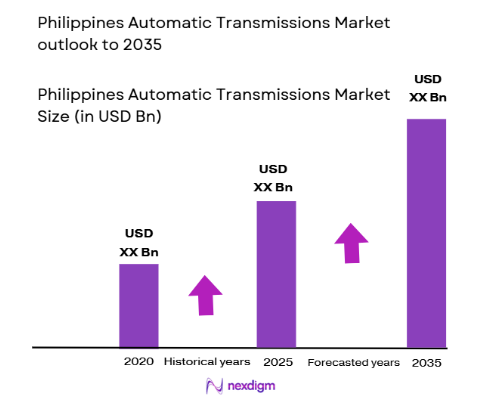
The Philippines Automatic Transmissions market is valued at approximately USD ~ billion based on a recent historical assessment, driven primarily by increasing passenger vehicle sales, rising urban congestion, and consumer preference for driving comfort. The growing adoption of automatic vehicles across metropolitan areas, supported by expanding automotive financing and dealership networks, has accelerated demand. Additionally, technological advancements in fuel-efficient transmission systems and integration of electronic control units have further contributed to sustained market expansion.
Metro Manila, Cebu, and Davao dominate the Philippines Automatic Transmissions market due to high vehicle density, stronger purchasing power, and developed road infrastructure supporting automatic vehicle usage. These urban centers benefit from higher disposable incomes and greater exposure to global automotive trends, encouraging adoption of advanced transmission systems. Furthermore, import-driven automotive distribution hubs and concentration of dealerships in these regions strengthen accessibility, making them central to market growth and technological adoption.
Market Segmentation
By Product Type
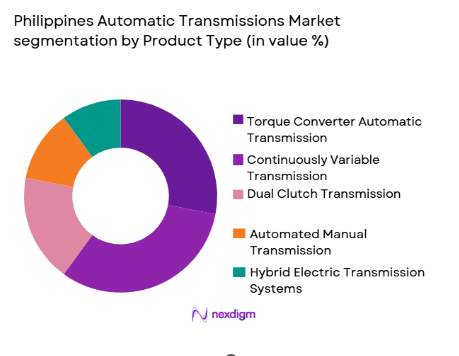
Philippines Automatic Transmissions market is segmented by product type into Torque Converter Automatic Transmission, Continuously Variable Transmission, Dual Clutch Transmission, Automated Manual Transmission, and Hybrid Electric Transmission Systems. Recently, Continuously Variable Transmission has a dominant market share due to factors such as superior fuel efficiency, smoother driving experience, and widespread adoption in compact passenger vehicles. Its compatibility with urban driving conditions and lower maintenance requirements have made it highly preferred among consumers, especially in densely populated cities with heavy traffic conditions.
By Platform Type
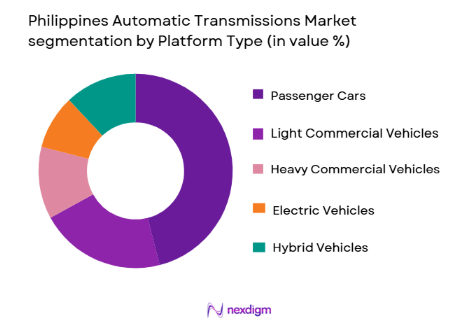
Philippines Automatic Transmissions market is segmented by platform type into Passenger Cars, Light Commercial Vehicles, Heavy Commercial Vehicles, Electric Vehicles, and Hybrid Vehicles. Recently, Passenger Cars have a dominant market share due to increasing urbanization, rising middle-class income, and growing demand for personal mobility solutions. The expansion of ride-hailing services and daily commuting requirements has significantly driven the preference for automatic transmission-equipped passenger vehicles, especially in urban and semi-urban regions.
Competitive Landscape
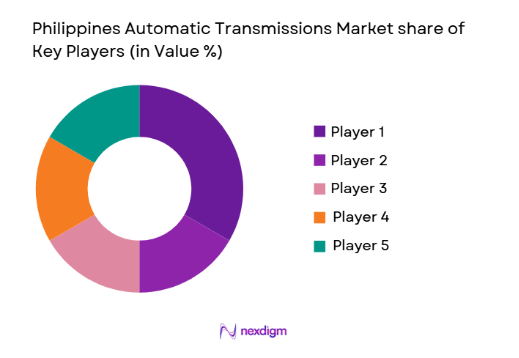
The Philippines Automatic Transmissions market is moderately consolidated, with a mix of global automotive OEMs and regional distributors shaping the competitive environment. Leading players leverage strong dealership networks, localized assembly operations, and advanced transmission technologies to maintain their position. Strategic collaborations, product diversification, and aftermarket service expansion are key competitive strategies, while global supply chain integration continues to influence pricing and availability across the market.
| Company Name | Establishment Year | Headquarters | Technology Focus | Market Reach | Key Products | Revenue | Transmission Innovation Capability |
| Toyota Motor Philippines | 1988 | Philippines | ~ | ~ | ~ | ~ | ~ |
| Mitsubishi Motors Philippines | 1963 | Philippines | ~ | ~ | ~ | ~ | ~ |
| Nissan Philippines | 1969 | Philippines | ~ | ~ | ~ | ~ | ~ |
| Honda Cars Philippines | 1990 | Philippines | ~ | ~ | ~ | ~ | ~ |
| Ford Philippines | 1997 | Philippines | ~ | ~ | ~ | ~ | ~ |
Philippines Automatic Transmissions Market Analysis
Growth Drivers
Rising Urbanization and Traffic Congestion Driving Automatic Adoption:
The Philippines Automatic Transmissions market is experiencing strong growth due to increasing urbanization and worsening traffic congestion in major cities. As urban populations expand, the demand for convenient and easy-to-drive vehicles has significantly increased, encouraging consumers to shift from manual to automatic transmissions. Heavy traffic conditions in cities such as Metro Manila have made clutch-based driving less desirable, thereby accelerating the adoption of automatic vehicles. This trend is further supported by increasing disposable incomes, allowing more consumers to afford vehicles equipped with advanced transmission systems. Additionally, the growth of ride-hailing services has created demand for vehicles that reduce driver fatigue, making automatic transmissions a preferred choice. Automotive manufacturers are also introducing more affordable automatic variants to capture a wider consumer base. Government infrastructure development projects, including road expansions, are indirectly supporting vehicle ownership growth. Improved financing options and flexible payment schemes have made automatic vehicles more accessible. As a result, the market continues to expand steadily with rising urban mobility demands.
Technological Advancements in Transmission Efficiency and Performance:
Continuous innovation in transmission technologies is significantly driving the Philippines Automatic Transmissions market by enhancing vehicle performance and fuel efficiency. Modern automatic systems such as continuously variable transmissions and dual-clutch transmissions provide smoother gear shifts and improved driving comfort. These advancements help optimize fuel consumption, addressing one of the primary concerns of consumers in the region. Manufacturers are increasingly integrating electronic control units and smart sensors to improve system responsiveness and reliability. The development of lightweight transmission components also contributes to overall vehicle efficiency and reduced emissions. Additionally, the integration of hybrid and electric vehicle transmission systems is opening new growth avenues. Automakers are investing in research and development to meet evolving regulatory standards and consumer expectations. The availability of technologically advanced vehicles at competitive price points is encouraging adoption across various vehicle segments. This ongoing innovation is strengthening the market’s long-term growth trajectory.
Market Challenges
High Cost of Automatic Transmission Systems Limiting Mass Adoption:
The Philippines Automatic Transmissions market faces a significant challenge due to the relatively higher cost of automatic systems compared to manual transmissions. Price-sensitive consumers often prefer manual vehicles, especially in entry-level segments, limiting the penetration of automatic transmissions. The cost difference is primarily driven by complex components and advanced technologies used in automatic systems. Additionally, import dependency for key transmission components further increases overall vehicle prices. Maintenance and repair costs are also higher for automatic systems, discouraging budget-conscious buyers. Limited availability of skilled technicians for servicing advanced transmission systems adds to the challenge. These factors collectively slow down adoption in rural and lower-income segments. Despite growing demand in urban areas, affordability remains a critical barrier. Manufacturers are attempting to address this through localized production and cost optimization strategies. However, achieving widespread adoption remains a gradual process.
Dependence on Imported Components and Supply Chain Vulnerabilities:
The Philippines Automatic Transmissions market is highly dependent on imported components, making it vulnerable to global supply chain disruptions. Fluctuations in international trade policies, currency exchange rates, and logistics costs can significantly impact the availability and pricing of transmission systems. This dependence also limits the development of a strong domestic manufacturing ecosystem. Supply chain disruptions can lead to production delays and increased vehicle prices, affecting overall market growth. Additionally, geopolitical uncertainties and global economic conditions can further exacerbate these challenges. Limited local supplier networks restrict flexibility and responsiveness in the supply chain. Manufacturers are exploring localization strategies to mitigate risks, but progress remains gradual. The reliance on imports continues to pose a long-term challenge for market stability. Addressing this issue requires investment in domestic manufacturing capabilities and infrastructure development.
Opportunities
Expansion of Hybrid and Electric Vehicle Transmission Technologies:
The Philippines Automatic Transmissions market presents significant opportunities with the growing adoption of hybrid and electric vehicles. As environmental concerns and fuel efficiency requirements increase, consumers are gradually shifting toward cleaner mobility solutions. Automatic transmission systems play a crucial role in hybrid and electric vehicles, offering seamless performance and energy efficiency. Government initiatives promoting sustainable transportation are further supporting this transition. Automakers are introducing new models equipped with advanced transmission systems tailored for electric mobility. Infrastructure development for electric vehicles, including charging stations, is also contributing to market expansion. The increasing availability of hybrid vehicles at competitive prices is encouraging consumer adoption. Additionally, partnerships between automotive companies and technology providers are accelerating innovation in transmission systems. This transition toward electrification is expected to create long-term growth opportunities for the market.
Growth of Aftermarket Services and Maintenance Ecosystem:
The expanding automotive aftermarket sector in the Philippines Automatic Transmissions market offers substantial growth potential. As the number of automatic vehicles increases, the demand for maintenance, repair, and replacement services is also rising. This creates opportunities for service providers, component manufacturers, and distributors. The development of specialized service centers for automatic transmissions is improving customer confidence and reliability. Additionally, digital platforms are enabling easier access to aftermarket products and services. Training programs for technicians are enhancing service quality and addressing skill gaps in the market. The increasing lifespan of vehicles is also driving demand for replacement parts and system upgrades. Manufacturers are leveraging aftermarket services to strengthen customer relationships and generate additional revenue streams. This growing ecosystem is expected to play a critical role in supporting long-term market growth.
Future Outlook
The Philippines Automatic Transmissions market is expected to witness steady growth over the next five years driven by increasing urban mobility demands and technological advancements. The shift toward fuel-efficient and hybrid transmission systems will accelerate adoption across passenger vehicles. Regulatory support for cleaner mobility and infrastructure development will further enhance market prospects. Additionally, growing consumer preference for comfort and automation will continue to shape demand. Expansion of aftermarket services and local manufacturing initiatives will strengthen the overall ecosystem.
Major Players
- Toyota Motor Philippines
- Mitsubishi Motors Philippines
- Nissan Philippines
- Honda Cars Philippines
- Ford Philippines
- Hyundai Motor Philippines
- Isuzu Philippines Corporation
- Mazda Philippines
- Kia Philippines
- Subaru Philippines
- Volkswagen Philippines
- Geely Philippines
- Changan Philippines
- Foton Motor Philippines
- Suzuki Philippines
Key Target Audience
- Automotive OEM manufacturers
- Component suppliers and distributors
- Fleet management companies
- Ride hailing service providers
- Logistics and transportation companies
- Investments and venture capitalist firms
- Government and regulatory bodies
- Automotive aftermarket service providers
Research Methodology
Step 1: Identification of Key Variables
The study begins by identifying key variables such as vehicle production, transmission type adoption, consumer preferences, and pricing trends. These variables form the basis for market estimation and segmentation.
Step 2: Market Analysis and Construction
Market data is collected from industry databases, company reports, and government publications to construct a comprehensive market model. Both supply-side and demand-side factors are analyzed.
Step 3: Hypothesis Validation and Expert Consultation
Findings are validated through consultations with industry experts, automotive professionals, and key stakeholders. This ensures accuracy and reliability of the data and insights.
Step 4: Research Synthesis and Final Output
All insights are synthesized into a structured report, combining quantitative data with qualitative analysis. The final output provides actionable intelligence for decision-making.

- Executive Summary
- Research Methodology (Definitions, Scope, Industry Assumptions, Market Sizing Approach, Primary & Secondary Research Framework, Data Collection & Verification Protocol, Analytic Models & Forecast Methodology, Limitations & Research Validity Checks)

- Market Definition and Scope
- Value Chain & Stakeholder Ecosystem
- Regulatory / Certification Landscape
- Sector Dynamics Affecting Demand
- Strategic Initiatives & Infrastructure Growth

- Growth Drivers
Rising urban vehicle ownership driving demand for convenient driving systems
Increasing adoption of automatic vehicles in congested city environments
Expansion of ride hailing and delivery fleets requiring ease of operation
Technological advancements in fuel efficient transmission systems
Growing consumer preference for comfort and reduced driver fatigue - Market Challenges
High cost of automatic transmission systems compared to manual variants
Limited availability of skilled technicians for maintenance and repair
Dependence on imported components affecting pricing stability
Fuel efficiency concerns in traditional automatic systems
Infrastructure constraints impacting adoption in rural areas - Market Opportunities
Growth in hybrid and electric vehicle transmission integration
Expansion of aftermarket services and maintenance networks
Increasing partnerships between OEMs and local distributors - Trends
Shift toward CVT and dual clutch technologies for efficiency gains
Integration of electronic and AI based transmission controls
Rising demand for lightweight and compact transmission systems
Growth in electric vehicle compatible transmission technologies
Adoption of predictive maintenance and diagnostics systems - Government Regulations & Defense Policy
Emission standards encouraging efficient transmission systems
Import regulations influencing component sourcing strategies
Vehicle safety and certification standards impacting system design - SWOT Analysis
- Stakeholder and Ecosystem Analysis
- Porter’s Five Forces Analysis
- Competition Intensity and Ecosystem Mapping

- By Market Value, 2020-2025
- By Installed Units, 2020-2025
- By Average System Price, 2020-2025
- By System Complexity Tier, 2020-2025

- By System Type (In Value%)
Torque Converter Automatic Transmission
Continuously Variable Transmission
Dual Clutch Transmission
Automated Manual Transmission
Hybrid Electric Transmission Systems - By Platform Type (In Value%)
Passenger Cars
Light Commercial Vehicles
Heavy Commercial Vehicles
Electric Vehicles
Hybrid Vehicles - By Fitment Type (In Value%)
OEM Fitment
Aftermarket Replacement
Retrofitting Solutions
Performance Upgrades
Fleet Integration Systems - By EndUser Segment (In Value%)
Individual Vehicle Owners
Commercial Fleet Operators
Ride Hailing Service Providers
Logistics and Delivery Companies
Government and Public Transport Agencies - By Procurement Channel (In Value%)
OEM Direct Supply Agreements
Authorized Dealership Networks
Independent Aftermarket Distributors
Online Automotive Platforms
Fleet Procurement Contracts - By Material / Technology (in Value %)
Hydraulic Transmission Systems
Electronic Control Units Integration
Lightweight Aluminum Components
Advanced Lubrication Technologies
AI Enabled Transmission Control Systems

- Market structure and competitive positioning
- Market share snapshot of major players
- CrossComparison Parameters (Product Portfolio, Transmission Efficiency, Pricing Strategy, Distribution Network, Technology Integration, Aftermarket Support, OEM Partnerships, Regional Presence, Innovation Capability, Production Capacity)
- SWOT Analysis of Key Players
- Pricing & Procurement Analysis
- Key Players
Toyota Motor Philippines
Mitsubishi Motors Philippines
Nissan Philippines
Honda Cars Philippines
Suzuki Philippines
Ford Philippines
Hyundai Motor Philippines
Isuzu Philippines Corporation
Mazda Philippines
Kia Philippines
Subaru Philippines
Volkswagen Philippines
Geely Philippines
Changan Philippines
Foton Motor Philippines

- Growing preference among urban consumers for automatic vehicles in traffic dense cities
- Fleet operators focusing on efficiency and reduced driver fatigue
- Ride hailing platforms increasing demand for automatic transmission vehicles
- Government initiatives supporting modernization of public transport fleets

- Forecast Market Value, 2026-2035
- Forecast Installed Units, 2026-2035
- Price Forecast by System Tier, 2026-2035
- Future Demand by Platform, 2026-2035


 Request a Sample
 Ask for Customization
 Get a Quote
 Enquire Now