
 Download PDF
 Download PDF
Market Overview
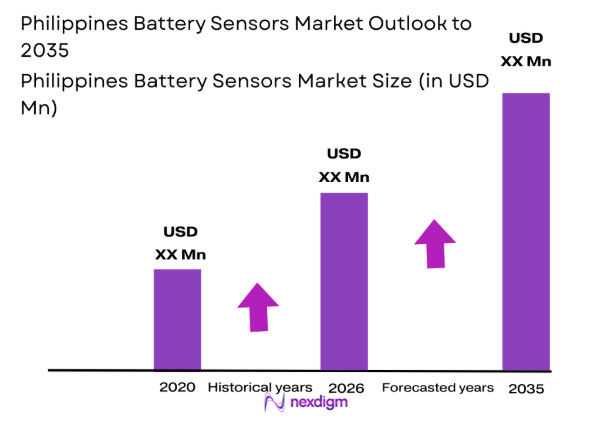
The Philippines Battery Sensors market is expected to grow significantly, driven by an increasing demand for efficient battery management systems in sectors such as electric vehicles (EVs) and renewable energy. Based on a recent historical assessment, the market size for battery sensors in the Philippines is projected to reach USD ~ million. This growth is fueled by the country’s shift towards sustainable transportation and energy solutions, coupled with advancements in sensor technologies for battery monitoring.
Metro Manila and Cebu are key regions dominating the market, driven by strong industrial activity and government support for clean energy initiatives. The rise of electric vehicles and renewable energy infrastructure in these areas is spurring demand for high-performance battery sensors. These regions are also seeing increasing investments in electric vehicle charging networks and energy storage solutions, further accelerating market growth.
Market Segmentation
By Product Type
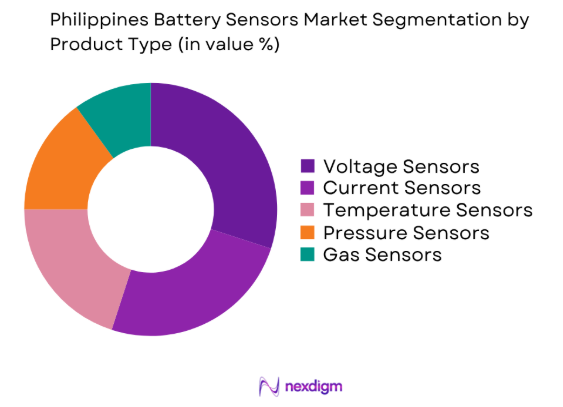
The Philippines Battery Sensors market is segmented by product type into voltage sensors, current sensors, temperature sensors, pressure sensors, and gas sensors. Voltage sensors have recently gained dominance due to the high demand for battery management systems, especially in electric vehicles and energy storage solutions. These sensors play a crucial role in monitoring the health and efficiency of batteries, ensuring optimal performance and safety. With the growing adoption of electric vehicles and renewable energy projects, the demand for accurate and reliable voltage sensors is expected to continue increasing.
By Platform Type
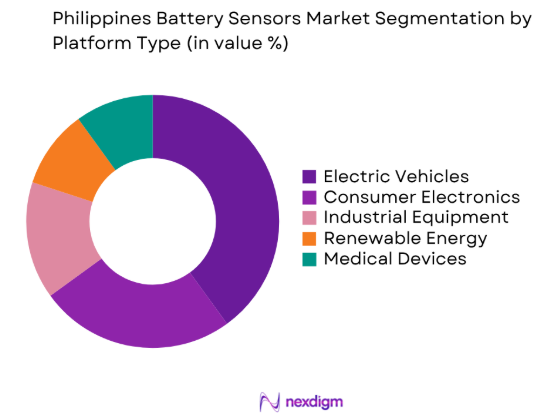
The market is also segmented by platform type into electric vehicles, consumer electronics, industrial equipment, renewable energy systems, and medical devices. Electric vehicles dominate the market share due to the rapid adoption of EVs in the Philippines. As the country moves towards greener transportation, EVs require advanced battery monitoring systems, driving the demand for battery sensors. Government incentives and infrastructure development for EVs further contribute to the increasing market share of this segment.
Competitive Landscape
The Philippines Battery Sensors market is competitive, with major players focusing on technological innovations and strategic partnerships. Key players such as TE Connectivity and Honeywell are leading the market with advanced battery sensor solutions that meet the evolving needs of electric vehicles and renewable energy sectors. These companies are enhancing their product offerings to cater to the growing demand for high-precision battery sensors, further driving market expansion.
| Company Name | Establishment Year | Headquarters | Technology Focus | Market Reach | Key Products | Revenue | Sensor Accuracy |
| TE Connectivity | 2007 | Switzerland | ~ | ~ | ~ | ~ | ~ |
| Honeywell | 1906 | USA | ~ | ~ | ~ | ~ | ~ |
| Infineon Technologies | 1999 | Germany | ~ | ~ | ~ | ~ | ~ |
| Bosch | 1886 | Germany | ~ | ~ | ~ | ~ | ~ |
| STMicroelectronics | 1987 | Switzerland | ~ | ~ | ~ | ~ | ~ |
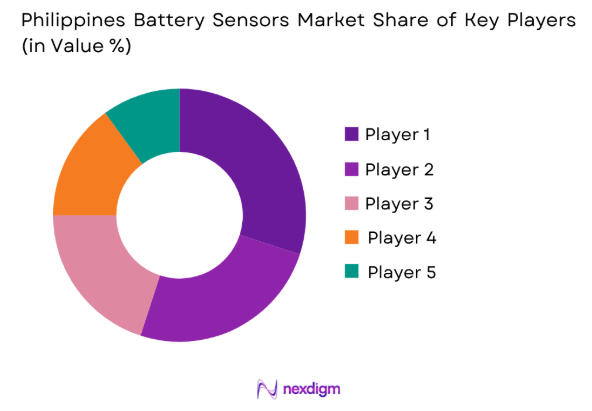
Philippines Battery Sensors Market Analysis
Growth Drivers
Government Support for EV Adoption
A key growth driver in the Philippines Battery Sensors market is the government’s robust push for electric vehicle (EV) adoption. The government has implemented various incentives such as subsidies, tax breaks, and investments in EV infrastructure to accelerate the growth of the EV market. These initiatives are expected to boost EV adoption across the country, leading to an increased demand for advanced battery management systems, including sensors. With a focus on reducing carbon emissions and promoting sustainable energy solutions, the government’s efforts are critical in driving the growth of the battery sensors market, positioning it for long-term expansion as EV adoption rises.
Technological Advancements in Battery Monitoring
A significant growth driver for the Philippines Battery Sensors market is the rapid advancement of battery management system technologies. Innovations in sensor technologies, such as wireless communication, improved accuracy, and multi-functional capabilities, are gaining traction. These developments enable more precise monitoring of battery performance, ensuring enhanced safety, prolonged battery life, and greater energy efficiency. As the demand for reliable and sophisticated battery management solutions rises, these technological advancements will fuel the demand for battery sensors, especially in electric vehicles and renewable energy sectors. The continuous evolution of these technologies is essential for meeting the increasing needs of modern energy storage systems.
Market Challenges
High Manufacturing Costs
The Philippines Battery Sensors market faces considerable challenges due to the high manufacturing costs associated with advanced battery sensors. These sensors demand sophisticated technology and precise production processes, which contribute to elevated costs. For manufacturers, balancing cost efficiency while ensuring high-quality standards is a major hurdle. This challenge is particularly apparent in the electric vehicle and renewable energy markets, where affordability is crucial for widespread adoption. As battery sensors are integral to the performance and safety of electric vehicles and energy storage systems, the high production costs may hinder their integration, limiting market growth. Consequently, achieving cost-effective manufacturing without compromising on quality remains a key obstacle in the market’s expansion.
Supply Chain Constraints
The Philippines Battery Sensors market is also grappling with supply chain constraints, particularly due to the ongoing global semiconductor shortage. Battery sensors rely heavily on semiconductor components, which have become increasingly scarce, leading to production delays and limited availability of specific sensor types. This issue is exacerbated by geopolitical tensions and the rising demand for semiconductors across various industries. As a result, manufacturers face challenges in meeting the growing demand for battery sensors, particularly in electric vehicles and renewable energy sectors. These supply chain disruptions are expected to persist, potentially hindering the market’s ability to scale effectively and meet future demand.
Opportunities
Expansion of EV Infrastructure
The increasing demand for electric vehicles (EVs) presents a significant opportunity for the Philippines Battery Sensors market. As investments in EV infrastructure, such as charging and battery swapping stations, continue to rise, the need for efficient and reliable battery sensors will grow. These sensors are crucial for monitoring battery performance, ensuring longer lifespan and optimal efficiency. With the development of a robust EV ecosystem in the Philippines, there is a clear opportunity for market players to expand their product offerings. As EV adoption accelerates, the demand for advanced battery sensors will continue to increase, creating a promising growth avenue for manufacturers in the market.
Growth in Renewable Energy Sector
The growth of renewable energy projects in the Philippines presents a key opportunity for battery sensor manufacturers. As the country invests more in solar and wind power, energy storage systems are becoming essential for managing supply and demand. Battery sensors are crucial for ensuring the efficiency and safety of these storage systems by providing real-time monitoring of battery performance. With the increasing emphasis on renewable energy and the need for reliable energy storage solutions, the demand for advanced battery sensors is expected to rise. This creates substantial opportunities for market players to expand their offerings and cater to the growing renewable energy sector in the Philippines.
Future Outlook
The future of the Philippines Battery Sensors market looks promising, with expected growth driven by the rising adoption of electric vehicles and the increasing investments in renewable energy systems. Technological advancements in battery management systems, coupled with government support for green mobility, will continue to propel the demand for battery sensors. As the need for efficient energy storage and smart grid integration grows, the market will witness continued expansion, creating opportunities for new product innovations and market players.
Major Players
- TE Connectivity
- Honeywell
- Infineon Technologies
- Bosch
- STMicroelectronics
- Panasonic Corporation
- Texas Instruments
- Maxim Integrated
- NXP Semiconductors
- Murata Manufacturing
- Renesas Electronics
- Analog Devices
- Broadcom
- TDK Corporation
- Microchip Technology
Key Target Audience
- Investments and venture capitalist firms
- Government and regulatory bodies
- Electric vehicle manufacturers
- Renewable energy companies
- Battery manufacturers
- OEMs in automotive and industrial sectors
- Research and development firms
- Smart grid solution providers
Research Methodology
Step 1: Identification of Key Variables
This step involves defining the key market variables, including market drivers, trends, and segmentation factors that influence the battery sensors market.
Step 2: Market Analysis and Construction
We analyze the existing market data, trends, and competitor activities to build a comprehensive market model for the Philippines Battery Sensors market.
Step 3: Hypothesis Validation and Expert Consultation
In this phase, we validate the market hypotheses through expert interviews, primary research, and consultations with industry leaders to ensure the accuracy of the market outlook.
Step 4: Research Synthesis and Final Output
We synthesize all collected data and insights to produce the final market report, which provides a clear and concise outlook for the Philippines Battery Sensors market.

- Executive Summary
- Research Methodology (Definitions, Scope, Industry Assumptions, Market Sizing Approach, Primary & Secondary Research Framework, Data Collection & Verification Protocol, Analytic Models & Forecast Methodology, Limitations & Research Validity Checks)

- Market Definition and Scope
- Value Chain & Stakeholder Ecosystem
- Regulatory / Certification Landscape
- Sector Dynamics Affecting Demand
- Strategic Initiatives & Infrastructure Growth

- Growth Drivers
Increasing Electric Vehicle Adoption
Growth in Renewable Energy
Technological Advancements in Battery Management
Rising Consumer Electronics Demand
Government Initiatives Supporting Green Technologies - Market Challenges
High Manufacturing Costs
Complex Regulatory Landscape
Lack of Standardization
Technology Integration Issues
Supply Chain Constraints - Market Opportunities
Growing EV Infrastructure Development
Increase in Smart Grid Technologies
Collaborations in Energy Storage Solutions - Trends
Integration of IoT with Battery Sensors
Shift Towards Wireless Sensors
Advancements in Battery Life Management Technologies - Government Regulations
- SWOT Analysis of Key Competitors
- Porter’s Five Forces

- By Market Value, 2020-2025
- By Installed Units, 2020-2025
- By Average System Price, 2020-2025
- By System Complexity Tier, 2020-2025

- By System Type (In Value%)
Battery Voltage Sensors
Battery Current Sensors
Battery Temperature Sensors
Battery Pressure Sensors
Battery Gas Sensors - By Platform Type (In Value%)
Electric Vehicles
Consumer Electronics
Industrial Equipment
Renewable Energy Systems
Medical Devices - By Fitment Type (In Value%)
On-board Sensors
Off-board Sensors
Integrated Sensors
Standalone Sensors
Embedded Sensors - By End User Segment (In Value%)
Automotive Industry
Consumer Electronics Industry
Energy Storage Systems
Healthcare Sector
Renewable Energy Sector - By Procurement Channel (In Value%)
Direct Procurement
Third-party Distributors
Online Platforms
OEM Partnerships
Retail Partnerships

- Market Share Analysis
- Cross Comparison Parameters (System Type, Platform Type, Procurement Channel, End User Segment, Fitment Type, Technology Type, Geographical Reach, Sensor Accuracy, Battery Size Compatibility, Integration Ease)
- SWOT Analysis of Key Competitors
- Pricing & Procurement Analysis
- Key Players
Sensata Technologies
Analog Devices
TE Connectivity
Panasonic Corporation
Honeywell International
Infineon Technologies
Texas Instruments
Robert Bosch GmbH
Emerson Electric
STMicroelectronics
Maxim Integrated
Vishay Intertechnology
NXP Semiconductors
Murata Manufacturing
Renesas Electronics

- Automotive Industry’s Increasing Demand for Sensors
- Renewable Energy Sector’s Push for Battery Efficiency
- Consumer Electronics’ Demand for Battery Monitoring
- Government and Regulatory Push for EV Adoption

- Forecast Market Value, 2026-2035
- Forecast Installed Units, 2026-2035
- Price Forecast by System Tier, 2026-2035
- Future Demand by Platform, 2026-2035


 Request a Sample
 Ask for Customization
 Get a Quote
 Enquire Now