

 Download PDF
 Download PDF
Market Overview
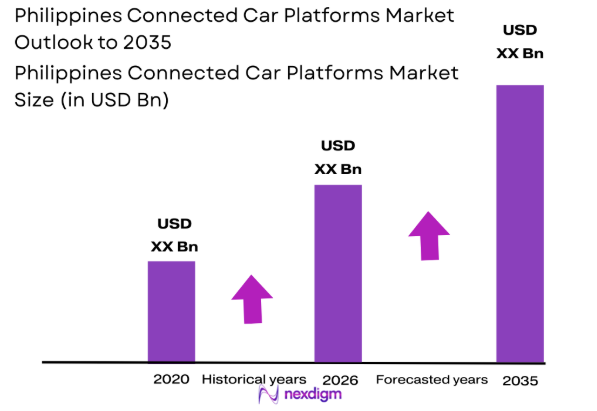
The Philippines Connected Car Platforms market is growing significantly, driven by increased demand for advanced vehicle technologies, including telematics, infotainment, and autonomous driving systems. As of recent historical assessments, the market is valued at USD ~ billion and is expected to see substantial growth due to the increasing adoption of connected vehicles and the expansion of smart cities. Key drivers include advancements in 5G technology and the government’s push for smart infrastructure.
The dominant cities in the Philippines for connected car platforms are Metro Manila and Cebu, both being major economic hubs. These cities benefit from the concentration of automotive manufacturers, tech startups, and telecom providers, enabling faster adoption of connected vehicle technologies. Metro Manila’s robust infrastructure and Cebu’s expanding tech ecosystem contribute to the increased demand for connected car services.
Market Segmentation
By System Type
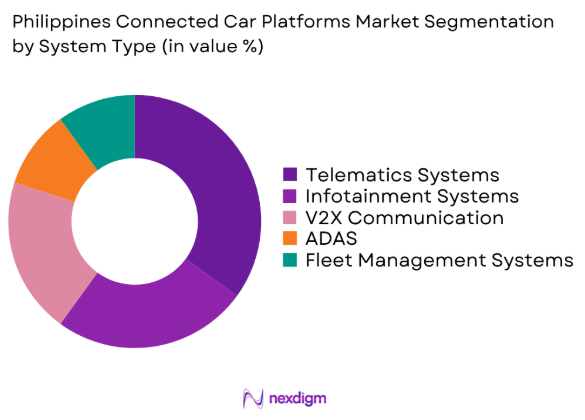
The Philippines Connected Car Platforms market is segmented by system type into telematics systems, infotainment systems, vehicle-to-everything (V2X) communication, advanced driver assistance systems (ADAS), and fleet management systems. Recently, telematics systems have dominated the market due to their increasing integration into vehicles, offering enhanced safety features, real-time tracking, and communication capabilities that cater to both consumer and fleet operator needs. This dominance is driven by the growing adoption of fleet management systems that leverage telematics to enhance operational efficiency.
By Platform Type
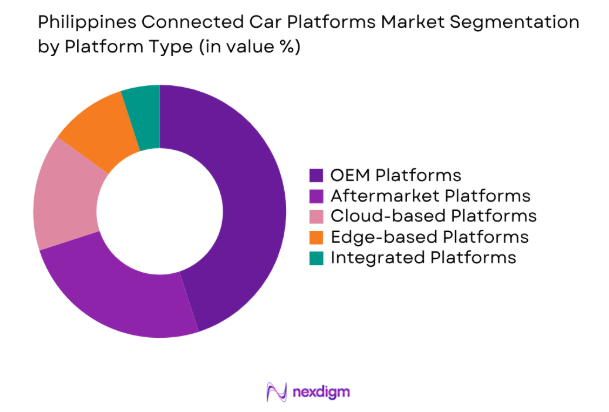
The Philippines Connected Car Platforms market is also segmented by platform type into OEM platforms, aftermarket platforms, cloud-based platforms, edge-based platforms, and integrated platforms. OEM platforms hold the dominant market share, largely driven by automotive manufacturers integrating connected car technologies directly into new vehicle models. This is further supported by consumer demand for enhanced vehicle safety and connectivity, alongside regulatory pressures to improve vehicle technology in the Philippines.
Competitive Landscape
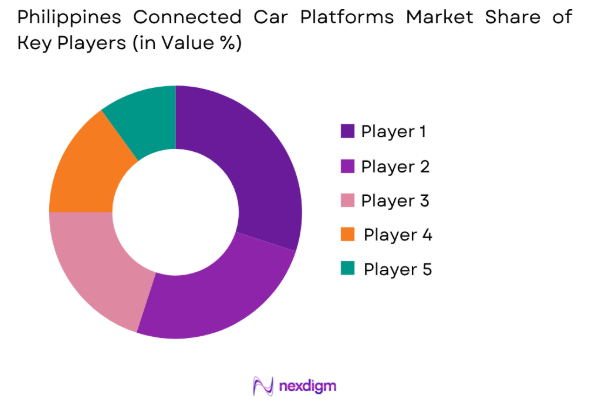
The competitive landscape of the Philippines Connected Car Platforms market is marked by the presence of key global and local players focusing on technological advancements and strategic partnerships. Major players are consolidating their positions through collaborations with telecom providers, vehicle manufacturers, and technology firms to offer advanced connected vehicle solutions. The market remains dynamic, with both incumbents and startups vying for leadership in vehicle connectivity and data-driven services.
| Company Name | Establishment Year | Headquarters | Technology Focus | Market Reach | Key Products | Revenue | Market-Specific Parameter |
| Toyota | 1937 | Japan | ~ | ~ | ~ | ~ | ~ |
| Honda | 1946 | Japan | ~ | ~ | ~ | ~ | ~ |
| BMW | 1916 | Germany | ~ | ~ | ~ | ~ | ~ |
| Qualcomm | 1985 | USA | ~ | ~ | ~ | ~ | ~ |
| Ericsson | 1876 | Sweden | ~ | ~ | ~ | ~ | ~ |
Philippines Connected Car Platforms Market Analysis
Growth Drivers
Expansion of 5G Networks
The rapid rollout of 5G technology is a major driver for the growth of the Philippines Connected Car Platforms market. With 5G infrastructure, vehicles will benefit from faster data processing, real-time updates, and enhanced navigation, improving the driving experience. 5G’s ability to handle larger data streams will support advanced features such as autonomous driving, vehicle-to-vehicle (V2V) communication, and cloud-based infotainment systems, which are essential for the connected car ecosystem. The low latency of 5G will also improve performance, boosting consumer demand and industry growth. The Philippines government is already investing in expanding 5G infrastructure, fostering a favorable environment for connected car technologies, which will drive market competition and innovation in the coming years.
Government Initiatives for Smart Cities
The Philippine government’s significant investments in smart city infrastructure have fostered the adoption of connected car technologies. Through the “Build, Build, Build” program, the government is improving urban mobility, traffic management, and public transportation with smart technologies. This supports connected car platforms as smart cities can better accommodate connected vehicles. Policies promoting data-driven technologies, such as vehicle-to-everything (V2X) communication, have accelerated adoption. Additionally, government incentives and regulations focusing on sustainability and road safety are encouraging automotive manufacturers to adopt cleaner, more efficient connected vehicle solutions. The ongoing development of smart city projects is expected to drive greater demand for connected car platforms, fueling market growth in the Philippines.
Market Challenges
High Initial Investment Costs
A major challenge in the Philippines Connected Car Platforms market is the high initial cost of implementing connected car technologies. Both automotive manufacturers and consumers are hesitant due to the significant upfront investments needed for infrastructure, hardware, and system integration. While connected vehicles offer long-term benefits like enhanced safety and fuel efficiency, the high costs of telematics, infotainment systems, and other advanced features hinder widespread adoption. Local manufacturers, in particular, face challenges integrating these technologies into affordable models. Limited government subsidies further prevent consumers from affording connected car features. However, the ongoing reduction in the cost of components like sensors and microchips could eventually make these technologies more accessible.
Cybersecurity and Privacy Concerns
Cybersecurity and privacy concerns are significant barriers to the adoption of connected car technologies in the Philippines. As more devices become connected to the internet, the risk of cyber-attacks and unauthorized access to sensitive data, such as driver behavior and location, increases. Vehicle manufacturers and telecom providers must ensure the protection of in-vehicle data from malicious attacks or breaches to prevent theft or vehicle hijacking. Securing communication between connected vehicles and infrastructure is also crucial to avoid accidents or traffic disruptions. Compliance with data protection regulations, such as the Data Privacy Act of 2012, adds pressure on the market to invest in robust security measures, which can raise costs and slow adoption.
Opportunities
Rise of Electric Vehicles and Sustainable Mobility Solutions
The shift toward sustainable transportation is driving the growth of connected car platforms in the Philippines, as the demand for electric vehicles (EVs) increases. Government incentives and a push for greener transportation are accelerating the adoption of EVs. Connected car platforms play a crucial role in EVs, offering features like real-time battery monitoring, energy-efficient route planning, and vehicle diagnostics. As more consumers and businesses adopt EVs, the need for connected technologies will grow, creating opportunities in both passenger and commercial vehicle segments. Integrating these platforms with EVs enhances performance control, helping operators and consumers maximize benefits while reducing carbon footprints, opening new business opportunities for tech providers.
Increasing Demand for Autonomous Vehicles
Autonomous vehicles (AVs) present a significant opportunity for the Philippines Connected Car Platforms market. As both global and local automotive players invest in AV technologies, the demand for connected platforms enabling autonomous driving will rise. These platforms facilitate safe, efficient driving by ensuring seamless communication between vehicles, infrastructure, and other road users. With the Philippines’ growing tech ecosystem and urbanization, the country is well-positioned for AV adoption. As regulatory frameworks adapt to accommodate AVs, the market for connected car platforms will expand. Advancements in AI, machine learning, and V2X communication will make AVs a reality, opening new opportunities for technology providers in this emerging sector.
Future Outlook
The future outlook for the Philippines Connected Car Platforms market looks promising, with technological advancements such as 5G, AI integration, and autonomous vehicle solutions expected to drive significant growth in the next five years. Government initiatives aimed at smart city development and the increasing adoption of electric vehicles will further fuel demand. As the market continues to evolve, new opportunities will emerge in the areas of cybersecurity, data privacy, and fleet management, providing avenues for growth and investment in connected vehicle technologies.
Major Players
- Toyota
- Honda
- Ford
- BMW
- Hyundai
- Nissan
- General Motors
- Aptiv
- Continental
- Denso
- Qualcomm
- Ericsson
- Bosch
- ZF Friedrichshafen
- Valeo
Key Target Audience
- Investments and venture capitalist firms
- Government and regulatory bodies
- Automotive manufacturers
- Telecom providers
- Fleet operators
- Technology providers
- Infrastructure developers
- Smart city planners
Research Methodology
Step 1: Identification of Key Variables
Identification of the most relevant variables, including system types, platform types, and market dynamics.
Step 2: Market Analysis and Construction
Analyzing historical market data, identifying trends, and segmenting the market based on key drivers.
Step 3: Hypothesis Validation and Expert Consultation
Validating hypotheses through consultation with industry experts and key stakeholders.
Step 4: Research Synthesis and Final Output
Synthesizing all findings into a cohesive report with actionable insights and recommendations.

- Executive Summary
- Research Methodology (Definitions, Scope, Industry Assumptions, Market Sizing Approach, Primary & Secondary Research Framework, Data Collection & Verification Protocol, Analytic Models & Forecast Methodology, Limitations & Research Validity Checks)

- Market Definition and Scope
- Value Chain & Stakeholder Ecosystem
- Regulatory / Certification Landscape
- Sector Dynamics Affecting Demand
- Strategic Initiatives & Infrastructure Growth

- Growth Drivers
Increased Adoption of Electric Vehicles
Rising Consumer Demand for Connected Features
Government Push for Smart Infrastructure - Market Challenges
High Initial Investment Costs
Security and Privacy Concerns
Regulatory and Compliance Barriers - Market Opportunities
Expansion of 5G Connectivity
Integration of AI and Machine Learning
Collaborations between Automotive and Tech Firms - Trends
Increase in Autonomous Vehicle Integration
Rising Use of Big Data and Analytics
Shift Toward Over-the-Air (OTA) Updates - Government Regulations
- SWOT Analysis of Key Competitors
- Porter’s Five Forces

- By Market Value, 2020-2025
- By Installed Units, 2020-2025
- By Average System Price, 2020-2025
- By System Complexity Tier, 2020-2025

- By System Type (In Value%)
Telematics Systems
Infotainment Systems
Vehicle-to-Everything (V2X) Communication
Advanced Driver Assistance Systems (ADAS)
Fleet Management Systems - By Platform Type (In Value%)
OEM Platforms
Aftermarket Platforms
Cloud-based Platforms
Edge-based Platforms
Integrated Platforms - By Fitment Type (In Value%)
Factory-installed Systems
Retrofitted Systems
Modular Solutions
Integrated Solutions
Upgraded Systems - By End User Segment (In Value%)
Automotive Manufacturers
Fleet Operators
Tech Providers
Telecom Operators
Government and Regulatory Bodies - By Procurement Channel (In Value%)
Direct Procurement
Third-party Distributors
Online Platforms
OEM Partnerships
Service Providers

- Market Share Analysis
- Cross Comparison Parameters (System Type, Platform Type, Procurement Channel, End User Segment, Fitment Type, Vehicle Type, Technology Integration, Service Coverage, Fleet Size, Price Sensitivity)
- SWOT Analysis of Key Competitors
- Pricing & Procurement Analysis
- Key Players
Toyota
Honda
Ford
BMW
Hyundai
Nissan
General Motors
Mercedes-Benz
Volks,wagen
Volvo
Aptiv
Continental
Denso
Qualcomm
Ericsson

- Automotive manufacturers increasingly focus on connected car technologies
- Fleet operators enhance operational efficiency using connected systems
- Tech providers expand into automotive connectivity solutions
- Government bodies create favorable policies for smart city initiatives

- Forecast Market Value, 2026-2035
- Forecast Installed Units, 2026-2035
- Price Forecast by System Tier, 2026-2035
- Future Demand by Platform, 2026-2035


 Request a Sample
 Ask for Customization
 Get a Quote
 Enquire Now