

 Download PDF
 Download PDF
Market Overview
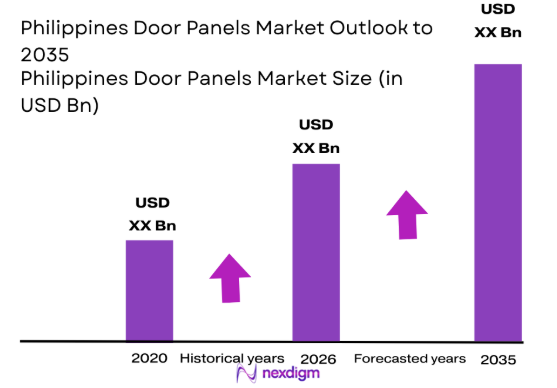
The Philippines Door Panels market has seen significant growth, driven by an increasing demand for automotive, residential, and commercial applications. The market size is largely influenced by the rise in infrastructure development, particularly in construction and vehicle manufacturing. As urbanization continues to accelerate, the demand for residential door panels also grows, with the real estate sector expanding rapidly. Furthermore, advancements in automotive technologies and regulations promoting vehicle safety and energy efficiency contribute to the market’s growth. Based on a recent historical assessment, the market size is valued at approximately USD ~ billion, with key drivers being construction projects, automotive production, and technological advancements in door panel designs.
The Philippines remains a dominant player in the Southeast Asian region due to its strategic position and economic growth. Cities like Metro Manila, Cebu, and Davao lead the market as primary hubs for residential and commercial projects. The automotive industry is also concentrated in these regions, driven by both local manufacturing and importation. Government incentives and infrastructure developments continue to boost demand, with Metro Manila’s urban expansion influencing the market for residential and commercial door panels. Other provinces follow suit, driven by both infrastructure and real estate development initiatives.
Market Segmentation
By Product Type
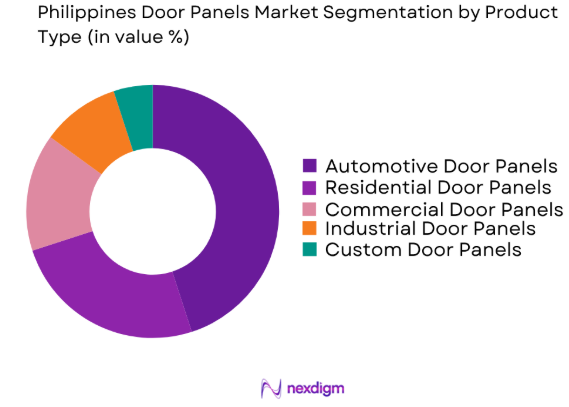
The Philippines door panels market is segmented by product type into automotive door panels, residential door panels, commercial door panels, industrial door panels, and custom door panels. Recently, automotive door panels have a dominant market share due to the growing automotive sector, which has experienced a surge in vehicle production and exports. The demand for energy-efficient and lightweight materials in vehicles is also contributing to the growth of this sub-segment. The automotive industry’s shift towards advanced door panel designs, which focus on safety and durability, continues to drive the demand for this sub-segment.
By Platform Type
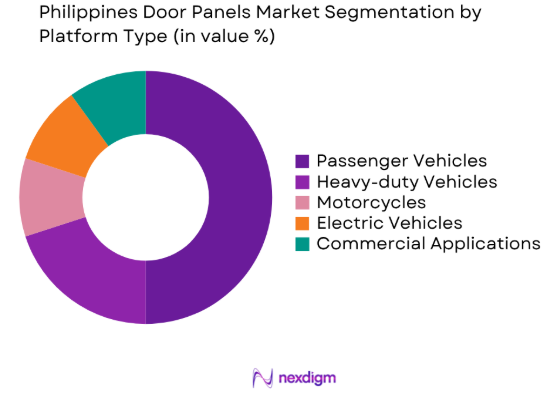
The Philippines Door Panels market is segmented by platform type into passenger vehicles, heavy-duty vehicles, motorcycles, electric vehicles, and commercial applications. The passenger vehicle sub-segment is the leading segment, driven by an increasing demand for vehicles in the region. Growth in the middle-class population, combined with the introduction of new models from domestic and international manufacturers, has significantly contributed to the market’s expansion. This sub-segment’s dominance is supported by continuous improvements in vehicle safety, design, and comfort, which influence the adoption of high-quality door panels.
Competitive Landscape
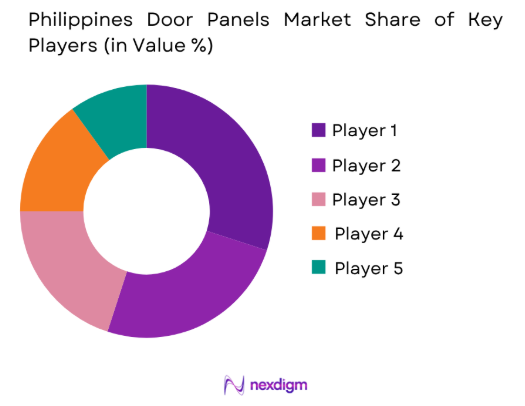
The Philippines door panels market is highly competitive, with both local and international players dominating the market. Major players focus on offering innovative solutions, utilizing advanced materials such as lightweight composites and sustainable materials. Consolidation is expected to continue as players integrate vertically to control supply chains and improve operational efficiency. This competitive landscape is further influenced by technological advancements in door panel designs and the increasing importance of sustainability in manufacturing processes.
| Company Name | Establishment Year | Headquarters | Technology Focus | Market Reach | Key Products | Revenue | Additional Parameter |
| Toyota | 1937 | Japan | ~ | ~ | ~ | ~ | ~ |
| Honda | 1948 | Japan | ~ | ~ | ~ | ~ | ~ |
| Mitsubishi | 1870 | Japan | ~ | ~ | ~ | ~ | ~ |
| Isuzu | 1916 | Japan | ~ | ~ | ~ | ~ | ~ |
| Metro Doors | 1998 | Philippines | ~ | ~ | ~ | ~ | ~ |
Philippines Door Panels Market Analysis
Growth Drivers
Increase in Infrastructure Development
The Philippines is witnessing significant growth in urban infrastructure, especially in residential and commercial construction. This surge in development drives the demand for high-quality door panels, as both residential and commercial buildings require durable, aesthetically appealing solutions. As more mixed-use projects emerge, the need for specialized door panels increases. Government initiatives aimed at enhancing public infrastructure also open up opportunities for door panel manufacturers to supply materials for government buildings, schools, and hospitals. The continuous growth in urbanization and construction, coupled with these government-driven projects, creates a favorable environment for door panel manufacturers to meet the rising demand across various sectors.
Growth in Automotive Production
The automotive sector in the Philippines has experienced steady growth, driven by both local manufacturing and vehicle imports. With more vehicles on the road, the demand for automotive parts, including door panels, has surged. Manufacturers are prioritizing lightweight materials and advanced design features to enhance vehicle safety, reduce energy consumption, and meet strict safety standards. Additionally, increasing consumer demand for personalized and customized vehicles further boosts the need for specialized door panels. As consumer preferences shift toward more unique and efficient vehicle features, the market for automotive door panels continues to expand, presenting growth opportunities for manufacturers focused on innovation and customization.
Market Challenges
High Raw Material Costs
A significant challenge for the Philippines door panels market is the rising cost of essential raw materials, such as steel and composites, used in production. Global supply chain disruptions and inflationary pressures have caused fluctuations in material prices, making it more difficult for manufacturers to control production costs. As raw material prices increase, manufacturers are forced to adjust their pricing strategies for finished door panels. This situation creates challenges in maintaining competitive prices while still delivering high-quality products. The volatility of material costs also impacts profitability, as companies must balance the need to stay cost-effective with the demand for superior, durable door panels that meet customer expectations and regulatory standards.
Regulatory Compliance and Safety Standards
Compliance with both local and international regulations related to material safety, environmental impact, and manufacturing standards poses a major challenge in the Philippines door panels market. The government enforces stringent rules on the use of sustainable materials and safety standards, particularly in automotive and construction sectors. Manufacturers often incur additional costs in research, development, and certification processes to meet these requirements. Ensuring compliance may also involve adopting new technologies and materials, which can be resource-intensive. Failure to adhere to these standards can result in penalties, legal consequences, or loss of market share, making it crucial for manufacturers to invest in compliance strategies to maintain competitiveness and avoid potential risks in the market.
Opportunities
Technological Advancements in Smart Doors
The Philippines market presents growing opportunities for smart door panels that incorporate advanced technologies like touchless access, biometric security, and energy-efficient features. As consumer awareness of smart technologies increases, the demand for intelligent residential and commercial doors is on the rise. Manufacturers can take advantage of this trend by integrating these smart features into their door panels, enhancing both security and convenience for end-users. Moreover, government incentives for energy-efficient building materials further support the adoption of smart door panels, driving market growth. This combination of consumer demand for innovation and regulatory support creates a promising environment for manufacturers to expand their offerings and meet evolving consumer needs.
Shift Toward Sustainability in Manufacturing
The increasing emphasis on sustainability in construction and automotive manufacturing offers a significant opportunity for door panel manufacturers to adopt eco-friendly materials and processes. Both consumers and businesses are seeking products that are environmentally friendly and energy-efficient. By incorporating sustainable materials like recycled composites and minimizing the environmental impact of production processes, companies can stand out in the market. This shift toward sustainability is further supported by government regulations that promote green building practices and eco-friendly products. Manufacturers who embrace these trends not only meet consumer demand but also align with regulatory standards, gaining a competitive edge in a market focused on environmental responsibility.
Future Outlook
The future outlook for the Philippines door panels market is promising, with continued growth expected in both the residential and automotive sectors. Technological advancements in materials and design, along with increasing demand for energy-efficient and smart door solutions, will drive market growth. Government initiatives supporting infrastructure development and sustainability will further create opportunities for innovation in the door panel sector. Additionally, the market is poised to benefit from an expanding middle class and the increasing popularity of electric vehicles, which require specialized door solutions.
Major Players
- Toyota
- Honda
- Mitsubishi
- Isuzu
- Metro Doors
- Nissan
- Hyundai
- Ford
- Kia
- Fuso
- Volkswagen
- BMW
- Mercedes-Benz
- Audi
- Tesla
Key Target Audience
- Investments and venture capitalist firms
- Government and regulatory bodies
- Real estate developers
- Automotive manufacturers
- Door panel suppliers
- Retailers and distributors
- Construction companies
- End consumers
Research Methodology
Step 1: Identification of Key Variables
The first step involves identifying the critical variables that influence the door panels market, such as product type, platform type, and procurement channels.
Step 2: Market Analysis and Construction
In this step, a comprehensive market analysis is performed by segmenting the market and collecting data from primary and secondary sources to construct a detailed market profile.
Step 3: Hypothesis Validation and Expert Consultation
Expert consultations are conducted to validate the findings and refine hypotheses regarding key market drivers, challenges, and opportunities.
Step 4: Research Synthesis and Final Output
The final step synthesizes the data and insights gathered into a structured market report, presenting conclusions and recommendations for stakeholders.

- Executive Summary
- Research Methodology (Definitions, Scope, Industry Assumptions, Market Sizing Approach, Primary & Secondary Research Framework, Data Collection & Verification Protocol, Analytic Models & Forecast Methodology, Limitations & Research Validity Checks)

- Market Definition and Scope
- Value Chain & Stakeholder Ecosystem
- Regulatory / Certification Landscape
- Sector Dynamics Affecting Demand
- Strategic Initiatives & Infrastructure Growth

- Growth Drivers
Increase in Automotive Production
Growth of Residential Construction
Expansion of Electric Vehicle (EV) Market - Market Challenges
High Material Costs
Regulatory Compliance
Logistical Challenges in Distribution - Market Opportunities
Emerging Demand for EV Door Panels
Expansion of Smart Home Integration
Customization Trends in Residential and Commercial Markets - Trends
Shift Toward Lightweight Materials
Growth in Customization Preferences
Increased Use of Sustainable Materials - Government Regulations
- SWOT Analysis of Key Competitors
- Porter’s Five Forces

- By Market Value, 2020-2025
- By Installed Units, 2020-2025
- By Average System Price, 2020-2025
- By System Complexity Tier, 2020-2025

- By System Type (In Value%)
Automotive Door Panels
Commercial Vehicle Door Panels
Residential Door Panels
Industrial Door Panels|
Custom Door Panels - By Platform Type (In Value%)
Passenger Vehicles
Heavy-duty Vehicles
Motorcycles
Electric Vehicles
Commercial Applications - By Fitment Type (In Value%)
OEM (Original Equipment Manufacturer)
Aftermarket
Replacement Parts
Custom Fitments
Universal Fitments - By End User Segment (In Value%)
Automobile Manufacturers
Construction & Real Estate Developers
Commercial Vehicle Manufacturers
Retailers & Distributors
End Consumers - By Procurement Channel (In Value%)
Direct Procurement
Dealer Networks
Online Platforms
Third-party Distributors
Government Tenders

- Market Share Analysis
- Cross Comparison Parameters (System Type, Platform Type, Procurement Channel, End User Segment, Fitment Type, Material Type, Production Process, Region, Sales Channel, Price Tier)
- SWOT Analysis of Key Competitors
- Pricing & Procurement Analysis
- Key Players
Toyota
Honda
Ford
Nissan
Hyundai
Mitsubishi
Isuzu
Volkswagen
Kia
Chevrolet
BMW
Mercedes-Benz
Audi
Tesla
Fuso

- Demand from Automotive Manufacturers
- Growth in the Residential Sector
- Commercial Vehicle Door Panel Innovations
- Retailer and Distributor Network Expansion

- Forecast Market Value, 2026-2035
- Forecast Installed Units, 2026-2035
- Price Forecast by System Tier, 2026-2035
- Future Demand by Platform, 2026-2035


 Request a Sample
 Ask for Customization
 Get a Quote
 Enquire Now