

 Download PDF
 Download PDF
Market Overview
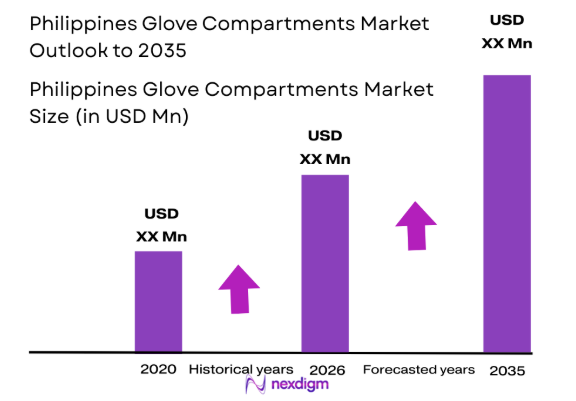
The Philippines Glove Compartments market is driven by the increasing demand for vehicle interior customization and functional storage solutions. With a rising number of vehicle manufacturers focusing on enhancing consumer comfort, glove compartments are becoming more sophisticated, incorporating features like integrated lighting and modular designs. Based on a recent historical assessment, the market size for glove compartments in the Philippines is expected to reach USD ~ million, with steady growth attributed to both OEM and aftermarket demand. The growth is further bolstered by an increasing number of car owners seeking customization options to enhance the practicality and aesthetics of their vehicles.
The market is dominated by key players in urban centers such as Metro Manila, where automotive manufacturing and consumer purchasing power are the highest. Additionally, the region’s proximity to major international ports supports the efficient distribution of automotive components, making it a hub for glove compartment manufacturing. Consumer demand in suburban areas also reflects the shift towards more feature-rich, space-efficient vehicle designs. As the Philippines continues to witness rapid urbanization, demand for customized automotive interiors, including glove compartments, is set to increase due to rising disposable income and an evolving automotive culture.
Market Segmentation
By Product Type
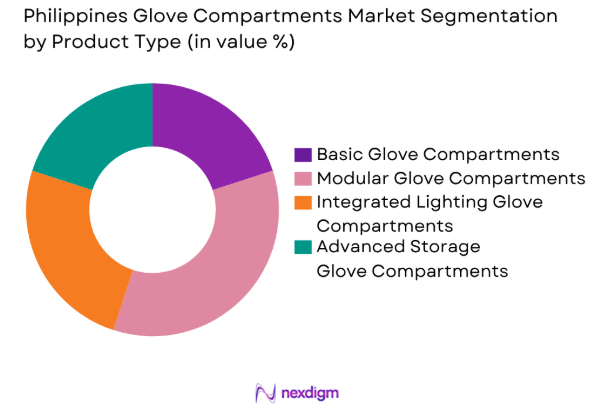
The Philippines glove compartments market is segmented by product type into basic glove compartments, modular glove compartments, integrated lighting glove compartments, and glove compartments with advanced storage features. Recently, modular glove compartments have gained a dominant market share due to their customizable nature, catering to a broader range of consumer needs. These compartments allow car owners to tailor the storage space based on their preferences, further enhancing the utility and aesthetic appeal of their vehicles. As consumers increasingly demand personalization in their vehicles, modular options continue to rise in popularity.
By Platform Type
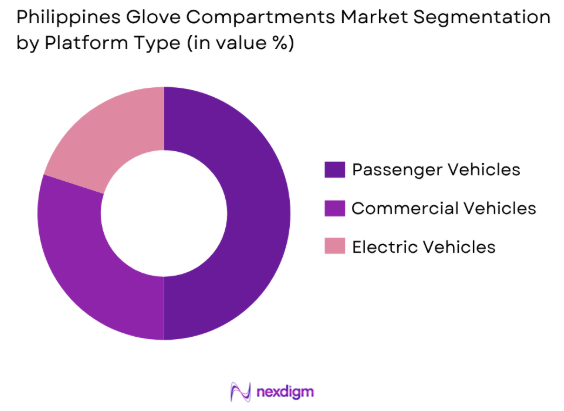
The Philippines Glove Compartments market is segmented into passenger vehicles, commercial vehicles, and electric vehicles. Among these, passenger vehicles dominate the glove compartments market due to their large production volumes and higher demand for customizable interiors. Consumer preferences for enhanced interior functionality in passenger vehicles, combined with a growing trend toward more feature-rich designs, has propelled the demand for glove compartments in this segment. The expansion of electric vehicles is also contributing to the growth, as these vehicles often include unique storage requirements, further diversifying the platform types within the market.
Competitive Landscape
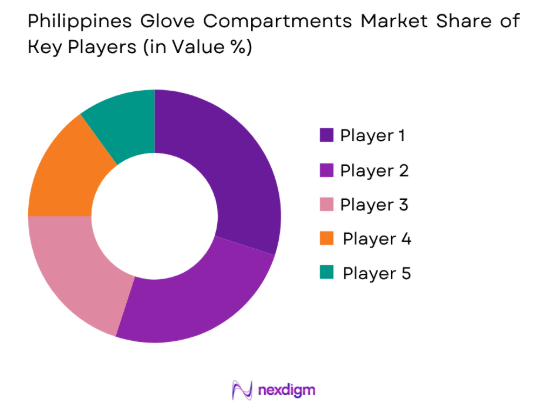
The Philippines glove compartments market is moderately consolidated with several prominent players offering a variety of products to meet diverse consumer needs. These companies are focusing on product innovation, with many offering customizable and eco-friendly storage solutions. The market is highly competitive, with a mix of local manufacturers and international suppliers vying for market share. The increasing consumer preference for convenience and enhanced vehicle aesthetics is further driving competition among key players.
| Company Name | Establishment Year | Headquarters | Technology Focus | Market Reach | Key Products | Revenue | Additional Parameter |
| Honda | 1948 | Japan | ~ | ~ | ~ | ~ | ~ |
| Toyota | 1937 | Japan | ~ | ~ | ~ | ~ | ~ |
| Ford | 1903 | USA | ~ | ~ | ~ | ~ | ~ |
| Nissan | 1933 | Japan | ~ | ~ | ~ | ~ | ~ |
| Hyundai | 1967 | South Korea | ~ | ~ | ~ | ~ | ~ |
Philippines Glove Compartments Market Analysis
Growth Drivers
Increased consumer demand for vehicle customization
The growing consumer desire for personalized vehicle interiors is a key driver of the glove compartments market. Consumers increasingly prefer products that cater to their specific needs, emphasizing both practicality and aesthetics. In response, manufacturers are introducing more adaptable and modular glove compartments, offering customization options to fit individual preferences. This trend toward interior customization is further supported by the expansion of the automotive market and rising disposable incomes, particularly in emerging markets like the Philippines. As consumers seek more functional and visually appealing vehicle interiors, the demand for versatile and innovative glove compartments continues to grow, offering significant opportunities for manufacturers to innovate and meet these evolving consumer demands.
Technological advancements in automotive interiors
Technological advancements in vehicle interiors are another major growth driver for the glove compartments market. Innovations like motorized glove compartments, digital storage management, and enhanced security features are becoming more prevalent. As car manufacturers focus on creating smarter, more efficient, and user-friendly designs, glove compartments are evolving to offer improved functionality. These advancements cater to the increasing demand for modern, convenient automotive interiors, enhancing user experience and providing better storage solutions. With consumers seeking innovative and practical vehicle features, these technological developments play a critical role in driving the glove compartments market, positioning it for continued growth in the evolving automotive landscape.
Market Challenges
High production and customization costs
A key challenge in the glove compartments market is the high production costs linked to customized products. As consumer demand for personalized and feature-rich glove compartments rises, manufacturers face increased costs for incorporating advanced technologies and custom designs. These higher production costs may lead to increased retail prices, potentially deterring price-sensitive consumers. The challenge for manufacturers is to balance the need for innovation and customization with cost-efficient production processes. Achieving this balance is crucial for maintaining competitiveness in the market while meeting consumer demand for both affordability and enhanced functionality in vehicle interiors. Manufacturers must continue to find ways to reduce costs without compromising on product quality or features.
Supply chain disruptions and material shortages
Another significant challenge in the glove compartments market is supply chain disruptions and material shortages, which have been exacerbated by global events like the COVID-19 pandemic and ongoing geopolitical tensions. These disruptions have caused delays in sourcing essential raw materials and components for manufacturing glove compartments. Consequently, production timelines are often extended, leading to delays in product availability. This issue poses a particular challenge in regions with less-developed automotive industries, where the supply chain may be more vulnerable. These delays could hinder the market’s growth by limiting manufacturers’ ability to meet consumer demand and impacting the timely delivery of products, ultimately affecting market expansion.
Opportunities
Rising adoption of electric vehicles (EVs)
The growing adoption of electric vehicles (EVs) offers a significant opportunity for the glove compartments market. EVs often require specialized interiors with advanced storage solutions, creating a demand for glove compartments that cater to these unique needs. This trend opens doors for manufacturers to innovate and offer tailored products that complement the evolving design of electric vehicles. As governments continue to promote sustainable transportation, the demand for EVs is expected to rise, which in turn will drive the need for customized automotive components, including glove compartments. With consumers increasingly opting for electric vehicles, manufacturers have an opportunity to meet the growing demand by providing specialized storage solutions designed for the electric vehicle market.
Focus on eco-friendly materials
As environmental sustainability gains importance for both consumers and manufacturers, the glove compartments market has an opportunity to address the growing demand for eco-friendly materials. Consumers are increasingly seeking products made from sustainable or recycled materials, even in automotive interiors. Manufacturers who prioritize environmentally conscious designs and materials for glove compartments can attract eco-conscious consumers while aligning with the rising regulatory pressures in the automotive industry for greener products. By incorporating sustainable practices, manufacturers can not only meet market demand but also enhance their brand reputation as environmentally responsible companies. This shift toward eco-friendly solutions presents a key growth opportunity in the glove compartments market, driven by consumer preferences and environmental regulations.
Future Outlook
The future outlook for the Philippines glove compartments market is positive, with continued growth expected over the next five years. Technological advancements in vehicle interiors, along with the growing demand for electric vehicles, will contribute significantly to the expansion of the market. Additionally, the increasing consumer preference for customizable and modular vehicle storage solutions will drive further market development. Regulatory support for greener automotive solutions will also play a crucial role in shaping the market, particularly in terms of sustainability-focused products. With these factors, the glove compartments market is poised for sustained growth in the coming years.
Major Players
- Honda
- Toyota
- Ford
- Nissan
- Hyundai
- BMW
- Volkswagen
- General Motors
- Mercedes-Benz
- Kia Motors
- Subaru
- Mazda
- Tesla
- Mitsubishi Motors
- Fiat Chrysler Automobiles
Key Target Audience
- Investments and venture capitalist firms
- Government and regulatory bodies
- Automotive manufacturers
- Automotive aftermarket suppliers
- Vehicle customization shops
- Electric vehicle manufacturers
- Distributors & resellers
- Third-party suppliers
Research Methodology
Step 1: Identification of Key Variables
This step involves identifying the core factors that influence the glove compartments market, such as consumer preferences, technological trends, and economic factors.
Step 2: Market Analysis and Construction
In this phase, market trends, size, and potential are analyzed through both primary and secondary research, using credible sources and data.
Step 3: Hypothesis Validation and Expert Consultation
To validate the market hypotheses, consultations with industry experts and key stakeholders are conducted to ensure the accuracy of assumptions.
Step 4: Research Synthesis and Final Output
After gathering all relevant data and insights, the final output is synthesized, and a comprehensive report on the glove compartments market is developed.

- Executive Summary
- Research Methodology (Definitions, Scope, Industry Assumptions, Market Sizing Approach, Primary & Secondary Research Framework, Data Collection & Verification Protocol, Analytic Models & Forecast Methodology, Limitations & Research Validity Checks)

- Market Definition and Scope
- Value Chain & Stakeholder Ecosystem
- Regulatory / Certification Landscape
- Sector Dynamics Affecting Demand
- Strategic Initiatives & Infrastructure Growth

- Growth Drivers
Increasing Demand for Vehicle Customization
Rising Production of Electric and Hybrid Vehicles
Technological Innovations in Automotive Interiors - Market Challenges
High Cost of Customization & Integration
Regulatory Compliance and Certification Standards
Supply Chain Disruptions & Material Shortages - Market Opportunities
Growing Consumer Preference for Modular and Customizable Interiors
Expansion of the Electric Vehicle Market
Government Support for Green Automotive Technologies - Trends
Integration of Smart Storage Solutions\
Customization of Interior Design for Vehicle Differentiation
Rising Demand for Sustainable & Eco-friendly Materials - Government Regulations
- SWOT Analysis of Key Competitors
- Porter’s Five Forces

- By Market Value, 2020-2025
- By Installed Units, 2020-2025
- By Average System Price, 2020-2025
- By System Complexity Tier, 2020-2025

- By System Type (In Value%)
Glove Compartment Design
Storage Capacity
Integrated Lighting Systems
Enhanced Security Features
Modular Storage Solutions - By Platform Type (In Value%)
Passenger Vehicles
Commercial Vehicles
Electric Vehicles
Luxury Vehicles
Off-road Vehicles - By Fitment Type (In Value%)
OEM Fitment
Aftermarket Fitment
Custom Fitment
Integrated Fitment
Modular Fitment - By End User Segment (In Value%)
Automobile Manufacturers
Aftermarket Part Suppliers
OEM Suppliers
Vehicle Customization Shops
Government & Military Fleets - By Procurement Channel (In Value%)
Direct Procurement
Distributors & Resellers
Online Platforms
OEM Networks
Third-party Suppliers

- Market Share Analysis
- Cross Comparison Parameters (System Type, Platform Type, Procurement Channel, End User Segment, Fitment Type, Storage Capacity, Vehicle Type, Customization Level, Integration Technology, Geographic Region)
- SWOT Analysis of Key Competitors
- Pricing & Procurement Analysis
- Key Players
Honda
Toyota
Ford
Hyundai
BMW
Nissan
Volkswagen
Mitsubishi Motors
General Motors
Tesla
Mercedes-Benz
Kia Motors
Subaru
Mazda
Fiat Chrysler Automobiles

- Vehicle Manufacturers’ Push for Custom Interior Solutions
- Growth of the Aftermarket Accessories Segment
- Impact of Consumer Preferences on Vehicle Customization
- Technological Adoption by OEMs for Innovative Interiors

- Forecast Market Value, 2026-2035
- Forecast Installed Units, 2026-2035
- Price Forecast by System Tier, 2026-2035
- Future Demand by Platform, 2026-2035


 Request a Sample
 Ask for Customization
 Get a Quote
 Enquire Now