

 Download PDF
Market Overview
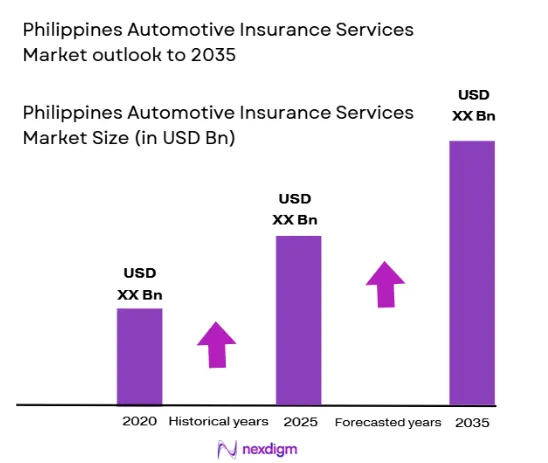
The Philippines automotive insurance services market is expected to reach USD ~ billion based on a recent historical assessment. The market is driven by increasing vehicle ownership, rising awareness about road safety, and growing disposable income among Filipinos. Enhanced government policies to encourage vehicle insurance, alongside a growing preference for comprehensive coverage, have contributed to the market’s growth. Digitalization and the adoption of online platforms further support the expansion, offering ease of access to insurance products and personalized plans.
Metro Manila stands as the dominant region for automotive insurance services in the Philippines due to its dense population and high vehicle sales. Other major urban centers such as Cebu, Davao, and Quezon City also play a significant role in driving demand. These areas are benefiting from expanding infrastructure, improved road networks, and the rising middle class, which continues to increase the demand for comprehensive vehicle insurance. Furthermore, the government’s focus on modernization and urban development accelerates the need for robust insurance solutions.
Market Segmentation
By Product Type:
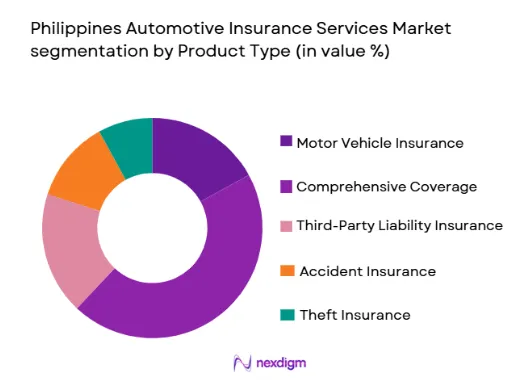
The Philippines automotive insurance services market is segmented by product type into motor vehicle insurance, comprehensive coverage, third-party liability insurance, accident insurance, and theft insurance. Recently, comprehensive coverage has a dominant market share due to increasing awareness among consumers about the importance of complete protection for their vehicles. With growing concerns over accidents, natural disasters, and theft, more drivers prefer to opt for comprehensive coverage, which offers protection against a broader range of risks compared to other insurance products.
By Platform Type:
The Philippines automotive insurance services market is segmented by platform type into online platforms, offline platforms, telematics-based platforms, hybrid platforms, and bancassurance platforms. Recently, online platforms have seen a rise in market share due to their convenience and ease of access for consumers. As more individuals turn to the internet for purchasing insurance policies, online platforms have capitalized on the demand by providing user-friendly experiences, quick policy issuance, and competitive pricing.

Competitive Landscape
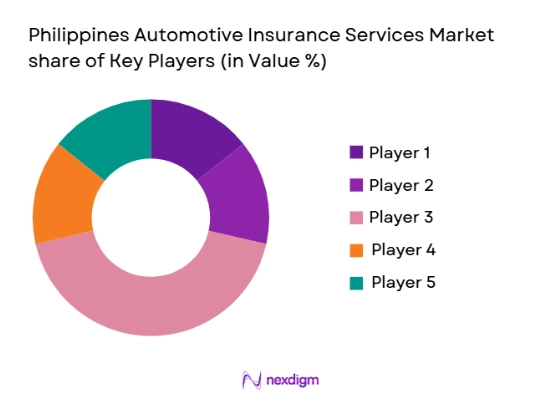
The competitive landscape in the Philippines automotive insurance services market is characterized by the presence of a mix of both established multinational insurers and local players. Major players are expanding their digital presence, adopting AI-driven technologies, and offering personalized coverage plans. The market sees constant consolidation, as companies seek to enhance their offerings and gain larger market shares. Increasing partnerships between tech firms and traditional insurance providers also shape the landscape.
| Company Name | Establishment Year | Headquarters | Technology Focus | Market Reach | Key Products | Revenue (USD) | Additional Market-Specific Parameter |
| Allianz PNB Life Insurance | 2001 | Makati, Philippines | ~ | ~ | ~ | ~ | ~ |
| BPI/MS Insurance | 1959 | Manila, Philippines | ~ | ~ | ~ | ~ | ~ |
| Manulife Philippines | 1901 | Quezon City, Philippines | ~ | ~ | ~ | ~ | ~ |
| FPG Insurance | 1952 | Manila, Philippines | ~ | ~ | ~ | ~ | ~ |
| Sun Life Grepa Financial | 1959 | Makati, Philippines | ~ | ~ | ~ | ~ | ~ |
Philippines Automotive Insurance Services Market Analysis
Growth Drivers
Increasing Vehicle Ownership:
Vehicle ownership in the Philippines has been steadily rising over the years, contributing to the demand for automotive insurance services. As more people purchase cars, they are increasingly recognizing the importance of securing comprehensive insurance to protect their investments. Additionally, the increasing availability of vehicle financing options has made car ownership more accessible to a larger segment of the population, further fueling the need for insurance products. The growing automotive market has led to more competition among insurance providers, pushing them to offer better coverage options at competitive prices. With the government encouraging insurance coverage and offering tax incentives for insurers, the automotive insurance market continues to thrive. The expansion of urban areas and the rise in economic activity also support the growing need for vehicle protection and insurance. With more cars on the road, the risks of accidents and theft increase, driving further demand for motor vehicle insurance. The rising middle class also favors insurance as a means of financial protection, pushing the market to offer flexible and affordable plans. Consequently, increasing vehicle ownership remains a key growth driver for the automotive insurance services market in the Philippines.
Digital Transformation in the Insurance Industry:
The digitalization of the automotive insurance sector has been a significant driver of growth in the market. The shift towards online platforms, telematics-based services, and mobile applications has made it easier for consumers to purchase policies, file claims, and manage their coverage on the go. With digital tools, insurance companies can offer personalized policies based on user behavior, which helps cater to the individual needs of customers. The introduction of AI-powered chatbots, automated claim processing, and blockchain integration also improves the efficiency of the claims process and reduces operational costs. Moreover, digital platforms enable insurers to tap into underserved markets by reaching consumers in rural or remote areas who may not have easy access to traditional brick-and-mortar offices. This technological transformation allows insurers to provide more transparent, accessible, and convenient services to their clients, resulting in greater market growth.
Market Challenges
High Competition Among Insurance Providers:
The automotive insurance market in the Philippines is highly competitive, with both local and international insurers vying for market share. As more players enter the market, companies are under pressure to offer innovative solutions and lower premiums to attract customers. This intense competition often leads to price wars, which can erode profit margins for insurance providers. Additionally, the cost of acquiring new customers is rising due to the increased reliance on digital marketing and customer acquisition strategies. In this environment, insurers must differentiate themselves by offering superior customer service, flexible coverage options, and innovative solutions. However, the increasing competition could potentially lead to a race to the bottom in pricing, which could limit profitability in the long run.
Regulatory and Compliance Challenges:
The automotive insurance market in the Philippines is subject to stringent regulatory requirements that vary depending on the type of insurance and the platform used. Insurance companies must comply with the rules set by the Insurance Commission, the Department of Finance, and other government agencies. Adhering to these regulations can be costly and time-consuming for insurers. Furthermore, the Philippine government has been continuously updating its policies, including implementing stricter anti-money laundering laws and data protection regulations. These compliance requirements can present significant barriers for smaller insurance companies and hinder their ability to compete effectively. The complexity of these regulations may also lead to increased operational costs for insurers, limiting their ability to offer affordable coverage options to consumers.
Opportunities
Expansion of Online Insurance Platforms:
The growing adoption of smartphones and internet access in the Philippines presents a significant opportunity for the automotive insurance market. More Filipinos are turning to online platforms to purchase insurance products, file claims, and manage their policies. The convenience and accessibility of online insurance platforms are appealing to tech-savvy consumers, particularly the younger generation. By leveraging digital technologies such as artificial intelligence and machine learning, insurers can offer personalized coverage based on individual driving behaviors and preferences. The expansion of online platforms also allows insurance providers to reach consumers in underserved areas, expanding their customer base. This opportunity for digital transformation can drive significant growth in the automotive insurance sector, providing a more seamless and efficient experience for consumers.
Rise in Demand for Telematics-Based Insurance Products:
Telematics-based insurance products have gained popularity due to their ability to offer usage-based premiums. By using devices installed in vehicles to monitor driving behavior, insurers can offer more personalized pricing and reward safe driving. This technology helps reduce the risk of accidents, which in turn lowers insurance costs. With more drivers in the Philippines seeking affordable options for car insurance, telematics-based products present an attractive solution. The integration of telematics in insurance policies also opens doors for partnerships with automotive manufacturers, fleet operators, and technology companies, further driving market growth. As consumers demand more flexible and cost-effective insurance options, the telematics segment is poised to become a key growth area in the Philippine automotive insurance market.
Future Outlook
The future of the Philippines automotive insurance market looks promising, with sustained growth expected over the next five years. The market is likely to benefit from increasing vehicle sales, digital transformation, and rising awareness about the importance of insurance. Regulatory support will continue to encourage insurance penetration, and as the middle class expands, demand for comprehensive coverage will rise. Additionally, technological advancements, such as telematics and AI, will further drive efficiency and customer satisfaction, contributing to market expansion. The automotive insurance landscape is also expected to witness further consolidation, with companies leveraging partnerships and technology to gain a competitive edge.
Major Players
- Allianz PNB Life Insurance
- BPI/MS Insurance
- Manulife Philippines
- FPG Insurance
- Sun Life Grepa Financial
- AXA Philippines
- Insular Life
- Prudential Guarantee & Assurance
- Pioneer Insurance
- United Coconut Planters Life Assurance Corporation
- Philippine American Life Insurance
- Malayan Insurance
- Generali Philippines Life
- Globe Insurance
- Standard Insurance
Key Target Audience
- Investment and venture capitalist firms
- Government and regulatory bodies
- Automotive manufacturers
- Insurance brokers
- Digital platform providers
- Fleet operators
- Consumer finance companies
- Automobile dealerships
Research Methodology
Step 1: Identification of Key Variables
The key market variables influencing the Philippines automotive insurance services market are identified based on historical data, current trends, and market research. These variables are crucial for understanding the market dynamics.
Step 2: Market Analysis and Construction
The market analysis is carried out using a combination of primary and secondary research. The collected data is analyzed to construct an accurate picture of the market size, growth trends, and potential opportunities.
Step 3: Hypothesis Validation and Expert Consultation
The market hypotheses are validated through expert consultations and feedback from industry leaders. This ensures that the findings align with the current market conditions and expectations.
Step 4: Research Synthesis and Final Output
After synthesizing all research findings, the final output is prepared. This includes a detailed report on the Philippines automotive insurance services market, its growth drivers, challenges, opportunities, and future outlook.

- Executive Summary
- Research Methodology (Definitions, Scope, Industry Assumptions, Market Sizing Approach, Primary & Secondary Research Framework, Data Collection & Verification Protocol, Analytic Models & Forecast Methodology, Limitations & Research Validity Checks)

- Market Definition and Scope
- Value Chain & Stakeholder Ecosystem
- Regulatory / Certification Landscape
- Sector Dynamics Affecting Demand
- Strategic Initiatives & Infrastructure Growth

- Growth Drivers
Increase in Vehicle Ownership
Rise in Road Safety Awareness
Growing Middle-Class Population
Government Support for Vehicle Insurance
Technological Advancements in Insurance - Market Challenges
Regulatory Compliance Issues
High Competition Among Providers
Lack of Trust in Insurance Products
Fraudulent Claims
High Operational Costs - Market Opportunities
Growth in Online Insurance Platforms
Integration of Telematics for Personalized Plans
Emerging Demand for Electric Vehicle Insurance - Trends
Adoption of AI and Machine Learning in Insurance
Shift Toward Digital Insurance Solutions
Increase in Customizable Coverage Options
Use of Blockchain for Fraud Prevention
Integration of Usage-Based Insurance - Government Regulations & Defense Policy
Insurance Regulatory Updates
Data Privacy Laws
Government Initiatives for Sustainable Insurance - SWOT Analysis
- Stakeholder and Ecosystem Analysis
- Porter’s Five Forces Analysis
- Competition Intensity and Ecosystem Mapping

- By Market Value, 2020-2025
- By Installed Units, 2020-2025
- By Average System Price, 2020-2025
- By System Complexity Tier, 2020-2025

- By System Type (In Value%)
Motor Vehicle Insurance
Comprehensive Coverage
Third-Party Liability Insurance
Accident Insurance
Theft Insurance - By Platform Type (In Value%)
Online Platforms
Offline Platforms
Telematics-based Platforms
Hybrid Platforms
Bancassurance Platforms - By Fitment Type (In Value%)
Personal Insurance
Fleet Insurance
Commercial Vehicle Insurance
Government Vehicle Insurance
Specialized Vehicle Insurance - By EndUser Segment (In Value%)
Individual Vehicle Owners
Car Dealerships
Fleet Management Companies
Insurance Brokers
Corporate Clients - By Procurement Channel (In Value%)
Direct Procurement
Agent-Based Procurement
Broker-Based Procurement
Online Procurement
Third-Party Platforms - By Material / Technology (in Value%)
Traditional Insurance Models
AI-Based Insurance Platforms
Blockchain-Enabled Insurance
Smart Insurance Policies
Telematics Integration

- Market structure and competitive positioning
- Market share snapshot of major players
- CrossComparison Parameters (Motor Vehicle Insurance, Online Platforms, Agent-Based Procurement, Personal Insurance, Traditional Insurance Models, AI-Based Insurance Platforms, Government Vehicle Insurance, Fraudulent Claims, Usage-Based Insurance, Telemarketing Platforms)
- SWOT Analysis of Key Players
- Pricing & Procurement Analysis
- Key Players
Allianz PNB Life Insurance
BPI/MS Insurance
Philippine American Life and General Insurance Company
Sun Life Grepa Financial, Inc.
Manulife Philippines
FPG Insurance
Mercury Insurance
Pioneer Insurance & Surety Corporation
Union Bank of the Philippines
AXA Philippines
ING Life Insurance
Cocolife
Eastern Assurance and Surety Corporation
Grepalife Insurance Corporation
Generali Pilipinas Life Assurance
Standard Insurance

- Individual Vehicle Owners’ Increasing Demand for Customization
- Growth of Fleet Insurance in Commercial Sectors
- Rising Adoption of Online Insurance Platforms
- Corporate Clients Seeking Comprehensive Insurance Solutions

- Forecast Market Value, 2026-2035
- Forecast Installed Units, 2026-2035
- Price Forecast by System Tier, 2026-2035
- Future Demand by Platform, 2026-2035


 Request a Sample
 Ask for Customization
 Get a Quote
 Enquire Now