
 Download PDF
 Download PDF
Market Overview
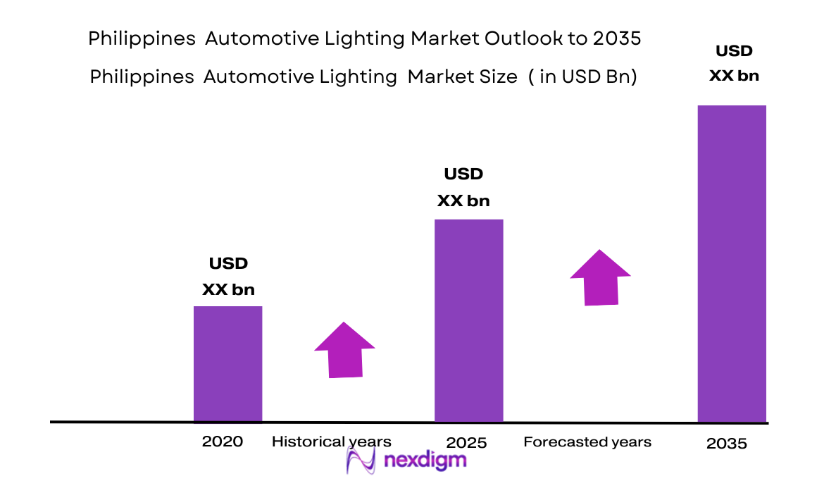
The Philippines automotive lighting market has been experiencing substantial growth, driven by increasing demand for advanced lighting solutions and rising vehicle production. In 2024, the market size is expected to reach USD ~ billion, reflecting the growing adoption of energy-efficient lighting systems in vehicles. The demand for LED lights, coupled with advancements in automotive design and safety regulations, has significantly influenced the market. Moreover, technological advancements in automotive lighting, such as adaptive lighting and smart lighting systems, are expected to drive market growth further.
The dominance of urban centers like Metro Manila, Cebu, and Davao plays a crucial role in the market’s growth. These cities contribute significantly to the overall demand for automotive lighting, owing to higher vehicle ownership and urbanization trends. The growth of the automotive aftermarket sector in these regions also facilitates the demand for lighting solutions, as consumers seek upgrades for aesthetic appeal and enhanced vehicle performance. Additionally, government policies promoting energy efficiency and the adoption of sustainable technologies contribute to the expansion of automotive lighting markets in these regions.
Market Segmentation
By Product Type:
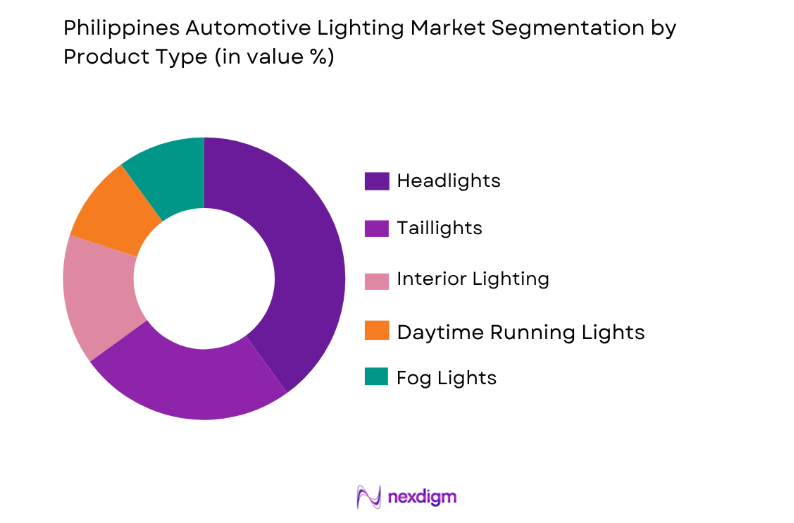
The Philippines automotive lighting market is segmented by product type into headlights, taillights, interior lighting, daytime running lights, and fog lights. Recently, headlights have dominated the market share due to the increasing need for enhanced safety features and longer-lasting lighting solutions. Factors such as demand for energy-efficient products, growing focus on vehicle aesthetics, and advancements in LED technology have led to headlights holding a significant market share. As headlights are critical to ensuring road safety and enhancing the driving experience, they remain the most in-demand product in the automotive lighting market.
By Platform Type:
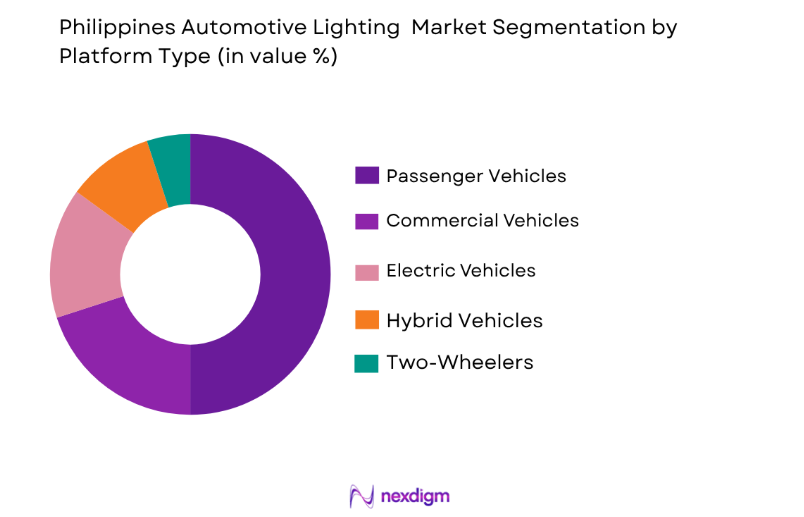
The Philippines automotive lighting market is segmented by platform type into passenger vehicles, commercial vehicles, electric vehicles (EVs), hybrid vehicles, and two-wheelers. Recently, passenger vehicles have dominated the market share due to the increasing number of vehicles on the road and rising consumer demand for advanced lighting solutions. As urban areas expand and more consumers opt for personal vehicles, the need for energy-efficient and customizable lighting systems has grown. The shift towards eco-friendly lighting technologies, like LEDs and OLEDs, in passenger vehicles has further solidified this sub-segment’s dominant position. The growth of EVs and hybrid vehicles is also expected to contribute to the rise in demand for specialized lighting solutions designed for these vehicles, further supporting the platform type segment.
Competitive Landscape
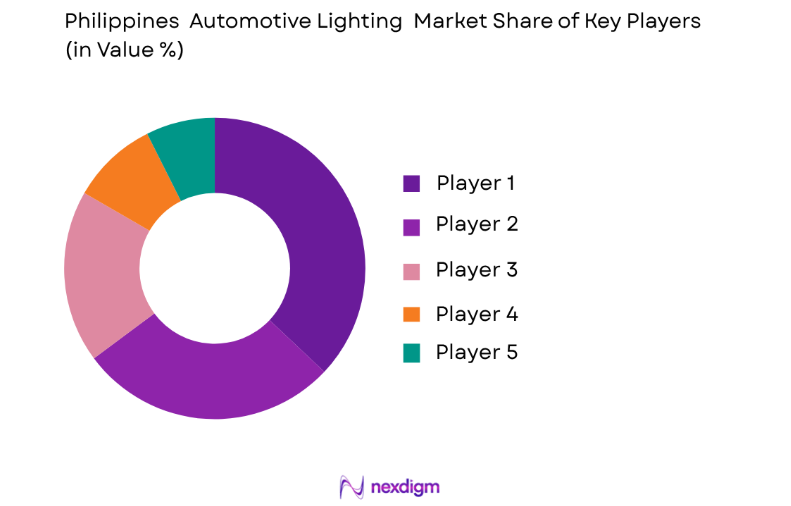
The Philippines automotive lighting market is highly competitive, with several key players focusing on technological innovations and strategic partnerships. Major companies have been consolidating their market position through mergers, acquisitions, and product innovations. Players are increasingly focusing on developing energy-efficient lighting solutions such as LED and OLED technologies to meet the growing demand for sustainable automotive components. Market consolidation is expected to intensify as players aim to meet regulatory requirements and capitalize on emerging market trends.
| Company Name | Establishment Year | Headquarters | Technology Focus | Market Reach | Key Products | Revenue (USD) | Growth Rate (%) |
| Philips | 1891 | Netherlands | ~ | ~ | ~ | ~ | ~ |
| Osram | 1906 | Germany | ~ | ~ | ~ | ~ | ~ |
| Hella | 1899 | Germany | ~ | ~ | ~ | ~ | ~ |
| Valeo | 1923 | France | ~ | ~ | ~ | ~ | ~ |
| Koito Manufacturing | 1915 | Japan | ~ | ~ | ~ | ~ | ~ |
Philippines Automotive Lighting Market Analysis
Growth Drivers
Technological Advancements in Automotive Lighting:
The demand for energy-efficient and advanced automotive lighting solutions, including LED and OLED technologies, has been a significant growth driver for the market. These lighting systems offer better energy efficiency, longer lifespans, and improved road safety, driving their adoption across the automotive sector. Furthermore, the increasing implementation of adaptive and intelligent lighting technologies in modern vehicles, such as automatic beam control and enhanced visibility features, has significantly contributed to market growth. The shift toward more sustainable vehicle components has also led to automotive manufacturers prioritizing the inclusion of advanced lighting systems in their designs. This transition toward energy-efficient systems is especially noticeable in electric vehicles, where the demand for eco-friendly and high-performance components is growing rapidly.
Rising Consumer Demand for Vehicle Customization:
With the rising interest in vehicle aesthetics and personal expression, vehicle owners in the Philippines are increasingly investing in lighting solutions to enhance their vehicles’ appearance. The growing trend of vehicle customization has led to increased demand for aftermarket lighting solutions, including ambient lighting, underbody lights, and custom-designed headlights. Additionally, consumers’ interest in vehicles with superior lighting systems for both aesthetic and functional purposes is contributing to the growth of the automotive lighting market. Customization allows consumers to express their personal style while simultaneously improving vehicle performance and safety. This trend has been particularly noticeable in urban areas where vehicle owners seek to stand out through personalized upgrades.
Market Challenges
High Cost of Advanced Lighting Technologies:
One of the major challenges facing the Philippines automotive lighting market is the high cost associated with advanced lighting technologies, particularly LED and OLED systems. These lighting solutions, while energy-efficient and longer-lasting, come with a higher upfront cost compared to traditional incandescent or halogen lights. This cost barrier may limit adoption, particularly in price-sensitive markets or for consumers opting for entry-level vehicles. Despite the growing demand for sustainable lighting solutions, the premium pricing of these products remains a significant obstacle for widespread adoption, especially in developing regions of the country.
Regulatory and Compliance Barriers:
Another challenge in the Philippines automotive lighting market is the regulatory and compliance barriers surrounding vehicle lighting standards. The market is subject to stringent regulations regarding lighting performance, safety, and environmental impact, which can vary from one region to another. Manufacturers must comply with both local and international standards to ensure their products meet safety and quality requirements. This regulatory burden can increase production costs and lead to delays in product launches, affecting market growth. Furthermore, evolving environmental standards, including the push for more energy-efficient and low-emission components, can pose additional challenges for manufacturers who need to stay ahead of regulatory changes.
Opportunities
Growth of Electric Vehicle Market:
The expansion of the electric vehicle (EV) market presents significant opportunities for the automotive lighting sector. As EVs continue to gain popularity in the Philippines, there is a growing need for specialized lighting solutions that cater to these vehicles. LED and OLED lighting systems are particularly well-suited for electric vehicles due to their energy efficiency and long lifespan. Additionally, EV manufacturers are increasingly focusing on offering stylish and innovative lighting designs to differentiate their products in a competitive market. This growing demand for energy-efficient lighting in EVs is expected to drive the adoption of advanced automotive lighting technologies in the coming years.
Adoption of Smart and Autonomous Vehicle Technologies:
The shift towards autonomous and connected vehicles presents new opportunities for the automotive lighting market. Advanced lighting solutions, such as adaptive headlights and smart lighting systems, play a critical role in improving vehicle safety, visibility, and functionality in autonomous vehicles. As these technologies continue to evolve, the need for more sophisticated lighting systems will increase. Additionally, connected lighting systems that integrate with vehicle sensors and communication networks will become more prevalent, offering opportunities for manufacturers to innovate and provide cutting-edge lighting solutions that enhance the driving experience.
Future Outlook
The Philippines automotive lighting market is expected to experience continued growth over the next five years, driven by technological advancements, increasing vehicle production, and the growing demand for energy-efficient and customizable lighting solutions. The rise of electric vehicles and autonomous driving technologies will further boost the adoption of advanced lighting systems, offering new opportunities for manufacturers. Additionally, regulatory support for energy-efficient technologies will continue to drive market expansion. As the automotive lighting market evolves, manufacturers must focus on innovation, cost reduction, and meeting consumer preferences to stay competitive in this dynamic market.
Major Players
- Philips
- Osram
- Hella
- Valeo
- Koito Manufacturing
- Stanley Electric
- Magna International
- Panasonic
- Hyundai Mobis
- Aisin Seiki
- Bosch
- Trumpower
- DeltronElectronics
- SamvardhanaMotherson
- Lumen Engineering
Key Target Audience
- Automotive Manufacturers
- Aftermarket Retailers
- Government and Regulatory Bodies
- OEM Parts Suppliers
- Vehicle Owners
- Fleet Operators
- Electric Vehicle Manufacturers
- Investors and Venture Capitalist Firms
Research Methodology
Step 1: Identification of Key Variables
The first step involves identifying key market variables, such as product types, technology adoption, consumer demand patterns, and regulatory factors influencing the automotive lighting market in the Philippines.
Step 2: Market Analysis and Construction
Market analysis is conducted by examining historical data, market trends, and current market dynamics. Primary and secondary research methods are used to build a comprehensive view of the market.
Step 3: Hypothesis Validation and Expert Consultation
Market hypotheses are validated through expert consultations and industry interviews to ensure that the identified trends and variables align with real-world market behavior.
Step 4: Research Synthesis and Final Output
The final step involves synthesizing all collected data and insights into a cohesive market report that includes forecasts, growth drivers, challenges, opportunities, and strategic recommendations for stakeholders.

- Executive Summary
- Research Methodology (Definitions, Scope, Industry Assumptions, Market Sizing Approach, Primary & Secondary Research Framework, Data Collection & Verification Protocol, Analytic Models & Forecast Methodology, Limitations & Research Validity Checks)

- Market Definition and Scope
- Value Chain & Stakeholder Ecosystem
- Regulatory / Certification Landscape
- Sector Dynamics Affecting Demand

- Growth Drivers
Increasing Vehicle Production
Technological Advancements in Lighting Systems
Rising Demand for Energy-Efficient Solutions - Market Challenges
High Cost of Advanced Lighting Systems
Supply Chain Disruptions
Regulatory Compliance for Lighting Standards - Market Opportunities
Adoption of LED and OLED Lighting Systems
Growing EV and Hybrid Vehicle Production
Rising Focus on Vehicle Aesthetics and Customization - Trends
Smart Lighting Integration in Vehicles
Customization and Personalization of Automotive Lighting
Focus on Sustainable and Eco-friendly Lighting Solutions - Government Regulations

- By Market Value, 2020-2025
- By Installed Units, 2020-2025
- By Average System Price, 2020-2025
- By System Complexity Tier, 2020-2025

- By System Type (In Value%)
Headlights
Taillights
Interior Lighting
Daytime Running Lights
Fog Lights - By Platform Type (In Value%)
Passenger Vehicles
Commercial Vehicles
Electric Vehicles
Hybrid Vehicles
Two-Wheelers - By Fitment Type (In Value%)
OEM
Aftermarket
Replacement
Customized
Upgraded Systems - By EndUser Segment (In Value%)
Automotive Manufacturers
Aftermarket Retailers
Vehicle Owners
Fleet Operators

- Market Share Analysis
- CrossComparison Parameters (Price, Technology, Performance, Brand, Durability)
- SWOT Analysis of Key Competitors
- Pricing & Procurement Analysis
- Porter’s Five Forces
- Key Players
Philips
Osram
Hella
Koito Manufacturing
Stanley Electric
Valeo
Magneti Marelli
Southco
Aisin Seiki
Varroc Engineering
LG Innotek
Toshiba
Mitsubishi Electric
Samsung Electronics
Nissan Motor Co.

- Vehicle Manufacturers’ Shift Towards Advanced Lighting
- Consumer Preference for Enhanced Aesthetics and Functionality
- Aftermarket Growth in LED and Custom Lighting
- Increasing Demand for Intelligent Lighting Solutions

- Forecast Market Value, 2026-2035
- Forecast Installed Units, 2026-2035
- Price Forecast by System Tier, 2026-2035
- Future Demand by Platform, 2026-2035


 Request a Sample
 Ask for Customization
 Get a Quote
 Enquire Now