

 Download PDF
 Download PDF
Market Overview
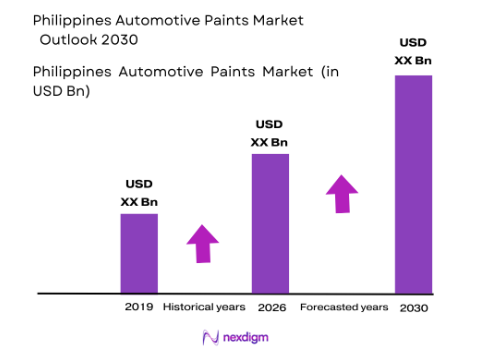
The Philippines Automotive Paints market is valued at approximately USD ~ million, driven by a growing automotive industry, increasing vehicle ownership, and robust demand from both OEM and aftermarket sectors. The expansion in vehicle sales, particularly in light commercial vehicles (LCVs) and passenger cars, is fuelling the demand for high-performance automotive coatings. Additionally, the rise in automotive repair and collision activities, combined with government initiatives to promote eco-friendly, low-VOC coatings, further boosts the market’s growth. Major paint technologies like waterborne and powder coatings are also contributing to the market’s expansion due to stringent environmental regulations and the demand for more sustainable solutions.
Metro Manila, Cebu, and Davao are the key cities driving the Philippines Automotive Paints market due to their significant vehicle populations, automotive production facilities, and high repair and maintenance activities. Metro Manila, being the national capital region, is a hub for automotive manufacturers, distributors, and workshops. These cities are also seeing a surge in vehicle imports and a high concentration of service centers for automotive refinishing and collision repair. The expansion of automotive manufacturing and assembly facilities, along with the growing demand for both OEM and aftermarket automotive paint applications, particularly in these regions, positions them as dominant market drivers.
Market Segmentation
By Product Type
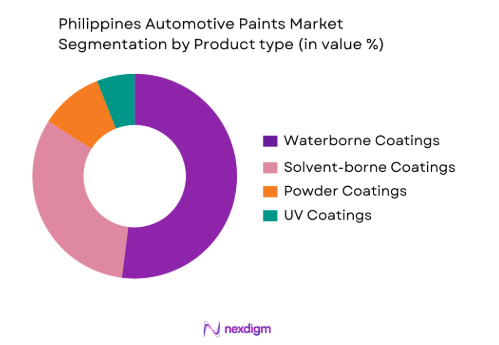
The Philippines Automotive Paints market is segmented by product type into waterborne coatings, solvent-borne coatings, powder coatings, and others (including UV coatings and specialty coatings). Waterborne coatings dominate the market due to their eco-friendly nature, adherence to environmental regulations, and improved performance characteristics, such as durability and resistance to UV degradation. The increasing government emphasis on VOC (volatile organic compounds) reduction has led to the preference for waterborne products, contributing significantly to their market share. Additionally, advancements in waterborne technology, making them cost-effective without compromising performance, are accelerating their adoption across both OEM and aftermarket sectors.
By End-Use Application
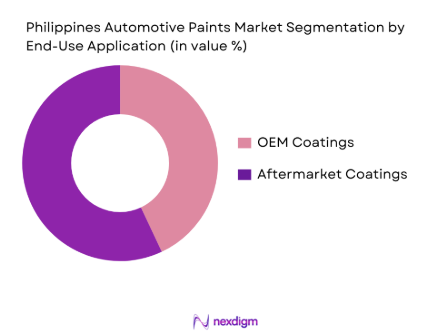
The market is segmented by end-use application into OEM coatings and aftermarket coatings (refinish). The aftermarket coatings segment holds a larger market share in the Philippines automotive paints market due to the rising number of vehicles requiring repair and maintenance. The high frequency of vehicle collisions and the significant number of older vehicles in the region fuel the demand for aftermarket refinishing products. Furthermore, the growing awareness of vehicle aesthetics and customizations, such as custom paint jobs and specialized finishes, have driven the aftermarket sector’s growth. Aftermarket coatings offer a wide range of colour, texture, and finish options, making them popular among consumers seeking personalization and vehicle restoration.
Competitive Landscape
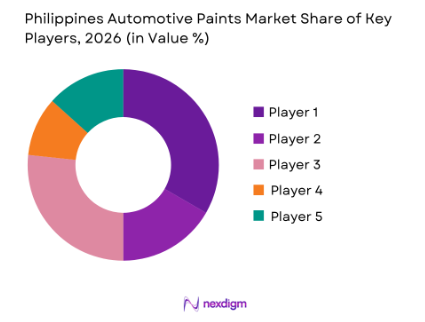
The Philippines Automotive Paints market is competitive, with several global and local players. The market is led by both multinational paint companies and regional players that cater to both OEM and aftermarket needs. Major global brands such as AkzoNobel, PPG Industries, and BASF dominate the OEM coatings segment, while local manufacturers and distributors serve the growing demand in the aftermarket sector. These key players focus on expanding their product portfolios with sustainable and eco-friendly solutions, addressing the growing regulatory requirements around VOC emissions and environmental standards.
| Company | Establishment Year | Headquarters | Product Range | Technological Innovation | Market Share | Sustainability Initiatives | Key Partners |
| AkzoNobel | 1792 | Netherlands | ~ | ~ | ~ | ~ | ~ |
| PPG Industries | 1883 | USA | ~ | ~ | ~ | ~ | ~ |
| BASF | 1865 | Germany | ~ | ~ | ~ | ~ | ~ |
| Nippon Paint | 1881 | Japan | ~ | ~ | ~ | ~ | ~ |
| Sherwin-Williams | 1866 | USA | ~ | ~ | ~ | ~ | ~ |
Philippines Automotive Paints Market Analysis
Growth Drivers
Rising Vehicle Ownership and Expanding Automotive Industry
The Philippines is witnessing steady growth in vehicle ownership due to rising disposable incomes, urbanization, and an expanding middle class. Passenger cars, motorcycles, and light commercial vehicles are increasingly in demand, especially in Metro Manila and rapidly developing provincial cities. This growth directly drives the automotive paints market, as OEMs require coatings for new vehicle production while the aftermarket demands paints for repair, customization, and refurbishment. Additionally, government-led infrastructure projects and logistics sector expansion are boosting commercial vehicle sales, further increasing paint consumption. Local assembly plants and imports of vehicles from ASEAN countries also contribute to consistent demand for OEM-grade automotive coatings. As the automotive sector continues to mature, the need for durable, corrosion-resistant, and aesthetically appealing paints remains a critical factor supporting market growth.
Growth of Automotive Aftermarket and Repair Services
The strong presence of an aging vehicle fleet in the Philippines significantly fuels demand for automotive paints in the aftermarket segment. Many vehicles remain in use well beyond their original warranty periods, increasing the need for repainting, touch-ups, and body repair due to wear, corrosion, and accident damage. Frequent exposure to harsh weather conditions, including humidity, heavy rainfall, and flooding, accelerates paint degradation, driving recurring demand for refinishing solutions. Additionally, customization trends—such as color changes, graphic designs, and protective coatings—are becoming popular among younger consumers. The rapid expansion of auto repair shops, service centers, and paint distributors across urban and semi-urban areas further supports market growth by improving accessibility to automotive paint products and services.
Market Challenges
Volatile Raw Material Prices and Supply Chain Constraints
One of the key challenges facing the Philippine automotive paints market is the volatility in raw material prices, particularly pigments, resins, solvents, and additives that are often imported. Fluctuations in global crude oil prices directly impact the cost of petrochemical-based inputs, leading to inconsistent production costs for paint manufacturers. Additionally, supply chain disruptions—caused by global trade uncertainties, shipping delays, or currency fluctuations—can affect the availability and pricing of essential materials. Smaller local manufacturers and distributors are especially vulnerable, as they may lack the purchasing power to absorb cost increases. These challenges can reduce profit margins, lead to higher end-user prices, and limit the ability of manufacturers to offer competitively priced products in a price-sensitive market.
Environmental Regulations and Compliance Costs
Increasing environmental awareness and stricter regulations on volatile organic compounds (VOCs) present another major challenge for the automotive paints market. The Philippine government is gradually aligning with international environmental standards, encouraging the use of eco-friendly, low-VOC, and water-based coatings. While these regulations are beneficial in the long term, they impose short-term compliance costs on manufacturers, including investments in new formulations, production technologies, and testing procedures. Smaller players may struggle to meet these requirements due to limited R&D budgets. Additionally, transitioning customers from traditional solvent-based paints to environmentally friendly alternatives can be difficult, as newer solutions often come at a higher cost and require specialized application techniques.
Opportunities
Rising Demand for Eco-Friendly and Advanced Coating Technologies
The shift toward sustainable and environmentally friendly automotive paints presents a significant opportunity in the Philippine market. Increasing regulatory pressure and growing consumer awareness are driving demand for water-based, low-VOC, and high-solid coatings. These advanced formulations offer benefits such as reduced environmental impact, improved durability, and better corrosion resistance—key factors in the country’s tropical climate. Manufacturers that invest in innovation and eco-friendly technologies can differentiate themselves and gain a competitive edge. There is also rising interest in functional coatings, such as scratch-resistant, UV-protective, and self-healing paints, particularly in premium and commercial vehicle segments. As awareness grows, both OEMs and aftermarket service providers are likely to adopt these advanced solutions, expanding revenue potential.
Expansion of Automotive Services and Customization Trends
The growing popularity of vehicle personalization and aesthetic enhancement offers strong opportunities for automotive paint suppliers. Filipino consumers, particularly younger vehicle owners, increasingly view vehicles as lifestyle assets rather than just transportation tools. This trend drives demand for custom colors, matte finishes, metallic coatings, and protective clear coats. Additionally, the expansion of car detailing centers, modification shops, and collision repair facilities creates new distribution channels for automotive paints. Digital marketing and e-commerce platforms are also enabling paint manufacturers and distributors to reach a broader customer base, including small workshops and individual consumers. By offering tailored solutions, training programs, and technical support, companies can strengthen brand loyalty and expand their footprint in both urban and emerging regional markets.
Future Outlook
The Philippines Automotive Paints market is poised for steady growth in the coming years. The shift toward environmentally friendly and sustainable automotive coatings is expected to drive the adoption of waterborne and powder coatings, especially in response to government regulations on VOC emissions. Moreover, the growing demand for high-performance, durable coatings in the OEM and aftermarket segments is anticipated to boost the market. Technological advancements, including the introduction of self-healing and nano-coatings, are expected to further augment the demand for premium automotive paints. As the Philippines automotive industry continues to expand, the market for automotive paints will follow suit, driven by a robust economy, a growing vehicle fleet, and increased repair activities.
Major Players
- AkzoNobel
- PPG Industries
- BASF
- Nippon Paint
- Sherwin-Williams
- Axalta Coating Systems
- Kansai Paint
- Jotun
- RPM International
- Valspar
- Hempel
- Berger Paints
- Asian Paints
- Krylo
- Tikkurila
Key Target Audience
- Automotive Manufacturers
- Vehicle Repair & Collision Centers
- Paint Suppliers & Distributors
- Investments & Venture Capitalist Firms
- Government and Regulatory Bodies
- Automotive Dealerships and Service Providers
- Raw Material Suppliers
- Automotive Coatings Technology Developers
Research Methodology
Step 1: Identification of Key Variables
In this phase, the research team will map out all critical stakeholders within the Philippines Automotive Paints market, including raw material suppliers, OEM manufacturers, aftermarket repair centers, and distributors. Data will be gathered from multiple credible sources, including government publications, industry reports, and in-depth interviews with sector experts.
Step 2: Market Analysis and Construction
Historical data on market growth, vehicle production, and paint demand will be collated, focusing on assessing market penetration across key regions. Both quantitative and qualitative analyses will be conducted to understand the key factors influencing market trends and performance, including pricing models, consumption patterns, and technological advancements.
Step 3: Hypothesis Validation and Expert Consultation
The market hypotheses will be tested through consultations with industry professionals, OEM paint engineers, and auto body repair experts. This will provide valuable insights into market dynamics, such as emerging paint technologies, consumer preferences, and potential market disruptors.
Step 4: Research Synthesis and Final Output
In this final phase, comprehensive interviews with major industry players and thorough validation with internal experts will ensure the research’s accuracy. This interaction will verify the findings from both secondary and primary research, ensuring that the final report offers a holistic view of the Philippines Automotive Paints market.

- Executive Summary
- Research Methodology (Market Definitions & Assumptions, Abbreviations, Philippines Automotive Production & Sales Data Sources, Data Collection: Primary Interviews, Secondary Trade Data, Market Sizing & Forecasting Techniques, Limitations & Risk Adjustments)

- Overview & Scope of Philippines Automotive Paints Market
- Industry Genesis & Market Evolution
- Automotive Sector Dynamics: OEM Production, Assembly & Imports
- Paints Role: Protective, Aesthetic & Functional Performance
- Supply Chain & Value Chain
- Regulatory Environment

- Growth Drivers
Increasing Vehicle Ownership & Urban Mobility Growth
Expansion of Aftermarket Collision Repair Sector
Shift to Low‑VOC/Waterborne Paints - Challenges
Cost Volatility in Raw Materials
Intense Price Competition & Imports
Skilled Labor Gap in Paint Application & Finishing - Opportunities
Smart/Functional Coatings
EV & New Mobility Vehicle Paint Customization
Digital & Robotic Paint Application Adoption - Market Trends
Eco‑friendly Formulations, Sustainable Packaging
Advanced Coating Textures
Growth of Luxury & Premium Paint Segments

- Total Market Value & Volume, 2019-2025
- OEM Paint Demand, 2019-2025
- Aftermarket & Refinish Coating Demand, 2019-2025
- Average Price Realization by Technology Type, 2019-2025
- Per Vehicle Paint Consumption Metrics, 2019-2025

- By Technology Type (In Value %)
Waterborne/VOC‑Low Technology
Solvent Borne Technology
Powder Coatings
UV/High‑Solid & Specialty - By Coating Layer Type (In Value %)
Electrocoat
Primer Surfacer
Basecoat & Colorant
Clearcoat/Topcoat
Specialty Finishes
- By Vehicle Type (In Value %)
Passenger Cars
Light Commercial Vehicles (LCV) & Vans
Heavy Commercial Vehicles (HCV) & Buses
Two/Three‑Wheelers - By Application Channel (In Value %)
OEM
Aftermarket Refinish
Customization & Specialty Workshops - By Distribution Channel (In Value %)
Direct OEM Supply Agreement
Distributors/Dealers
Paint Retail Shops & Auto Shops
E‑Commerce/Online Specialty Platforms - By Region (In Value %)
Luzon Automotive Cluster
Visayas Regional Demand
Mindanao Market Growth
Metro Manila Collision & Customization Segment

- Market Share & Positioning
- Cross Comparison Parameters (Company Overview, Philippines Market Footprint, Product Portfolio, Channel Coverage, Regulatory & VOC Compliance Capability, Production Capacity & Localization Strategy, Strategic Partnerships, Pricing Segmentation & SKU Strategy)
- SWOT Analysis
- Price Matrix
- Porter’s Five Forces
- Company Profiles
AkzoNobel NV
PPG Industries
BASF SE
Axalta Coating Systems
Nippon Paint Holdings
Sherwin‑Williams
Kansai Paint Co., Ltd.
Valspar
RPM International Inc.
Jotun Group
Berger Paints
Hempel A/S
Mitsubishi Motors Philippines
Local Paint Manufacturers
Regional ASEAN Paint Importers/Distributors

- OEM Paint Usage & Paint Shop Utilization Rates
- Aftermarket Refinish Usage & Restore Paint SOP
- Consumer Purchasing Drivers
- Decision Criteria & Paint Quality Expectations

- Future Market Value & Volume Projections, 2026-2030
- Technology Adoption Forecast, 2026-2030
- Aftermarket vs OEM Future Demand, 2026-2030
- Price & Margin Trend Forecast, 2026-2030


 Request a Sample
 Ask for Customization
 Get a Quote
 Enquire Now