
 Download PDF
Market Overview
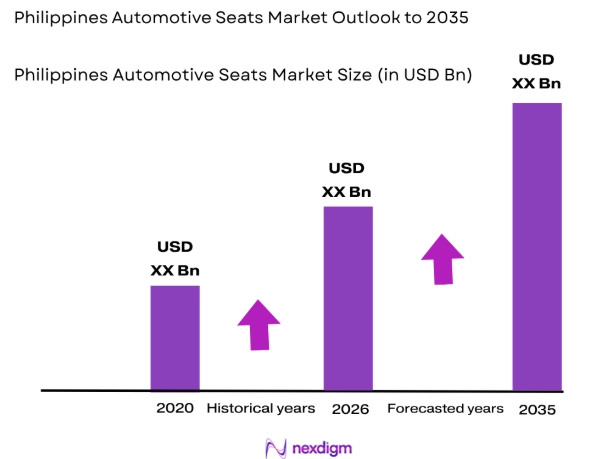
The Philippines Automotive Seats market is estimated to reach USD ~ billion based on a recent historical assessment. This market is driven by increasing vehicle production, growing disposable incomes, and a rising preference for comfort and safety features in vehicles. Moreover, the demand for high-performance and luxury vehicles in the country, especially among urban consumers, is expected to propel the adoption of advanced automotive seats, further boosting the market’s growth.
Manila, Cebu, and Davao are the dominant cities in the Philippines driving the adoption of automotive seats. The high concentration of automotive manufacturing plants, along with strong economic growth and infrastructure development in these regions, has made them key contributors to the demand for automotive seats. The shift toward more comfortable and innovative seat designs, such as ergonomic and heated seats, has been particularly prominent in these urban centers.
Market Segmentation
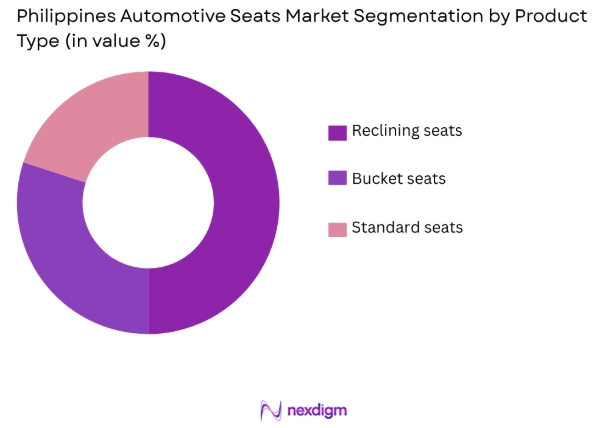
By Product Type
The Philippines Automotive Seats market is segmented by product type into standard seats, bucket seats, and reclining seats. Recently, reclining seats have gained a dominant market share due to their growing popularity in passenger vehicles, especially in the premium vehicle segment. As consumers increasingly prioritize comfort and convenience, reclining seats offer enhanced flexibility for relaxation, especially during long-distance travel. Additionally, the rise in the demand for electric and autonomous vehicles, where comfort is paramount, has further boosted the adoption of reclining seats in the market.
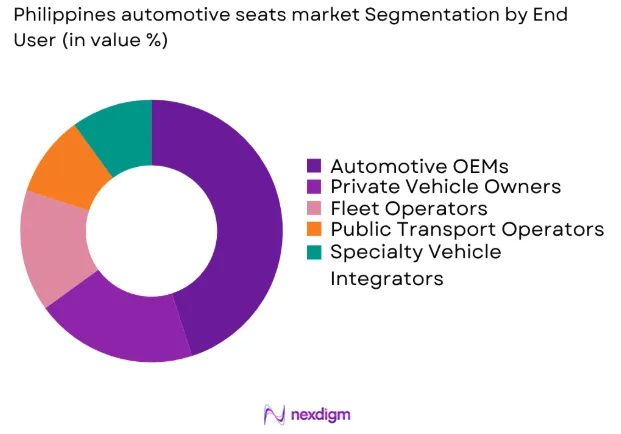
By End-User Segment
Philippines automotive seats market is segmented by end-user into private vehicle owners, fleet operators, automotive OEMs, public transport operators, and specialty vehicle integrators. Recently, automotive OEMs have a dominant market share due to their direct integration of seating systems during vehicle manufacturing and assembly processes. OEM-driven procurement ensures consistent demand volumes, standardized product specifications, and long-term supplier contracts, which significantly outweigh aftermarket demand. The presence of major assembly hubs and growing domestic vehicle production further strengthens OEM dominance in the market.
Competitive Landscape
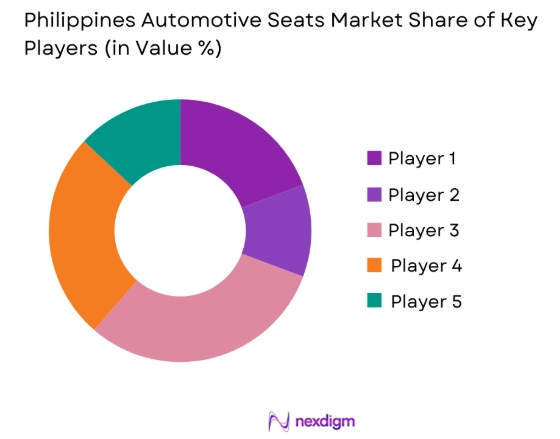
The competitive landscape of the Philippines Automotive Seats market is marked by strong competition among global and regional manufacturers. Key players in the market focus on product innovation, such as introducing ergonomic, heated, and massaging seats to cater to the growing consumer demand for comfort and luxury. The increasing partnerships between automotive seat manufacturers and OEMs (original equipment manufacturers) also play a significant role in market expansion. Companies are consolidating their presence in the Philippines through strategic collaborations and improving production capabilities to meet the growing demand for high-quality automotive seats.
| Company Name | Establishment Year | Headquarters | Technology Focus | Market Reach | Key Products | Revenue (USD Billion) | Market-Specific Parameter |
| Lear Corporation | 1917 | USA | ~ | ~ | ~ | ~ | ~ |
| Adient | 2016 | USA | ~ | ~ | ~ | ~ | ~ |
| Faurecia | 1997 | France | ~ | ~ | ~ | ~ | ~ |
| Toyota Boshoku | 1918 | Japan | ~ | ~ | ~ | ~ | ~ |
| Magna International | 1957 | Canada | ~ | ~ | ~ | ~ | ~ |
Philippines Automotive Seats Market Analysis
Growth Drivers
Economic Growth
Economic growth in the Philippines is a key driver for the automotive seats market. As the economy expands, there is a rise in disposable income, leading to increased demand for passenger vehicles and light commercial vehicles equipped with advanced seat technologies. Additionally, growing urbanization and improved infrastructure contribute to a higher rate of vehicle ownership, driving the demand for automotive seats. With a thriving middle class and an increasing preference for modern, high-performance vehicles, the demand for advanced and comfortable seating solutions is expected to continue rising.
Demand for Comfort and Safety Features
The increasing demand for comfort and safety features in vehicles is another significant growth driver. Consumers in the Philippines are increasingly prioritizing vehicle comfort, especially in urban areas where long hours are spent in traffic. This has led to the demand for seats with features like heating, cooling, and adjustability. In addition, safety features such as airbags integrated into seats are becoming more common, especially in premium and mid-range vehicles. These factors are driving the adoption of automotive seats with advanced features, further boosting market growth.
Market Challenges
High Production Costs
One of the key challenges facing the Philippines Automotive Seats market is the high production cost. Advanced seat technologies, such as electric seats, massaging seats, and high-quality materials, significantly increase the cost of production. This cost is passed on to consumers, making such seats less accessible for budget-conscious buyers. As a result, automotive seat manufacturers are under pressure to balance cost and quality, making it difficult for them to penetrate the mass-market segment. This challenge limits the widespread adoption of premium seating technologies, especially in low-cost vehicles.
Competition from Low-Cost Alternatives
The presence of low-cost, locally manufactured automotive seats in the Philippines poses a significant challenge to the market. While global players like Lear Corporation and Adient dominate the high-end segment, local manufacturers provide cost-effective alternatives to meet the demand from budget-conscious consumers. These low-cost alternatives often focus on basic seat designs without the advanced comfort and safety features demanded by higher-end vehicle segments. This creates pricing pressure on premium automotive seat manufacturers, impacting their market share and limiting their growth potential.
Opportunities
Emerging Electric Vehicle Market
The rise of electric vehicles (EVs) in the Philippines presents a promising opportunity for the automotive seats market. As EVs are equipped with advanced technologies, there is a growing demand for automotive seats that are lightweight, comfortable, and designed to accommodate the unique needs of electric vehicles, such as optimizing space and enhancing energy efficiency. The shift toward EVs is expected to drive the adoption of advanced automotive seats, offering new growth prospects for manufacturers in the Philippines.
Focus on Sustainable and Eco-Friendly Materials
There is an increasing focus on sustainability and the use of eco-friendly materials in the automotive industry. As consumers become more environmentally conscious, there is a growing preference for vehicles that use sustainable materials in their interior components, including seats. This trend presents a significant opportunity for manufacturers to innovate and introduce seating solutions made from recycled, biodegradable, and low-impact materials. As environmental regulations continue to tighten, the shift toward sustainable automotive seats will contribute to market growth.
Future Outlook
The future outlook for the Philippines Automotive Seats market is positive, with steady growth expected over the next five years. Economic development, rising disposable incomes, and the growing preference for comfort and safety features in vehicles are expected to drive demand for automotive seats. The market will also benefit from advancements in seat technologies, such as smart and sustainable seating solutions, which will cater to the evolving preferences of consumers. Additionally, the shift toward electric vehicles will open new opportunities for innovation in automotive seat design, contributing to the continued expansion of the market.
Step 1: Identification of Key Variables
The key variables influencing the Philippines Automotive Seats market, such as consumer preferences, vehicle production trends, and technological innovations, were identified for analysis.
Step 2: Market Analysis and Construction
The market was segmented by product type, vehicle category, and key growth drivers. The analysis focused on adoption rates, competitive dynamics, and consumer trends.
Step 3: Hypothesis Validation and Expert Consultation
Industry experts, including automotive engineers and market analysts, were consulted to validate the market assumptions and ensure data relevance.
Step 4: Research Synthesis and Final Output
Data collected from various sources, including market reports, interviews with experts, and consumer trends, was synthesized to produce the final market outlook for the Philippines Automotive Seats market.

- Executive Summary
- Research Methodology (Definitions, Scope, Industry Assumptions, Market Sizing Approach, Primary & Secondary Research Framework, Data Collection & Verification Protocol, Analytic Models & Forecast Methodology, Limitations & Research Validity Checks)

- Market Definition and Scope
- Value Chain & Stakeholder Ecosystem
- Regulatory / Certification Landscape
- Sector Dynamics Affecting Demand

- Growth Drivers
Increasing Demand for Automotive Comfort
Technological Advancements in Seat Materials
Rising Demand for Safety Features - Market Challenges
High Cost of Luxury Seats
Material Supply Chain Disruptions
Regulatory Compliance Costs - Market Opportunities
Expansion of Electric Vehicle Production
Growth in Premium Vehicle Segments
Technological Advancements in Seat Customization - Trends
Integration of Smart Features in Seats
Growing Focus on Sustainability in Automotive Materials - Government Regulations
- SWOT Analysis
- Porter’s Five Forces

- By Market Value, 2020-2025
- By Installed Units, 2020-2025
- By Average System Price, 2020-2025
- By System Complexity Tier, 2020-2025

- By System Type (In Value%)
Standard Seats
Sport Seats
Luxury Seats
Reclining Seats
Heated & Cooled Seats - By Platform Type (In Value%)
Passenger Vehicles
Commercial Vehicles
Electric Vehicles
Luxury Vehicles - By Fitment Type (In Value%)
OEM Fitment
Aftermarket Fitment
Integrated Systems
Modular Systems - By End User Segment (In Value%)
Private Vehicle Owners
Fleet Operators
Automotive OEMs

- Market Share Analysis
- Cross Comparison Parameters (System Type, Platform Type, Procurement Channel, End User Segment, Fitment Type, Comfort Features, Technological Advancements)
- SWOT Analysis of Key Competitors
- Pricing & Procurement Analysis
- Key Players
Adient
Lear Corporation
Faurecia
Toyota Boshoku Corporation
Magna International
TS Tech Co., Ltd.
Hyundai Dymos
Sumitomo Riko Company
Rexbo
Brose
Guilin Songlin Auto Parts
Aisin Seiki
Kongsberg Automotive
Tachi-S
Nissin Kogyo Co., Ltd.

- Rising Adoption Among Private Vehicle Owners
- Fleet Operators Increasing Investment in Comfort
- Growth in Ride-hailing Services
- Increasing Demand for Safety Features

- Forecast Market Value, 2026-2035
- Forecast Installed Units, 2026-2035
- Price Forecast by System Tier, 2026-2035
- Future Demand by Platform, 2026-2035


 Request a Sample
 Ask for Customization
 Get a Quote
 Enquire Now