

 Download PDF
Market Overview
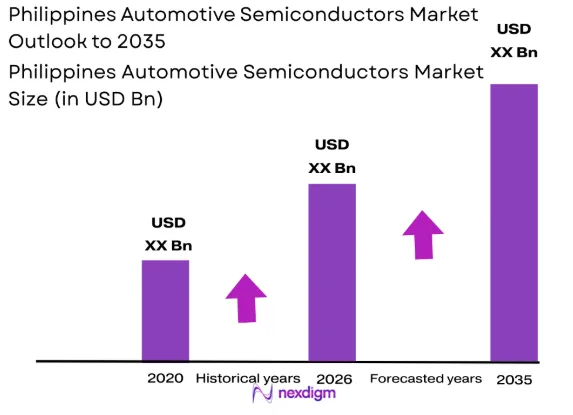
The Philippines Automotive Semiconductors market has shown remarkable growth, driven by the increasing adoption of advanced technologies in the automotive sector, such as electric vehicles (EVs) and autonomous driving systems. With the automotive industry rapidly incorporating more semiconductor components, the market is expected to reach USD ~ billion based on a recent historical assessment, driven by the need for power management, sensors, microcontrollers, and memory chips in vehicles. The automotive industry’s push for more sophisticated, energy-efficient solutions contributes to the market’s expansion.
Key players in the market are primarily based in cities like Metro Manila, where high-tech manufacturing facilities and a skilled workforce are readily available. The dominance of these regions is further supported by government incentives promoting electric mobility and the growing trend of vehicle electrification. Metro Manila, along with other key automotive hubs, benefits from robust infrastructure, including ports and manufacturing zones that attract international automotive players and component manufacturers.
Market Segmentation
By Product Type
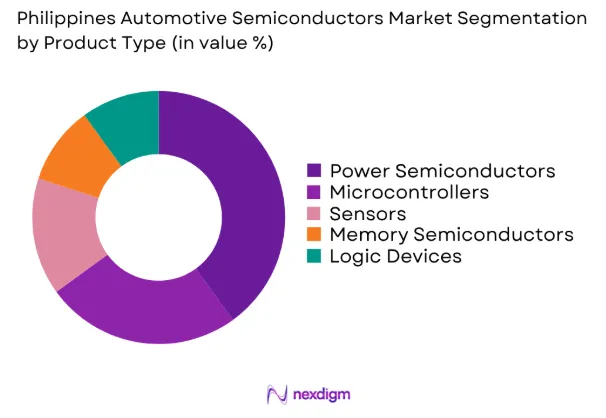
The Philippines Automotive Semiconductors market in the Philippines is segmented by product type into microcontrollers, power semiconductors, sensors, memory semiconductors, and logic devices. Among these, power semiconductors dominate the market share due to the increasing demand for electric vehicles and the integration of more efficient power management systems in automotive applications. Factors such as the growing electric vehicle market, which requires efficient power delivery and management, have accelerated the adoption of power semiconductors in automotive systems.
By Platform Type
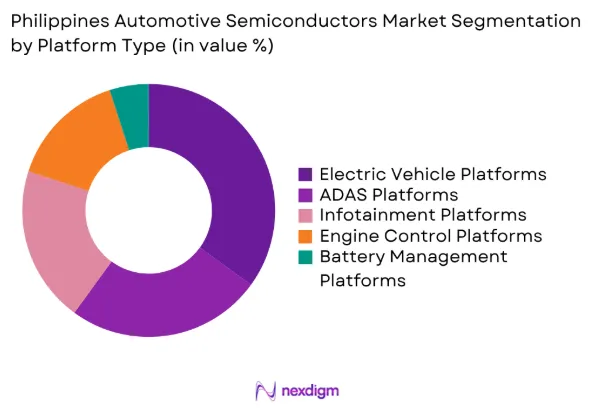
The market is segmented by platform type into ADAS (Advanced Driver-Assistance Systems) platforms, electric vehicle platforms, infotainment platforms, engine control platforms, and battery management platforms. Electric vehicle platforms are currently dominating the market share due to the increasing demand for electric vehicles in the Philippines and the government’s support for green technologies. EV platforms require more sophisticated semiconductor components to manage power and communication systems within the vehicles.
Competitive Landscape
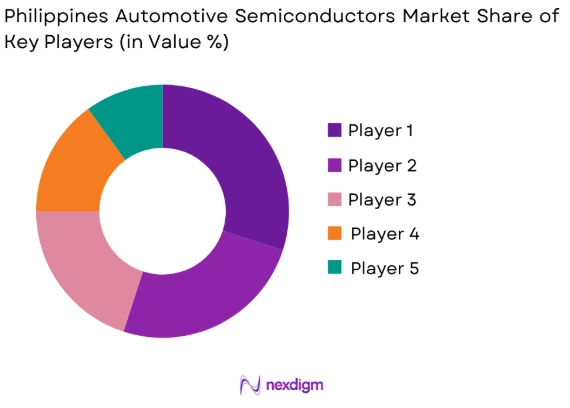
The Philippines automotive semiconductors market is characterized by high competition among both global and regional players. Key international semiconductor manufacturers have established a strong foothold in the region due to growing demand from automotive OEMs and Tier 1 suppliers. These players leverage economies of scale, strategic partnerships, and technological innovation to maintain market leadership. The competitive landscape is marked by consolidation as large companies continue to acquire smaller firms to expand their capabilities, particularly in electric vehicle-related technologies.
| Company Name | Establishment Year | Headquarters | Technology Focus | Market Reach | Key Products | Revenue (USD) | Market-specific Parameter |
| NXP Semiconductors | 1953 | Netherlands | ~ | ~ | ~ | ~ | ~ |
| Infineon Technologies | 1999 | Germany | ~ | ~ | ~ | ~ | ~ |
| STMicroelectronics | 1987 | Switzerland | ~ | ~ | ~ | ~ | ~ |
| Renesas Electronics | 2003 | Japan | ~ | ~ | ~ | ~ | ~ |
| Texas Instruments | 1930 | USA | ~ | ~ | ~ | ~ | ~ |
Philippines Automotive Semiconductors Market Analysis
Growth Drivers
Government Support for Green Mobility
The Philippine government’s push for electric vehicle (EV) adoption through tax incentives and regulatory frameworks is a key driver for the automotive semiconductors market. As EV demand grows, the need for advanced semiconductor solutions to support components like battery management, power systems, and motor controls also rises. Policies such as the Electric Vehicle Industry Development Act (EVIDA) have fostered the market’s expansion, creating a favorable environment for semiconductor companies. This shift toward EVs enhances the local automotive ecosystem, presenting significant opportunities for semiconductor manufacturers to supply components that meet the performance, efficiency, and safety needs of electric vehicles, ultimately driving market growth.
Technological Advancements in Driver-Assistance Systems
Another growth driver is the increasing adoption of Advanced Driver-Assistance Systems (ADAS), which is transforming the automotive industry by enhancing vehicle safety and user experience. With semiconductor technology enabling features such as lane-keeping assistance, automatic emergency braking, adaptive cruise control, and parking assistance, the demand for semiconductors in ADAS applications is rising. The evolution of these systems is further accelerated by advancements in artificial intelligence (AI), machine learning, and sensor technology, which require high-performance automotive semiconductors for data processing, communication, and real-time decision-making. As these systems become standard in vehicles, the need for automotive semiconductors to support ADAS functionalities is projected to grow significantly in the coming years.
Market Challenges
Supply Chain Disruptions
One of the key challenges affecting the automotive semiconductors market in the Philippines is the disruption in the global semiconductor supply chain. The automotive industry is highly reliant on the timely delivery of semiconductor components, yet global supply shortages due to the COVID-19 pandemic, increased demand, and geopolitical tensions have created significant bottlenecks. As a result, local manufacturers face delays in sourcing semiconductors, leading to slower production timelines and increased costs for automotive OEMs. Supply chain disruptions have caused a ripple effect across industries, and the automotive semiconductor market is no exception. These disruptions are challenging the growth prospects of the market, as companies struggle to meet the growing demand for semiconductors in automotive applications.
Technological Integration Challenges
As automotive manufacturers increasingly integrate advanced semiconductor technologies, there are significant challenges related to system compatibility and interoperability. The integration of high-tech systems such as autonomous driving capabilities, AI-based diagnostics, and electric powertrains requires seamless communication between various semiconductor components, which is often difficult to achieve. This complexity not only drives up costs but also increases the risk of system malfunctions, affecting vehicle safety and reliability. Furthermore, the evolving standards for electric and autonomous vehicles add another layer of complexity, as semiconductor manufacturers must continuously adapt their products to meet the latest requirements. These technological integration challenges are limiting the scalability of certain automotive semiconductor solutions and posing a barrier to market growth.
Opportunities
Expansion of Electric Vehicle Charging Infrastructure
The growth of the electric vehicle (EV) market in the Philippines presents a significant opportunity for the automotive semiconductors market, particularly with the expanding EV charging infrastructure. As more consumers and businesses adopt EVs, the demand for efficient and reliable charging stations rises, which in turn drives the need for semiconductor-based solutions for power management, monitoring, and control. The government’s focus on creating a robust network of charging stations supports this growth, further enhancing the need for automotive semiconductors. By providing solutions that cater to the charging infrastructure, semiconductor manufacturers have the opportunity to tap into this growing sector and contribute to the nation’s transition towards greener mobility.
Technological Advancements in Autonomous Vehicles
Autonomous vehicles (AVs) present a significant opportunity for the automotive semiconductors market. As AV adoption increases, so does the demand for semiconductors to support complex technologies like LIDAR, cameras, sensors, and radar. The Philippines, with its growing urbanization and technological progress, is an ideal market for AV integration. As these technologies evolve, the need for semiconductor components is expected to rise. AV systems require reliable, real-time processing capabilities, offering semiconductor manufacturers the opportunity to develop innovative solutions that power next-generation autonomous driving systems. This growing demand for advanced technologies presents a unique growth opportunity for the semiconductor sector in the automotive market.
Future Outlook
Over the next five years, the Philippines automotive semiconductors market is expected to experience robust growth driven by continued advancements in electric vehicle technology and autonomous driving systems. The market is also anticipated to benefit from government incentives supporting green technologies and infrastructure development. With technological advancements in AI, machine learning, and smart manufacturing, semiconductor solutions will become increasingly sophisticated, enabling more efficient and reliable automotive applications. Furthermore, as the automotive sector embraces digitalization, opportunities for innovation in automotive electronics, powered by semiconductors, will further drive market expansion.
Major Players
- NXP Semiconductors
- Infineon Technologies
- STMicroelectronics
- Renesas Electronics
- Texas Instruments
- Microchip Technology
- ON Semiconductor
- Broadcom
- Qualcomm
- Analog Devices
- Maxim Integrated
- Microsemi
- Samsung Electronics
- Texas Instruments
- Intel Corporation
Key Target Audience
- Investments and venture capitalist firms
- Government and regulatory bodies
- Automotive OEMs
- Automotive Tier 1 suppliers
- Electric vehicle manufacturers
- Semiconductor component manufacturers
- Energy infrastructure companies
- Automotive research and development firms
Research Methodology
Step 1: Identification of Key Variables
The first step involves identifying the key variables driving the market such as demand patterns, technological trends, and regulatory policies.
Step 2: Market Analysis and Construction
This step includes gathering and analyzing historical data and forecasting future trends based on current market dynamics.
Step 3: Hypothesis Validation and Expert Consultation
Expert opinions and industry insights are gathered to validate hypotheses formed during the analysis.
Step 4: Research Synthesis and Final Output
The final step involves synthesizing the research findings and compiling them into a structured, comprehensive report.

- Executive Summary
- Research Methodology (Definitions, Scope, Industry Assumptions, Market Sizing Approach, Primary & Secondary Research Framework, Data Collection & Verification Protocol, Analytic Models & Forecast Methodology, Limitations & Research Validity Checks)

- Market Definition and Scope
- Value Chain & Stakeholder Ecosystem
- Regulatory / Certification Landscape
- Sector Dynamics Affecting Demand
- Strategic Initiatives & Infrastructure Growth

- Growth Drivers
Increased Adoption of Electric Vehicles
Government Incentives for Green Technologies
Rising Demand for Advanced Driver-Assistance Systems - Market Challenges
Supply Chain Disruptions
Technological Integration Challenges
High Initial Cost of Semiconductor Components - Market Opportunities
Expanding Electric Vehicle Charging Infrastructure
Technological Advancements in Autonomous Vehicles
Growing Investment in Smart Manufacturing Technologies - Trends
Integration of 5G and IoT in Automotive Systems
Rise in Vehicle Electrification
Shift Towards More Sustainable Automotive Manufacturing - Government Regulations
- SWOT Analysis of Key Competitors
- Porter’s Five Forces

- By Market Value, 2020-2025
- By Installed Units, 2020-2025
- By Average System Price, 2020-2025
- By System Complexity Tier, 2020-2025

- By System Type (In Value%)
Automotive Microcontrollers
Power Semiconductors
Sensors
Memory Semiconductors
Logic Devices - By Platform Type (In Value%)
ADAS Platforms
Electric Vehicle Platforms
Infotainment Platforms
Engine Control Platforms
Battery Management Platforms - By Fitment Type (In Value%)
OEM Fitment
Aftermarket Fitment
Hybrid Fitment
Integrated Fitment
Modular Fitment - By End User Segment (In Value%)
OEMs (Original Equipment Manufacturers)
Tier 1 Suppliers
Automotive Component Manufacturers
Electronics Manufacturers
Aftermarket Service Providers - By Procurement Channel (In Value%)
Direct Procurement
Distributor-based Procurement
Online Procurement Platforms
Government Tenders
Third-party Suppliers

- Market Share Analysis
- Cross Comparison Parameters (System Type, Platform Type, Procurement Channel, End User Segment, Fitment Type, Geography, Technology Integration, Production Volume, Pricing Model, Market Penetration)
- SWOT Analysis of Key Competitors
- Pricing & Procurement Analysis
- Key Players
NXP Semiconductors
Infineon Technologies
STMicroelectronics
Texas Instruments
Qualcomm
Renesas Electronics
Analog Devices
Broadcom
ON Semiconductor
Microchip Technology
Taiwan Semiconductor Manufacturing Company (TSMC)
Samsung Electronics
Intel Corporation
Rohm Semiconductor
Hitachi Automotive Systems

- Increasing Demand from OEMs for Semiconductors
- Growing Focus on Connected and Autonomous Vehicles
- Rising Adoption of Electric Powertrains
- Demand for Semiconductors in Infotainment Systems

- Forecast Market Value, 2026-2035
- Forecast Installed Units, 2026-2035
- Price Forecast by System Tier, 2026-2035
- Future Demand by Platform, 2026-2035


 Request a Sample
 Ask for Customization
 Get a Quote
 Enquire Now