

 Download PDF
 Download PDF
Market Overview
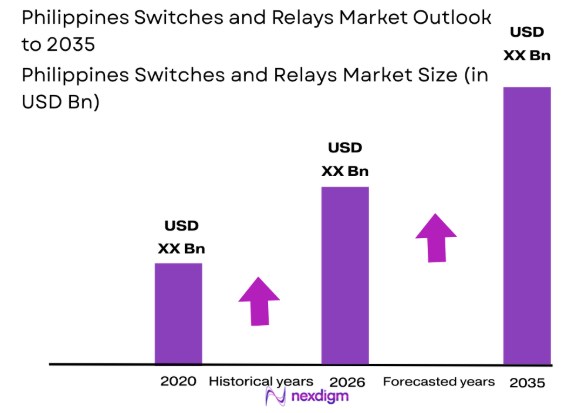
The Philippines Switches and Relays market is projected to grow significantly, driven by increasing demand from sectors such as energy, automotive, and industrial automation. Market size stands at USD ~ billion, supported by advancements in smart grid technology and infrastructure projects. Additionally, the rise of electric vehicles (EVs) and the expanding renewable energy sector contribute significantly to the growth of switches and relays, driving innovation in products designed for higher reliability and efficiency in various applications.
The dominant regions in the Philippines market include Metro Manila, Cebu, and Davao, with Metro Manila being the focal point due to its status as the country’s economic and industrial hub. The high concentration of industries such as manufacturing, construction, and transportation in these regions drives demand for reliable switching and relaying solutions. Government initiatives supporting infrastructure growth and green energy projects are also accelerating market development, creating a favorable environment for market leaders to expand their footprint across the country.
Market Segmentation
By Product Type
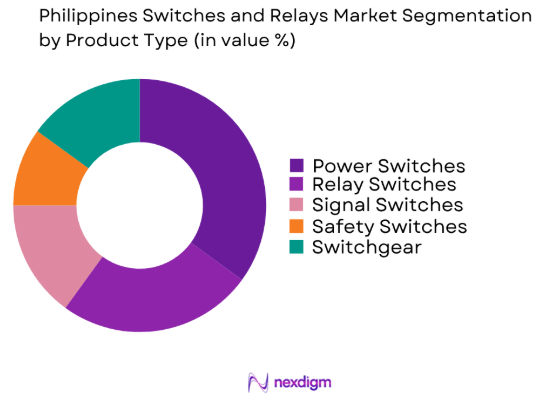
The Philippines switches and relays market is segmented by product type into power switches, relay switches, signal switches, safety switches, and switchgear. Recently, power switches have a dominant market share due to the increased demand for robust, high-performance electrical equipment for industrial and energy applications. Power switches are preferred for their reliability in handling high-voltage and high-current operations, especially in sectors like energy, construction, and transportation. Their widespread adoption is a result of the growing need for efficient and safe power distribution systems in the industrial and residential sectors.
By Platform Type
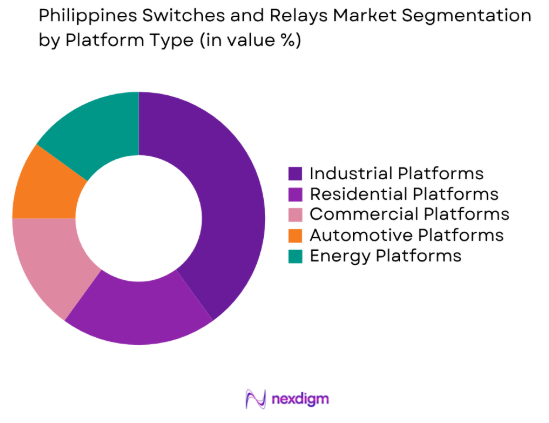
The Philippines Switches and Relays market is also segmented by platform type into industrial platforms, residential platforms, commercial platforms, automotive platforms, and energy platforms. Among these, industrial platforms dominate the market share due to the rapid industrialization and ongoing infrastructure projects across the country. The increased focus on automation, energy efficiency, and smart grids has led to high demand for advanced switching and relaying solutions that can meet the stringent performance standards required for industrial applications. With continuous investment in industrial automation, industrial platforms are expected to remain the key growth driver in this segment.
Competitive Landscape
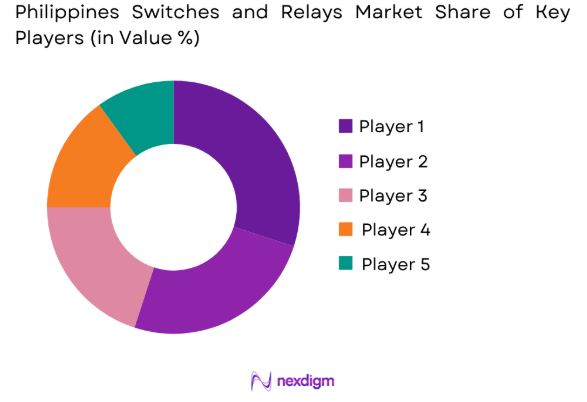
The Philippines switches and relays market is competitive, with major players focusing on technological innovation and the provision of reliable, high-quality products. The market is characterized by consolidation, with industry leaders expanding their market share through strategic partnerships and acquisitions. Key players invest heavily in R&D to address the growing demand for energy-efficient and smart-grid-compatible products.
| Company Name | Establishment Year | Headquarters | Technology Focus | Market Reach | Key Products | Revenue (USD Million) | Additional Parameter |
| Schneider Electric | 1836 | Rueil-Malmaison, FR | ~ | ~ | ~ | ~ | ~ |
| Siemens | 1847 | Munich, DE | ~ | ~ | ~ | ~ | ~ |
| ABB | 1988 | Zurich, CH | ~ | ~ | ~ | ~ | ~ |
| Legrand | 1904 | Limoges, FR | ~ | ~ | ~ | ~ | ~ |
| Eaton | 1911 | Dublin, IE | ~ | ~ | ~ | ~ | ~ |
Philippines Switches and Relays Market Analysis
Growth Drivers
Technological Advancements in Smart Grid Technologies
The increasing adoption of smart grid technologies in the Philippines is significantly driving demand for advanced switches and relays. Smart grids, which require precise control and monitoring of electricity distribution, rely on high-performance switches and relays to ensure optimal functioning. With both the government and private sector focusing on upgrading the country’s energy infrastructure, the need for reliable, efficient, and smart electrical components is growing. This shift towards more advanced energy systems is expected to result in a rapid expansion of the switches and relays market, as these technologies become integral to improving energy distribution and meeting sustainability goals. This development promises significant opportunities for market growth.
Government Infrastructure Development Initiatives
The Philippine government’s strong focus on infrastructure development, including road networks, power grids, and smart cities, is a major driver for the switches and relays market. Public sector investments in large-scale infrastructure projects create sustained demand for switching solutions, especially in the industrial and energy sectors. Ongoing initiatives to enhance power distribution and industrial automation further highlight the critical role of switches and relays in ensuring the seamless operation of modern infrastructure. As these projects continue to progress, the need for reliable, high-performance switching systems will grow, making switches and relays essential components in supporting the country’s development and technological advancements.
Market Challenges
High Capital Investment in Infrastructure
A key challenge for the switches and relays market is the high initial investment required for infrastructure development. Despite the growing demand for advanced switching solutions, the significant costs associated with deploying and maintaining such infrastructure can be a barrier, particularly for smaller companies. This issue is compounded by the need for specialized products that align with the increasing demands for efficiency, reliability, and sustainability in the energy and industrial sectors. As industries and governments focus on improving energy distribution and industrial automation, the financial challenges of integrating advanced switching systems could limit market growth, particularly for less capitalized players in the market.
Skilled Labor Shortage
A significant challenge for the switches and relays market is the shortage of skilled labor needed to install and maintain advanced electrical systems. As automation rises and switchgear systems become more complex, the demand for highly trained professionals capable of ensuring proper installation, operation, and troubleshooting intensifies. However, the Philippines faces a shortage of qualified personnel in its electrical industry, making it difficult to meet the growing demand for sophisticated switching solutions. This shortage limits the ability to fully leverage advanced technologies, hindering the smooth deployment and maintenance of critical infrastructure and slowing overall market growth, particularly in sectors requiring specialized expertise.
Opportunities
Expansion of Electric Vehicle Market
The rapid growth of the electric vehicle (EV) market in the Philippines offers a significant opportunity for the switches and relays market. As EV adoption increases, there is a growing need for specialized electrical systems, including switches and relays, essential for managing power distribution within vehicles and charging stations. This shift towards sustainable transportation opens up new avenues for market players to innovate and expand their product offerings. With the demand for reliable, high-performance components critical to EV functionality, the switches and relays market is positioned to benefit from the rising trend in electric mobility, creating significant growth potential for industry players.
Growth of Smart Homes and Buildings
The rise of smart homes and buildings in the Philippines presents a significant opportunity for the switches and relays market. As consumers and businesses increasingly adopt smart technologies for energy management, home automation, and security, the demand for reliable and efficient switches and relays will continue to grow. Smart homes and buildings require advanced electrical components that can ensure seamless operation of automated systems, making switches and relays integral to their functionality. With government initiatives promoting sustainable building practices and energy efficiency, there is an increasing focus on solutions that support these goals. This growing emphasis on smart, energy-efficient buildings is expected to drive rapid demand for switches and relays, presenting considerable opportunities for market expansion and innovation.
Future Outlook
The future of the switches and relays market in the Philippines looks promising, driven by technological innovations in smart grids, renewable energy, and electric vehicles. Government policies supporting energy efficiency and sustainable infrastructure will continue to drive demand for advanced switching solutions. The next five years will see the further integration of IoT technologies and AI into electrical systems, with a focus on optimizing energy usage and improving system reliability. Moreover, as urbanization increases, the demand for smart homes and green buildings will further fuel market growth, offering exciting opportunities for companies in the sector.
Major Players
- Schneider Electric
- Siemens
- ABB
- Legrand
- Eaton
- Mitsubishi Electric
- General Electric
- Rockwell Automation
- Honeywell
- Hubbell
- C&K Components
- Omron
- Panasonic
- Toshiba
- Emerson
Key Target Audience
- Investments and venture capitalist firms
- Government and regulatory bodies
- Industrial equipment manufacturers
- Renewable energy companies
- Automotive sector manufacturers
- Commercial developers
- Energy infrastructure companies
- System integrators
Research Methodology
Step 1: Identification of Key Variables
The research process begins by identifying key variables that impact the switches and relays market, such as technology advancements, government regulations, and industry trends.
Step 2: Market Analysis and Construction
Market data is collected through primary and secondary research, including interviews with industry experts, analysis of published reports, and surveys of market participants to construct a comprehensive market model.
Step 3: Hypothesis Validation and Expert Consultation
Hypotheses derived from initial data analysis are validated by consulting with industry experts and stakeholders to ensure the market projections are realistic and reliable.
Step 4: Research Synthesis and Final Output
The final research findings are synthesized into a detailed report, incorporating market size, trends, growth drivers, challenges, and opportunities, followed by strategic recommendations for market participants.

- Executive Summary
- Research Methodology (Definitions, Scope, Industry Assumptions, Market Sizing Approach, Primary & Secondary Research Framework, Data Collection & Verification Protocol, Analytic Models & Forecast Methodology, Limitations & Research Validity Checks)

- Market Definition and Scope
- Value Chain & Stakeholder Ecosystem
- Regulatory / Certification Landscape
- Sector Dynamics Affecting Demand
- Strategic Initiatives & Infrastructure Growth

- Growth Drivers
Technological Advancements in Smart Grids
Government Support for Infrastructure Development
Growth of the Renewable Energy Sector - Market Challenges
High Initial Capital Investment in Infrastructure
Limited Skilled Workforce for Advanced Technologies
Regulatory Hurdles in Manufacturing and Distribution - Market Opportunities
Expansion of Electric Vehicle Market
Rise of Smart Buildings and Cities
Growth in Energy Efficiency and Sustainability Solutions - Trends
Shift Toward Automation in Electrical Systems
Increase in Demand for Smart and IoT-enabled Relays
Technological Integration in Renewable Energy Systems - Government Regulations
- SWOT Analysis of Key Competitors
- Porter’s Five Forces

- By Market Value, 2020-2025
- By Installed Units, 2020-2025
- By Average System Price, 2020-2025
- By System Complexity Tier, 2020-2025

- By System Type (In Value%)
Power Switches
Relay Switches
Signal Switches
Safety Switches
Switchgear - By Platform Type (In Value%)
Industrial Platforms
Residential Platforms
Commercial Platforms
Automotive Platforms
Energy Platforms - By Fitment Type (In Value%)
On-premise Solutions
Cloud-based Solutions
Hybrid Solutions
Modular Solutions
Integrated Solutions - By End User Segment (In Value%)
Residential Consumers
Automotive Manufacturers
Industrial Equipment Suppliers
Energy Sector Companies
Construction Firms - By Procurement Channel (In Value%)
Direct Procurement
Government Tenders
Private Sector Procurement
Online Bidding Platforms
Third-party Distributors

- Market Share Analysis
- Cross Comparison Parameters (Product Type, Platform Type, Procurement Channel, End User Segment, Fitment Type, System Complexity, Geographic Region, Market Reach, Technology Integration, Pricing Model)
- SWOT Analysis of Key Competitors
- Pricing & Procurement Analysis
- Key Players
Schneider Electric
Siemens
Eaton
Legrand
ABB
Mitsubishi Electric
General Electric
Schurter
Rockwell Automation
Honeywell
Hubbell
C&K Components
Omron
Panasonic
Toshiba

- Growing Adoption in Industrial Automation
- Increasing Demand in the Automotive Sector
- Rise of Energy-efficient Solutions in Residential Spaces
- Shift Towards Green and Renewable Energy Technologies

- Forecast Market Value, 2026-2035
- Forecast Installed Units, 2026-2035
- Price Forecast by System Tier, 2026-2035
- Future Demand by Platform, 2026-2035


 Request a Sample
 Ask for Customization
 Get a Quote
 Enquire Now