
 Download PDF
Market Overview
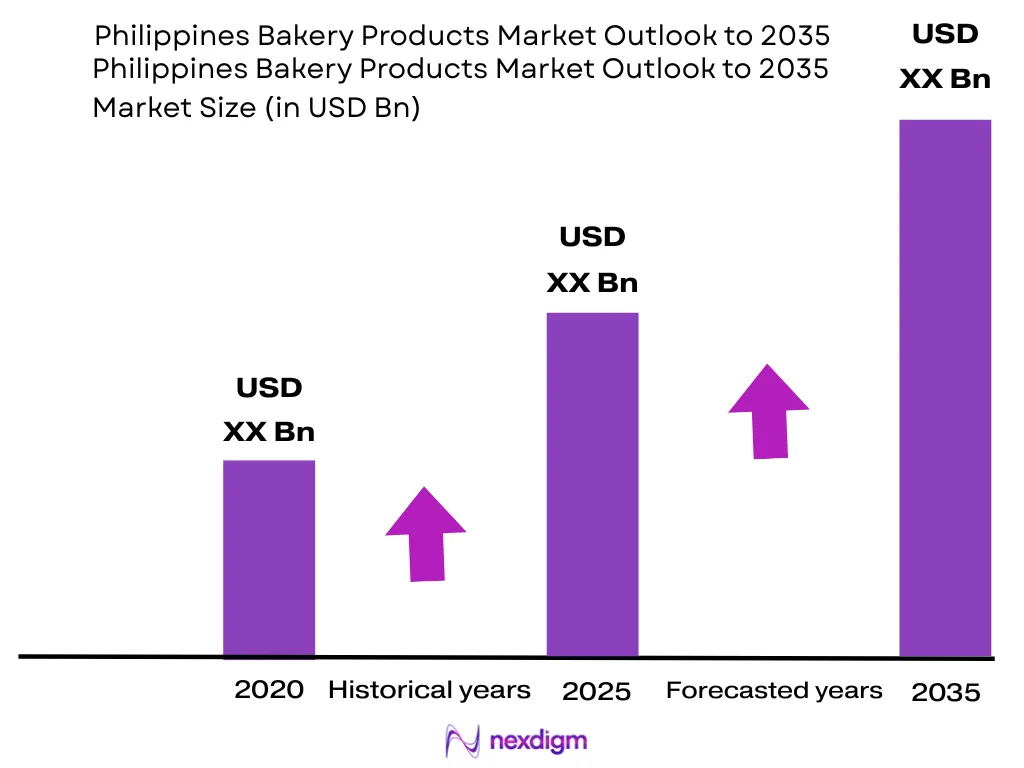
The Philippines Bakery Products Market was valued at approximately USD ~ Billion in 2024, compared to USD ~ Billion in 2023, based on industry analysis incorporating data from the Philippine Statistics Authority (PSA), Department of Trade and Industry (DTI), and international trade databases. The market is driven by the country’s population exceeding 117 million people and rising urbanization levels. Bakery products remain staple food items across Filipino households, with bread, pandesal, cakes, pastries, and biscuits forming an integral part of daily consumption. The increasing penetration of modern retail formats, convenience stores, bakery café chains, and online food delivery platforms continues to support market expansion. Growing household expenditure on food and changing lifestyles favoring ready-to-eat products have further strengthened demand for packaged and fresh bakery products.
Market Segmentation
By Product Type
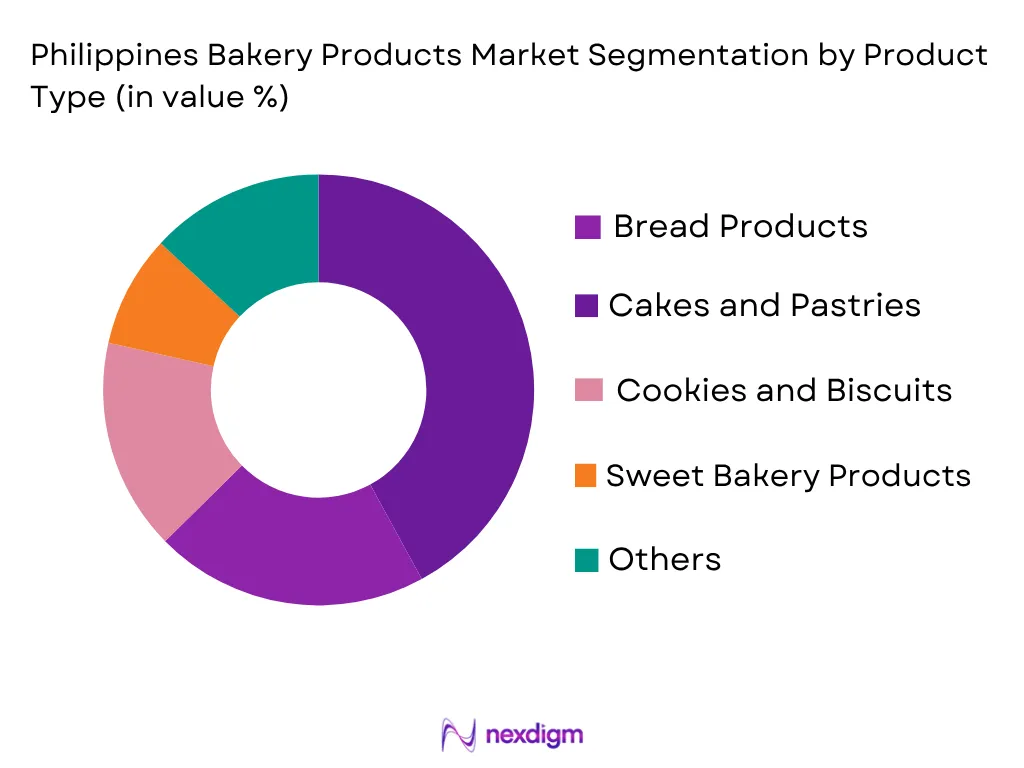
Philippines Bakery Products Market is segmented by product type into bread products, cakes and pastries, cookies and biscuits, sweet bakery products, frozen bakery products, artisan and premium bakery products, and bakery snacks. Recently, Bread Products have maintained the dominant market share within this segmentation due to their role as a daily staple food among Filipino consumers. Products such as pandesal, loaf bread, buns, and rolls are consumed across all income groups and age categories. Leading companies including Gardenia, Monde Nissin, and Universal Robina have established strong brand recognition and extensive distribution networks across supermarkets, convenience stores, sari-sari stores, and independent bakeries. Bread products benefit from high purchase frequency, affordability, and widespread accessibility throughout urban and rural regions. Furthermore, increasing demand for fortified and healthier bread variants has expanded consumer adoption while preserving the segment’s leadership position within the overall bakery products market.
By Distribution Channel
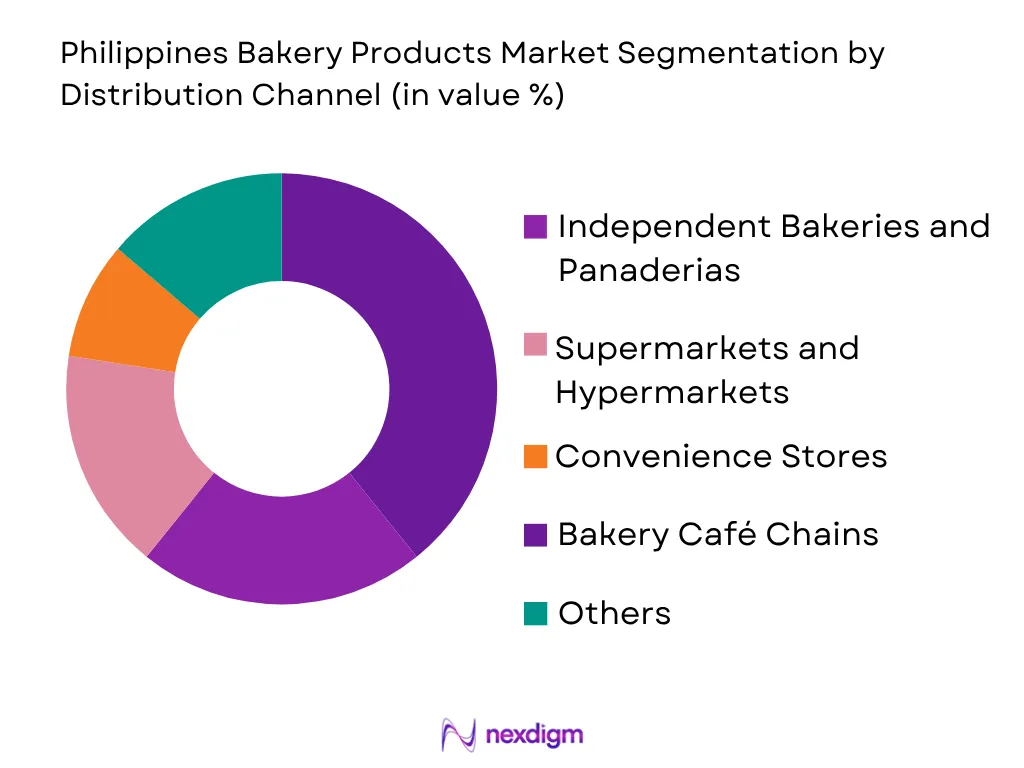
Philippines Bakery Products Market is segmented by distribution channel into supermarkets and hypermarkets, convenience stores, traditional sari-sari stores, independent bakeries and panaderias, bakery café chains, online retail, and foodservice channels. Recently, Independent Bakeries and Panaderias have maintained the dominant market share due to their deep-rooted presence in Filipino communities. Thousands of neighborhood bakeries provide freshly baked bread products multiple times per day and remain highly accessible to consumers. These establishments benefit from strong local customer loyalty, affordability, and proximity to residential areas. Traditional bakery formats continue to outperform many modern channels in terms of daily consumer visits, especially for staple bread products such as pandesal. Their ability to cater to local taste preferences and maintain competitive pricing supports their leading position within the market.
Competitive Landscape
The Philippines Bakery Products Market is characterized by the presence of both large-scale commercial bakery manufacturers and extensive networks of regional bakery chains. Major companies leverage strong brand recognition, nationwide distribution systems, product innovation capabilities, and diversified product portfolios to maintain competitive positions. The market also features substantial participation from independent bakeries and panaderias that continue to play an important role in daily bread consumption patterns across the country.
| Company | Establishment Year | Headquarters | Key Brands | Product Portfolio | Distribution Reach | Manufacturing Presence | Retail Penetration | Innovative Focus |
| Gardenia Bakeries Philippines | 1997 | ~ | ~ | ~ | ~ | ~ | ~ | ~ |
| Monde Nissin Corporation | 1979 | ~ | ~ | ~ | ~ | ~ | ~ | ~ |
| Universal Robina Corporation | 1954 | ~ | ~ | ~ | ~ | ~ | ~ | ~ |
| Goldilocks Bakeshop | 1966 | ~ | ~ | ~ | ~ | ~ | ~ | ~ |
| Red Ribbon Bakeshop | 1979 | ~ | ~ | ~ | ~ | ~ | ~ | ~ |
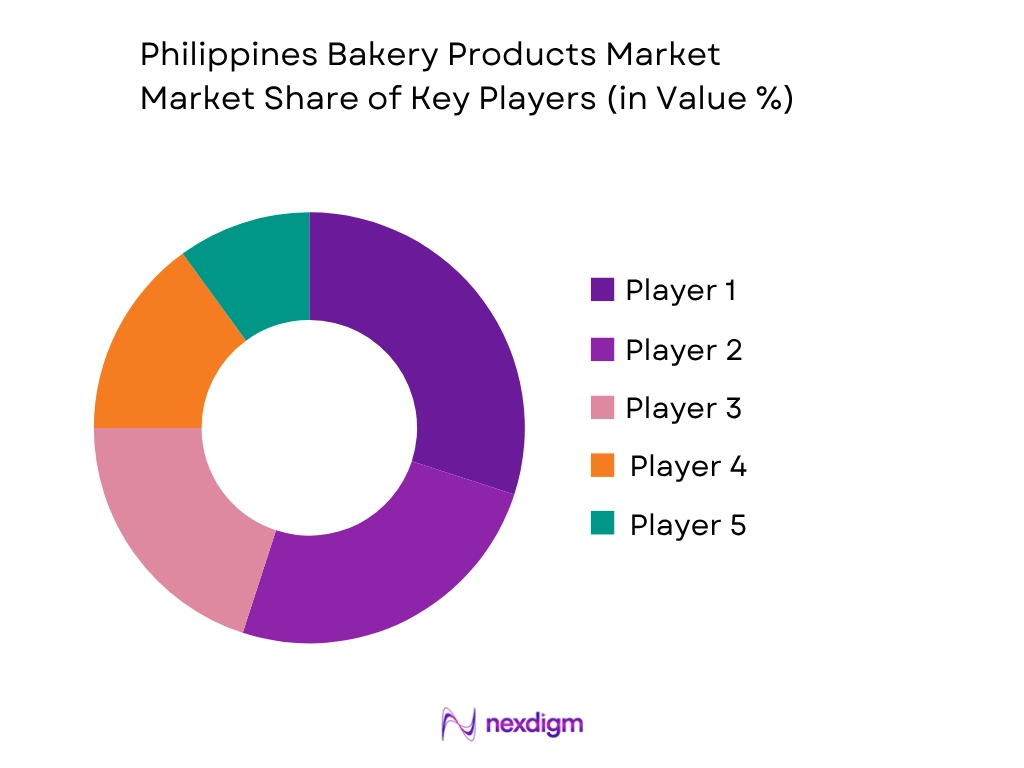
Philippines Bakery Products Market Analysis
Growth Drivers
Urban Population Density and Convenience Food Consumption
Philippines Bakery Products Market continues to benefit from one of the world’s most urbanized consumer bases. According to the World Bank, Philippines’s population exceeded 5.9 million, with virtually the entire population residing in urban areas. The Department of Statistics Philippines reported nominal GDP exceeding SGD 690 billion, while GDP per capita remained above USD 84,000, among the highest globally. This strong purchasing power supports frequent consumption of packaged bread, pastries, cakes, and ready-to-eat bakery products. The Ministry of Trade and Industry reported continued growth in consumer-facing industries, supported by robust domestic spending and tourism-related demand. Changi Airport handled more than 67 million passenger movements, creating significant demand for bakery products across retail outlets, cafés, and foodservice channels. Additionally, Philippines’s extensive retail infrastructure, including over 300 supermarkets and thousands of convenience retail points, enhances product accessibility. High workforce participation, long working hours, and demand for quick meal solutions continue to increase bakery product consumption as consumers increasingly rely on bread, sandwiches, pastries, and grab-and-go bakery items as part of their daily food intake patterns. These macroeconomic and demographic fundamentals continue to strengthen bakery product demand across the country.
Growth of Tourism and Foodservice Sector
The expansion of Philippines’s tourism and hospitality ecosystem is significantly driving bakery product consumption. The Philippines Tourism Board reported international visitor arrivals exceeding 16 million, while tourism receipts surpassed SGD 29 billion. This influx of visitors directly supports demand for bakery products across hotels, cafés, restaurants, airport retail outlets, and foodservice chains. Philippines maintains more than 430 hotels and thousands of licensed food establishments, creating extensive commercial demand for bread, cakes, pastries, croissants, and dessert bakery products. According to the Department of Statistics Philippines, food and beverage services generated billions of dollars in operating receipts, highlighting the importance of bakery ingredients and finished bakery products within the hospitality supply chain. Furthermore, Philippines’s resident population exceeds 5.9 million, supported by a substantial expatriate workforce that contributes to demand for international bakery varieties including sourdough bread, European pastries, Japanese bakery products, and artisan baked goods. The country’s role as a regional business hub also supports corporate catering, institutional foodservice, and premium café expansion. Together, tourism growth, foodservice development, and rising consumer spending create a strong foundation for continued bakery product consumption across retail and commercial channels.
Market Challenges
Dependence on Imported Raw Materials
Philippines Bakery Products Market faces a major challenge due to its heavy dependence on imported agricultural commodities. Philippines imports more than 90 percent of its food requirements because of limited domestic agricultural production capacity. Wheat, flour, dairy products, cocoa, sugar, and bakery ingredients are largely sourced from international suppliers. The Philippines Food Agency identifies over 180 countries and regions as food import sources, highlighting the country’s reliance on global supply chains. According to Enterprise Philippines trade statistics, food imports account for billions of dollars annually, exposing bakery manufacturers to fluctuations in global commodity availability and logistics disruptions. International geopolitical events, shipping bottlenecks, and climate-related agricultural challenges can affect ingredient availability and procurement planning. Additionally, Philippines’s position as a food-processing and re-export hub means bakery manufacturers must continuously manage inventory levels to maintain uninterrupted production. The country’s limited land area of approximately 735 square kilometers further restricts opportunities for large-scale domestic agricultural expansion. Consequently, bakery companies must invest heavily in supply chain resilience, supplier diversification, and inventory management to maintain stable production and product availability across retail and foodservice channels.
Labor Constraints and Operating Environment
The bakery sector in Philippines operates within a highly competitive labor market characterized by workforce constraints and rising productivity requirements. According to the Ministry of Manpower, total employment exceeds 4 million workers, while the economy remains heavily dependent on skilled labor across manufacturing, food processing, retail, and hospitality sectors. Bakery operations require trained personnel for production, quality control, food safety compliance, logistics, and retail management. Philippines’s aging demographic profile and limited labor pool create recruitment challenges for labor-intensive bakery operations. The Department of Statistics Philippines reported median monthly incomes continuing to rise, reflecting higher labor expenses across the economy. Additionally, bakery manufacturers compete with sectors such as logistics, technology, hospitality, and financial services for talent. Food manufacturing facilities must also comply with strict operational, hygiene, and food safety requirements established by national authorities, increasing workforce training needs. The country’s strong emphasis on productivity enhancement encourages bakery companies to invest in automation and advanced production technologies. However, transitioning to automated operations requires specialized technical capabilities, making workforce development and retention a continuing challenge for bakery manufacturers and retail bakery operators.
Market Opportunities
Expansion of Premium and Health-Oriented Bakery Products
Philippines Bakery Products Market presents significant opportunities through growing consumer demand for premium, functional, and health-oriented bakery products. Philippines’s GDP per capita exceeding USD 84,000 supports spending on value-added food categories, including artisanal breads, organic bakery products, low-sugar pastries, high-protein baked goods, and clean-label offerings. The Ministry of Health continues to encourage healthier dietary choices through various national nutrition initiatives, supporting demand for wholegrain and reduced-sugar bakery products. Philippines’s educated consumer base demonstrates strong awareness of nutrition, ingredient transparency, and wellness trends. The country hosts more than 7,000 food and beverage establishments, creating multiple channels for premium bakery product distribution. Furthermore, the presence of multinational retailers and specialty food stores enables rapid introduction of innovative bakery concepts. Growing expatriate populations and international tourism also increase demand for European, Japanese, Korean, and specialty bakery formats. These factors create favorable conditions for bakery manufacturers to expand premium product portfolios, introduce functional ingredients, and differentiate offerings through quality, nutrition, and unique culinary experiences.
Digital Retail and Food Delivery Ecosystem
Philippines’s advanced digital infrastructure creates substantial opportunities for bakery manufacturers and retailers. According to the Infocomm Media Development Authority, internet penetration exceeds 5 million users, while smartphone adoption remains among the highest globally. Philippines’s digital economy contributes significantly to national economic output, supporting strong adoption of online grocery platforms, food delivery applications, and direct-to-consumer retail models. The country possesses extensive digital payment infrastructure, enabling seamless online transactions across food and beverage categories. Major delivery platforms operate nationwide, allowing bakery businesses to expand customer reach without significant physical store investments. Philippines’s dense urban environment supports efficient last-mile delivery networks, reducing delivery times for fresh bakery products. Furthermore, the country’s strong logistics capabilities and transportation infrastructure facilitate rapid movement of perishable goods. Consumers increasingly utilize digital channels to purchase cakes, pastries, artisan breads, celebration desserts, and customized bakery products. As online food purchasing behavior continues to mature, bakery companies have opportunities to strengthen omnichannel strategies, enhance customer engagement, and expand sales through digital commerce platforms and subscription-based bakery services.
Future Outlook
The Philippines Bakery Products Market is expected to witness sustained growth throughout the forecast period supported by increasing urbanization, rising disposable incomes, expansion of organized retail, and growing consumer preference for convenience foods. Product innovation focused on healthier ingredients, fortified bakery products, and premium offerings is expected to strengthen market development. Expansion of digital commerce platforms and food delivery services is also likely to create new growth avenues for bakery manufacturers and retailers. Additionally, increasing investments in bakery automation and production efficiency are expected to improve supply chain capabilities and support future market expansion.
Major Players
- Gardenia Bakeries Philippines
- Monde Nissin Corporation
- Universal Robina Corporation
- Julie’s Bakeshop
- Goldilocks Bakeshop
- Red Ribbon Bakeshop
- BreadTalk Philippines
- French Baker
- Pan De Manila
- Eng Bee Tin Bakery
- Mister Donut Philippines
- Conti’s Bakeshop and Restaurant
- Country Style Foods
- Le Coeur de France
- Masa Madre Bakehouse
Key Target Audience
- Bakery Product Manufacturers
- Wheat Flour Milling Companies
- Bakery Ingredient Suppliers
- Modern Retail Chains
- Foodservice and Hospitality Operators
- Investments and Venture Capitalist Firms
- Government and Regulatory Bodies (Department of Trade and Industry, Food and Drug Administration Philippines, Department of Agriculture)
- Logistics and Distribution Companies
Research Methodology
Step 1: Identification of Key Variables
The initial phase involves constructing an ecosystem map encompassing all major stakeholders within the Philippines Bakery Products Market. This step is supported by extensive secondary research using industry databases, trade publications, government statistics, and company reports. The objective is to identify critical variables influencing market demand, supply, pricing, and consumer behavior.
Step 2: Market Analysis and Construction
In this phase, historical market data is compiled and analyzed to evaluate consumption patterns, production trends, distribution structures, and revenue generation across product categories. Demand-side and supply-side assessments are conducted to establish a comprehensive understanding of market dynamics.
Step 3: Hypothesis Validation and Expert Consultation
Market assumptions and preliminary findings are validated through structured interviews with bakery manufacturers, distributors, ingredient suppliers, retailers, and industry experts. These consultations provide operational insights that strengthen the reliability and accuracy of market estimates.
Step 4: Research Synthesis and Final Output
The final stage involves integrating primary and secondary research findings through a data triangulation approach. Detailed analysis of product segments, competitive landscape, consumer behavior, and future growth opportunities is conducted to produce a comprehensive and validated market report.

- Executive Summary
- Research Methodology (Market Definitions and Assumptions, Abbreviations, Market Sizing Approach, Top-Down Analysis, Bottom-Up Analysis, Demand-Side Assessment, Supply-Side Assessment, Primary Industry Interviews, Data Triangulation, Forecasting Framework, Limitations and Future Conclusions)

- Definition and Scope
- Market Evolution and Industry Genesis10
- Timeline of Major Industry Developments
- Bakery Industry Value Chain Analysis
- Supply Chain Analysis

- Growth Drivers (High Bread Consumption Frequency, Rising Urban Population, Growth in Convenience Food Demand, Expansion of Modern Retail Networks, Increasing Household Food Expenditure)
- Market Challenges (Dependence on Imported Wheat, Raw Material Price Volatility, Shelf-Life Management Constraints, Energy Cost Fluctuations, Fragmented Traditional Bakery Sector)
- Market Opportunities (Premium Bakery Expansion, Health-Oriented Bakery Products, Frozen Bakery Penetration, Digital Commerce Growth, Tourism-Driven Bakery Consumption)
- Market Trends (Premiumization of Bakery Products, Whole Grain Adoption, Clean Label Ingredients, Ready-to-Bake Solutions, Functional Bakery Innovations)
- Government Regulations (Food Safety Standards, Product Labeling Requirements, Wheat Flour Fortification Regulations, Packaging Compliance Standards, Import and Customs Regulations)
- SWOT Analysis
- Porter’s Five Forces Analysis
- PESTLE Analysis
- Stakeholder Ecosystem
- Competition Ecosystem

- By Market Value (2020-2025)
- By Volume Consumption (2020-2025)
- By Average Selling Price (2020-2025)

- By Product Type (In Value %)
Bread Products
Pandesal
Loaf Bread
Buns and Rolls
Cakes and Pastries
Cookies and Biscuits
Sweet Bakery Products
Frozen Bakery Products
Artisan and Premium Bakery Products
Bakery Snacks and Convenience Bakery Items - By Ingredient Type (In Value %)
Conventional Bakery Products
Whole Wheat Bakery Products
Multigrain Bakery Products
Gluten-Free Bakery Products
Organic Bakery Products
Low-Sugar Bakery Products
High-Fiber Bakery Products
Protein-Enriched Bakery Products - By Distribution Channel (In Value %)
Supermarkets and Hypermarkets
Convenience Stores
Traditional Sari-Sari Stores
Independent Bakeries and Panaderias
Bakery Café Chains
Online Retail and Direct-to-Consumer
Foodservice and Institutional Sales
Quick Commerce Platforms - By Region (In Value %)
National Capital Region
Luzon
Visayas
Mindanao
Emerging Urban Centers - By Packaging Type (In Value %)
Flexible Packaging
Paper Packaging
Plastic Packaging
Cartons and Boxes
Resealable Packaging
Sustainable and Recyclable Packaging

- Market Share of Major Players (By Value, Volume, Product Category, Distribution Channel, Organized Retail Presence)
- Cross Comparison Parameters (Product Portfolio Breadth, Bakery SKU Count, Production Capacity, Distribution Reach, Panaderia Network Presence, Frozen Bakery Capability, Health-Oriented Product Portfolio, New Product Launch Frequency)
- SWOT Analysis of Major Players
- Pricing Analysis by SKU and Product Category
- Detailed Profiles of Major Companies
Gardenia Bakeries Philippines
Monde Nissin Corporation
Universal Robina Corporation
Julie’s Bakeshop
Goldilocks Bakeshop
Red Ribbon Bakeshop
BreadTalk Philippines
French Baker
Pan De Manila
Eng Bee Tin Bakery
Mister Donut Philippines
Conti’s Bakeshop and Restaurant
Country Style Foods
Le Coeur de France
Masa Madre Bakehouse

- Consumption Behavior Assessment (Purchase Frequency, Product Preferences, Daily Bread Consumption Patterns, Household Penetration)
- Demographic Consumption Trends (Age Group, Income Segment, Family Size, Urban-Rural Distribution)
- Purchasing Power Analysis
- Household Spending on Bakery Products
- Traditional vs Modern Retail Purchase Analysis
- Brand Loyalty Assessment
- Premium vs Value Segment Demand Analysis
- Health and Wellness Impact on Bakery Purchases
- Consumer Pain Point Analysis
- Product Attribute Preference Analysis (Freshness, Taste, Affordability, Shelf Life, Nutrition)
- Purchase Decision-Making Process
- Online vs Offline Purchase Behavior

- By Market Value (2026-2035)
- By Volume Consumption (2026-2035)
- By Average Selling Price (2026-2035)


 Request a Sample
 Ask for Customization
 Get a Quote
 Enquire Now