
 Download PDF
 Download PDF
Market Overview
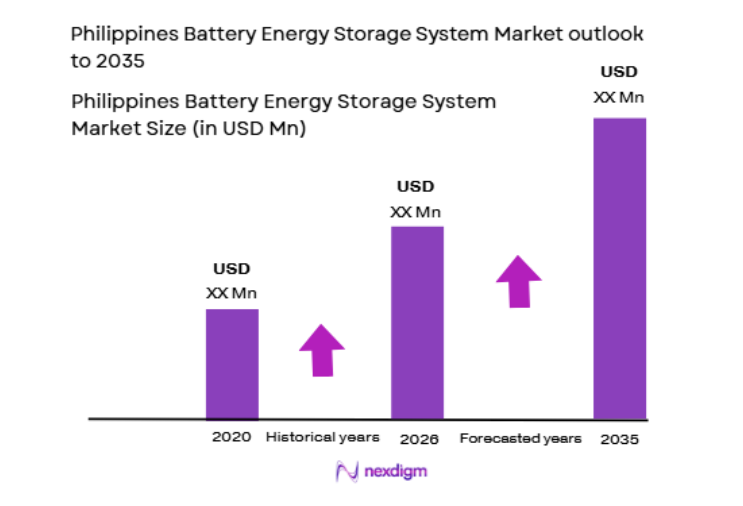
The Philippines battery energy storage system (BESS) market is expected to reach USD ~ million based on a recent historical assessment. The growth of the market is being driven by the country’s transition to renewable energy sources, which require storage solutions to balance intermittent power generation from solar and wind. Additionally, the rising demand for grid stability, energy security, and the decrease in storage technology costs are further propelling the BESS market in the Philippines.
Metro Manila, Cebu, and Davao are the dominant cities driving the adoption of energy storage systems in the Philippines. These urban centers are key to the nation’s energy transition efforts, with high energy demand and significant investments in renewable energy projects. Moreover, the Philippine government has prioritized renewable energy integration into the grid, making these cities critical for energy storage infrastructure development. The need for energy storage in these regions is also heightened by increasing urbanization and the government’s focus on reducing reliance on traditional energy sources.
Market Segmentation
By Technology Type
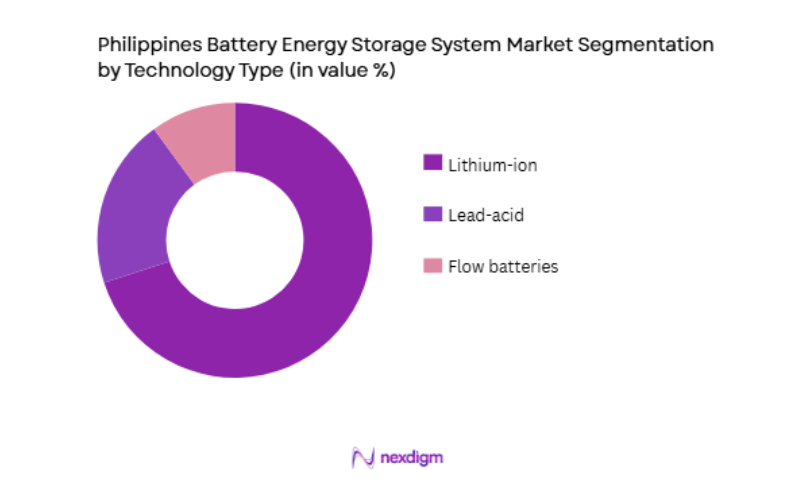
The Philippines BESS market is segmented by technology type into lithium-ion, lead-acid, and flow batteries. Lithium-ion batteries dominate the market due to their higher efficiency, longer lifespan, and decreasing costs. These batteries are well-suited for applications requiring high energy density, quick response times, and relatively compact sizes. The growing adoption of renewable energy sources such as solar and wind has further driven the demand for lithium-ion batteries, as they efficiently store the fluctuating energy generated by these sources. As battery prices continue to decrease, lithium-ion technology is expected to maintain its dominance in the market for both residential and commercial energy storage solutions.
By End-Use Application
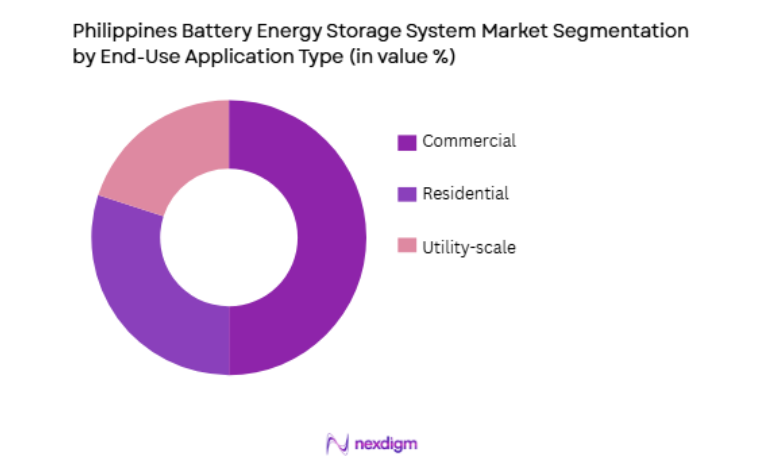
The Philippines BESS market is segmented by end-use application into residential, commercial, and utility-scale. Recently, the commercial segment has experienced the most growth due to businesses’ increasing need to lower energy costs and ensure consistent power supply, particularly during peak demand periods. Commercial establishments are increasingly turning to energy storage systems to manage energy consumption more efficiently, reduce dependence on the grid, and take advantage of solar energy. The availability of government incentives and policies supporting renewable energy adoption is also driving growth in the commercial sector, making it the dominant application segment for BESS in the Philippines.
Competitive Landscape
The competitive landscape of the Philippines BESS market is composed of both local and international players. Established companies such as Siemens and ABB are leveraging their expertise in energy solutions to tap into the growing demand for energy storage systems. Local players like Cleanfuel and QEV Technologies are also making strides in providing cost-effective energy storage solutions tailored to the Philippine market. The market is still in its nascent stages, and there is considerable opportunity for new entrants to introduce innovative technologies and financing models to meet the increasing demand for energy storage systems. As the market continues to expand, competition is expected to intensify, with more players focusing on providing integrated solutions that combine energy storage with renewable energy systems.
| Company Name | Establishment Year | Headquarters | Technology Focus | Market Reach | Key Products | Revenue | Market-Specific Parameter |
| Siemens | 1847 | Munich, Germany | ~ | ~ | ~ | ~ | ~ |
| ABB | 1988 | Zurich, Switzerland | ~ | ~ | ~ | ~ | ~ |
| Cleanfuel | 2007 | Makati, Philippines | ~ | ~ | ~ | ~ | ~ |
| QEV Technologies | 2017 | Manila, Philippines | ~ | ~ | ~ | ~ | ~ |
| Tesla | 2003 | Palo Alto, USA | ~ | ~ | ~ | ~ | ~ |
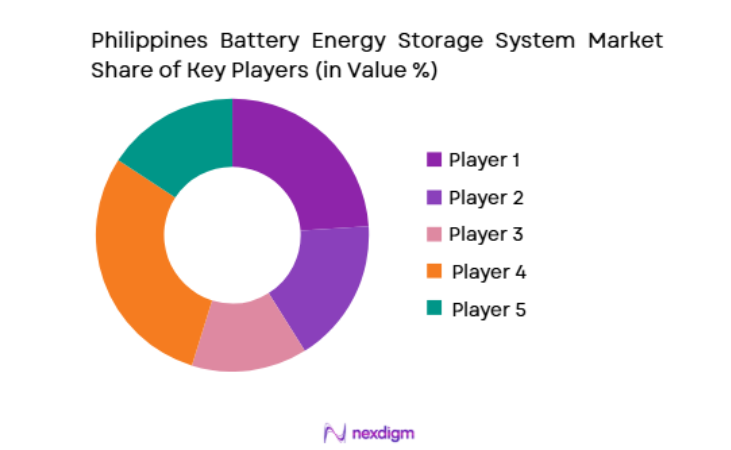
Philippines Battery Energy Storage System Market Analysis
Growth Drivers
Government Support for Renewable Energy Integration
The Philippine government’s initiatives to reduce carbon emissions and promote clean energy are major growth drivers for the BESS market. Through various policies and programs, such as renewable energy incentives and tax breaks, the government is encouraging the use of energy storage systems to support the integration of solar, wind, and other renewable energy sources into the national grid. As the country continues to diversify its energy mix and reduce reliance on fossil fuels, energy storage systems will play an increasingly important role in ensuring a stable and reliable power supply. The establishment of national energy policies, which include ambitious renewable energy targets, supports the growing demand for battery storage systems, helping businesses, households, and utility providers manage the intermittent nature of renewable energy generation. As more renewable energy projects come online, energy storage solutions will be crucial for grid stability, further driving the BESS market growth in the Philippines.
Technological Advancements in Battery Systems
The continuous improvements in battery technologies, particularly in lithium-ion batteries, are a significant driver of the BESS market in the Philippines. Advancements in battery efficiency, energy density, and cost reduction are making energy storage systems more attractive for consumers and businesses alike. As the price of lithium-ion batteries continues to decline due to economies of scale and improvements in manufacturing processes, the affordability of energy storage systems has improved, making them more accessible to a broader segment of the population. Additionally, innovations in battery management systems and smart grids have made it easier to integrate energy storage systems with renewable energy sources, further accelerating their adoption. As the technology continues to evolve, energy storage systems will become more efficient and versatile, enabling greater market penetration and supporting the transition to a low-carbon economy in the Philippines.
Market Challenges
High Initial Capital Costs
Despite the long-term savings and efficiency benefits, the high initial capital cost of installing battery energy storage systems remains a significant barrier to widespread adoption in the Philippines. Although battery prices have been falling over the years, the upfront investment required to purchase and install an energy storage system, particularly for large-scale applications, remains a challenge for both residential and commercial customers. For residential customers, the cost of installing home battery systems may exceed their budget, making it difficult to convince consumers to switch to energy storage solutions. For commercial and industrial clients, the upfront investment can be even higher, limiting adoption to larger companies or those with substantial capital. To accelerate market growth, it is necessary to reduce initial costs through incentives, financing models, or economies of scale, making these systems more affordable and accessible to a broader customer base.
Lack of Sufficient Infrastructure
While the Philippines is making progress in expanding its charging infrastructure, there remains a lack of sufficient infrastructure to support the widespread use of battery energy storage systems. This includes not only the availability of charging stations for electric vehicles (EVs) but also the grid infrastructure needed to support large-scale energy storage deployments. Inadequate infrastructure can delay the integration of energy storage systems into the grid, hindering their effectiveness and limiting their reach. Without a comprehensive and reliable infrastructure in place, the widespread adoption of energy storage solutions will be slow. The government and private sector must invest in developing the necessary infrastructure, including both physical assets such as charging stations and grid modernization, to ensure that energy storage systems can be effectively utilized and support the growing demand for renewable energy.
Opportunities
Renewable Energy Integration for Grid Support
The Philippines’ increasing focus on renewable energy provides a significant opportunity for the BESS market to grow. With solar, wind, and other renewable energy sources being integrated into the national grid, energy storage systems will be essential for ensuring grid stability and reliability. Energy storage systems can store excess renewable energy during periods of high generation and release it during times of high demand or low generation, helping to balance supply and demand. The Philippine government’s ambitious renewable energy targets, including the goal to increase renewable energy capacity, further drive the demand for energy storage systems that can support this transition. By providing a more stable and reliable energy supply, energy storage solutions will play a critical role in achieving the country’s renewable energy goals, creating growth opportunities for the BESS market.
Off-Grid Energy Solutions for Remote Areas
One of the significant opportunities for the BESS market in the Philippines lies in off-grid energy solutions for remote areas. Many rural areas in the Philippines lack access to reliable electricity, particularly in remote islands and mountainous regions. Battery energy storage systems, combined with renewable energy sources like solar power, can provide off-grid communities with a stable and sustainable source of electricity. By utilizing energy storage systems to store power generated during the day, these off-grid systems can provide electricity to communities during nighttime or cloudy periods, improving their quality of life and economic opportunities. As the government and NGOs focus on improving energy access for rural populations, battery energy storage systems will play an important role in expanding access to clean, reliable energy, creating a significant growth opportunity for the market.
Future Outlook
The Philippines BESS market is poised for continued growth, driven by increasing government support for renewable energy, advancements in battery technology, and the growing demand for grid stability. As the country integrates more renewable energy into the grid, energy storage systems will become essential for ensuring consistent power supply. The development of both residential and commercial energy storage systems will be supported by expanding infrastructure and new business models, making energy storage more accessible. Over the next five years, the Philippines is expected to see substantial growth in the adoption of energy storage solutions, contributing to its transition to a low-carbon economy.
Major Players
- Siemens
- ABB
- Cleanfuel
- QEV Technologies
- Tesla
- BYD
- Schneider Electric
- LG Chem
- Panasonic
- CATL
- Vestas
- Hyundai
- Enel X
- NextEra Energy
- Fluence
Key Target Audience
- Investments and venture capitalist firms
- Government and regulatory bodies
- Energy providers
- Battery manufacturers
- Renewable energy developers
- Utility companies
- Commercial energy users
- Environmental NGOs
Research Methodology
Step 1: Identification of Key Variables
Identify and define the key variables driving the Philippines BESS market, including renewable energy targets, technological advancements, and government policies.
Step 2: Market Analysis and Construction
Analyze market trends and demand patterns using a mix of primary and secondary research to construct an accurate market model.
Step 3: Hypothesis Validation and Expert Consultation
Consult with industry experts, energy providers, and government officials to validate market assumptions and refine growth projections.
Step 4: Research Synthesis and Final Output
Synthesize research findings into a detailed report, offering insights, recommendations, and actionable strategies for market participants.

- Executive Summary
- Research Methodology (Definitions, Scope, Industry Assumptions, Market Sizing Approach, Primary & Secondary Research Framework, Data Collection & Verification Protocol, Analytic Models & Forecast Methodology, Limitations & Research Validity Checks)

- Market Definition and Scope
- Value Chain & Stakeholder Ecosystem
- Regulatory / Certification Landscape
- Sector Dynamics Affecting Demand

- Growth Drivers
Government Incentives & Support for Renewable Energy
Increasing Energy Storage Demand for Grid Stability
Technological Advancements in Battery Storage Systems - Market Challenges
High Capital Investment for Deployment
Technological & Performance Limitations of Existing Storage Systems
Regulatory & Compliance Barriers in Energy Storage Integration - Market Opportunities
Integration of Energy Storage with Renewable Energy Sources
Growth of Electric Vehicle Charging Infrastructure
Advancements in Battery Technology and Energy Efficiency - Trends
Increased Investment in Energy Storage for Renewables Integration
Rising Adoption of Energy Storage in Residential Applications - Government Regulations
Energy Storage System Certification Standards
Incentive Programs for Renewable Energy Integration
Policy Guidelines for Battery Recycling and Disposal - SWOT Analysis
- Porter’s Five Forces

- By Market Value, 2020-2025
- By Installed Units, 2020-2025
- By Average System Price, 2020-2025
- By System Complexity Tier, 2020-2025

- By System Type (In Value%)
Utility-Scale Storage Systems
Commercial & Industrial Storage Systems
Residential Storage Systems
Hybrid Storage Systems
Off-grid Storage Systems - By Platform Type (In Value%)
Grid-Connected Platforms
Off-Grid Platforms
Microgrid Platforms
Hybrid Platforms
Integrated Platforms - By Fitment Type (In Value%)
On-premise Solutions
Cloud-based Solutions
Hybrid Solutions
Integrated Solutions - By End User Segment (In Value%)
Utilities
Commercial & Industrial Facilities
Residential Sector

- Market Share Analysis
- Cross Comparison Parameters (System Type, Platform Type, End User Segment, Fitment Type, Charging Speed, Storage Capacity, Battery Technology, Cost per kWh, System Efficiency, Integration with Renewable Energy)
- SWOT Analysis of Key Competitors
- Pricing & Procurement Analysis
- Key Players
Tesla
BYD Company
Samsung SDI
LG Chem
Panasonic
VARTA AG
Sonnen
Fluence Energy
Redflow
Eaton
Enphase Energy
Schneider Electric
Sungrow Power Supply Co.
Saft
AES Energy Storage

- Utilities’ Adoption of Energy Storage for Grid Optimization
- Commercial & Industrial Sectors Utilizing Energy Storage for Cost Reduction
- Residential Sector’s Growing Interest in Energy Storage Solutions
- Government Agencies Driving Energy Storage Initiatives

- Forecast Market Value, 2026-2035
- Forecast Installed Units, 2026-2035
- Price Forecast by System Tier, 2026-2035
- Future Demand by Platform, 2026-2035


 Request a Sample
 Ask for Customization
 Get a Quote
 Enquire Now