
 Download PDF
Market Overview
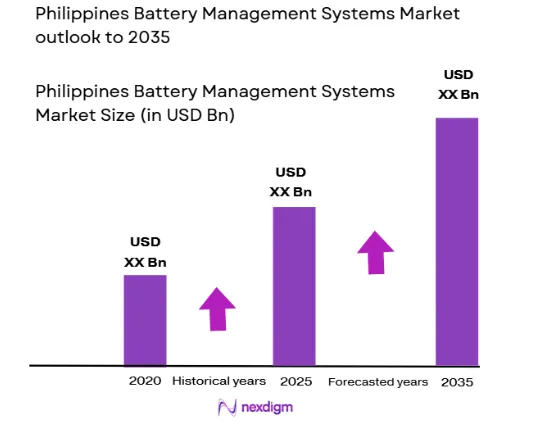
The Philippines Battery Management Systems (BMS) market is valued at approximately USD ~ billion, supported by accelerating adoption of electric mobility, grid-scale energy storage, and consumer electronics manufacturing. Growth is driven by increasing deployment of lithium-ion battery systems across transportation and renewable energy sectors, alongside regulatory initiatives promoting energy efficiency and electrification. Rising investments in smart grid infrastructure and battery lifecycle optimization technologies are further strengthening demand for advanced BMS solutions across industrial and commercial applications.
Metro Manila, Cebu, and Davao emerge as key hubs due to strong industrial concentration, logistics infrastructure, and energy demand. The Philippines benefits from proximity to major Asian battery supply chains, particularly from China, Japan, and South Korea, enabling cost-effective technology integration. Urban electrification programs and renewable energy projects in island regions further support adoption. Government-backed clean energy initiatives and infrastructure expansion reinforce regional dominance and position the country as a growing participant in Southeast Asia’s battery ecosystem.
Market Segmentation
By Product Type
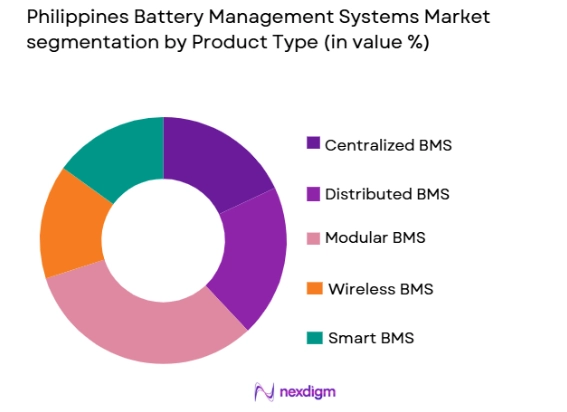
Philippines Battery Management Systems (BMS) market is segmented by product type into centralized BMS, distributed BMS, modular BMS, wireless BMS, and smart BMS. Recently, modular BMS has a dominant market share due to its scalability, ease of integration, and flexibility across electric vehicles and stationary storage systems. Its ability to manage complex battery architectures efficiently makes it preferred among OEMs and energy providers. Increased adoption in renewable energy storage and EV applications, combined with cost optimization and reduced maintenance requirements, further strengthens its dominance across diverse industrial and commercial sectors.
By Application
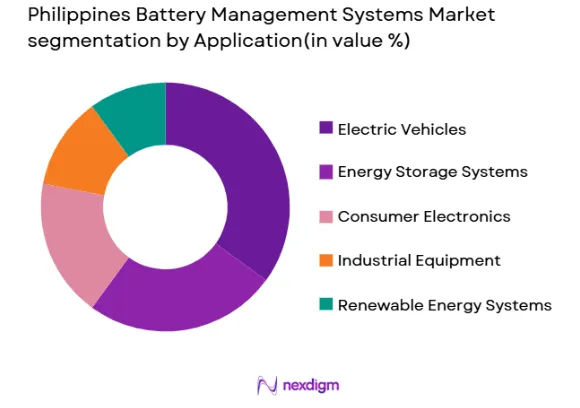
Philippines Battery Management Systems (BMS) market is segmented by application into electric vehicles, energy storage systems, consumer electronics, industrial equipment, and renewable energy systems. Recently, electric vehicles have a dominant market share due to increasing adoption of e-mobility solutions and government incentives supporting electrification. Rising fuel costs and environmental concerns are pushing consumers toward electric mobility, thereby increasing BMS integration. Additionally, expansion of EV charging infrastructure and partnerships between automotive and technology firms are driving the demand for advanced battery monitoring systems in the transportation sector.
Competitive Landscape
The Philippines Battery Management Systems (BMS) market exhibits moderate consolidation with global semiconductor and energy technology firms dominating due to advanced capabilities and established supply chains. Local participation remains limited, with international players leveraging partnerships and distribution networks to expand presence. Technological differentiation, software integration, and reliability remain key competitive factors shaping market positioning.
| Company Name | Establishment Year | Headquarters | Technology Focus | Market Reach | Key Products | Revenue (USD Billion) | BMS Integration Capability |
| Texas Instruments | 1930 | USA | ~ | ~ | ~ | ~ | ~ |
| NXP Semiconductors | 2006 | Netherlands | ~ | ~ | ~ | ~ | ~ |
| Renesas Electronics | 2010 | Japan | ~ | ~ | ~ | ~ | ~ |
| Infineon Technologies | 1999 | Germany | ~ | ~ | ~ | ~ | ~ |
| STMicroelectronics | 1987 | Switzerland | ~ | ~ | ~ | ~ | ~ |
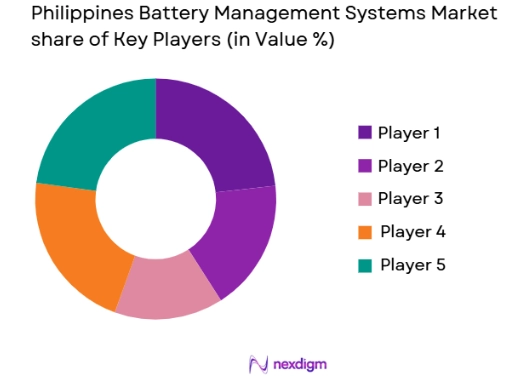
Philippines Battery Management Systems (BMS) Market Analysis
Growth Drivers
Rising Electric Vehicle Adoption Across Urban Mobility Systems
The increasing shift toward electric mobility in urban centers is significantly driving demand for battery management systems in the Philippines market. Government incentives promoting electric vehicles, along with rising fuel costs, are encouraging consumers and fleet operators to transition toward EVs. This transition necessitates efficient battery monitoring, safety management, and performance optimization, all of which are enabled by advanced BMS solutions. Urban infrastructure development, including charging stations, is further supporting EV penetration across major cities. Additionally, partnerships between automotive OEMs and technology providers are enhancing innovation in battery technologies. Growing environmental awareness is also influencing purchasing decisions, further accelerating adoption. The need for longer battery life and enhanced safety standards reinforces the importance of BMS integration. As EV adoption expands across public and private transportation sectors, the demand for scalable and intelligent battery management solutions continues to rise. This trend is expected to remain a primary growth driver due to sustained policy and infrastructure support.
Expansion of Renewable Energy Storage Infrastructure
The Philippines is witnessing increased investment in renewable energy projects, including solar and wind installations, which require efficient energy storage systems. Battery management systems play a critical role in ensuring optimal performance, safety, and longevity of these storage systems. As the country focuses on reducing dependence on fossil fuels, energy storage solutions are becoming essential for grid stability and energy reliability. BMS technology enables efficient charge-discharge cycles and prevents battery degradation, making it indispensable for large-scale deployments. Additionally, government initiatives supporting clean energy adoption are encouraging investments in advanced storage solutions. The integration of smart grids further enhances the need for real-time battery monitoring and control systems. Increasing participation from private energy companies is also contributing to market expansion. As renewable energy capacity continues to grow, the reliance on efficient battery systems is expected to increase. This creates sustained demand for advanced BMS technologies across both utility-scale and distributed energy systems.
Market Challenges
High Cost of Advanced Battery Management Integration
The integration of sophisticated battery management systems involves significant costs related to hardware, software, and system design. These costs pose a challenge for small and medium enterprises and limit adoption in cost-sensitive applications. Advanced BMS solutions require specialized components, including sensors, microcontrollers, and communication modules, which increase overall system expenses. Additionally, reliance on imported components further adds to cost pressures due to supply chain fluctuations. Limited local manufacturing capabilities exacerbate the issue, making it difficult to achieve economies of scale. The complexity of integrating BMS into existing systems also increases development and maintenance costs. Furthermore, high upfront investment requirements deter adoption in emerging sectors. Cost considerations remain a critical barrier, particularly in developing markets with price-sensitive consumers. Despite long-term benefits, the initial financial burden continues to restrict widespread implementation of advanced BMS solutions.
Limited Domestic Technical Expertise and Manufacturing Base
The Philippines faces challenges related to limited technical expertise and domestic manufacturing capabilities in the battery management systems domain. The lack of skilled professionals specializing in advanced battery technologies restricts innovation and system development. Dependence on foreign technology providers limits local value addition and increases vulnerability to supply disruptions. Additionally, insufficient research and development infrastructure hampers the growth of indigenous solutions. Training programs and technical education in this field remain underdeveloped, further constraining workforce capabilities. The absence of a robust local ecosystem for battery and semiconductor manufacturing adds to the challenge. Companies often rely on imported technologies, leading to higher costs and reduced competitiveness. This situation also slows down the adoption of customized solutions tailored to local market needs. Addressing these limitations requires strategic investments in education, R&D, and industrial infrastructure to support long-term market growth.
Opportunities
Integration of AI and IoT in Battery Management Systems
The incorporation of artificial intelligence and Internet of Things technologies presents a significant opportunity for enhancing battery management capabilities. AI-driven analytics enable predictive maintenance, improving battery lifespan and performance efficiency. IoT connectivity allows real-time monitoring and remote management of battery systems, enhancing operational efficiency. These advancements are particularly beneficial for electric vehicles and energy storage applications where performance optimization is critical. Companies investing in smart BMS solutions can gain competitive advantages through improved system intelligence and automation. Additionally, integration with cloud platforms enables data-driven decision-making and advanced diagnostics. The growing digitalization of energy systems further supports adoption of these technologies. As industries increasingly prioritize efficiency and reliability, demand for AI-enabled BMS solutions is expected to rise. This creates opportunities for innovation and differentiation in the market.
Development of Localized Battery and BMS Manufacturing Ecosystem
Establishing a localized manufacturing ecosystem for batteries and BMS solutions offers significant growth potential for the Philippines market. Local production can reduce dependency on imports and improve supply chain resilience. It also enables cost optimization and faster deployment of customized solutions tailored to regional needs. Government support through incentives and infrastructure development can accelerate the growth of domestic manufacturing capabilities. Collaboration between local firms and international technology providers can facilitate knowledge transfer and skill development. Additionally, localized production supports job creation and economic growth. The increasing demand for batteries across multiple sectors provides a strong foundation for developing a domestic ecosystem. Investment in research and development can further enhance innovation and competitiveness. This opportunity aligns with national goals of industrial development and technological advancement.
Future Outlook
The Philippines Battery Management Systems market is expected to witness sustained growth driven by increasing electrification and renewable energy integration. Advancements in AI-enabled monitoring and wireless technologies will enhance system efficiency. Regulatory support for clean energy and electric mobility will continue to drive adoption. Expanding infrastructure and rising investments in energy storage will further strengthen demand. The market is likely to evolve toward smart, scalable, and cost-efficient BMS solutions.
Major Players
- Analog Devices Inc.
- Texas Instruments Incorporated
- NXP Semiconductors
- Renesas Electronics Corporation
- Infineon Technologies AG
- STMicroelectronics NV
- Panasonic Holdings Corporation
- LG Energy Solution Ltd.
- Samsung SDI Co. Ltd.
- BYD Company Limited
- Toshiba Corporation
- Eaton Corporation plc
- ABB Ltd.
- Schneider Electric SE
- Delta Electronics Inc.
Key Target Audience
- Automotive OEMs
- Energy storage solution providers
- Renewable energy developers
- Consumer electronics manufacturers
- Industrial equipment manufacturers
- Government and regulatory bodies
- Investments and venture capitalist firms
- Battery technology integrators
Research Methodology
Step 1: Identification of Key Variables
Key variables such as demand drivers, technology adoption, regulatory factors, and supply chain dynamics are identified. These variables are analyzed across different industry segments to establish market structure and influencing parameters.
Step 2: Market Analysis and Construction
Data is collected from industry reports, company filings, and trade statistics. The market is constructed using bottom-up and top-down approaches to ensure comprehensive coverage and accuracy.
Step 3: Hypothesis Validation and Expert Consultation
Findings are validated through consultations with industry experts, manufacturers, and stakeholders. Assumptions are tested against real-world data to ensure reliability and consistency.
Step 4: Research Synthesis and Final Output
All validated data is synthesized into structured insights. Final outputs are prepared with detailed analysis, ensuring clarity, accuracy, and actionable intelligence for stakeholders.

- Executive Summary
- Research Methodology (Definitions, Scope, Industry Assumptions, Market Sizing Approach, Primary & Secondary Research Framework, Data Collection & Verification Protocol, Analytic Models & Forecast Methodology, Limitations & Research Validity Checks)

- Market Definition and Scope
- Value Chain & Stakeholder Ecosystem
- Regulatory / Certification Landscape
- Sector Dynamics Affecting Demand
- Strategic Initiatives & Infrastructure Growth

- Growth Drivers
Rising adoption of electric vehicles across urban mobility ecosystems
Expansion of renewable energy storage infrastructure
Government incentives supporting clean energy technologies
Increasing demand for efficient battery lifecycle management
Growth in consumer electronics requiring advanced battery control systems - Market Challenges
High initial cost of advanced BMS integration
Limited domestic manufacturing capabilities
Technical complexity in system interoperability
Supply chain dependency on imported battery components
Lack of skilled workforce for system design and maintenance - Market Opportunities
Development of localized BMS manufacturing ecosystems
Integration of AI and IoT in battery monitoring solutions
Expansion of grid-scale energy storage deployments - Trends
Shift towards wireless battery management architectures
Increasing use of predictive analytics in battery health monitoring
Adoption of modular and scalable BMS designs
Growing collaboration between automotive and technology firms
Integration of cloud-based battery management platforms - Government Regulations & Defense Policy
Implementation of energy efficiency and safety standards for battery systems
Government-backed renewable energy expansion policies
Incentives for electric mobility and battery technology adoption - SWOT Analysis
- Stakeholder and Ecosystem Analysis
- Porter’s Five Forces Analysis
- Competition Intensity and Ecosystem Mapping

- By Market Value, 2020-2025
- By Installed Units, 2020-2025
- By Average System Price, 2020-2025
- By System Complexity Tier, 2020-2025

- By System Type (In Value%)
Centralized BMS
Distributed BMS
Modular BMS
Wireless BMS
Advanced Smart BMS - By Platform Type (In Value%)
Electric Vehicles
Energy Storage Systems
Consumer Electronics
Industrial Equipment
Renewable Energy Systems - By Fitment Type (In Value%)
OEM Integration
Aftermarket Installation
Embedded Systems
Standalone Units
Retrofit Solutions - By End User Segment (In Value%)
Automotive Manufacturers
Energy Storage Operators
Electronics Manufacturers
Industrial Sector
Renewable Energy Developers - By Procurement Channel (In Value%)
Direct OEM Contracts
Government Procurement Programs
Private Sector Sourcing
Distributor Networks
Online Procurement Platforms - By Material / Technology (in Value %)
Lithium-ion BMS Technology
Solid-state Battery BMS
Nickel Metal Hydride BMS
Lead-acid BMS
AI-enabled Battery Management Systems

- Market structure and competitive positioning
- Market share snapshot of major players
- Cross Comparison Parameters (Technology Integration, System Scalability, Cost Efficiency, Product Reliability, Safety Standards Compliance, Energy Efficiency, Customization Capabilities, Software Integration, Supply Chain Strength, After-Sales Support)
- SWOT Analysis of Key Players
- Pricing & Procurement Analysis
- Key Players
Analog Devices Inc.
Texas Instruments Incorporated
NXP Semiconductors
Renesas Electronics Corporation
Infineon Technologies AG
STMicroelectronics NV
Panasonic Holdings Corporation
LG Energy Solution Ltd.
Samsung SDI Co. Ltd.
BYD Company Limited
Toshiba Corporation
Eaton Corporation plc
ABB Ltd.
Schneider Electric SE
Delta Electronics Inc.

- Automotive manufacturers increasingly demand integrated BMS for EV platforms
- Energy storage providers prioritize scalable and efficient battery monitoring systems
- Consumer electronics firms focus on compact and cost-effective BMS solutions
- Industrial users require robust systems for high-load and continuous operations

- Forecast Market Value, 2026-2035
- Forecast Installed Units, 2026-2035
- Price Forecast by System Tier, 2026-2035
- Future Demand by Platform, 2026-2035


 Request a Sample
 Ask for Customization
 Get a Quote
 Enquire Now