
 Download PDF
Market Overview
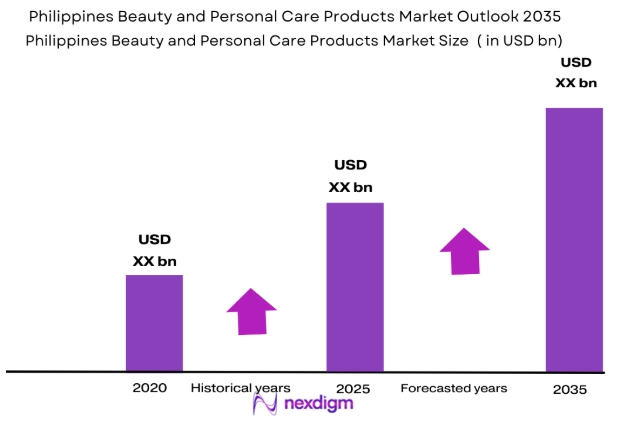
The Philippines beauty and personal care products market was valued at approximately USD ~ billion based on a recent historical assessment, supported by data from sources such as Statista and Euromonitor International. Growth is driven by rising disposable incomes, increasing urbanization, and strong consumer engagement with digital platforms that influence purchasing decisions. Expanding middle-class consumption, higher spending on grooming, and increased product penetration across skincare and cosmetics categories continue to sustain market expansion.
Metro Manila remains the dominant consumption hub due to higher income levels, dense retail infrastructure, and strong presence of international and domestic brands, while Cebu and Davao are emerging as key secondary markets. Urban concentration of shopping malls, beauty specialty stores, and logistics networks supports accessibility and product availability. Additionally, widespread adoption of social commerce and mobile purchasing in urban centers reinforces regional dominance, supported by strong influencer-driven demand and proximity to distribution networks.
Market Segmentation
By Product Type
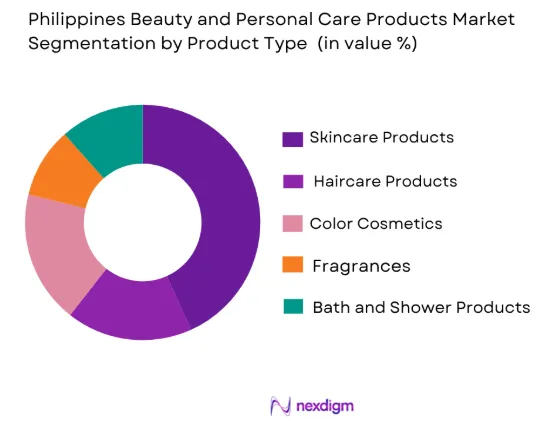
Philippines beauty and personal care products market is segmented by product type into skincare, haircare, color cosmetics, fragrances, oral care, and bath and shower products. Recently, skincare has a dominant market share due to factors such as increasing consumer awareness of skin health, widespread adoption of multi-step routines influenced by global beauty trends, and strong availability of both international and local brands. The demand for sunscreen, anti-aging creams, and hydration-focused products has significantly increased, particularly among urban consumers. Additionally, dermatologically tested and functional skincare products are gaining traction due to rising concerns over pollution and climate-related skin issues.
By Distribution Channel
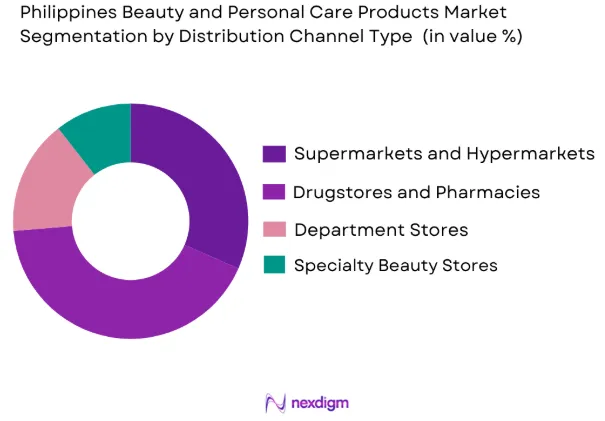
Philippines beauty and personal care products market is segmented by distribution channel into supermarkets and hypermarkets, pharmacies, specialty stores, e-commerce, direct selling, and convenience stores. Recently, e-commerce has a dominant market share due to factors such as increased smartphone penetration, widespread use of platforms like Shopee and Lazada, and convenience of home delivery. Social commerce and live-stream selling have further accelerated online sales, particularly among younger consumers. Discounts, bundled offers, and influencer endorsements have strengthened digital channel dominance over traditional retail formats.
Competitive Landscape
The Philippines beauty and personal care products market is moderately consolidated, with multinational corporations dominating premium segments while local brands compete strongly in mass and mid-tier categories. Global companies benefit from established distribution networks and brand recognition, whereas domestic players leverage localized product formulations and competitive pricing. Digital engagement and influencer marketing strategies have become critical differentiators, intensifying competition across both offline and online channels.
| Company Name | Establishment Year | Headquarters | Technology Focus | Market Reach | Key Products | Revenue | Distribution Strength |
| Unilever Philippines | 1927 | Philippines | ~ | ~ | ~ | ~ | ~ |
| Procter & Gamble Philippines | 1935 | USA | ~ | ~ | ~ | ~ | ~ |
| L’Oréal Philippines | 1994 | France | ~ | ~ | ~ | ~ | ~ |
| Beiersdorf Philippines | 1882 | Germany | ~ | ~ | ~ | ~ | ~ |
| Human Nature | 2008 | Philippines | ~ | ~ | ~ | ~ | ~ |
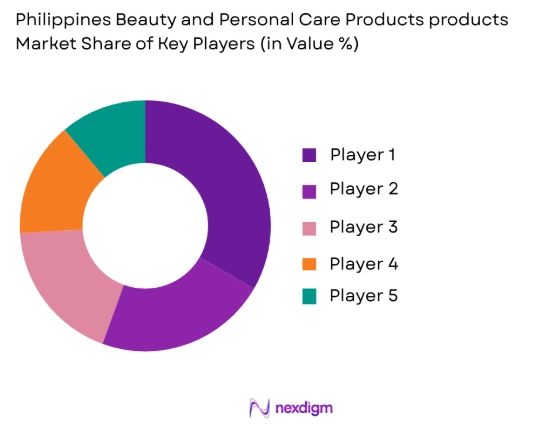
Philippines Beauty and Personal Care Products Market Analysis
Growth Drivers
Rising Disposable Income
The Philippines has experienced sustained income growth, directly supporting higher spending on discretionary categories such as beauty and personal care products. According to World Bank, GDP per capita reached USD 3,950 in 2023, compared to USD 3,460 in 2021, reflecting improved purchasing power. Household final consumption expenditure exceeded USD 330 billion in 2023, indicating strong consumer spending capacity. The Philippine Statistics Authority reported that personal care and household expenditure categories expanded alongside income growth, particularly in urban households. Remittances from overseas Filipino workers reached USD 37.2 billion in 2023, providing additional disposable income streams that significantly influence consumption of non-essential goods such as skincare and cosmetics. Increased financial inclusion is also evident, with over 65 million Filipinos having access to digital financial services as reported by Bangko Sentral ng Pilipinas. These macroeconomic indicators demonstrate that higher disposable income is translating into increased expenditure on grooming, wellness, and premium personal care products, reinforcing demand across product categories.
Influence of Social Media and Beauty Influencers
The Philippines is one of the most digitally connected countries globally, significantly influencing beauty consumption patterns through social media engagement. Data from DataReportal shows that there were over 86 million internet users and 84 million social media users in early 2024, indicating extensive digital reach. Average daily time spent on social media exceeded 3 hours and 30 minutes, one of the highest globally, driving continuous exposure to beauty trends and influencer content. Platforms such as TikTok and Instagram are widely used for beauty tutorials and product recommendations. The International Telecommunication Union reported mobile broadband penetration exceeding 75 subscriptions per 100 inhabitants, enabling seamless content consumption. High engagement levels have accelerated demand for trending skincare and cosmetics, particularly among younger consumers, reinforcing the role of influencers in shaping purchasing decisions and boosting market growth.
Market Challenges
High Price Sensitivity
Income inequality and cost pressures continue to influence consumer purchasing behavior in the Philippines beauty and personal care products market. The World Bank reported a Gini index of 42.3, indicating significant income disparity that affects affordability across regions. Inflation averaged 6.0 in 2023 according to Philippine Statistics Authority, increasing the cost of essential goods and reducing discretionary spending capacity. Food expenditure alone accounted for over USD 120 billion of household consumption, limiting available budgets for personal care products. Additionally, the minimum daily wage in Metro Manila remained around USD 10 equivalent, constraining spending among lower-income groups. These economic factors result in consumers prioritizing affordability, opting for smaller product sizes or switching to lower-priced alternatives, which impacts premium segment growth and brand loyalty within the market.
Import Dependency and Currency Fluctuations
The Philippines relies heavily on imports for raw materials and finished beauty products, exposing the market to currency volatility risks. According to Bangko Sentral ng Pilipinas, the Philippine peso averaged around 56 per USD in 2023, compared to 50 in 2021, increasing import costs. The Philippine Statistics Authority reported that total imports exceeded USD 137 billion in 2023, with a significant portion attributed to consumer goods and chemical-based inputs used in personal care manufacturing. Rising import costs directly affect product pricing and profit margins, particularly for international brands. Additionally, global supply chain disruptions have increased freight costs and lead times, further complicating inventory management. These factors create pricing instability and limit the ability of companies to maintain consistent supply and competitive pricing in the domestic market.
Opportunities
Clean Beauty and Natural Products
Increasing environmental awareness and health consciousness among Filipino consumers are driving demand for clean and natural beauty products, presenting significant growth opportunities. The World Bank reported that urban population reached over 58 million in 2023, with urban consumers showing higher awareness of sustainability and wellness trends. Additionally, the Department of Trade and Industry Philippines highlighted growing support for locally sourced ingredients such as coconut oil and aloe vera, which are widely used in natural personal care formulations. The country’s agricultural output includes over 14 million metric tons of coconut production annually, providing abundant raw materials for organic product development. Increasing environmental regulations and consumer preference for eco-friendly packaging further support this trend. These factors collectively create opportunities for brands to expand their portfolios with sustainable, locally sourced, and health-oriented beauty products.
Personalized Skincare Solutions
Advancements in technology and increasing consumer demand for customized products are creating opportunities for personalized skincare solutions in the Philippines. According to International Telecommunication Union, mobile internet penetration exceeded 75 subscriptions per 100 inhabitants, enabling digital platforms to offer tailored product recommendations. The Bangko Sentral ng Pilipinas reported over 65 million digital payment users, facilitating seamless online transactions for customized beauty products. Additionally, the Philippine Statistics Authority recorded a population exceeding 114 million, providing a large and diverse consumer base with varying skincare needs. Urban consumers are increasingly seeking products tailored to specific concerns such as acne, pigmentation, and aging, supported by digital diagnostics and AI-driven tools. This convergence of technology, consumer awareness, and digital infrastructure is enabling brands to deliver personalized solutions, enhancing customer engagement and driving market expansion.
Future Outlook
The Philippines beauty and personal care products market is expected to witness steady expansion over the next five years, driven by digital innovation, evolving consumer preferences, and increased product diversification. Growth will be supported by rising adoption of e-commerce platforms and advancements in personalized beauty solutions. Regulatory frameworks are likely to strengthen product quality standards, enhancing consumer trust. Demand for sustainable and premium products is expected to accelerate. Additionally, expansion into underserved regions and emerging consumer segments will further support long-term growth.
Major Players
- Unilever Philippines
- Procter & Gamble Philippines
- L’Oréal Philippines
- Colgate-Palmolive Philippines
- Johnson & Johnson Philippines
- Beiersdorf Philippines
- Shiseido Philippines
- Estée Lauder Companies Philippines
- Amorepacific Philippines
- Coty Philippines
- Avon Philippines
- Human Nature
- Sunnies Face
- Happy Skin
- Ever Bilena Cosmetics
Key Target Audience
- Beauty product manufacturers
- Retail chains and distributors
- E-commerce platform operators
- Investments and venture capitalist firms
- Government and regulatory bodies
- FMCG companies
- Packaging solution providers
- Digital marketing agencies
Research Methodology
Step 1: Identification of Key Variables
Key variables such as product categories, pricing structures, distribution channels, and consumer demographics were identified to define the scope of the Philippines beauty and personal care products market. Data points were collected from secondary sources and industry databases to establish a foundational understanding.
Step 2: Market Analysis and Construction
A combination of bottom-up and top-down approaches was used to construct the market model, incorporating sales volume data, pricing trends, and distribution patterns. Market sizing was validated using multiple data sources to ensure accuracy and consistency.
Step 3: Hypothesis Validation and Expert Consultation
Industry experts, including brand managers, distributors, and regulatory professionals, were consulted to validate assumptions and refine market estimates. Their insights helped ensure alignment with real-world market dynamics and operational realities.
Step 4: Research Synthesis and Final Output
All data and insights were synthesized into a comprehensive report, integrating quantitative analysis with qualitative assessments. The final output was structured to provide actionable insights and strategic recommendations for stakeholders.

- Executive Summary
- Research Methodology (Market Definitions and Scope of Beauty and Personal Care Products, Product Classification Framework, Retail and E-commerce Data Utilization Approach, Primary Interviews with Brands, Distributors, Retailers, and Industry Experts, Bottom-Up Sales Volume Modelling Top-Down Consumer Spending Validation, Assumptions on Pricing, Consumption Frequency, and Channel Margins, Limitations and Data Triangulation Techniques, TAM/SAM/SOM Modelling Framework Based on Consumer Spending and Product Penetration)

- Definition and Scope
- Evolution of Beauty and Personal Care Ecosystem in the Philippines
- Timeline of Industry Developments and Regulatory Reforms
- Consumer Beauty and Personal Care Lifecycle
- Value Chain Analysis
- Stakeholder Ecosystem

- Growth Drivers
Rising Disposable Income
Growing Urban Population
Influence of Social Media and Beauty Influencers
K-Beauty and J-Beauty Adoption
E-commerce and Social Commerce Growth
Increasing Male Grooming Demand
Premiumization of Skincare and Cosmetics - Market Challenges
High Price Sensitivity
Counterfeit and Grey Market Products
Regulatory Compliance Requirements
Intense Brand Competition
Import Dependency and Currency Fluctuations
Distribution Gaps in Rural Areas - Opportunities
Clean Beauty and Natural Products
Halal and Vegan Beauty Products
Personalized Skincare Solutions
Dermocosmetics and Functional Beauty
Men’s Grooming Expansion
Untapped Provincial Markets
Subscription-Based Beauty Commerce - Market Trends
TikTok and Live Selling-Led Beauty Purchases
Rise of Local Indie Beauty Brands
Skinimalism and Multi-Functional Products
Demand for SPF and Anti-Pollution Skincare
AI-Based Beauty Recommendations
Sustainable Packaging Adoption
Celebrity and Influencer-Led Brand Launches - Government Regulations
- SWOT Analysis
- Porter’s Five Forces
- Retail Digitization Impact
- E-commerce Integration Analysis

- By Value, 2020-2025
- By Sales Volume, 2020-2025
- By Average Selling Price per Product, 2020-2025

- By Product Category ( In Value %)
Skincare Products
Haircare Products
Color Cosmetics
Fragrances
Bath and Shower Products
- By Price Segment ( In Value %)
Mass Market Products
Mid-Premium Products
Premium/Luxury Products - By Distribution Channel (In Value %)
Supermarkets and Hypermarkets
Drugstores and Pharmacies
Department Stores
Specialty Beauty Stores - By Consumer Demographics ( In Value %
Teenagers
Young Adults
Working Professionals
Middle-Aged Consumers
Senior Consumers - By Gender (In Value %)
Female Consumers
Male Consumers
Unisex Products - By Region (In Value %)
Metro Manila
Luzon excluding Metro Manila
Visayas
Mindanao

- Market Share of Major Players
- Cross Comparison Parameters (Product Portfolio Breadth, Average Price Point, Retail Network Coverage, E-commerce Presence, Social Media Engagement,
Brand Recall, Product Innovation Capability, Customer Retention Rate,
Sustainability Positioning) - SWOT Analysis of Major Players
- Pricing Benchmarking
- Detailed Profiles of Major Companies
Unilever Philippines
Procter & Gamble Philippines
L’Oréal Philippines
Colgate-Palmolive Philippines
Johnson & Johnson Philippines
Beiersdorf Philippines
Shiseido Philippines
Estée Lauder Companies Philippines
Amorepacific Philippines
Coty Philippines
Avon Philippines
Human Nature
Sunnies Face

- Consumption Patterns and Seasonality
- Price Sensitivity and Brand Switching Behavior
- Purchase Frequency Analysis
- Consumer Pain Point Analysis
- Decision-Making Criteria
- Consumer TAM Analysis

- By Value, 2026-2035
- By Sales Volume, 2026-2035
- By Average Selling Price per Product, 2026-2035


 Request a Sample
 Ask for Customization
 Get a Quote
 Enquire Now